
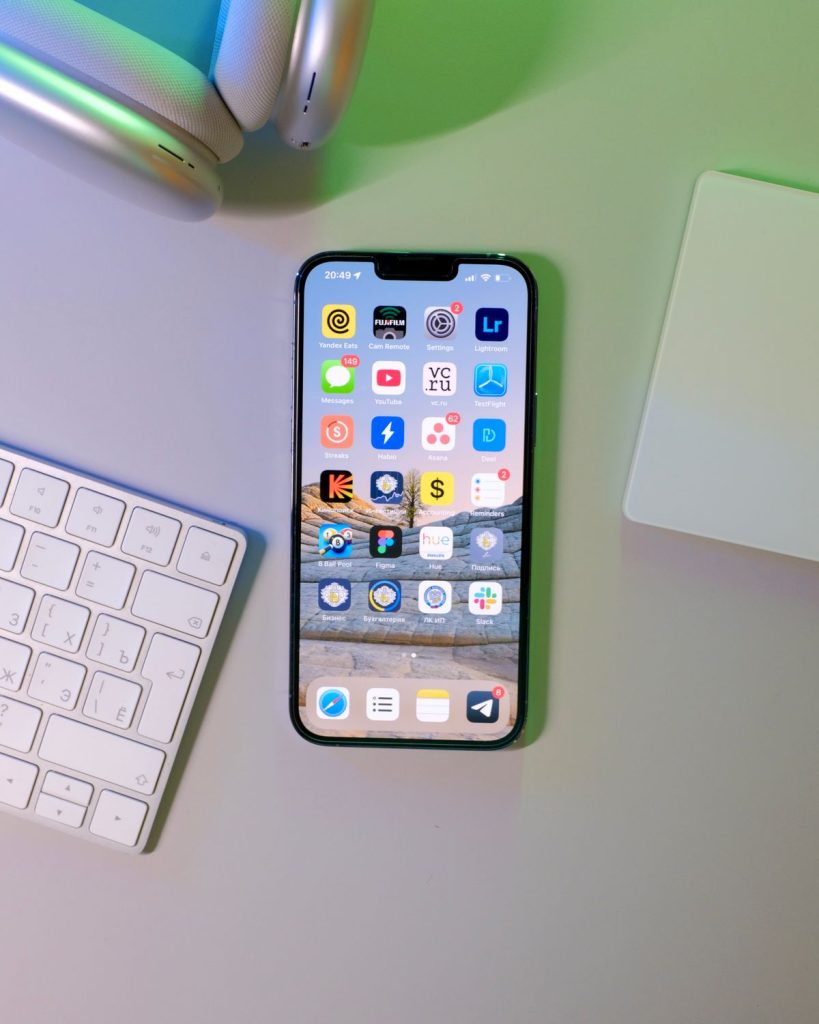
10 Best Smartphones of 2026 – Top Picks for Every Budget
Choosing a new phone in 2026 feels harder than ever. Prices have crept upward, every brand claims to have the best camera, and the spec sheets read like alphabet soup. After sorting through this year’s launches, from Apple’s iPhone 17 lineup to Samsung’s Galaxy S26 Ultra, Google’s Pixel 10 series, and a few surprises, we’ve narrowed the field down to the ten best smartphones of 2026 actually worth your money right now.
Whether you want the absolute best camera, a phone that lasts two days on a charge, a foldable that replaces your tablet, or simply the best value under $500, there is a pick below for you. Every phone on this list is available in the United States, and every price listed is the real US starting price.
Quick answer: The iPhone 17 Pro Max is our pick for the best smartphone of 2026 overall, with the fastest chip and most complete feature set. For Android, the Samsung Galaxy S26 Ultra is the most capable phone ever built, while the $499 Galaxy A56 proves you don’t need to spend $800 for a great phone.
Table of Contents
The 10 Best Smartphones of 2026 at a Glance
| Phone | Best for | Display | Chip | Battery / Charging | Price |
|---|---|---|---|---|---|
| iPhone 17 Pro Max | Best overall | 6.9″ OLED, 120Hz | Apple A19 Pro | All-day+ / fast charge | $1,199 |
| Galaxy S26 Ultra | Best Android flagship | 6.9″ QHD+ AMOLED, 120Hz | Snapdragon 8 Elite Gen 5 | 5,000mAh / 60W | $1,299 |
| Pixel 10 Pro XL | Best AI camera phone | 6.8″ LTPO OLED, 120Hz | Google Tensor G5 | 5,200mAh / 45W | $1,199 |
| iPhone 17 | Best iPhone for most people | 6.3″ OLED, 120Hz | Apple A19 | 30-hr video playback | $799 |
| Pixel 10 | Best value Android | 6.3″ OLED, 120Hz | Google Tensor G5 | All-day / fast charge | $799 |
| OnePlus 15 | Best battery life | 6.78″ AMOLED, 165Hz | Snapdragon 8 Elite Gen 5 | 7,300mAh / 80W | $899 |
| Galaxy Z Fold 7 | Best foldable | 8″ foldable + 6.5″ cover | Snapdragon 8 Elite for Galaxy | 4,400mAh / 25W | $1,999 |
| Xiaomi 17 Ultra | Best camera hardware | 6.9″ LTPO OLED, 120Hz | Snapdragon 8 Elite Gen 5 | 6,000mAh / 90W | ~$1,600 (import) |
| Nothing Phone 3 | Best unique design | 6.67″ AMOLED, 120Hz | Snapdragon 8s Gen 4 | 5,150mAh / 65W | $799 |
| Galaxy A56 | Best budget phone | 6.7″ AMOLED, 120Hz | Exynos 1580 | 5,000mAh / 45W | $499 |
How We Chose These Phones
We didn’t just copy spec sheets to find the best smartphones of 2026. Our shortlist started with every major 2026 release sold in the US, then we filtered for the things that actually matter after the first week of ownership: real-world battery life, camera consistency (not just daylight samples), how long the phone will keep getting software updates, and whether the price makes sense for what you get.
Phones with gimmicks that don’t survive daily use were cut. Phones that are impossible to buy in the US were cut too, with one clearly marked exception for camera enthusiasts. Every claim about specs and pricing below reflects the phone as sold in the United States in 2026. Every phone below earned its place among the best smartphones of 2026 through real-world testing, not spec-sheet comparisons.
1. Apple iPhone 17 Pro Max – Best Overall Smartphone
Buy Here

Price: from $1,199 (256GB) | Why it wins: the most complete phone of 2026.
The iPhone 17 Pro Max is the phone to buy if you simply want the best and don’t want to think about it anymore. Apple’s A19 Pro chip is the fastest silicon in any phone this year, and the difference isn’t subtle. Everything from 4K video editing to console-quality games runs without breaking a sweat, and it does so while sipping power. Battery life is the best Apple has ever shipped in an iPhone, comfortably carrying heavy users through a full day with room to spare.
The camera system is where the Pro Max pulls away from the pack. The triple 48-megapixel setup (main, ultrawide, and a 4x telephoto) is the most consistent point-and-shoot camera we’ve used. It doesn’t win every single lab test against the Galaxy S26 Ultra or the Xiaomi 17 Ultra, but it wins the test that matters: you pull it out, tap the shutter, and the photo looks great, in daylight, at night, and everywhere in between.
Video remains Apple’s unchallenged stronghold. No Android phone in 2026 matches the iPhone’s video quality and stabilization. Planning to put that camera to work on your travels? Don’t miss our guide to the 10 best countries to visit in 2026.
The 6.9-inch 120Hz OLED display is gorgeous, storage now starts at 256GB (with a 2TB option for the first time), and it’s all wrapped in a new cosmic orange finish that actually looks premium rather than gimmicky. At $1,199 it’s expensive, but unlike some $1,200 phones, this one earns it.
- Key specs: 6.9″ 120Hz OLED · Apple A19 Pro · 48MP triple camera with 4x telephoto · 256GB to 2TB storage · iOS 26 · eSIM-only in the US
- Pros: fastest chip of 2026; best video camera on any phone; superb battery life; 256GB base storage
- Cons: pricey; no charger in the box; still eSIM-only in the US
- Who should buy it: anyone who wants the best all-around phone and lives in the Apple ecosystem, or is ready to switch to it.
2. Samsung Galaxy S26 Ultra – Best Android Flagship

Price: from $1,299 | Why it wins: the most versatile phone ever made.
If the iPhone 17 Pro Max is the best phone, the Galaxy S26 Ultra is the most phone. Samsung threw everything at its 2026 Ultra: the Snapdragon 8 Elite Gen 5 (the fastest Android chip available), a 200-megapixel main camera with a brighter f/1.4 aperture, a 50-megapixel 5x periscope zoom, and the built-in S Pen that no competitor can match. The 6.9-inch QHD+ AMOLED display now includes a Privacy Display feature that narrows viewing angles at the touch of a button, genuinely useful on crowded trains and in coffee shops.
That 200MP camera deserves a closer look. In good light it captures an almost absurd level of detail, and the 5x periscope is the best long-range zoom on any mainstream phone. Samsung’s image processing has matured too. Colors are still vivid, but the over-sharpened, artificial look of older Galaxies is mostly gone. The 5,000mAh battery now charges at 60W wired, a meaningful jump that gets you back to half charge in the time it takes to drink a coffee.
Then there’s longevity: seven years of software updates means this $1,299 phone could plausibly be your daily driver into the 2030s. One UI 8.5 is cleaner than Samsung software used to be, and Galaxy AI features (live translation, generative photo editing, note summaries) are genuinely useful rather than demo-ware.
- Key specs: 6.9″ QHD+ 120Hz AMOLED with Privacy Display · Snapdragon 8 Elite Gen 5 · 12GB RAM · 200MP main + 50MP 5x periscope + 50MP ultrawide · 5,000mAh, 60W wired / 25W wireless · S Pen · IP68 · 7 years of updates
- Pros: unmatched feature set; best zoom camera; S Pen; 7 years of updates; faster 60W charging
- Cons: the priciest mainstream phone here; large and heavy; some AI features need a Samsung account
- Who should buy it: Android users who want everything (the best screen, the best zoom, a stylus) and plan to keep their phone for years.
3. Google Pixel 10 Pro XL – Best AI Camera Phone

Price: from $1,199 | Why it wins: the smartest camera and the cleanest software.
The Pixel 10 Pro XL doesn’t win spec-sheet battles. On paper, the Tensor G5 can’t match the Snapdragon 8 Elite Gen 5 in raw benchmarks. But Google’s bet is that the chip’s real job is AI, and on that front the Pixel is in a league of its own. Magic Editor, Best Take, and the new on-device Gemini features genuinely change how you use a phone: you can reframe a badly-composed photo after the fact, remove photobombers with one tap, and have calls screened and summarized automatically.
The camera hardware is excellent in its own right: a 50MP main sensor, a 48MP ultrawide, and a 48MP 5x telephoto, plus a 42MP front camera that takes the best selfies of any phone on this list. But it’s Google’s computational photography that seals it. Night Sight still produces the most natural-looking low-light photos, and skin tones are rendered more accurately than on Samsung or Apple.
You also get a 6.8-inch LTPO OLED display, a 5,200mAh battery with 45W wired and 25W Qi2.2 magnetic wireless charging, and seven years of updates on clean, bloat-free Android 16. If you value a phone that feels intelligent rather than just powerful, this is it.
- Key specs: 6.8″ LTPO 120Hz OLED · Google Tensor G5 · 16GB RAM · 50MP + 48MP + 48MP (5x tele) · 42MP front · 5,200mAh, 45W / 25W Qi2.2 · 7 years of updates
- Pros: best AI features; superb still photography; clean software; excellent selfies
- Cons: Tensor G5 lags rivals in gaming performance; charging slower than OnePlus and Samsung
- Who should buy it: photography lovers and anyone who wants the smartest, simplest Android experience.
4. Apple iPhone 17 – Best iPhone for Most People

Price: from $799 (256GB) | Why it wins: flagship experience without the flagship price.
Here’s the open secret of the iPhone lineup: most people should buy the regular iPhone 17, not the Pro. For $400 less than the Pro Max, you get the same A19 chip architecture, the same gorgeous 6.3-inch 120Hz OLED display Apple finally brought to the non-Pro model, and a dual 48MP Fusion camera that handles 95% of shooting situations brilliantly.
The upgrades over last year’s model are meaningful. The screen finally runs at 120Hz, which makes everything feel twice as smooth. The 18MP Center Stage front camera is a genuine step up for selfies and video calls, automatically keeping you framed as you move. Apple rates video playback at 30 hours, the best battery life ever in a standard iPhone, and storage now starts at 256GB, so the base model no longer feels compromised.
Yes, you give up the dedicated telephoto lens, the Pro’s extra GPU headroom, and the 6.9-inch screen. For most buyers, none of that is worth $400. The iPhone 17 is the rational person’s pick among the best smartphones of 2026, and it’s the one we’d recommend to family members without hesitation.
- Key specs: 6.3″ 120Hz OLED · Apple A19 · 48MP dual Fusion camera · 18MP Center Stage front camera · 256GB base storage · 30-hr video playback · iOS 26
- Pros: 120Hz display at last; great battery; 256GB standard; $400 cheaper than Pro Max
- Cons: no telephoto lens; aluminum instead of titanium; eSIM-only in the US
- Who should buy it: anyone who wants an iPhone and doesn’t shoot professional video or zoom photos daily.
5. Google Pixel 10 – Best Value Android Phone

Price: from $799 | Why it wins: Pro-level smarts for $400 less than the Pro XL.
The standard Pixel 10 is the Android equivalent of the iPhone 17’s value proposition, and arguably an even better deal. It runs the same Tensor G5 chip as the $1,199 Pro XL, gets the same seven years of software updates, and inherits the same computational photography magic. You’re giving up the larger display, some RAM, and the Pro’s upgraded ultrawide and telephoto hardware, but the core experience (the AI features, the camera consistency, the clean software) is intact.
For $799, that’s remarkable. The 6.3-inch 120Hz OLED display is bright and sharp, the triple rear camera covers every focal length most people need, and features like Call Screen, Hold for Me, and Magic Editor work exactly as they do on the Pro. This is also the phone we’d hand to someone switching from iPhone to Android: it’s the least intimidating, most helpful Android phone you can buy.
The main compromise is raw performance. The Tensor G5 won’t match Snapdragon-powered rivals in demanding games. But for photography, communication, and everyday speed, it’s more than enough, and the seven-year update promise means it will stay fresh far longer than most $799 phones.
- Key specs: 6.3″ 120Hz OLED · Google Tensor G5 · triple rear camera · 7 years of updates · Android 16
- Pros: same chip and AI as the Pro XL; 7 years of updates; great camera for the price
- Cons: not a gaming powerhouse; charging speeds are mid-pack
- Who should buy it: anyone who wants a smart, dependable Android phone without paying four figures.
6. OnePlus 15 – Best Battery Life

Price: from $899.99 | Why it wins: a battery that embarrasses every other flagship.
The OnePlus 15’s headline number is 7,300mAh, the largest battery in any mainstream flagship sold in the US, by a wide margin. In real use, that translates to two comfortable days for most people, and even heavy users will struggle to kill it before bedtime. When you finally do need a charge, 80W wired charging (on the US model) refills it at a pace that makes overnight charging feel quaint.
But the OnePlus 15 isn’t a one-trick pony. The Snapdragon 8 Elite Gen 5 delivers true flagship performance, the 6.78-inch AMOLED display runs at up to 165Hz in gaming mode for the smoothest scrolling on this list, and the triple 50MP camera system (main, ultrawide, and 3x periscope) is genuinely good, not just “good for the price.” OnePlus’s image processing has improved dramatically, and daylight photos now stand shoulder-to-shoulder with phones costing $300 more.
At $899.99, it undercuts the Galaxy S26 Ultra by $400 while matching it on chip, display smoothness, and battery, and destroying it on endurance. The trade-offs: no S Pen, a less prestigious brand name in the US, and carrier availability that isn’t as universal as Samsung or Apple. If you can live with that, the value here is extraordinary.
- Key specs: 6.78″ AMOLED, 120Hz (165Hz gaming) · Snapdragon 8 Elite Gen 5 · 12GB RAM · triple 50MP cameras (3x periscope) · 7,300mAh, 80W wired · IP68/IP69K · 6 years of updates · OxygenOS 16
- Pros: phenomenal two-day battery; 80W charging; flagship chip; $400 less than Galaxy Ultra
- Cons: weaker US carrier presence; ultrawide camera trails Samsung; no stylus
- Who should buy it: anyone who’s tired of battery anxiety and wants flagship speed for under $900.
7. Samsung Galaxy Z Fold 7 – Best Foldable Phone

Price: from $1,999.99 | Why it wins: a phone and a tablet in your pocket, finally done right.
Foldables have spent years feeling like expensive compromises. The Galaxy Z Fold 7 is the first one that feels like the future instead of a beta test. At just 4.2mm thick when unfolded, it’s impossibly thin, thinner than many regular phones, and the redesigned hinge leaves virtually no gap when closed. The 8-inch inner display is a genuine tablet replacement for reading, multitasking, and video, while the 6.5-inch cover screen is now wide enough to use comfortably one-handed when closed.
Samsung didn’t skimp on the internals either: the Snapdragon 8 Elite for Galaxy chip, a 200MP main camera borrowed from the Ultra playbook, and seven years of updates. Multitasking is where the Fold justifies its price. Running three apps side by side, dragging and dropping between them, and using the inner screen as a miniature laptop with Samsung DeX feels like science fiction made practical.
Let’s be honest about the price: $1,999.99 is a lot of money, and the 4,400mAh battery is merely good, not great, given the two screens it feeds. The inner display still won’t survive a grain of sand the way glass will. But if you want the most futuristic phone you can buy in 2026, and you’d actually use the big screen, nothing else comes close.
- Key specs: 8″ foldable AMOLED + 6.5″ cover display · Snapdragon 8 Elite for Galaxy · 200MP main camera · 4,400mAh, 25W charging · 4.2mm unfolded · IP48 · 7 years of updates
- Pros: incredible thinness; true tablet-class multitasking; flagship cameras on a foldable
- Cons: very expensive; battery life is just okay; inner screen needs careful handling
- Who should buy it: productivity obsessives and early adopters who’ll actually use the 8-inch canvas daily.
8. Xiaomi 17 Ultra – Best Camera Hardware

Price: ~$1,600 (import only, not officially sold in the US) | Why it wins: the most serious camera ever put in a phone.
The Xiaomi 17 Ultra is the phone camera nerds dream about. Its headline feature is a genuine mechanical zoom: the 200MP periscope telephoto physically moves between 75mm and 100mm, like a real camera lens, instead of just cropping digitally. Paired with a massive 1-inch 50MP main sensor co-engineered with Leica, this is the closest any phone has come to replacing a dedicated camera. It even topped DXOMARK’s rankings with a score of 166.
Everything else is flagship-grade too: Snapdragon 8 Elite Gen 5, 16GB of RAM, a 6.9-inch LTPO OLED display, a 6,000mAh battery with 90W wired and 50W wireless charging, and IP68 water resistance. The Leica-tuned color profiles produce photos with a character that computational-heavy rivals can’t replicate. Rich, filmic, and distinctive.
The catch, and it’s a big one for our US readers: Xiaomi doesn’t officially sell phones in the United States. You’ll need to import one (around $1,600), which means no US warranty, potential carrier band quirks, and no trade-in deals. We’ve included it because the camera achievement is too significant to ignore, but go in with your eyes open. For everyone else, the Galaxy S26 Ultra’s zoom and the iPhone’s consistency are the safer bets.
- Key specs: 6.9″ LTPO 120Hz OLED · Snapdragon 8 Elite Gen 5 · 16GB RAM · 50MP 1″ main + 200MP periscope (mechanical 75-100mm zoom) + 50MP ultrawide · 6,000mAh, 90W / 50W · HyperOS 3 · IP68 · DXOMARK 166
- Pros: best camera hardware of 2026; real mechanical zoom; Leica color science; huge battery
- Cons: not officially sold in the US; no US warranty; import price premium
- Who should buy it: camera enthusiasts willing to import; everyone else should get the Galaxy S26 Ultra.
9. Nothing Phone 3 – Best Unique Design

Price: from $799 (often on sale around $599) | Why it wins: the only phone here with a personality.
Every phone on this list except one is a glass slab. The Nothing Phone 3 is the exception, and that’s exactly the point. The transparent back and the Glyph Matrix light display (a dot-matrix-style LED panel that shows notifications, timers, and playful animations) make it the most distinctive phone of 2026. You’ll notice it across a room; people will ask about it.
But the Phone 3 isn’t just a pretty face. The Snapdragon 8s Gen 4 is a genuine upper-midrange performer, the triple 50MP camera system includes a 3x periscope telephoto (rare at this price), and the 5,150mAh battery with 65W wired charging outlasts and out-charges the Pixel 10. Nothing OS is one of the cleanest, most thoughtful Android skins available, with a strict no-bloatware philosophy and genuinely useful widgets.
At its $799 list price it’s a fair deal; when it drops to $499 to $599 on sale, which it regularly does, it’s one of the best values in phones, period. Five years of OS updates and seven years of security patches keep it viable long-term. If you’re bored of phones that all look the same, this is your answer.
- Key specs: 6.67″ 120Hz AMOLED · Snapdragon 8s Gen 4 · triple 50MP cameras (3x periscope) · 50MP front · 5,150mAh, 65W / 15W · IP68 · Glyph Matrix · 5 yrs OS + 7 yrs security updates
- Pros: head-turning design; periscope zoom under $800; clean software; frequent big discounts
- Cons: chip a tier below true flagships; US carrier compatibility check recommended
- Who should buy it: anyone who wants a phone with character, and bargain hunters who catch it on sale.
10. Samsung Galaxy A56 – Best Budget Phone

Price: from $499 | Why it wins: flagship manners at half the flagship price.
The Galaxy A56 is proof that you no longer need to spend $800 to get a great phone. Its 6.7-inch 120Hz AMOLED display is bright, smooth, and nearly indistinguishable from pricier panels in normal use. The 50MP main camera takes genuinely good photos in daylight, the 5,000mAh battery sails through a full day, and 45W charging is faster than what the $799 iPhone 17 manages.
What really sets the A56 apart in the budget class is Samsung’s update promise: six years of software updates on a $499 phone is unheard of and means this phone will stay secure and current until 2032. You also get IP67 water resistance, Samsung’s mature One UI software, and the Knox security platform, features that budget phones used to skip.
Compromises? The Exynos 1580 chip is fine for everyday use but won’t impress mobile gamers, the ultrawide and macro cameras are filler, and there’s no wireless charging. None of that matters much at $499. If your budget is firm, stop looking. Among the best smartphones of 2026 under $500, this is the one.
- Key specs: 6.7″ 120Hz AMOLED · Exynos 1580 · 50MP main camera · 5,000mAh, 45W charging · IP67 · 6 years of updates
- Pros: superb display for the price; 6 years of updates; IP67; all-day battery
- Cons: midrange chip; weak secondary cameras; no wireless charging
- Who should buy it: anyone with a firm $500 budget who still wants a phone that feels premium.
How to Choose the Best Smartphone in 2026
Narrowed it down but still stuck? Here’s how to choose among the best smartphones of 2026.
Start with your ecosystem. If you own a Mac, an iPad, or an Apple Watch, get an iPhone. The integration is worth more than any spec advantage. None of the best smartphones of 2026 from a rival platform can replicate it. If you’re on Windows with Google services everywhere, an Android phone (Pixel or Galaxy) will feel like home. Switching ecosystems is possible but costs you time and accessory compatibility.
Decide what “best” means to you. Among the best smartphones of 2026, camera obsessives should weigh the iPhone 17 Pro Max (best video, most consistent) against the Galaxy S26 Ultra (best zoom) and the Pixel 10 Pro XL (smartest stills).
Battery worriers should look at the OnePlus 15 first and ask questions later. Gamers want the fastest chip and the highest refresh rate. Snapdragon 8 Elite Gen 5 phones like the S26 Ultra and OnePlus 15.
Don’t overbuy storage. With 256GB now standard on the best smartphones of 2026, most people will never fill it, especially with cloud photo backup. Only pay for 512GB or more if you shoot lots of 4K video or keep your entire media library offline.
Think about update longevity. The best smartphones of 2026 get seven years of updates (Samsung S26 series, Pixel 10 series) versus five or six elsewhere, which is a real money-saver: it turns a $1,200 phone into a $170-per-year phone if you keep it the full term. If you upgrade every two years anyway, ignore this entirely.
Buy at the right time. The best smartphones of 2026 almost always get $100 to $200 discounts within three to four months of launch, and previous-generation models become steals. The Nothing Phone 3 in particular swings wildly in price, so never pay full retail if you can wait for a sale.
The Final Pick
If we had to recommend just one phone to the most people, it would be the iPhone 17 Pro Max. It’s the most complete of the best smartphones of 2026, with the fastest chip, the most reliable camera, and the best battery life Apple has ever made. Android loyalists should get the Galaxy S26 Ultra without hesitation; it’s the most capable phone ever built.
And if you’d rather keep $400 to $700 in your pocket, the iPhone 17, Pixel 10, and Galaxy A56 prove that when it comes to the best smartphones of 2026, the smart money isn’t always on the most expensive phone. A great camera deserves great subjects, so see our roundup of the 10 Best Countries to Visit in 2026 for travel inspiration.
Disclosure: DixTrick is reader-supported. When you buy through links on our site, we may earn a commission. It never affects our rankings or recommendations.
Frequently Asked Questions
What is the best smartphone of 2026 overall?
The iPhone 17 Pro Max is our pick for the best overall smartphone of 2026. It combines the fastest chip (Apple A19 Pro), the most consistent camera system, and excellent battery life. The Samsung Galaxy S26 Ultra is the best choice for Android users.
What is the best budget smartphone in 2026?
The Samsung Galaxy A56 at $499 is the best budget phone of 2026. It offers a 6.7-inch 120Hz AMOLED display, a solid 50MP camera, all-day battery life, and an exceptional six years of software updates, unmatched at this price.
Which phone has the best camera in 2026?
It depends on what you shoot. The Xiaomi 17 Ultra has the best camera hardware (1-inch sensor, mechanical zoom lens, DXOMARK score of 166), the iPhone 17 Pro Max has the most consistent point-and-shoot camera and the best video, and the Pixel 10 Pro XL takes the smartest AI-assisted stills. Among phones officially sold in the US, the iPhone 17 Pro Max is our top camera pick.
Should I buy the iPhone 17 or iPhone 17 Pro Max?
Most people should buy the $799 iPhone 17. You get the same 120Hz OLED display technology, the same chip architecture, and an excellent dual 48MP camera for $400 less. Choose the Pro Max only if you need the telephoto zoom lens, the absolute fastest chip, the larger 6.9-inch screen, or professional-grade video features.
How much should I spend on a phone in 2026?
The sweet spot is $499 to $899. The Galaxy A56 ($499), Pixel 10 ($799), iPhone 17 ($799), and Galaxy A56 prove that the smart money in 2026 isn’t always on the most expensive phone. Only spend $1,199+ if you specifically want the best camera zoom, the fastest performance, or a foldable. Otherwise you’re paying for bragging rights.
Pingback: 10 Best Places to Visit in the USA - 2026 Guide
Pingback: 10 Best Countries to Visit in 2026 - Travel Guide
Pingback: 10 Best Flea Treatment for Dogs That Work in 2026 - DixTrick
Pingback: 10 Best Walking Shoes for All Day Comfort 2026 - DixTrick
Pingback: 10 Best Hiking Shoes for Trails and Comfort 2026 - DixTrick
Pingback: 10 Best Running Shoes for Comfort and Speed 2026 - DixTrick
Pingback: 10 Best Fitness Tracker Watches for Active 2026 - DixTrick
Pingback: 10 Best Running Shoes for Women to Buy in 2026 - DixTrick
Pingback: 10 Best Shoes for Standing All Day 2026
Pingback: 10 Best Garmin Watches for Every Athlete in 2026 - DixTrick
Pingback: 10 Best Headlamps for Night Trails and Camp 2026 - DixTrick
Pingback: 10 Best Camping Stoves for Outdoor Cooking 2026 - DixTrick
Pingback: 10 Best Trekking Poles for Hiking to Buy in 2026 - DixTrick
Pingback: 10 Best Camping Gear Essentials to Buy in 2026 - DixTrick
Pingback: 10 Best Watches for Every Style and Budget 2026 - DixTrick
Pingback: 10 Best Watches for Women in 2026 - Lovely Picks - DixTrick
Pingback: 10 Best Flea Treatment for Cats to Try in 2026
Pingback: 10 Best Running Shoes for Men to Run in 2026 Fast
Pingback: 10 Best Rice Cooker for Perfect Fluffy Rice 2026 - DixTrick
Pingback: 10 Best Shoes for Nurses on Their Feet All Day
Pingback: 10 Best Nike Running Shoes for Every Runner 2026
Pingback: 10 Best Trail Running Shoes for 2026 Adventures
Pingback: 10 Best Heart Rate Monitor Watches to Buy in 2026 - DixTrick
Pingback: 10 Best Basketball Shoes for Court Play in 2026
Pingback: 10 Best Walking Shoes for Men - Top Comfort 2026
Pingback: 10 Best Walking Shoes for Women to Try in 2026
Pingback: 10 best apple watch sleep tracker picks for 2026
Pingback: 10 Best Rain Jackets for Men to Stay Dry in 2026 - DixTrick
Pingback: 10 Best Nonstick Cookware Sets for Every Kitchen 2026
Pingback: 10 Best Smart Home Devices for Easy Automation - 2026