
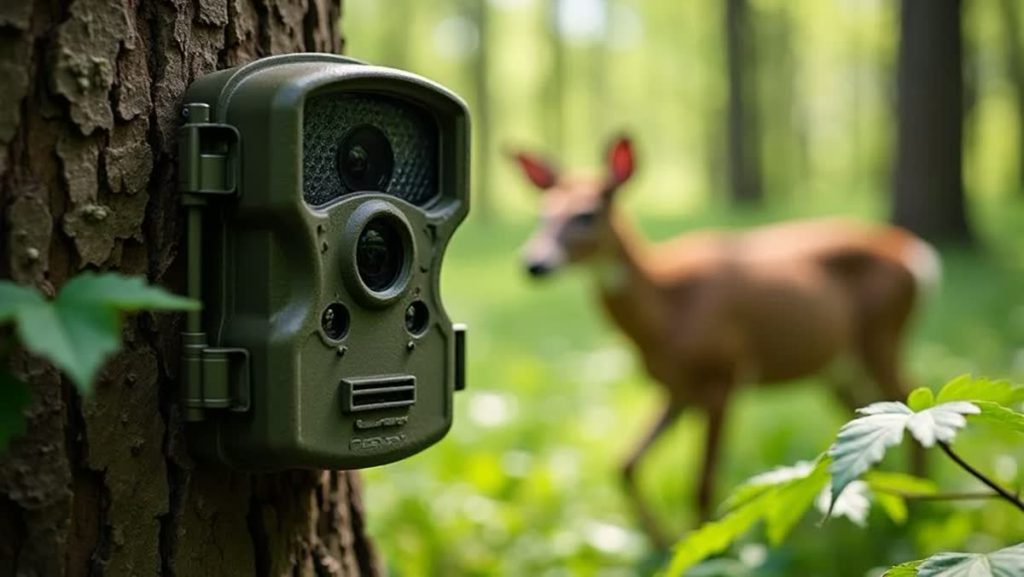
10 Best Trail Cameras for Wildlife Watching 2026
Introduction
There is a special thrill in discovering what walked past your tree stand while you were asleep. Choosing the best trail camera turns that curiosity into crisp photos and video clips waiting on your phone each morning, whether you scout whitetails, watch a backyard fox family, or keep an eye on a remote cabin. Modern trail cameras have grown far beyond blurry snapshots. They now pack high resolution sensors, invisible night vision, cellular connections, and apps that make setup feel simple.
This guide compares ten entries built around the best trail camera options for wildlife watching in 2026, from affordable GardePro models to cellular powerhouses from Tactacam, Moultrie, and SPYPOINT. Because the sheet we worked from mixed real model names with a few generic labels, every section says exactly what we could verify and flags what we could not. No invented specs, no fake prices, and no pretending a vague listing is a specific camera. That honesty is the whole point, so you buy the right camera with your eyes open.
Table of Contents
How We Chose
We started by verifying every entry through current manufacturer and retail listings, then judged each camera on the things that actually matter in the field. Detection speed matters most, because a deer that crosses the frame in half a second is gone before a slow camera wakes up. Night vision quality comes next, since most interesting wildlife moves after dark. We also weighed weather sealing, battery life, image resolution, and how easy each camera is to set up and retrieve photos from.
Cellular models earn extra credit for sending photos straight to your phone, though they need a data plan to do it. Non-cellular cameras still make excellent picks when you are happy to swap an SD card on your weekend visits. If your priority is watching a driveway or porch around the clock rather than scouting game sign, our guide to the best outdoor security cameras covers options built for that job. For wildlife watching, though, a dedicated trail camera remains the best trail camera choice, and here is what made the cut.
1. GardePro A3S: Best Trail Camera for Crisp Night Photos
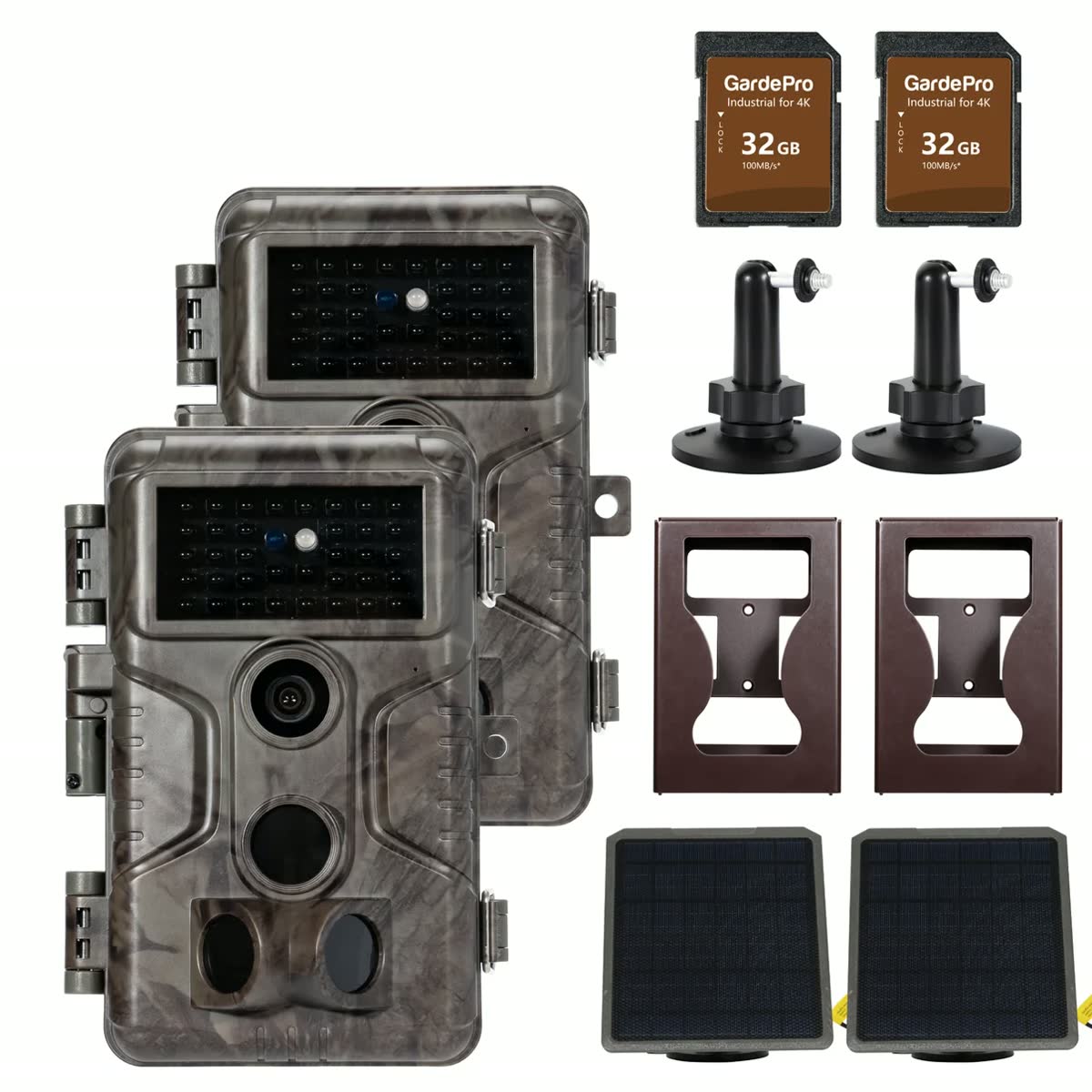
The GardePro A3S is a real, well documented model and one of the strongest value picks in this roundup. It captures 64MP still photos and 1296P HD video, which is more than enough detail to count points on a buck or read the markings on a visiting fox. Its 0.1 second trigger speed reacts fast enough to catch animals mid stride, and three PIR sensors widen the detection zone so fewer visitors slip past the edges of the frame.
Night performance is where the A3S earns its reputation. It uses a Sony Starvis sensor paired with 940nm no-glow infrared LEDs, reaching about 100 feet while staying invisible to both animals and people. The camera is IP66 rated against dust and heavy rain, runs on eight AA batteries, and accepts SD cards up to 512GB, so it can sit in the woods for long stretches between visits.
Keep in mind that the A3S is strictly non-cellular and non-WiFi, so photos live on the SD card until you collect them. Batteries and the memory card are sold separately, which adds a little to the starting cost. If you want a dependable, affordable camera for a fixed site and you do not mind walking out to grab the card, the A3S is hard to beat as the best trail camera for straightforward wildlife watching.
2. GardePro Advanced: Best Trail Camera for Feature Rich Scouting
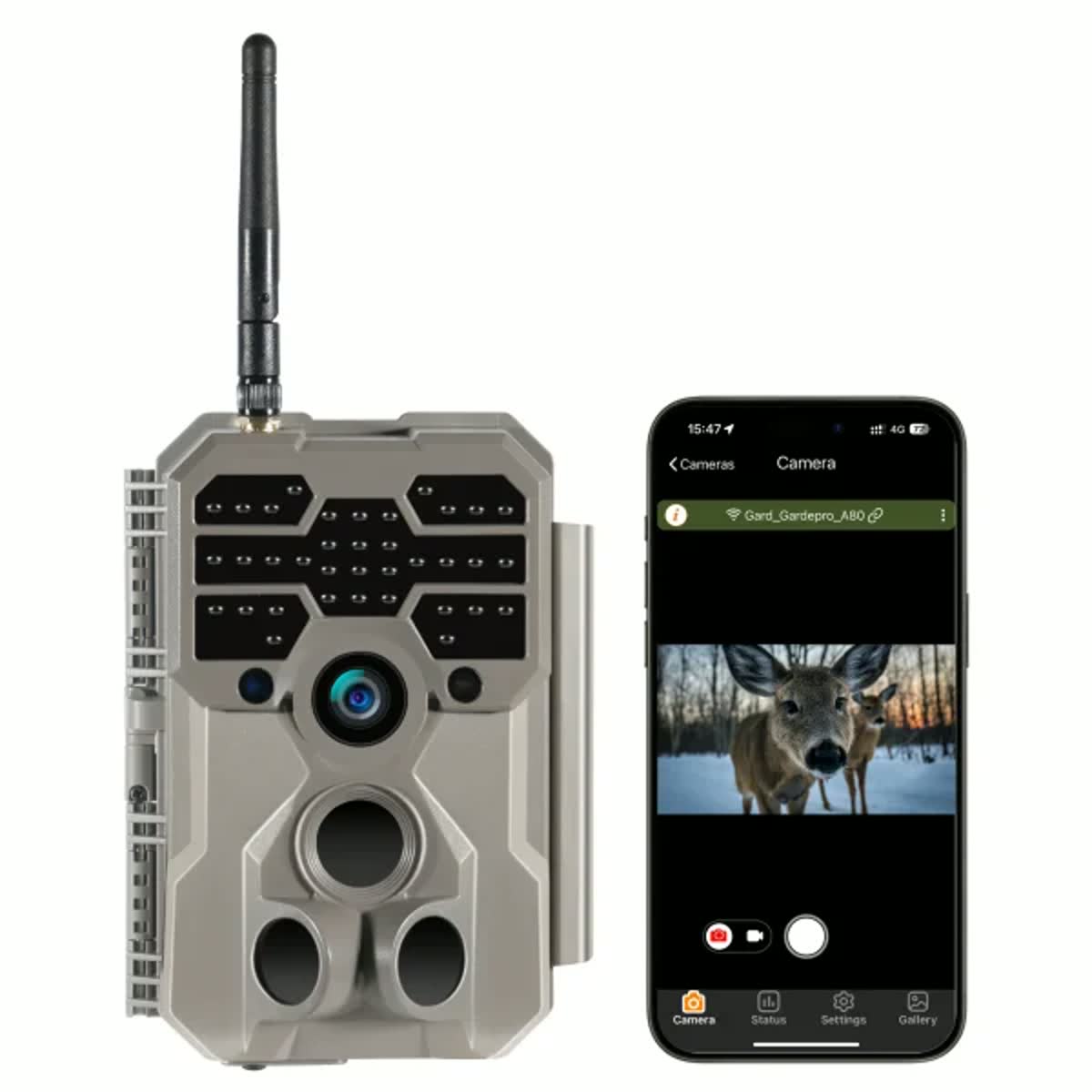
A quick honesty note first. The sheet lists this entry only as GardePro Advanced Trail Camera, with no specific model number, and GardePro does not sell a model called Advanced. We therefore treat this slot as the brand’s advanced tier rather than one verified camera, and everything below describes features confirmed across GardePro’s higher end models.
GardePro’s advanced models pair strong imaging with genuinely useful field features. Expect no-glow infrared night vision, fast triggers around a tenth of a second, IP66 weather sealing, and high resolution stills and video. Many models in this tier support the GardePro Mobile app for aiming and settings, accept solar panels for extended deployments, and handle large SD cards for months of captures.
Who should consider this tier? Anyone who wants more than a basic motion triggered box but is not ready for cellular data plans. You get refined night vision and smarter power options while keeping the simple SD card workflow. Just confirm the exact model number before you buy, since features vary across the lineup, and you will land a strong best trail camera candidate at a fair price.
3. GardePro Bluetooth: Best Trail Camera for App Based Setup
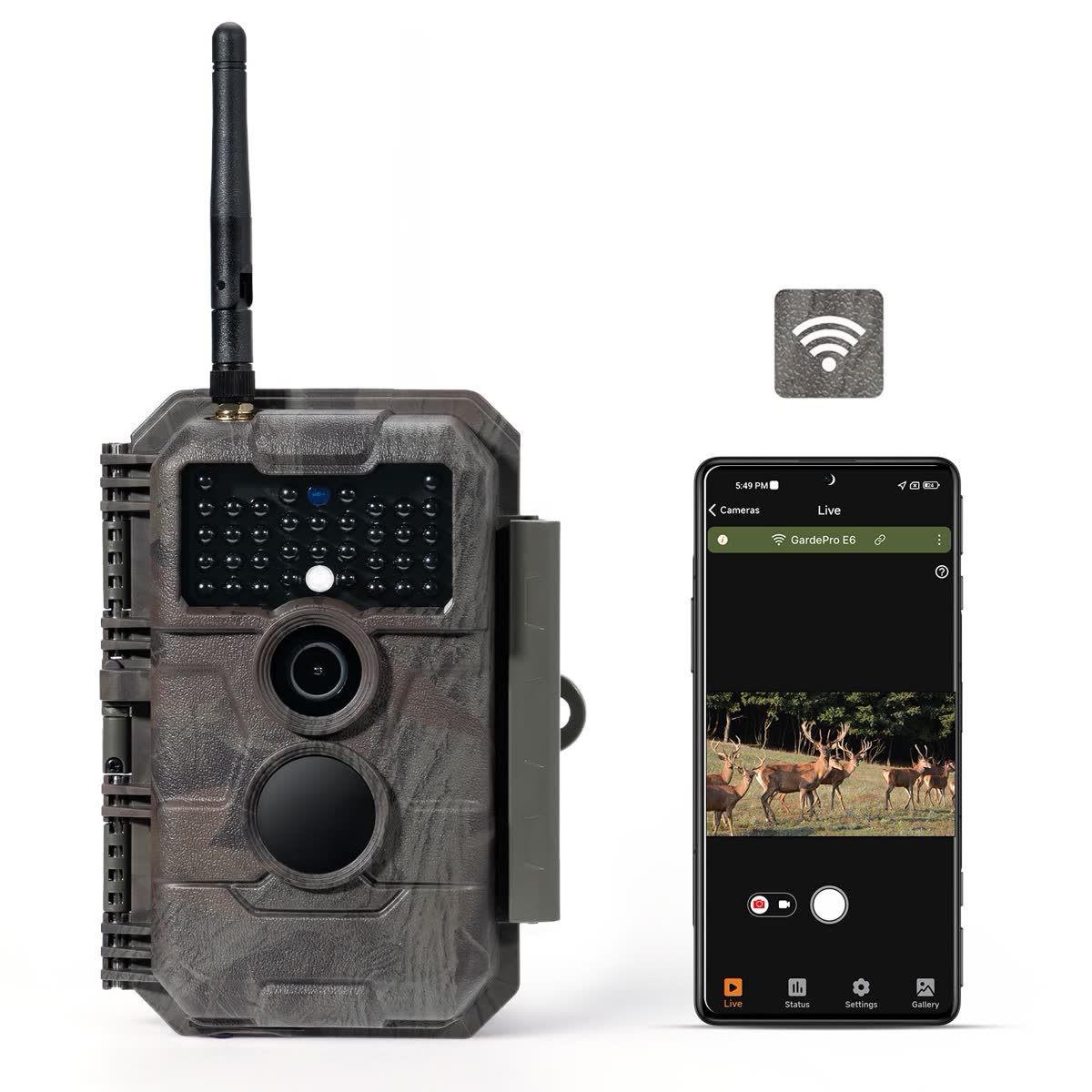
Another flag for transparency. The sheet lists GardePro Bluetooth Trail Camera without a model number, and no GardePro camera uses Bluetooth as its headline feature. What does exist, confirmed through GardePro’s own pages and listings, is a family of WiFi models that use ultra low power Bluetooth for camera discovery, then switch to WiFi for previews and file transfers through the GardePro Mobile app.
Models like the E6, the E8 2.0, and the E9PMB work this way. You pair your phone over Bluetooth, then browse photos, adjust settings, and download clips over WiFi without touching the camera or pulling the SD card. The E8 2.0 even offers 4K video, 64MP stills, dual antennas, and a WiFi range of up to 165 feet in open conditions, which makes aiming the camera from a distance genuinely practical.
This approach suits anyone who checks cameras often but hates disturbing the site. You can stand well back, connect from your phone, and leave the area undisturbed. There is no monthly fee, since the connection is local rather than cellular. Treat the sheet label as shorthand for GardePro’s Bluetooth enabled WiFi line, and you are looking at one of the most convenient ways to run a best trail camera without a data plan.
4. Generic Waterproof Trail Camera: Best Trail Camera Buying Basics
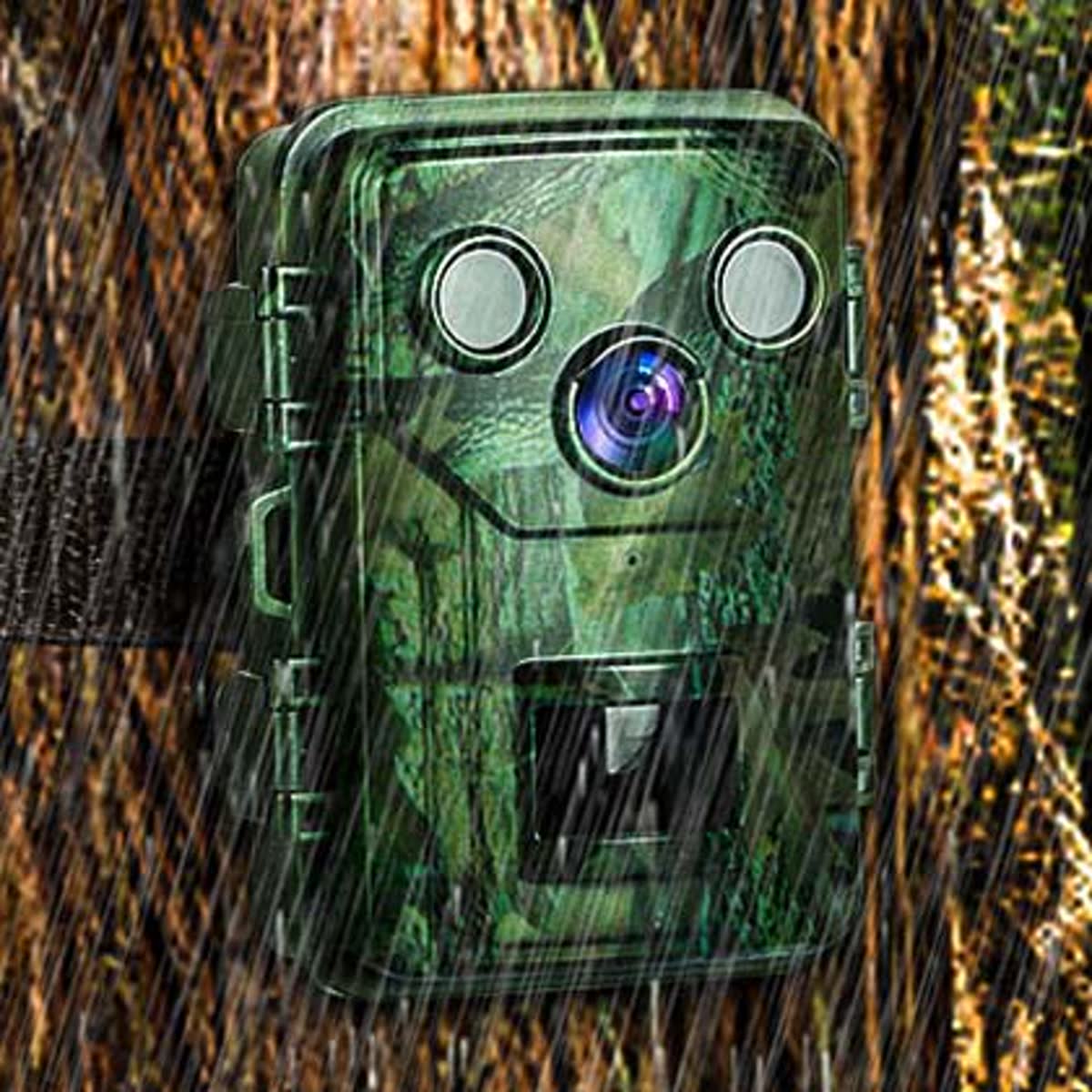
This entry is exactly what the name says, a generic waterproof trail camera with no verifiable brand or model, so we will not invent one. Instead, use this section as your buying checklist, because weather sealing is one of the most misunderstood specs on any best trail camera shortlist.
Look for an IP rating and know what it means. IP65 handles rain and dust, IP66 survives powerful water jets, and IP67 can endure temporary submersion. A good seal also covers the battery door, the SD card slot, and the lens gasket, which are the places cheap cameras leak first. Sealed buttons, a snug mounting strap, and a downward tilted lens help rain roll off instead of pooling.
When you see an unbranded waterproof trail camera online, check that the listing names a real IP rating rather than just saying waterproof, read recent buyer photos for signs of fogging, and confirm the warranty terms before ordering. A verified model from a known brand with a stated IP66 or IP67 rating is almost always a safer bet than a mystery camera with a bold claim and no paperwork.
5. TACTACAM Cellular: Best Trail Camera for Remote Phone Alerts
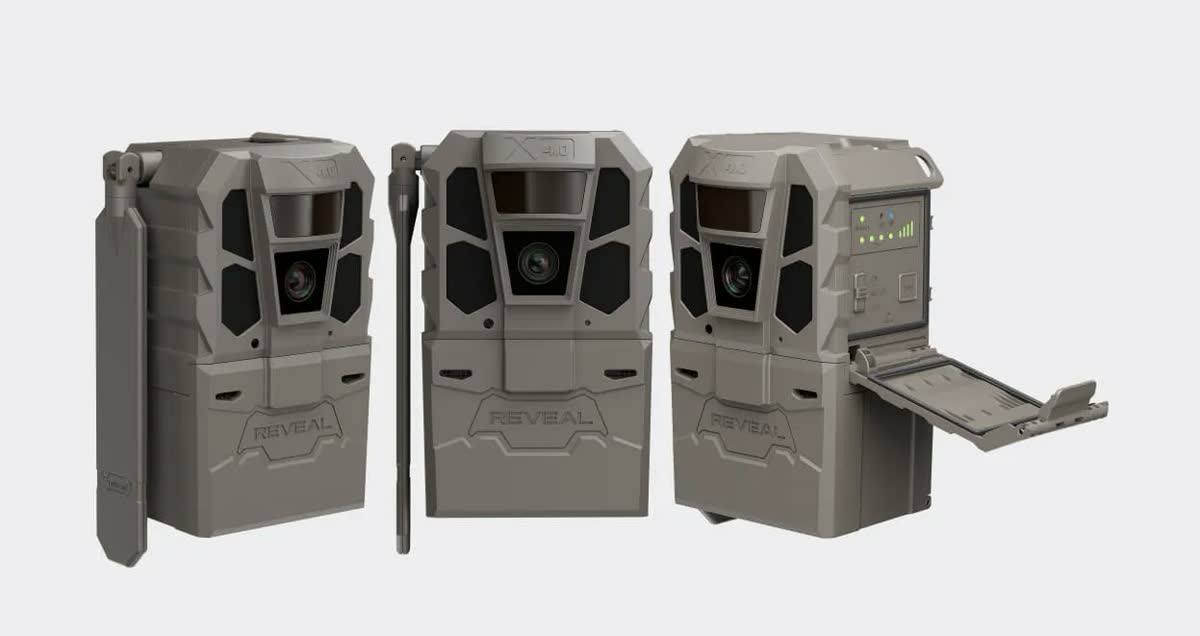
Transparency again. The sheet lists TACTACAM Cellular Trail Camera as a generic label, and Tactacam’s cellular line is the REVEAL family, which also appears as a dedicated entry later in this guide. Rather than invent a distinct model, this section covers what Tactacam’s cellular cameras offer as a group, while the later entry dives into specific REVEAL models.
Tactacam built its reputation on cameras that connect automatically to the strongest available carrier, so you do not fiddle with SIM cards in the field. Once linked to your account, the camera sends captured photos to your phone through the REVEAL app, with on demand HD photo requests on supported models. Plans are tiered by monthly photo volume, and features like built-in GPS help you track which camera sits where on a large property.
The cellular route makes sense when your cameras sit hours away or in spots you rarely visit. You scout from your couch, spot patterns in real time, and only drive out when the pictures tell you something is happening. Just budget for the data plan and confirm coverage where you hunt. For remote scouting, a cellular camera remains the best trail camera format for staying connected.
6. KJK Trail Camera: Best Trail Camera Budget Brand to Watch
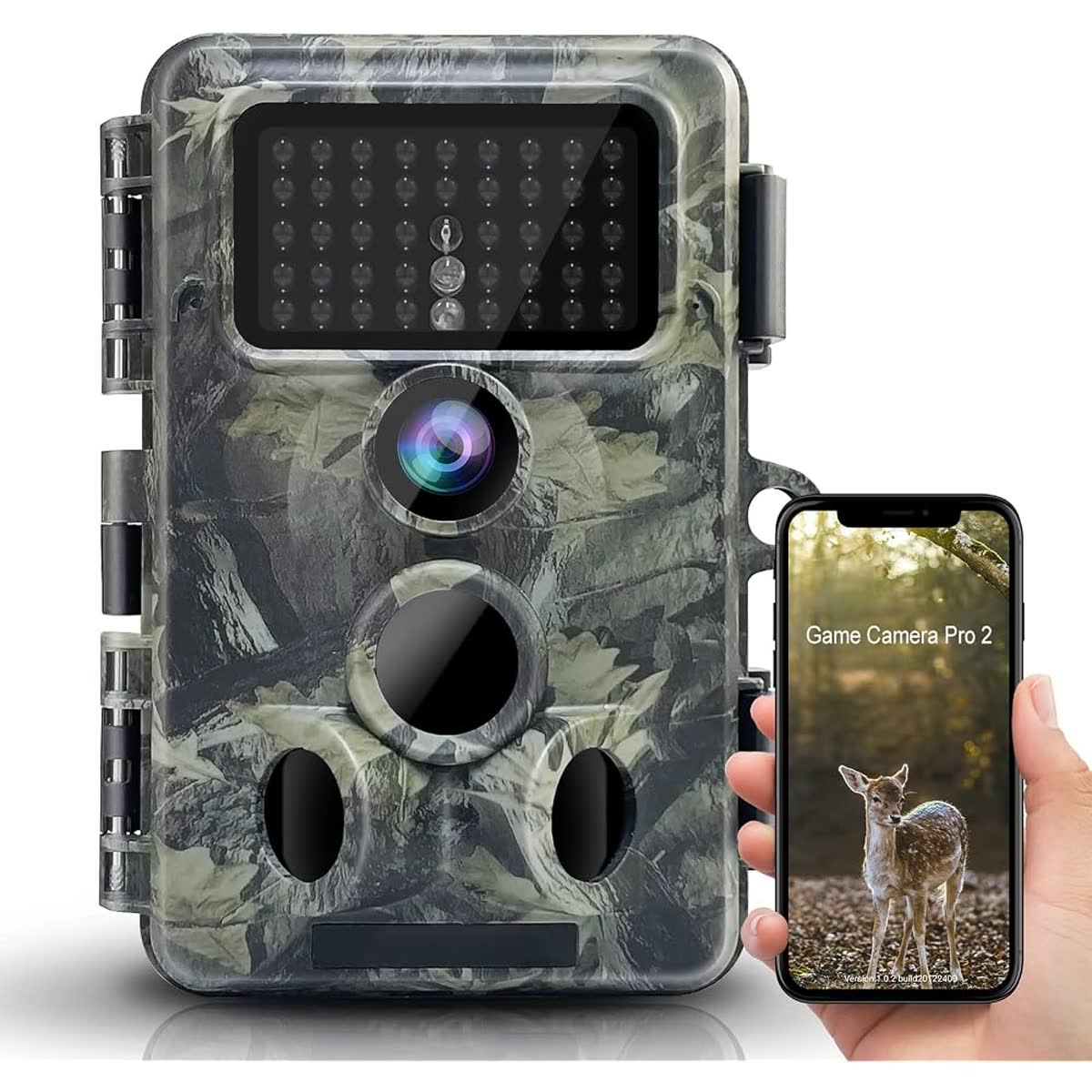
KJK is a lesser known budget brand, and we could not find an official manufacturer site, so treat it as an obscure marketplace label rather than a household name. That said, KJK trail cameras are real products sold through online marketplaces, with manuals and multiple models on record, including the KJK201 and the KJK230.
Marketplace listings credit models like the KJK201 with 36MP stills, 2.7K video, a 0.1 second trigger, IP66 sealing, and night vision reaching around 70 feet. The KJK230 is listed with bolder claims, including 64MP stills, 4K video, a 0.05 second trigger, and IP67 sealing. Because these figures come from third party listings rather than a manufacturer spec sheet, take them as marketing claims and verify them against buyer reviews before trusting them.
Budget brands like KJK can be fine for a first camera or a low risk spot where theft is a worry, and the prices are usually low. Go in with realistic expectations about night range and app quality, buy from a seller with a solid return policy, and consider one as a second camera rather than your only one. For shoppers on a tight budget, it is an interesting best trail camera wildcard.
7. Moultrie Edge: Best Trail Camera for Smart Scouting Tech
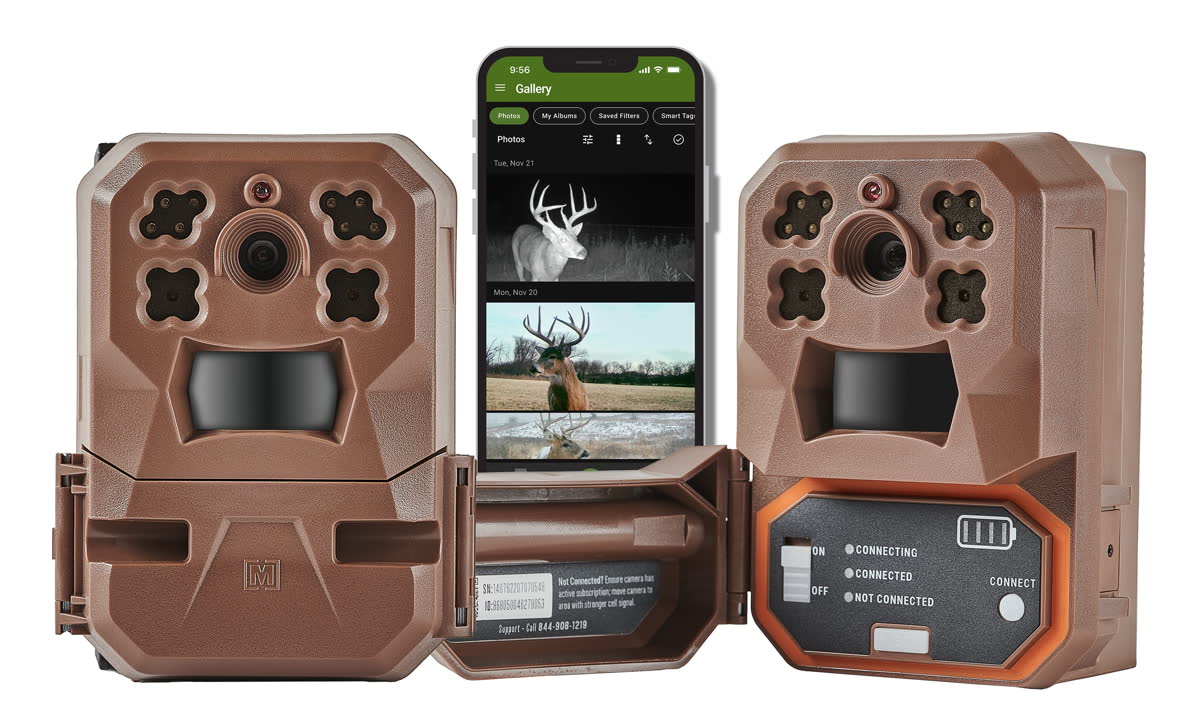
The Moultrie EDGE is a real and well established cellular trail camera line, now spanning the EDGE 2, EDGE 3, and the newer EDGE 4 series. Its signature trick is Auto Connect technology, which automatically finds the strongest signal across major cellular networks, so setup does not involve choosing a carrier or swapping SIM cards. Photos and video upload straight to your phone through the Moultrie Mobile app.
Moultrie also stands out for ditching the SD card entirely. The cameras use built-in memory with unlimited cloud storage, and the app layers on genuinely useful tools like species recognition, activity charting, weather forecasts, and mapping for hunt planning. On the hardware side, the EDGE 3 delivers 40MP stills, 1080p video, and a no-glow flash with about 100 feet of detection range, while the EDGE 4 series announced in 2026 adds IP67 sealing and AI features that crop a zoomed image of a recognized buck and send it to your phone.
If you run multiple cameras across a property, the Moultrie ecosystem is one of the most thought out in the business. Plans scale with camera counts, and the app’s scouting tools save real time during the season. Hunters who want their best trail camera to think a little will find a lot to like here. You can explore the current lineup on Moultrie’s official EDGE page to compare the latest models.
8. SPYPOINT Cellular: Best Trail Camera for a Free Data Plan
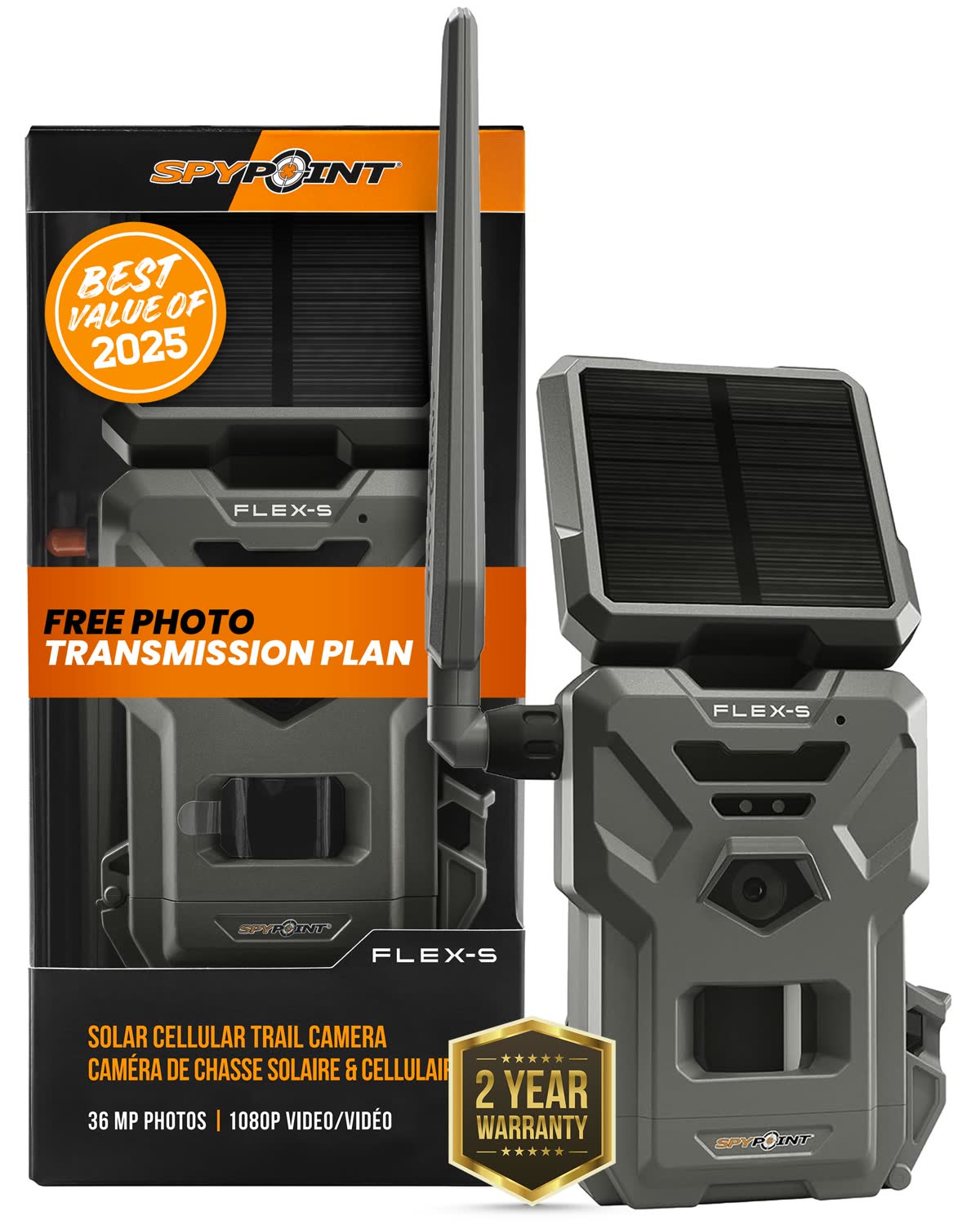
One more flag. The sheet lists SPYPOINT Cellular Trail Camera without a model, and SPYPOINT sells several cellular models rather than one generic camera. This section therefore covers the FLEX cellular family as a whole, which includes the FLEX, FLEX-S, FLEX-PLUS, FLEX-DARK, and FLEX-M models, while the next entry focuses on the FLEX-M specifically.
Across the family, the formula stays consistent. True dual-SIM technology connects to the strongest available network, the free SPYPOINT app handles activation and settings, and every camera includes a free plan covering 100 photos per month with no commitment. Paid tiers scale up to unlimited photos for heavy scouting. Higher models add 1080p video with sound, GPS mapping, on demand photo and video requests, and Constant Capture technology that sends and captures at the same time.
SPYPOINT’s free plan is a genuine differentiator, because it lets you run a cellular camera with zero monthly cost if your volume stays modest. For beginners curious about cellular scouting, that makes the FLEX family an easy recommendation. Pick your resolution and feature tier, and you have a flexible best trail camera system that grows with your ambitions.
9. SPYPOINT Flex-M: Best Trail Camera Cellular Value Pick
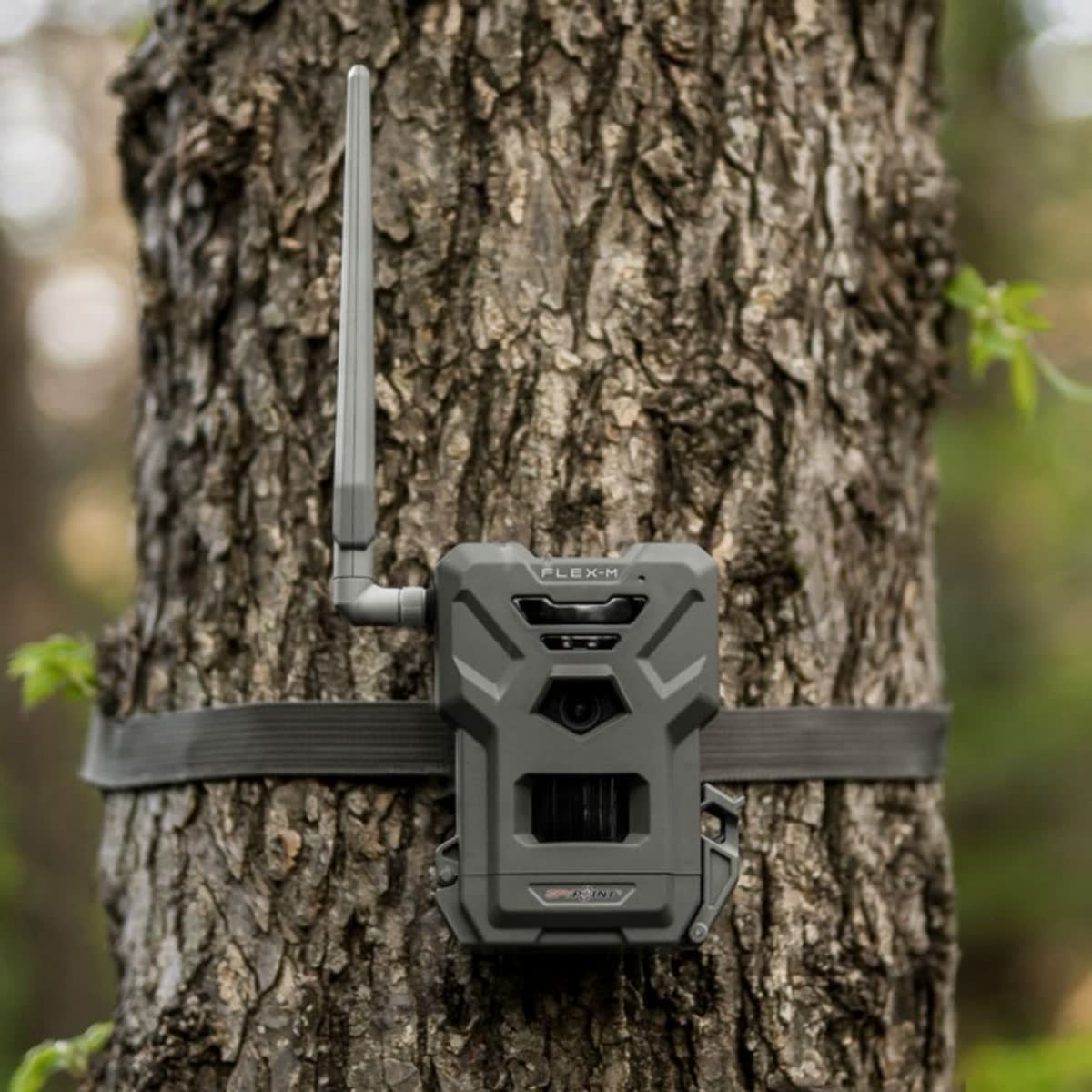
The SPYPOINT FLEX-M is real and easy to verify, and it exists for one reason, to make cellular scouting affordable. It captures 28MP photos with strong night vision and records 720p video with sound, which covers the essentials of patterning game without overspending on resolution you may never need. Setup is simple, with mobile activation and on-camera buttons for formatting the microSD card and grabbing a test photo.
The value story gets better with SPYPOINT’s plan structure. The free tier transmits up to 100 photos per month with no fees and no long term commitment, and paid plans start small for anyone who needs more volume. The camera is IP65 rated against dust and rain, GPS enabled for the app’s mapping features, and works with SPYPOINT’s solar accessories for long unattended deployments.
Think of the FLEX-M as the gateway to cellular scouting. It keeps the running cost near zero, the hardware simple, and the results reliable. If you have been on the fence about going cellular, this is the model that removes the excuses. See the full specifications and current options on SPYPOINT’s official FLEX-M page.
10. Tactacam REVEAL: Best Trail Camera for Image Quality
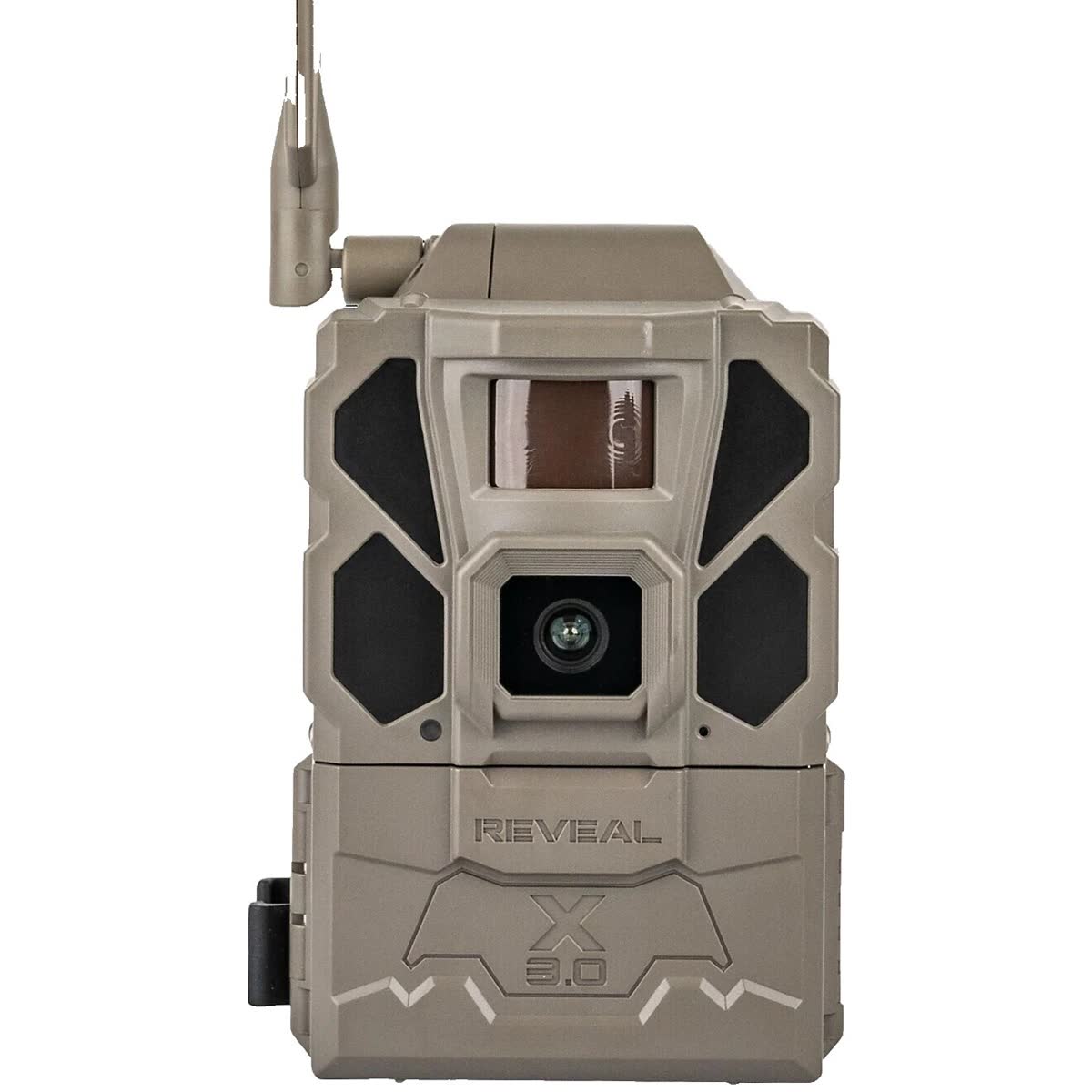
The Tactacam REVEAL line is one of the most recognizable names in cellular trail cameras, with more than two million cameras deployed according to the brand. The lineup spans several generations, from the REVEAL X Gen 2.0 through the Gen 3.0 models and the newer 4.0 series, so there is a REVEAL for nearly every budget and ambition level.
Image quality is the calling card. The REVEAL Ultra offers up to 4K photos with 1080p video, live streaming, and built-in GPS, while the Pro 4.0 and X 4.0 models announced in 2026 bring dual image sensors, selectable no-glow or low-glow infrared flash, improved low light performance, and live view aiming. Earlier models like the X Gen 3.0 still deliver solid 1080p video and dependable triggers for less money.
Pair the hardware with tiered data plans and the REVEAL app’s on demand HD requests, and you get a system that rewards serious scouts. If your priority is the sharpest possible pictures from a cellular camera, the REVEAL family deserves the top look. For wildlife watchers who demand detail, this is a best trail camera finalist in the truest sense.
Final Pick
So which one should you actually buy? If you want the best trail camera for pure value at a fixed site, the GardePro A3S delivers sharp 64MP stills, fast triggers, and invisible no-glow night vision without any monthly fee. If you would rather have photos sent to your phone, pick your cellular flavor. SPYPOINT’s FLEX-M keeps costs near zero with its free photo plan, the Moultrie EDGE brings the smartest scouting app in the business, and the Tactacam REVEAL line offers the finest image quality of the bunch.
Budget shoppers can gamble on the obscure KJK line for a second camera, and GardePro’s app connected WiFi models suit anyone who visits cameras often but hates disturbing the site. For always on coverage of buildings and yards rather than woods and fields, our best security cameras guide compares cameras designed for that purpose. Whichever you choose, mount it solid, aim it with care, and give the animals a week to forget it is there. The best trail camera is the one that is actually in the woods when the wildlife walks by.
Frequently Asked Questions
Do trail cameras need WiFi or cellular service to work?
No. Most trail cameras, including the GardePro A3S, work completely offline by saving photos and video to an SD card that you collect in person. WiFi and Bluetooth models add a local phone connection for previews without internet, while cellular models need a data plan and cell signal to send photos to your phone.
What is the difference between no-glow and low-glow infrared?
Both are infrared flashes for night photos, but no-glow uses 940nm LEDs that are invisible to humans and animals, while low-glow uses 850nm LEDs that emit a faint red blink when firing. No-glow is stealthier and better for easily spooked wildlife, while low-glow typically reaches a bit farther.
How far can the best trail camera detect motion at night?
Most quality trail cameras detect motion and illuminate subjects out to 70 to 100 feet at night. The GardePro A3S and the Moultrie EDGE 3 both reach around 100 feet, while budget models may fall short of their claims. Dense brush, cold weather, and low batteries can all reduce real world range.
How long do trail camera batteries last in the field?
It depends on the camera, the batteries, and how busy the site is. A non-cellular camera running on lithium AA batteries at a quiet site can last several months, while a busy cellular camera transmitting hundreds of photos may need fresh batteries or a solar panel within weeks. Lithium batteries handle cold far better than alkaline ones.
Do cellular trail cameras require a monthly subscription?
Almost always, yes, with one notable exception. SPYPOINT includes a free plan with 100 photos per month on its cellular cameras, so light users can pay nothing. Tactacam and Moultrie require paid plans tiered by photo volume, though annual billing usually lowers the monthly cost.
Can I use a trail camera for home security?
You can, and many people do, but trail cameras are built for wildlife, not 24/7 surveillance. They wake on motion, record short clips, and sleep between events, which saves battery but misses continuous footage. For round the clock protection with alerts and cloud storage, a dedicated security camera is the better tool.
The Bottom Line
Picking the best trail camera in 2026 comes down to how you want your photos. Grab the GardePro A3S if you are happy collecting an SD card and want excellent night shots for little money. Go cellular with SPYPOINT, Moultrie, or Tactacam if you want pictures on your phone in real time. Respect the flags in this guide, verify model numbers before you buy, and you will end up with a camera that earns its spot on the tree.