
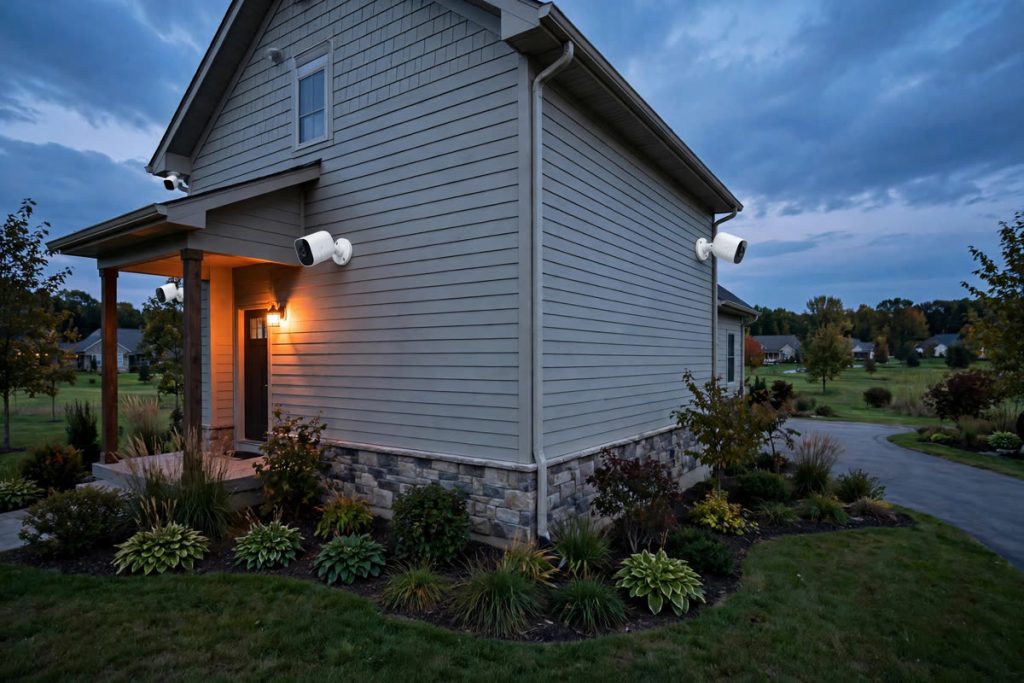
10 Best Security Cameras for Home Protection 2026
Table of Contents
Introduction
A home security camera used to be a luxury add on. The best security cameras in 2026 are small, wireless, and smart enough to tell a person from a passing cat, and a basic setup costs far less than replacing a single stolen bicycle. Whether you want to watch the front door, keep an eye on the driveway, or check on your pets while you are at work, the best security cameras now include a model built for exactly that job.
The market has exploded. Dozens of brands compete for your attention, from household names like Arlo to value brands like ANNKE and ANSQUE, and the spec sheets all start to blur together. Finding the best security cameras for your home takes checking which brands actually exist, what their product lines really offer, and which features matter in daily use. That homework is how we narrowed this list of the best security cameras down to ten entries we can actually verify.
This guide to the best security cameras does that homework for you. We verified every product on this list through live web research, confirming which brands are real and what their camera lines genuinely include. For more of our top 10 buying guides, visit DixTrick, where every list is built the same careful way. Below you will find wireless cameras, solar powered cameras, wired security systems, and indoor cameras, plus honest guides to the generic wireless class and to anti glare night vision, so you can pick the right protection with confidence.
How We Chose
Every product in this best security cameras guide was checked against live web sources before a single word was written. We searched for each brand and model to confirm it exists as a real, purchasable product, and we read manufacturer spec sheets and retailer listings to describe only what those sources actually say. Where a sheet row turned out to be generic, like “Wireless Security Camera,” or a feature rather than a product, like “Anti-Glare Monitoring,” or a malformed entry, like the two rows that only say “this year,” we say so openly instead of pretending we reviewed a specific model.
You will find no invented prices, no star ratings, no made up review counts, and no speculative specs on this page. What you will find is a clear statement, for every entry, of whether it is a real product, a product class, or a feature, and what the sources actually confirm about it. That is the standard behind every entry on this list of the best security cameras.
Wireless Security Camera (Class Guide)
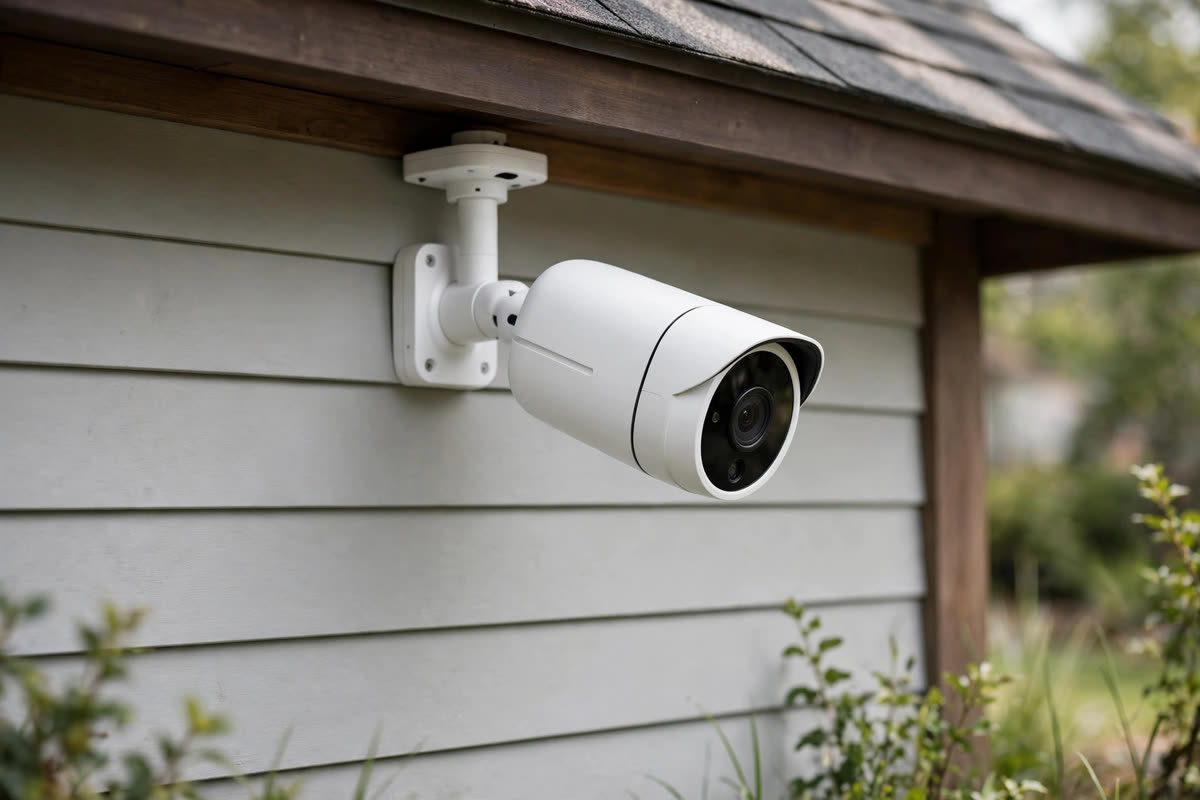
The first entry on our sheet is simply “Wireless Security Camera,” which is not a specific product at all, so we are treating it the honest way: as a guide to the whole class behind today’s best security cameras. A wireless security camera is any camera that sends its video over WiFi instead of a cable, and this single design choice reshapes everything about how you install and use it.
You can mount one on a fence post, a tree, or a detached garage, anywhere within WiFi reach, without drilling for cable runs or hiring an installer. Most wireless models run on rechargeable batteries or solar panels, which means placement is limited only by your network coverage and how much sunlight a spot gets.
When you shop the best security cameras in the wireless class, judge every candidate on the same handful of fundamentals. First, connectivity: a camera that constantly drops off your network is worse than no camera at all, so look for dual band WiFi support and check your signal strength at the exact spot you plan to mount it before you buy. Second, power: battery models need recharging every few months in busy spots, while solar models trickle charge themselves in sunny positions.
Third, storage: some cameras record to a local memory card or a hub in your home with no monthly fee, while others lock video history behind a cloud subscription, so decide which model you prefer before you fall in love with a camera. Fourth, night vision: this is where cheap cameras embarrass themselves, so favor models with color night vision or strong infrared illumination if the area you are watching goes truly dark.
Wireless cameras also share a few common weaknesses you should know about. They are easier for a determined thief to steal or knock down than a hard wired camera, since there is no cable anchoring them. They depend on your home internet, so a power cut or router failure blinds them unless you have backup power. And their motion detection can be triggered by swaying branches or passing headlights unless the camera offers smart person detection or customizable activity zones. None of these are deal breakers.
They just mean you should pair any wireless camera with a strong WiFi signal, a sensible mounting height, and realistic expectations about what battery power can do. Get those three right and the wireless class is the fastest, cheapest route to a protected home, which is why it dominates most best security cameras roundups.
Arlo Essential Outdoor
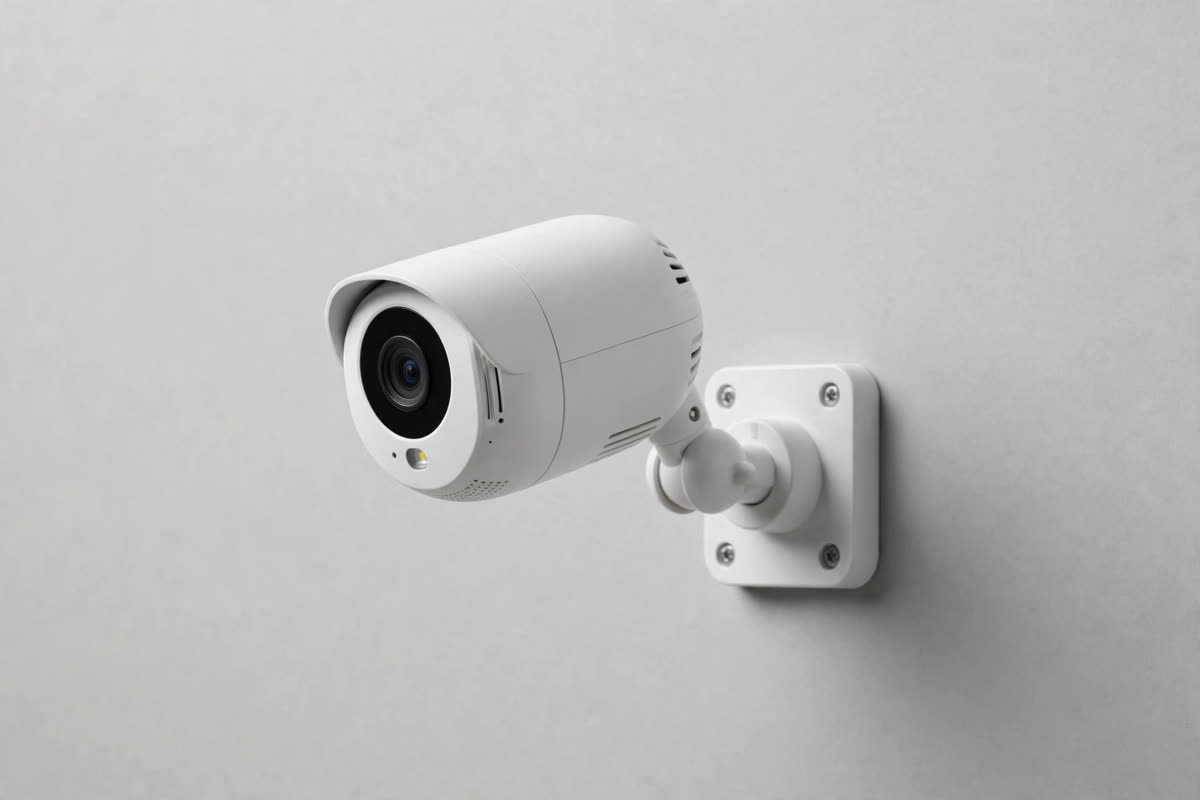
Arlo is one of the most established names in home security cameras, and the Essential Outdoor line is its entry point into serious outdoor protection. This is a real, widely sold product line we verified through Arlo’s own published spec sheets. The current generation comes in 2K and HD versions and connects directly to your WiFi network with no hub or base station required, running on a rechargeable battery in a weather resistant body. Setup is genuinely a minutes long job, which makes it a natural first camera for renters and first time buyers shopping the best security cameras.
Arlo’s spec sheets list a 130 degree diagonal field of view, color night vision, an integrated spotlight, an integrated siren you can trigger from the Arlo Secure app, and two way audio with noise cancellation, so you can hear and speak to visitors clearly. The camera offers up to 12x digital zoom, which helps when you need to read a license plate or make out a face in recorded footage. Motion alerts go straight to your phone, and you can watch live video from anywhere through the app. It is the polished, all in one package you expect from a premium brand.
The honest trade off with Arlo is the subscription. Arlo includes a trial of its Arlo Secure plan, and after the trial the premium features, including cloud video history and smart detections for people, packages, and vehicles, require a paid plan. The camera itself works without one, but much of what makes Arlo feel smart lives behind that paywall. If you are comfortable with a modest monthly fee for cloud storage and intelligent alerts, the Essential Outdoor is one of the most refined wireless cameras you can buy. If you refuse subscriptions on principle, look instead at the local storage brands further down this list of the best security cameras.
ANSQUE Wireless Camera
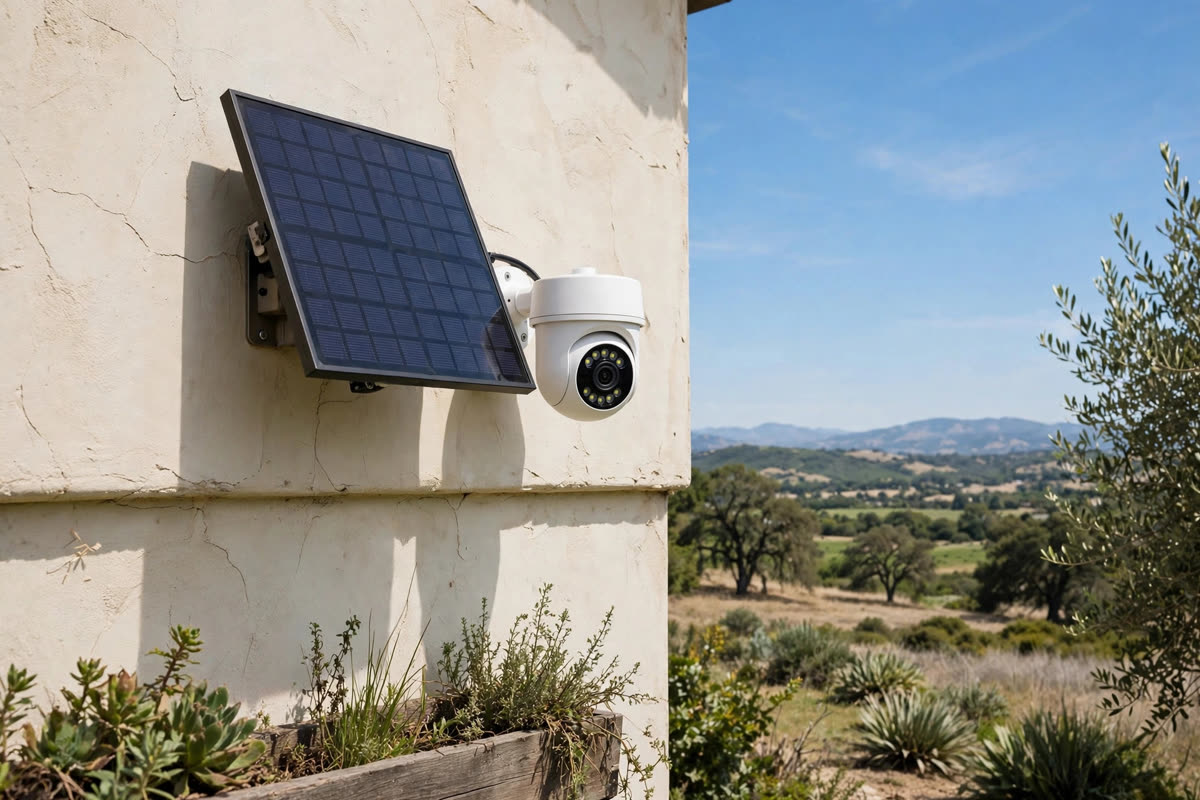
ANSQUE is a real budget security brand we verified through current retailer listings, and its signature product is the solar powered wireless outdoor camera, usually sold in multi camera kits with a home base station. The pitch is straightforward: cameras that charge themselves from an attached solar panel, connect to the base over a private wireless link, and store recordings locally with no monthly subscription required. It is the classic value play among the best security cameras, aimed at buyers who want several cameras covering the whole property without a big brand premium or a recurring fee.
According to the brand’s product listings, ANSQUE kits are built around outdoor use, with pan and tilt models that can rotate to follow movement, color night vision for after dark recording, and two way audio so you can talk through the camera. The base station connects to your router and holds the recordings, and the companion app handles live viewing, motion alerts, and playback. The listings also note compatibility with common voice assistants, which matters if your household already runs on Alexa or Google Assistant routines. Check the exact kit configuration, camera count, and storage capacity on the current product page before ordering.
ANSQUE makes the most sense for larger properties where you want four or more cameras and the cost of a premium brand would be painful, which is why it earns a spot among the best security cameras for budget multi camera coverage. Solar charging removes the chore of climbing a ladder to recharge batteries, and local storage keeps your total cost flat after purchase.
The trade offs are the usual ones for value brands: a less polished app experience and less certain long term software support than an established giant. Buy it for coverage per dollar, keep your expectations calibrated, and it is a legitimate way to blanket a house in cameras on a budget.
ANNKE Security System
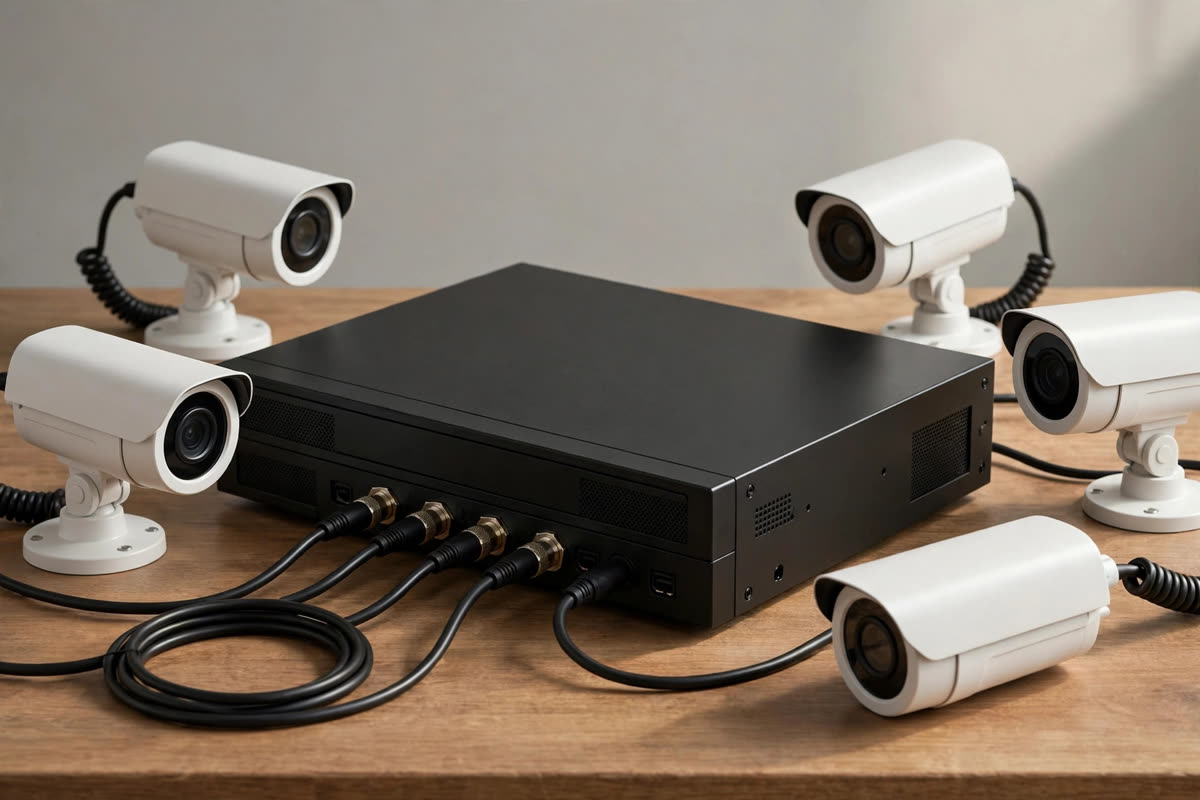
ANNKE is a long established security camera brand, verified through years of retailer listings and its own product documentation, and unlike most of the best security cameras on this list it specializes in wired systems rather than single wireless cameras. An ANNKE security system typically means a DVR or NVR recorder box plus a set of wired cameras, sold as a complete kit. The cameras connect to the recorder with cables carrying both power and video, so there is no WiFi to drop, no batteries to recharge, and no cloud subscription for your recordings. Everything is stored on the recorder’s hard drive inside your home.
ANNKE’s catalog spans analog DVR kits to higher resolution PoE NVR systems, with weatherproof outdoor cameras commonly rated IP66 or IP67. Many kits include smart features such as human and vehicle detection to cut down on false alarms, remote viewing through a phone app, and email or push alerts when motion is detected. The brand’s systems are popular with small business owners and homeowners who want a permanent, always on installation covering many angles at once, typically four, eight, or more channels.
The honest cost of a wired system is the installation. Running cables through walls and attics is real work, and a large property can turn into a weekend project or a job for a local installer. In exchange you get reliability that wireless cameras cannot match: a wired camera does not care about WiFi dead zones, interference, or battery levels. If your priority is a set and forget system that records around the clock for years, an ANNKE wired kit is one of the best security cameras choices for whole property coverage and one of the most cost effective ways to get there.
Anti-Glare Monitoring (Feature Guide)
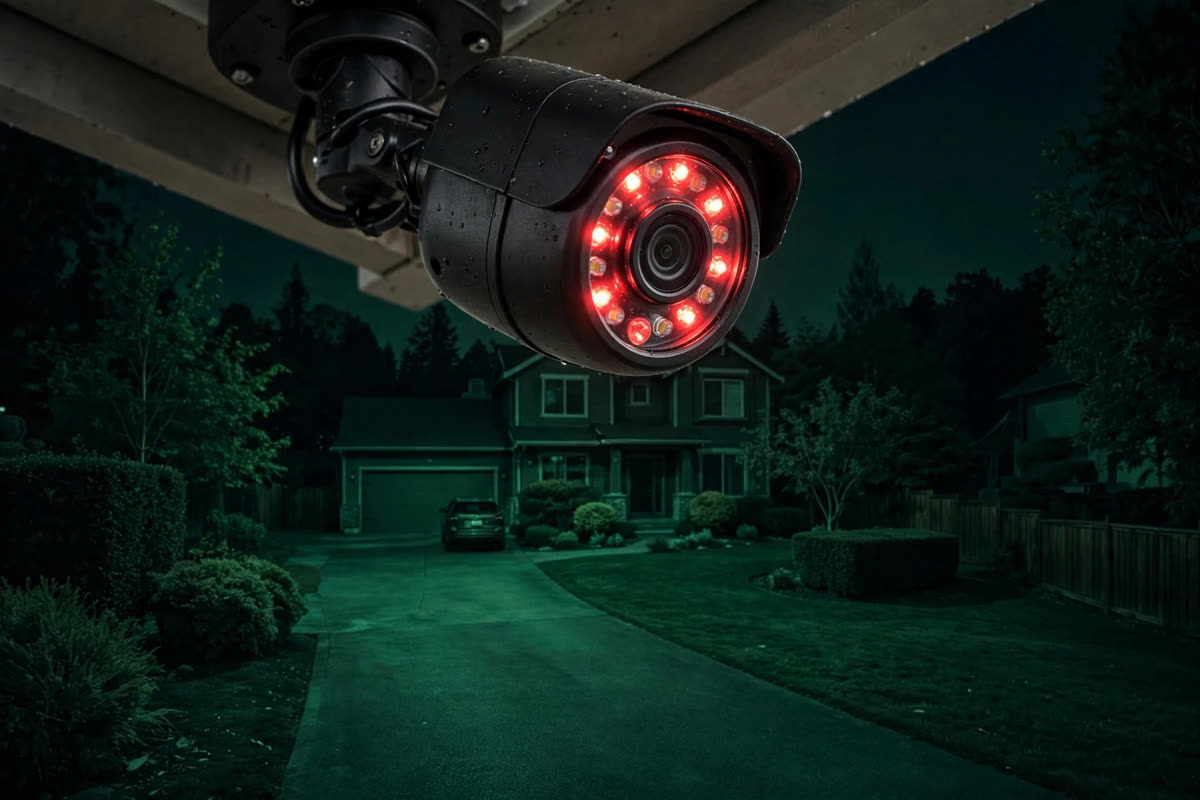
“Anti-Glare Monitoring” is not a product you can buy, so like our first entry we are handling it as a feature guide, and it is a feature worth understanding because it decides whether your camera is useful after sunset. Standard infrared night vision floods a scene with invisible IR light and records in black and white, but it has a classic failure: any reflective surface, a car windshield, a window, a glossy sign, bounces the IR light straight back into the lens and washes out the image in a white blur.
Anti glare features fight exactly that problem. They include better lens coatings, smarter IR intensity control, and wide dynamic range processing that balances bright and dark areas in the same frame, the details that separate the best security cameras from basic models once the sun goes down.
The related term you will see on listings is starlight or color night vision. Instead of relying only on infrared, these cameras use highly sensitive sensors, sometimes paired with a small built in spotlight, to capture full color video in very low light. The practical difference is enormous: a color night image lets you describe clothing or car colors to police, while a black and white IR image often cannot.
When you compare the best security cameras, treat night vision as a first class specification, not a footnote. Look for listings that show actual night sample footage or at least describe the low light sensor technology, and be skeptical of vague claims like “super night vision” with no detail behind them.
Placement matters as much as technology. Even the best anti glare camera will struggle if you aim it straight at a reflective garage window or directly into a streetlight. Mount cameras under eaves or porch roofs where possible, angle them slightly downward so the IR light hits the ground instead of bouncing off glass, and keep the lens clean, since a film of dust or spiderwebs scatters IR light and creates exactly the glare you are trying to avoid. Anti glare is not a magic setting but the combination of a capable sensor, sensible IR control, and thoughtful mounting, the same recipe behind the best security cameras for night use.
SOLIOM Wireless Camera
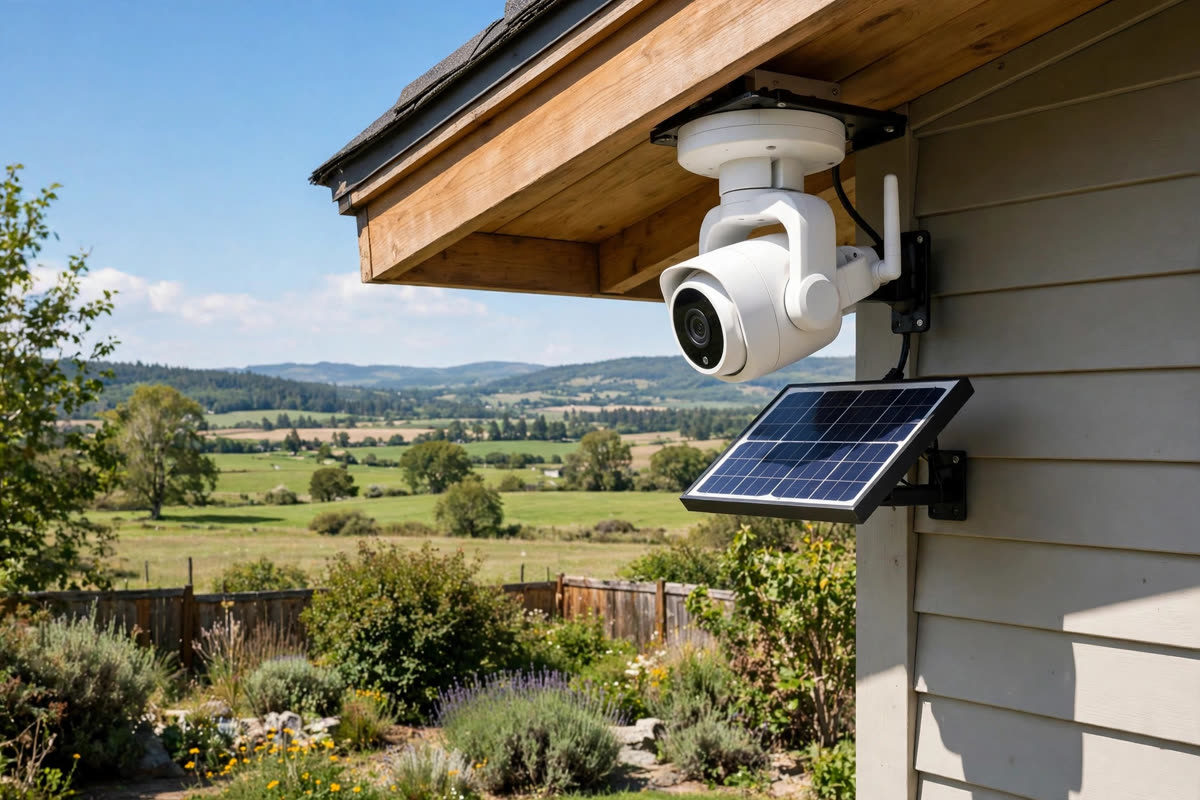
SOLIOM is a real security camera brand we verified through current retailer listings, best known for solar powered wireless cameras built for outdoor use. The brand’s catalog centers on a clear idea: a camera that powers itself from the sun, connects over WiFi, and needs no wiring, making it practical for spots like a back fence, a detached shed, or the far end of a long driveway. Many SOLIOM models add pan and tilt movement with a wide rotation range and motion tracking, so one camera can sweep across a large area instead of staring at a single fixed frame.
The listings describe solar panels paired with rechargeable batteries, color night vision, two way audio, and app based control with motion alerts, which is the standard toolkit for this category. SOLIOM also sells cellular models that run on mobile data instead of WiFi, a genuinely useful option for farms, construction sites, or rural properties where there is no home network to connect to. Voice assistant compatibility is listed for smart home integration. Confirm the exact model’s power setup, storage method, and connectivity type on the current product page, since solar, battery, WiFi, and cellular variants all exist under the same brand name.
SOLIOM earns its place on this list for one specific buyer: anyone whose ideal camera location has sunlight but no power outlet and no easy cable route. For a suburban front porch with an outlet nearby, a simpler camera will do. For a barn two hundred feet from the house, a solar wireless camera is often the only realistic option, and SOLIOM is one of the established names among the best security cameras for off grid locations. Remember that solar is not magic: the panel needs several hours of direct sun per day to keep up with a busy camera. Match the power source to the location and the brand’s core strength shines.
Arlo Security Cameras (Current Lineup)
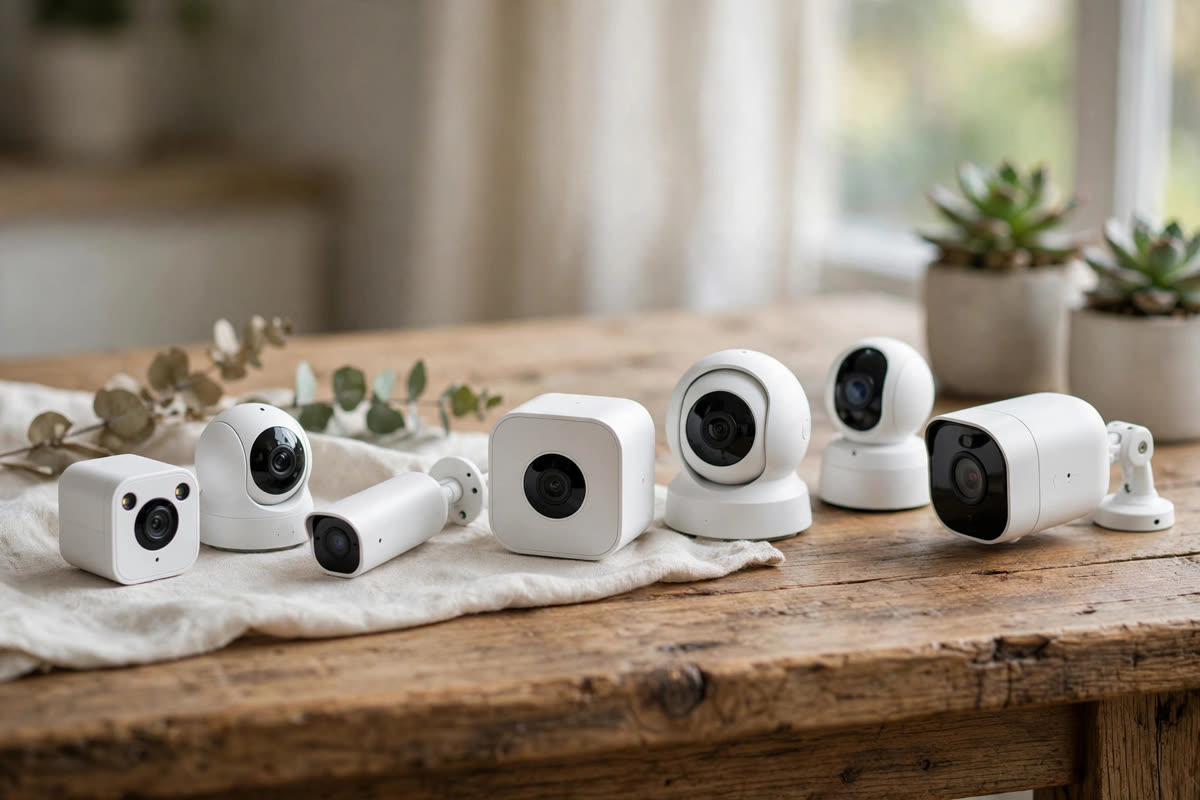
This row on the sheet reads “Arlo Security this year,” which is a malformed entry, not a real product name, so we are handling it openly as a pick covering Arlo’s current security camera lineup. Arlo is a genuine, major brand in home security, verified through its official site and published documentation, and its lineup spans several tiers: the Essential range for everyday buyers, step up models with higher resolution, plus video doorbells and floodlight cameras for specific jobs. Treating the lineup as a whole makes sense because Arlo’s real strength is the ecosystem: every camera feeds the same app, the same alert system, and the same optional cloud plan.
Across the lineup, Arlo’s calling cards are consistent. Cameras connect directly to WiFi without a hub on most models, record in HD or 2K depending on the tier, and include color night vision, two way audio, integrated spotlights and sirens on outdoor models, and smart detections that can distinguish people, packages, vehicles, and animals. The Arlo Secure app ties it together with live streaming, recorded history, and customizable activity zones, a polished experience for buyers who want security that simply works.
The caveat, repeated from our Essential entry because it applies to the whole brand, is the subscription model. Arlo’s smartest features and its cloud video history sit behind the Arlo Secure plan after the included trial, so the true cost of an Arlo system is the hardware plus the ongoing plan. For many buyers that trade is worth it: you get one of the best apps in the business, reliable hardware, and continuous feature updates. For buyers who want zero recurring cost, the local storage brands on this list are the better fit. Either way, Arlo’s current lineup remains the benchmark that every other contender for the best security cameras is measured against.
Arlo Essential Cameras (Current Generation)
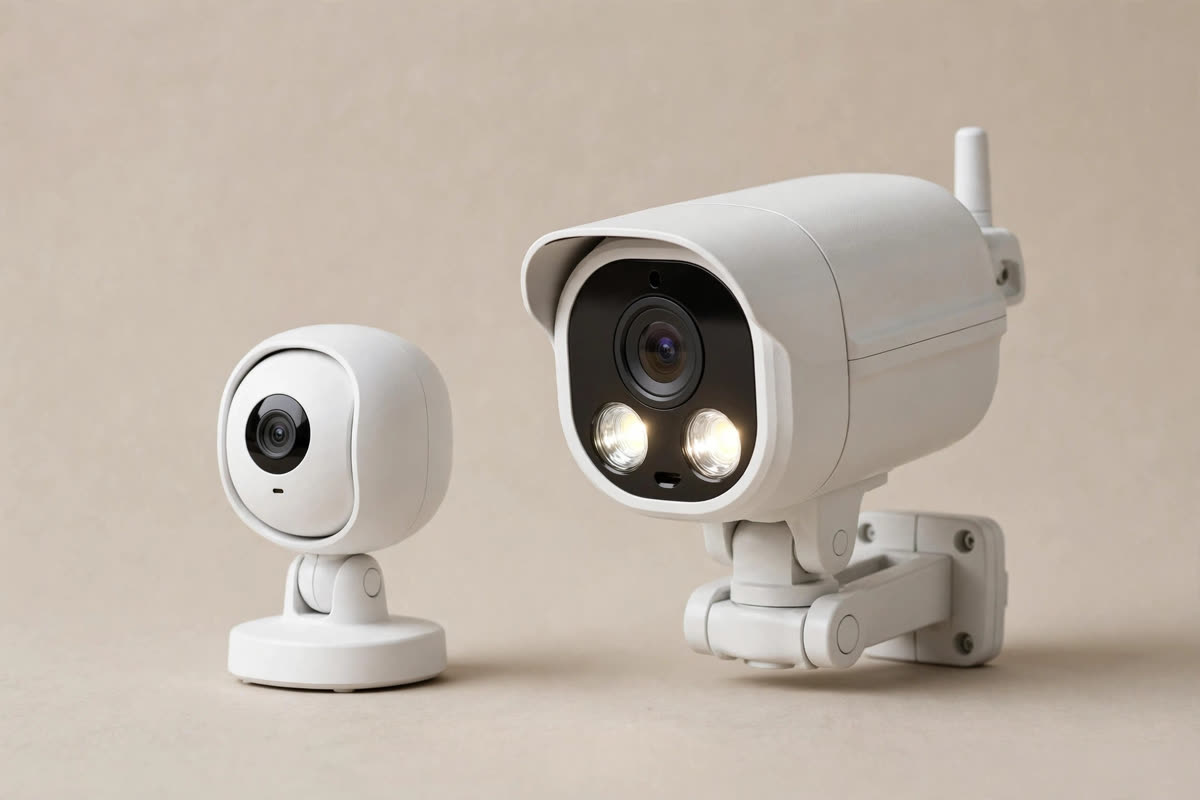
The sheet’s eighth row, “Arlo Essential this year,” is another malformed entry, so we are treating it transparently as the Arlo Essential line in its current generation. Unlike our second entry, which covered the Essential Outdoor camera specifically, the Essential line as a whole includes indoor cameras, outdoor cameras, and extended battery XL models sharing the same affordable, wire free, app driven philosophy. We verified the line through Arlo’s published spec sheets, which document both 2K and HD variants of the current generation.
What defines the Essential line is the balance it strikes. You get Arlo’s core experience, direct WiFi connection with no hub, rechargeable batteries, weather resistant outdoor models, color night vision, two way audio with noise cancellation, integrated spotlight and siren on outdoor units, and phone alerts with live streaming, at the brand’s most accessible price point. The indoor models add a privacy shutter for peace of mind when you are home. According to Arlo’s documentation, the cameras offer a 130 degree field of view and substantial digital zoom, and they work with the Arlo Secure app’s activity zones and smart notifications.
Choosing within the Essential line comes down to matching the model to the job. Outdoor models handle the perimeter, door, and driveway. Indoor models watch living rooms, hallways, and nurseries, with the privacy shutter as the key differentiator. The XL variants suit spots where recharging would be a hassle, like a high eave or a remote corner.
And the same honest note applies across all of them: the hardware is only half the product, and the Arlo Secure plan unlocks the full feature set after the trial. Pick the Essential line if you want Arlo’s polish at the lowest entry cost among the best security cameras, and size the system to your home before you buy.
Anona Indoor Camera
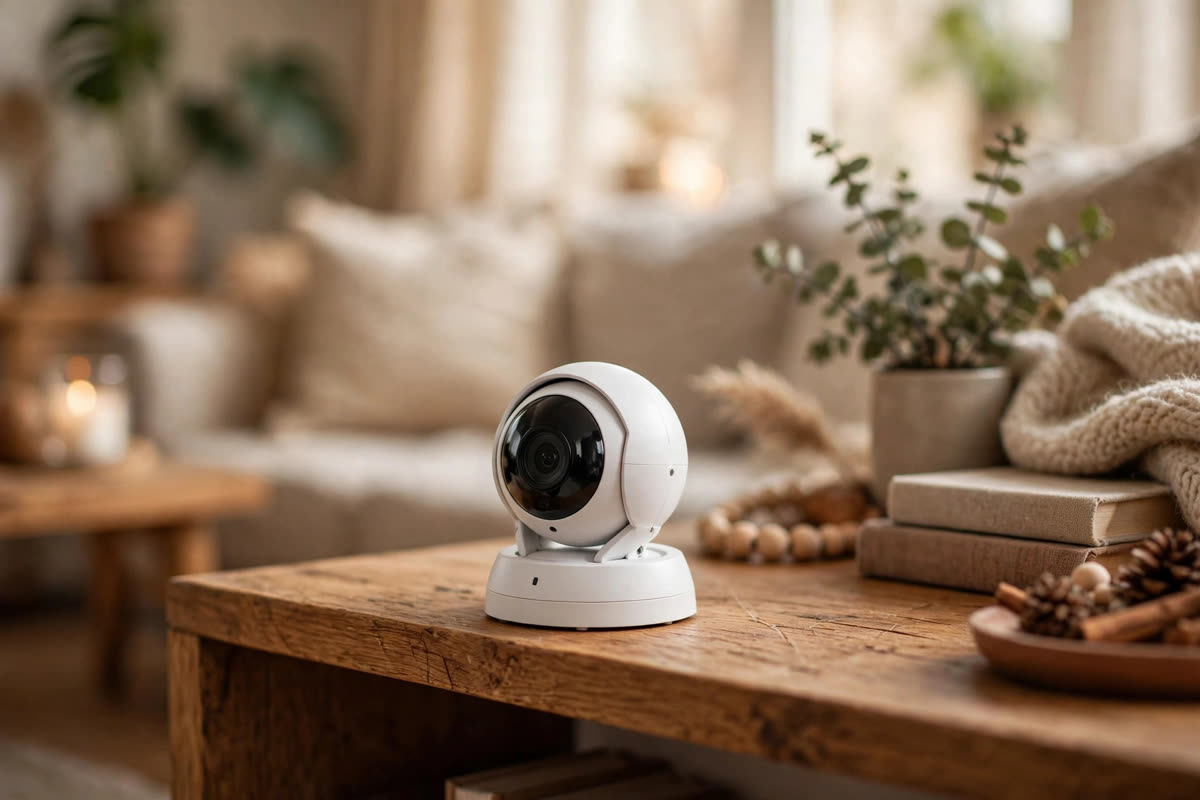
Anona is a real security camera brand we verified through current retailer listings, and its indoor camera, sold under names like the Anona Pano, is a pan and tilt model built for watching the inside of your home. The listings describe a camera that rotates a full 360 degrees horizontally with a wide vertical tilt range, streams in high resolution, and is controlled through a phone app. It is the indoor specialist on this list, pointing inward at the living room, the nursery, or the hallway.
The feature set reads like a checklist of what indoor buyers actually ask for. Two way audio lets you talk to family members or warn off an intruder through the camera. Motion tracking follows movement around the room automatically. Person, pet, and crying detection are listed as smart alerts, which matters because a bare motion sensor would ping your phone every time the dog stretches. Privacy mode, which points the lens away or disables recording on command, addresses the obvious discomfort of having a camera inside your home, and support for local memory cards plus cloud options gives you a choice in how footage is stored.
An indoor camera is a different purchase from an outdoor one, and the buying logic differs too. Indoors, weatherproofing is irrelevant, but wide rotation and a non intrusive design matter, since the camera shares your living space. Dual band WiFi support helps the stream stay smooth, and a physical privacy shutter or software privacy mode is worth insisting on. The Anona’s pan tilt design means a single camera can cover a whole open plan room that would need two or three fixed cameras otherwise. For apartments, nurseries, and pet owners, that flexibility makes it one of the best security cameras for indoor use, and that is the whole point of the design.
ANNKE 1920TVL Cameras
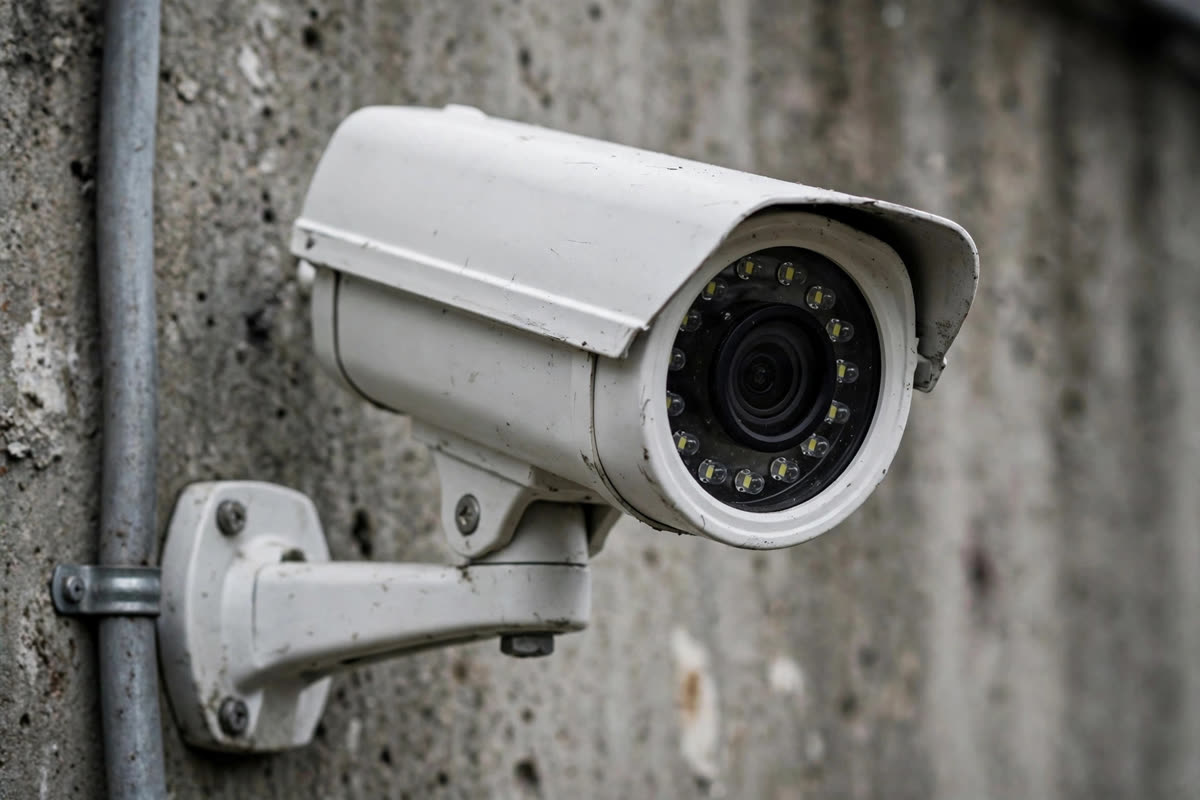
The final row on the sheet is “ANNKE 1920TVL,” which refers to a real category in ANNKE’s catalog: analog CCTV cameras rated at 1920 TVL, sold both individually and as part of the brand’s wired DVR kits. TVL stands for television lines, the traditional measure of analog camera resolution, and 1920 TVL corresponds roughly to 1080p full HD in practical terms. We verified that ANNKE sells cameras described this way in its DVR system listings. These are classic analog bullet and dome cameras that connect to a DVR recorder over coaxial cable.
Analog survives for three reasons: cost, reliability, and simplicity at scale. Analog cameras are among the cheapest per unit in the security world, the wired connection is immune to WiFi interference and needs no network configuration, and a DVR kit with four, eight, or sixteen of them plus a recorder is a proven formula for covering a whole property around the clock. ANNKE’s 1920TVL cameras are typically weatherproof for outdoor mounting and include infrared night vision, and because they record to the DVR’s hard drive, there is no subscription and no cloud dependency whatsoever.
The trade off is resolution and convenience. 1920TVL gives you usable full HD footage, enough to recognize faces and read plates at reasonable distances, but it will not match the detail of a modern 4K IP camera, and you cannot check the feed without the DVR and its app in the loop. Installation means running coaxial cable to every camera, which is the same weekend project as any wired system.
Think of the ANNKE 1920TVL cameras as the workhorse option: unglamorous, inexpensive per camera, and extremely dependable. For warehouses, workshops, rental properties, and large homes where camera count matters more than cutting edge image quality, they remain among the best security cameras for high camera count installs and one of the most economical ways to get serious coverage.
Final Pick
If you forced us to name the best security cameras starting point for most homes, it would be a wireless camera from an established brand with direct WiFi connection and no hub required, mounted to cover the main entrance. The front door is where packages land, visitors arrive, and most break in attempts begin, so a single well placed camera there delivers more real protection than three cameras pointed at empty side yards. Add a second camera over the driveway or back door once the first one proves its worth, and you have a system that covers the two angles that matter most, a practical starting point for anyone comparing the best security cameras.
That said, the honest answer is that the best security camera is the one matched to your property, not the one with the longest spec sheet. Work backward from your constraints, power, network, budget, and tolerance for monthly fees, and the best security cameras for your situation will select themselves.
FAQ
Do wireless security cameras work without WiFi?
Most wireless cameras need WiFi to send alerts and let you view footage remotely, but there are exceptions. Some record to a local memory card or hub for later review without a network, and cellular models from brands like SOLIOM use mobile data instead of WiFi. Wired DVR systems from brands like ANNKE need no WiFi at all for recording, only for remote viewing. Match the camera’s connectivity to what your location actually has.
Do I need a subscription for a security camera?
Not necessarily. Many Arlo style cameras reserve cloud history and smart detections for a paid plan, but cameras with local storage, such as ANSQUE kits, SOLIOM models with memory cards, and ANNKE wired DVR systems, record without any monthly fee. Decide before buying whether you are comfortable with a subscription, because it changes the true long term cost of the system.
How many security cameras does a typical home need?
Most homes are well covered by two to four cameras: one on the front door, one on the driveway or garage, and optionally one on the back door and one indoors. Start with the entrance and add cameras where you notice blind spots. It is better to place two cameras thoughtfully than to scatter six where they watch nothing useful.
What is the difference between 1920TVL and 1080p?
They describe roughly the same level of detail in different technologies. 1920TVL is the analog measurement used for cameras like ANNKE’s wired CCTV models, while 1080p is the digital resolution used by IP and WiFi cameras. In practice both give you full HD footage suitable for recognizing faces at normal distances. The bigger differences between analog and digital systems are in wiring, smart features, and remote access, not in the raw picture.
Can security cameras see at night in color?
Many modern cameras can. Color night vision uses sensitive sensors, sometimes with a built in spotlight, to record full color video in low light, and it is far more useful than black and white infrared for identifying clothing and vehicle colors. Standard infrared night vision still works in total darkness where color sensors give up. Check whether a camera lists color night vision specifically, and look at real night sample footage when you can.
Are budget security camera brands reliable?
Established budget brands like ANNKE, SOLIOM, and ANSQUE are real companies with real product lines, verified in this guide to the best security cameras, and they offer genuine value, especially for multi camera coverage. The trade offs versus premium brands are usually app polish, long term software support, and the consistency of customer service. Buy budget for coverage per dollar, buy premium for the smoothest experience, and avoid no name listings with no verifiable brand behind them.
The Bottom Line
The best security cameras of 2026 are not defined by a single brand or a single technology. They are defined by the match between the camera and the job: wireless for fast installs, solar for spots with no power, wired ANNKE systems for always on recording, indoor pan tilt cameras for inside the home, and anti glare night vision for after dark performance. Every entry on this list earned its place among the best security cameras by being a real, verifiable product, or in the case of our class and feature guides, by teaching you something the product listings will not.
Start with your constraints, not with a shopping cart, and the best security cameras for your home will be the ones that fit them. Map your power outlets, check your WiFi coverage, and decide how you feel about subscriptions before you choose. To explore more of our carefully researched top 10 buying guides, browse the full collection of DixTrick guides and find the right gear for every corner of your life.