
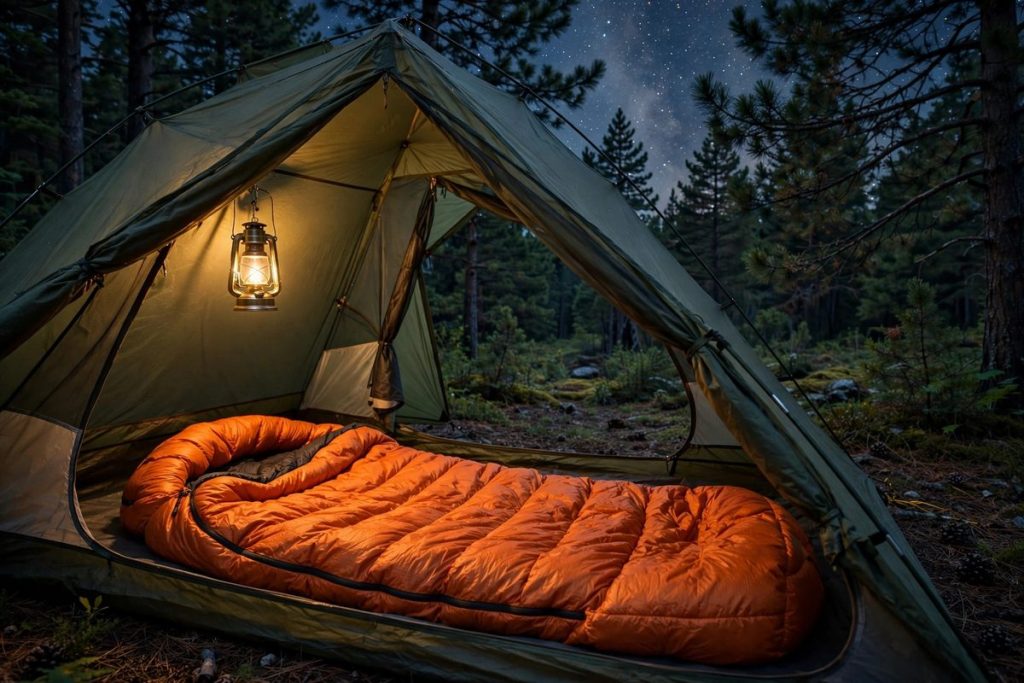
10 Best Sleeping Bags for Cold Weather Camping 2026
Introduction to the Best Sleeping Bags Ranking for 2026
A sleeping bag is the one piece of camping gear that can genuinely make or break a trip. A great bag turns a freezing mountainside into a cozy night under the stars, while a bad one turns the same night into hours of shivering, tossing, and counting down until sunrise. That is why choosing from the best sleeping bags matters so much: warmth, weight, packed size, and comfort all have to line up with the way you actually camp.
This 2026 ranking covers ten of the best sleeping bags across the full range of what campers need. At one end are affordable 3-season synthetic bags like the MalloMe, Oaskys, and ECOOPRO, which deliver solid comfort for fair-weather trips without emptying your wallet. In the middle sit proven cold-weather workhorses from Coleman and TETON Sports, built for shoulder-season nights when temperatures drop toward freezing. At the premium end are down-filled performers from Western Mountaineering and REI Co-op, engineered for backpackers who count every ounce.
Every pick below earned its place for a real reason, and every section is honest about tradeoffs: who each bag suits, where it shines, and where it falls short. No bag is perfect, and a bag that is ideal for a family car-camping weekend can be completely wrong for a solo backpacker. We call out those differences so you can match the bag to your trips, not to a marketing claim. If you are building out your full camp kit, pair your pick with one of the shelters in our guide to the 10 best camping tents for 2026, since the tent and the bag work as a team on cold nights.
One important note before we start: temperature ratings are the most misunderstood number in outdoor gear. A 20-degree bag does not guarantee comfort at 20 degrees for every sleeper. Ratings describe a standardized test, and real comfort depends on your metabolism, your sleeping pad, what you wear to bed, and whether you are a warm or cold sleeper. Throughout this guide we treat manufacturer ratings as a starting point and add honest context about who each rating really suits.
How We Chose the 10 Best Sleeping Bags
We evaluated these bags the way an experienced camper would: by asking what actually matters on real nights outdoors. Marketing copy promises a lot, so we focused on the features that determine whether you sleep warm and wake up rested. That means looking past flashy claims to the construction details, materials, and design choices that separate the best sleeping bags from the merely adequate.
Price was never the deciding factor on its own. A budget bag that keeps a summer camper comfortable is a great pick, and a premium down bag that justifies its cost with years of reliable service is also a great pick. What matters is whether each bag delivers what its price promises, honestly and consistently. Here are the six criteria every bag on this list was judged against.
- Temperature rating honesty. We compared manufacturer temperature ratings against the bag’s insulation type, fill weight, and construction to judge whether the rating is realistic. Bags with ratings that match their build earned trust; bags whose numbers looked optimistic got flagged.
- Insulation type and loft. Down insulation offers the best warmth for the weight but costs more and needs care when wet. Synthetic insulation is heavier and bulkier but keeps working when damp and costs far less. We valued both, judging each on what it promises rather than penalizing synthetic bags for not being down.
- Weight and packed size. A car camper barely notices an extra two pounds, while a backpacker feels every ounce by mile ten. We noted the weight and packed dimensions of every bag and judged them against their intended use, favoring bags that pack small for their warmth.
- Shell, lining, and weather resistance. Waterproof or water-resistant shells, durable ripstop fabrics, and comfortable linings all matter when you are sleeping outdoors. We looked for shells that resist dew and tent condensation, linings that feel good against skin, and zippers that do not snag at 2 a.m.
- Draft control and usable features. Draft tubes along zippers, draft collars at the neck, cinchable hoods, two-way zippers for ventilation, and interior pockets for valuables all add real comfort. These details separate bags that are merely warm from bags that are genuinely pleasant to sleep in.
- Value and warranty backing. We weighed what each bag costs against what it delivers, and we gave credit to manufacturers that stand behind their products with meaningful warranties, from multi-year coverage to lifetime guarantees.
Table of Contents
1. MalloMe Sleeping Bag
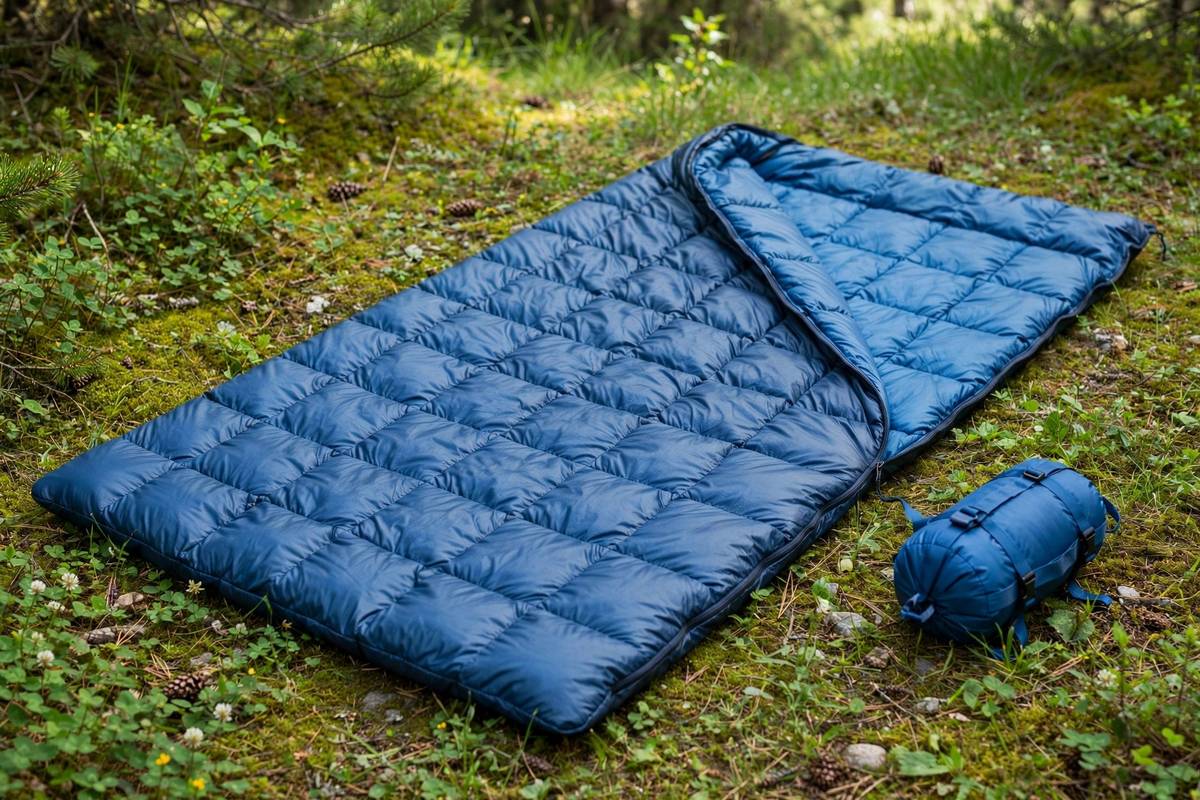
The MalloMe has become one of the most recognizable budget sleeping bags in the 3-season category, and it earns that recognition the honest way: by delivering reliable fair-weather comfort at a price that makes it easy to buy one for every member of the family, which is why it keeps appearing in roundups of the best sleeping bags for budget campers. The brand builds its bags around a waterproof hex-tech outer shell with double-layer S-stitching and 3D synthetic fiber fill, a combination designed to keep dew and light moisture out while the insulation does its job inside.
Depending on the version, MalloMe lists its 3-season bags for comfort roughly between 32°F and 77°F, which puts them squarely in spring, summer, and early fall territory. The rectangular cut is roomy enough for campers who toss and turn, and the bag ships with a compression sack with straps that cinches it down for transport. It is also machine washable, which matters a lot for a bag that will see scout trips, kids, and sandy beach campsites.
This is an easy recommendation for casual campers, families, and anyone buying their first sleeping bag. If your trips happen in mild weather and you sleep in a tent or cabin, the MalloMe gives you genuine comfort without the anxiety of an expensive bag getting dragged through the dirt. It also works well as a guest bed or emergency blanket at home.
The honest tradeoffs are what you would expect at this price. It is heavier and bulkier than a down bag, synthetic fill gradually loses loft after years of compression, and the zippers are functional rather than silky. It is not a winter bag, and cold sleepers should treat the lower end of its stated range with skepticism. For fair-weather camping, though, it is one of the best sleeping bags you can buy on a tight budget.
2. Oaskys Camping Sleeping Bag
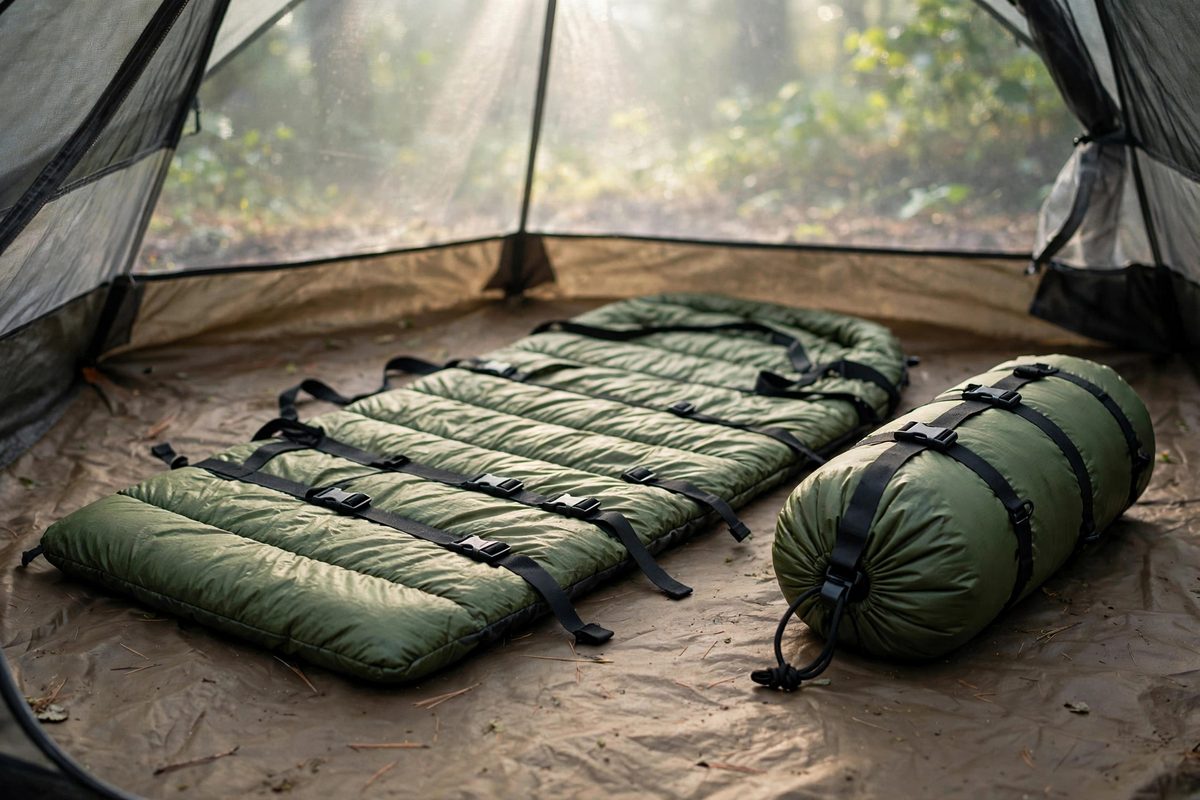
The Oaskys camping sleeping bag is another long-running favorite in the budget 3-season space, and it has earned a loyal following by nailing the basics. It is a 3-season bag built around a waterproof nylon shell with the brand’s double-fill synthetic insulation technology, designed to keep you warm in temperatures the brand rates roughly from 50°F to 80°F, or about 10 to 20 degrees Celsius. At around 3 pounds it is genuinely light for a bag in this price class.
The rectangular shape gives you room to move, and the included compression sack with straps packs the bag down to a manageable size for car camping, festivals, and backpacking trips where every inch counts. The brand backs it with a 3-year warranty, which is generous for a budget bag and helps it stand out among the best sleeping bags at this price. The nylon shell wipes clean easily, another practical plus for family use.
This bag suits warm-weather campers, kids, and first-time buyers who want something dependable without overthinking it. It is a great loaner bag too: cheap enough that you will not wince when a friend borrows it, good enough that they will actually sleep well. For summer nights and mild shoulder-season evenings, it does exactly what a bag like this should do.
Do not ask it to do winter. The Oaskys is a fair-weather bag, and anyone camping near freezing should step up to a colder-rated option on this list. The shell can feel a bit plasticky compared to premium fabrics, and like all budget synthetics it packs larger than a down equivalent. Within its comfort zone, though, it is a smart, honest value and a deserving member of the best sleeping bags conversation for warm-weather campers.
3. Sleepingo Camping Sleeping Bag
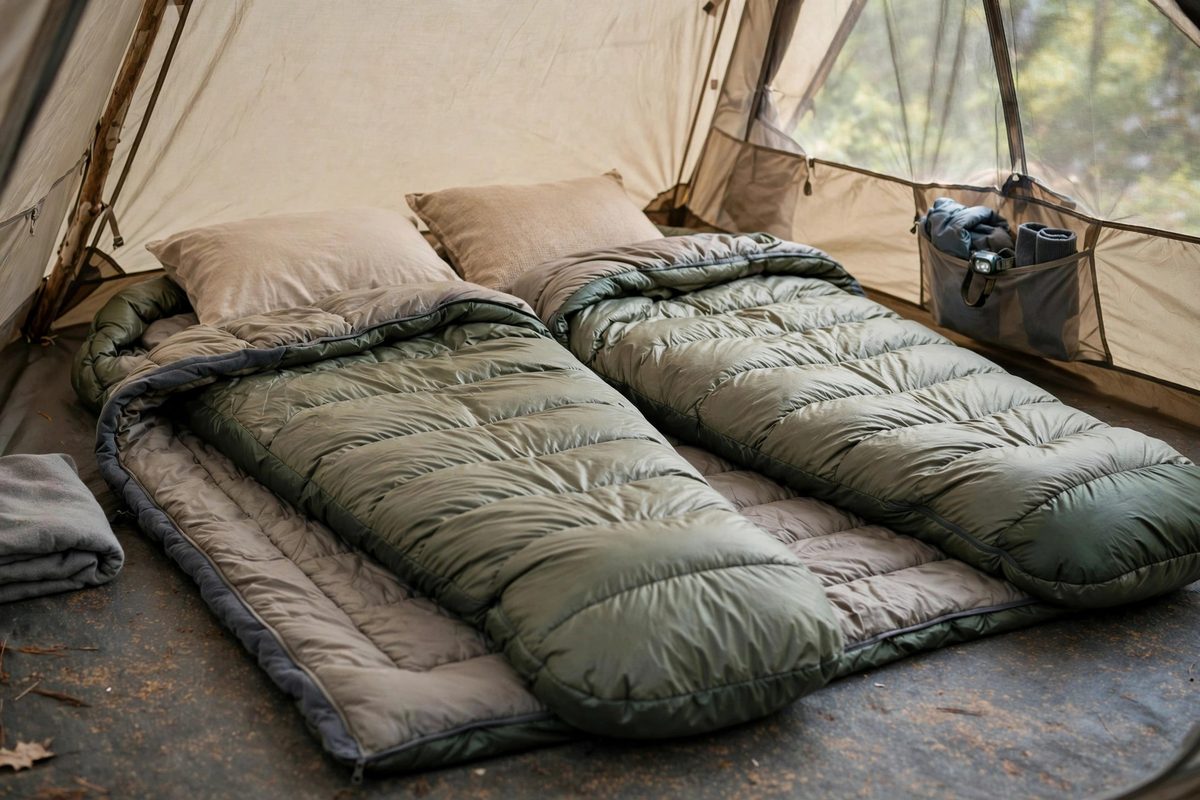
Sleepingo’s flagship product takes a different approach from the single bags around it: it is a queen-size double sleeping bag built for two adults, measuring about 87 by 59 inches. If you camp as a couple or with a kid who still wants to sleep close, this is the kind of bag that changes the experience. The waterproof nylon shell and synthetic fill carry a 32°F cold-weather rating, and the brand backs it with a lifetime warranty.
The cleverest part of the design is its convertibility. The bag unzips into two separate single sleeping bags, so it adapts to however your group sleeps on any given night. That flexibility makes it genuinely useful beyond couples: it works for parent-and-child camping, for friends sharing a tent, or as an oversized solo bag for anyone who hates feeling confined.
For car camping, truck camping, and cabin trips, the Sleepingo is hard to beat on comfort per dollar. The spacious cut means no fighting over blanket territory, and the waterproof shell handles tent condensation and damp ground without drama. It also includes the compression sack, though at two-person size it will never pack small enough for serious backpacking.
That is the main tradeoff: this is not a backpacking bag. Solo hikers should look elsewhere on this list, and even couples doing backcountry trips will want two individual bags instead. The 32°F rating is also best treated as a limit for warm sleepers rather than a comfort guarantee for everyone. But as a roomy, versatile two-person bag for drive-up camping, it earns its spot among the best sleeping bags for couples and families.
4. QOMOTOP Sleeping Bag
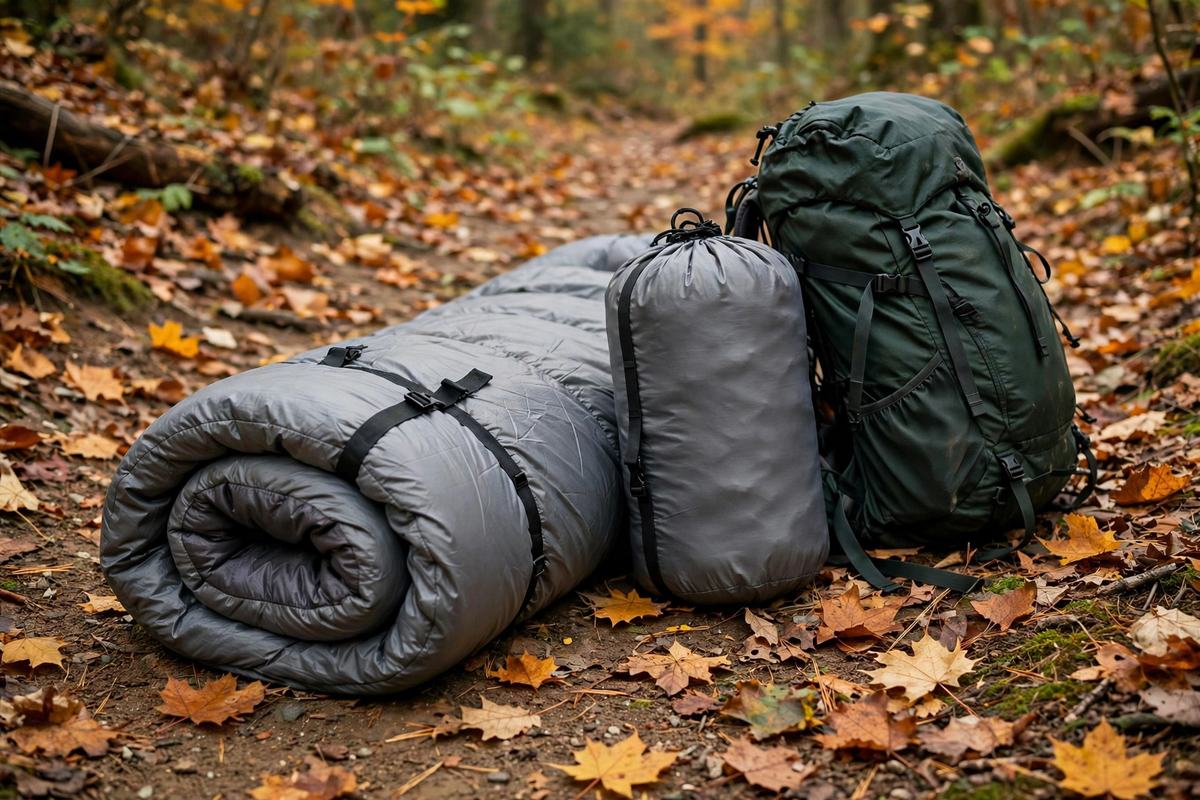
We owe readers honesty on this entry: during our research we could not verify an official QOMOTOP sleeping bag listing or detailed manufacturer specifications. QOMOTOP is a real outdoor brand, but its catalog is built around sleeping pads rather than sleeping bags, and no verifiable sleeping bag product page or spec sheet turned up in our searches. We are reviewing this entry generically, based on the category it appears to occupy, and we strongly recommend confirming exact specs, sizing, and return terms with the seller before buying.
Taken at face value, the QOMOTOP entry sits in the budget 3-season synthetic category alongside bags like the MalloMe and Oaskys above. That means a waterproof synthetic shell, a full-length zipper, a stuff or compression sack, and a comfort range aimed at spring, summer, and fall nights: the standard formula for budget entries among the best sleeping bags. If the bag you find matches that description from a reputable seller, it can serve the same role: an affordable first bag for fair-weather camping.
When evaluating any bag in this class, focus on the fundamentals rather than the brand name. Check that the zipper runs full length with a draft tube, that the shell is genuinely water-resistant, that the listed temperature range matches your actual camping seasons, and that the packed size fits your vehicle or pack. Those details matter far more than which marketplace label is stitched on the stuff sack.
Our bottom line on the QOMOTOP entry is cautious: buy only from a seller with clear specifications and a solid return policy, and compare it against the verified budget picks on this list before committing. The MalloMe and Oaskys bags above offer similar value with fully verifiable specs, and for most shoppers one of those is the safer choice. We have flagged this entry in our import notes so it can be re-verified or replaced if better information becomes available.
5. Coleman Brazos Cold-Weather Sleeping Bag
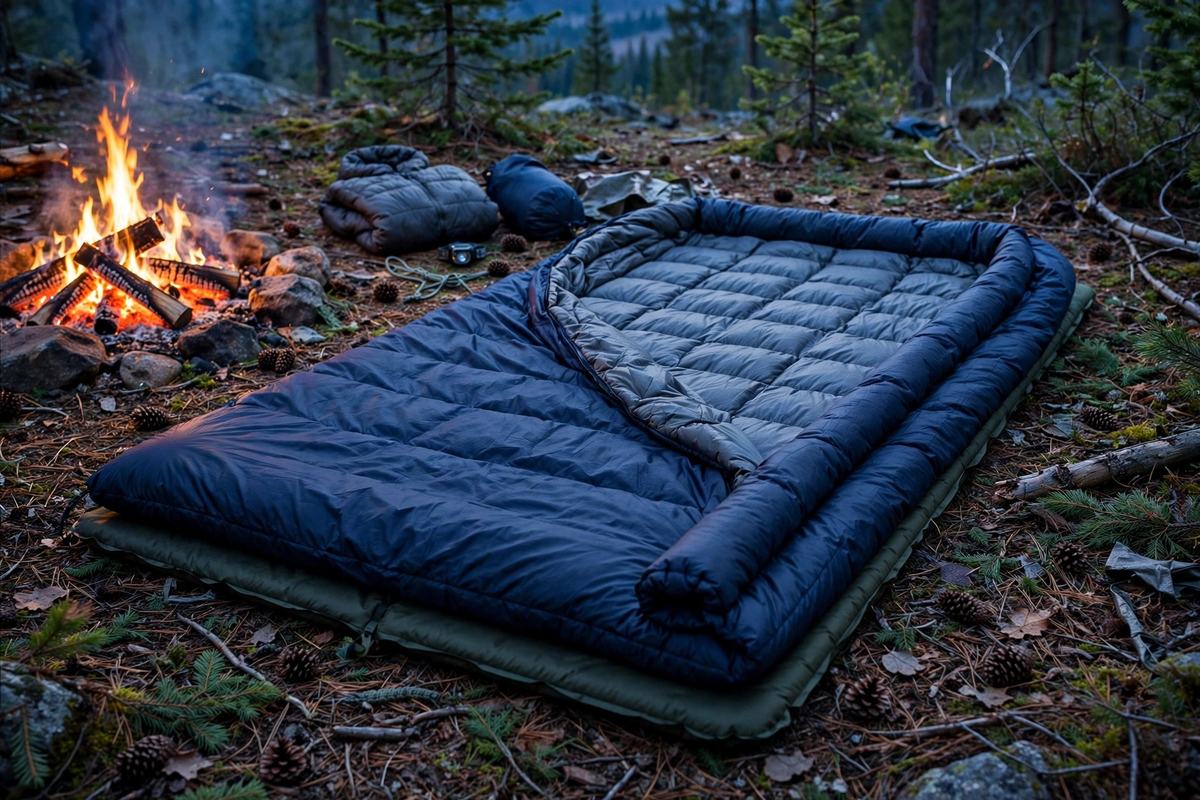
The Coleman Brazos is a genuine cold-weather classic, the bag countless families reach for when the forecast calls for frost. Coleman offers it in 20°F and 30°F versions, both built on the same proven formula: a roomy rectangular cut, durable polyester shell, and synthetic insulation tuned for chilly nights. Campers up to 5 feet 11 inches fit comfortably in its 75 by 33 inch dimensions, and the whole package is machine washable for easy care after muddy trips.
The construction details are what keep the Brazos warm. A Thermolock draft tube runs along the zipper to stop body heat from leaking out, Fiberlock construction keeps the insulation from shifting and creating cold spots, and the no-snag ZipPlow zipper glides without catching fabric at midnight. Roll-control fasteners hold the bag straight while you roll it up, and the included stuff sack makes packing straightforward. You can read the full official specifications on Coleman’s official Brazos 20°F sleeping bag page.
This bag shines for fall camping, cold-weather car camping, and anyone who wants one dependable bag for the chilly half of the year. Two Brazos bags zip together for double the room, which makes it a favorite for couples. Coleman backs it with a 5-year limited warranty, a strong statement for a bag in this price range, and it has years of real-world use behind it.
Be realistic about its limits. The Brazos is bulky and heavy compared to backpacking bags, so it belongs in a car trunk rather than on your back. It is a cold-weather bag, not a deep-winter expedition bag, and it will not replace a properly rated winter bag below its stated range. Within its zone, though, it is one of the best sleeping bags for cold-weather camping on a sensible budget.
6. TETON Sports Celsius Regular Sleeping Bag
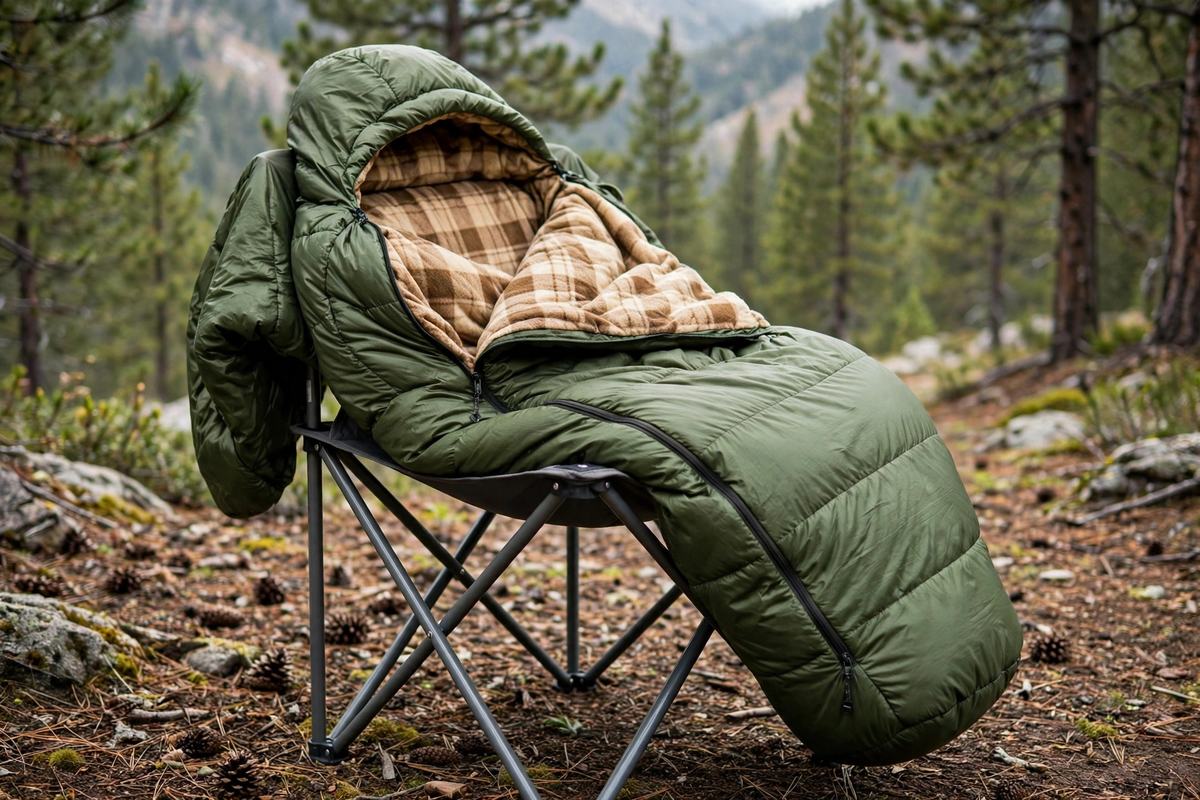
When the temperature drops toward freezing, the TETON Sports Celsius Regular is the bag many experienced campers recommend to friends. It carries a 0°F temperature rating in a roomy 80 by 33 inch rectangular body, making it one of the warmest budget-friendly entries among the best sleeping bags for freezing nights. At around 5 pounds packed, it is unapologetically a car-camping bag, but what you get for the weight is serious cold-weather capability.
The warmth comes from TETON’s SuperLoft Elite hollow-fiber insulation in a double-layer offset construction that eliminates the cold spots single-layer bags suffer from. The durable taffeta shell stands up to years of use, while the brushed poly-flannel lining feels like actual bedding against your skin, a comfort detail that budget bags often skip. The mummy-style hood cinches around your head for extra warmth and keeps your camp pillow clean.
Thoughtful features round out the package: zipper and shoulder draft tubes seal out cold air, the two-way anti-snag zipper opens from the top or bottom for ventilation, an interior pocket keeps keys and a phone within reach, and the included compression sack with heavy-duty straps packs it down tight. Left-zip and right-zip versions can be zipped together into a double bag, and TETON backs it with a limited lifetime warranty.
The tradeoffs are weight and bulk: five pounds is a lot to carry on your back, and the packed size fills a good chunk of a trunk. Cold sleepers should also remember that a 0°F rating is a survival-oriented number, and most people will be comfortable in it down to roughly freezing rather than at zero. But as an affordable, genuinely warm cold-weather bag for drive-up camping, the Celsius Regular is one of the best sleeping bags in its class.
7. ECOOPRO Warm Weather Sleeping Bag
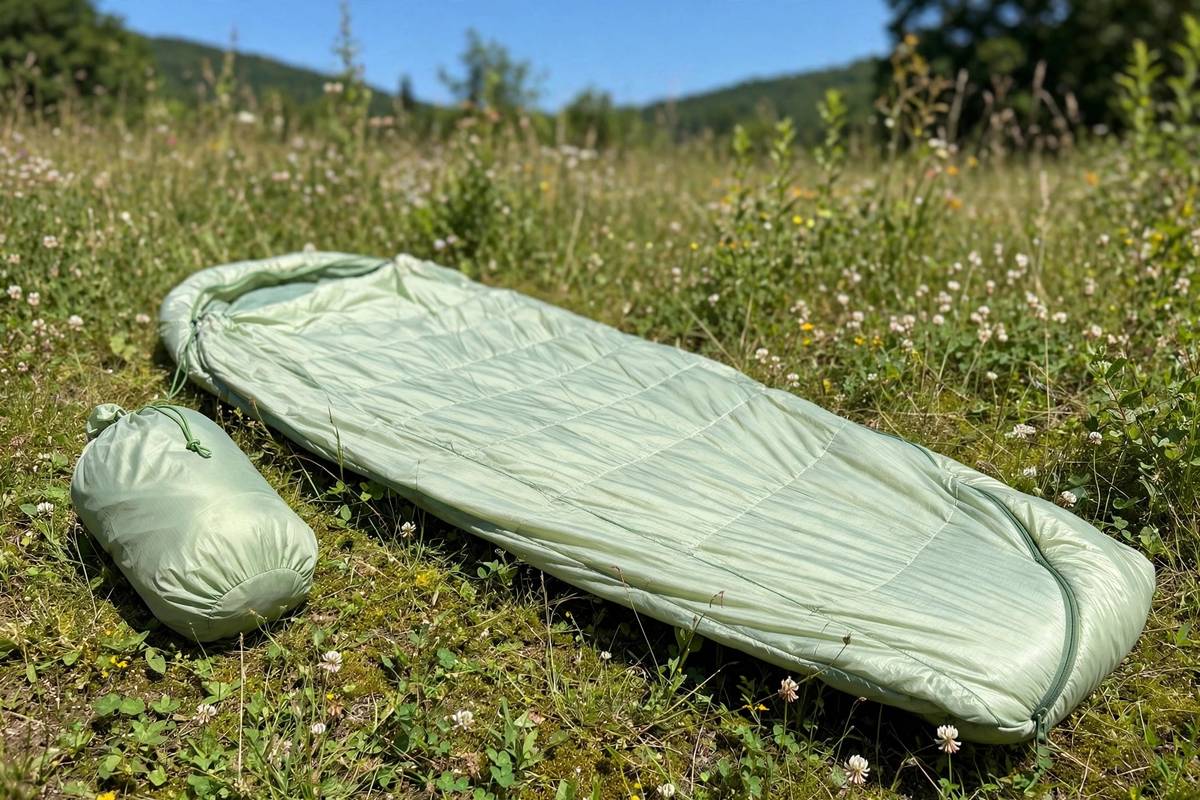
Not every camping trip needs a cold-weather fortress, and the ECOOPRO Warm Weather Sleeping Bag is built for the trips that do not. It is designed for temperatures of 50°F and up, which covers the vast majority of summer camping in most of the country. The envelope shape measures 83 by 30 inches, fitting most adults comfortably, and at just 1.65 pounds it is one of the lightest bags on this list.
The construction pairs a waterproof 400T nylon cover with a TC cotton lining, a combination the brand tunes for comfort in the 50 to 60°F range. The nylon shell shrugs off dew and tent condensation, while the cotton-blend lining breathes well on warm nights when a heavy bag would leave you sweating. It rolls up into its carry sack and compresses to roughly 11 to 12 inches tall, small enough to toss in a daypack or strap to a bike.
This is the bag for summer festivals, scout camp, backyard sleepovers that turn into real camping, and warm-weather road trips. It doubles as a camp comforter when unzipped, which makes it genuinely versatile around the house too. The brand includes a one-year warranty, and the simple envelope design means there is very little to go wrong.
The limitation is obvious and worth stating plainly: this bag is not for cold nights. Take it into the 40s and you will be uncomfortable, so shoulder-season campers need something warmer from this list. The thin warm-weather fill also means it offers less cushioning than thicker bags. But judged as a warm-weather specialist, it is one of the best sleeping bags for summer use: light, compact, affordable, and honest about what it is.
8. 30F MegaLite by WESTERN MOUNTAINEERING
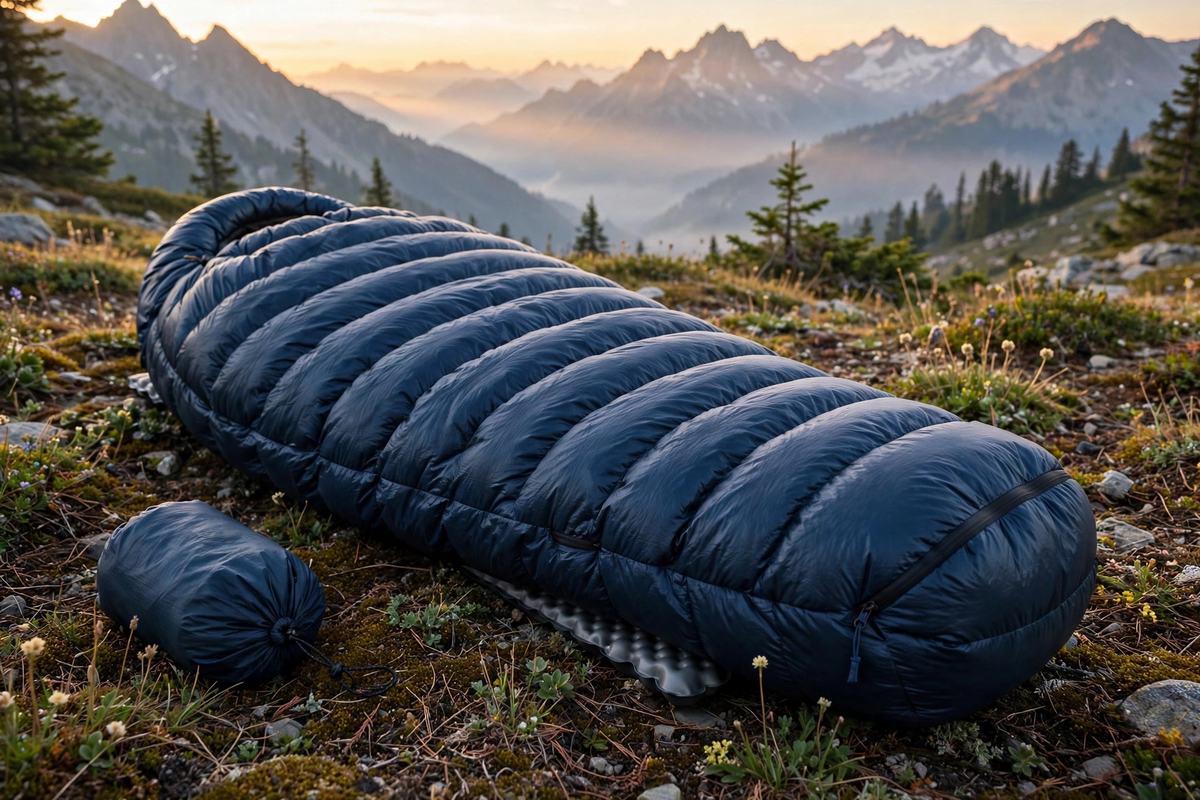
The MegaLite is where this list goes premium, and it earns the jump. Western Mountaineering has built its reputation on making some of the finest down sleeping bags in the world, all sewn in the USA, and the MegaLite is the wide-cut ultralight that backpackers graduate to. It is rated to 30°F and weighs just 1 lb 8 oz in the regular length, a warmth-to-weight ratio that synthetic bags simply cannot touch.
The secret is 850+ fill-power goose down, 12 ounces of it in the regular size, held in continuous baffles that let you shift insulation toward the top on cold nights or toward the bottom when it is milder. A full-length #5 YKK zipper vents fully on warm nights, while an insulated draft tube and a passive top collar seal in heat when temperatures drop. The ExtremeLite 12-denier ripstop nylon shell is featherlight yet genuinely durable, and the 64-inch shoulder girth tapering to 39 inches at the foot gives side sleepers and broad-shouldered campers room that standard ultralight bags do not. See the official MegaLite page at Western Mountaineering for the complete specifications.
This bag is made for thru-hikers, fastpackers, and anyone who has ever lain awake in a too-tight mummy bag wishing for an extra inch of elbow room. It packs down to roughly 7 by 13 inches, disappears into a pack, and lofts fast when you pull it out at camp. Western Mountaineering backs it with a lifetime warranty against manufacturing defects, and these bags are famous for lasting decades with reasonable care.
The honest caveats: it costs several times what a budget synthetic bag costs, the ultralight shell demands more care around sharp objects and campfire sparks, and down loses its insulating power when soaked, so it needs a dry bag or liner in truly wet conditions. It also uses a top collar rather than a full hood, which ultralight hikers accept but cold sleepers should know about. For backpackers who want the best sleeping bags money can buy in the 30-degree class, the MegaLite is the benchmark.
9. Coleman Kompact Sleeping Bag
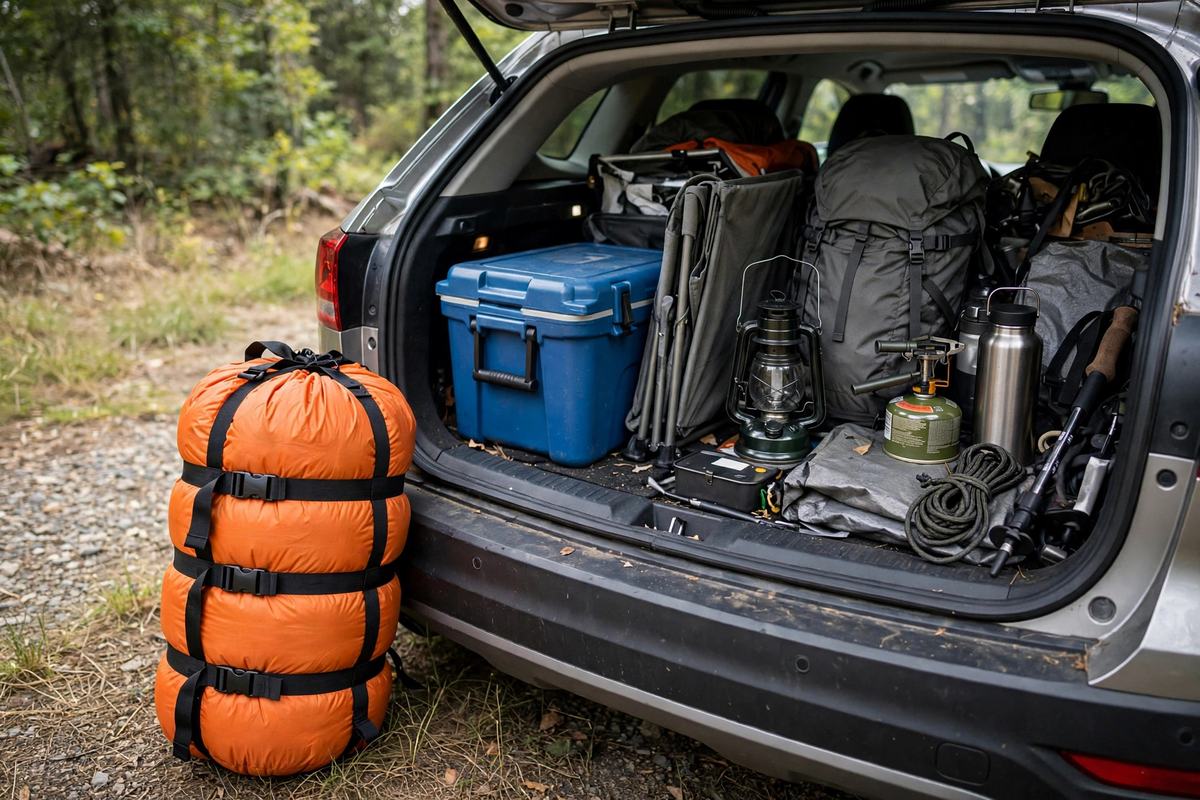
The Coleman Kompact solves the most common complaint about classic Coleman bags: they take up half the trunk. The Kompact line is built around the same trusted Coleman features but engineered to compress smaller, and it comes in 20°F, 30°F, and 40°F rating options so you can match the bag to your seasons. It is the pick for campers whose vehicle is already full of coolers, chairs, and kids.
Coleman loads the Kompact with its proven feature set. Coletherm Max fill delivers better heat retention with less weight than older fills, the Thermolock draft tube blocks heat loss through the zipper, and the patented ZipPlow zipper resists snagging. The Comfort Cuff adds soft fabric around your face, Roll Control keeps the bag straight while you roll it up, and the Quick Cord system secures the roll without fiddly knots. The compressible stuff sack with side straps cinches everything down tight, and Coleman backs the line with its 5-year limited warranty.
Both rectangular and mummy versions exist. The mummy versions, like the 25°F model, fit campers up to 6 feet 2 inches in an 82 by 32 inch body that holds heat efficiently, while the rectangular versions prioritize sprawling room. Either way, you get a bag that packs noticeably smaller than traditional rectangular bags without giving up the features that make Coleman bags easy to live with.
Choose your temperature rating carefully, since the 40°F version is a summer bag and the 20°F version is a genuinely cold-weather bag, and they are different products. Compact also means slightly snugger than the roomiest Coleman rectangles, so very tall or broad campers should check dimensions first. But if trunk space is your constraint, the Kompact is one of the best sleeping bags for making everything fit.
10. REI Co-op Magma 15 Sleeping Bag
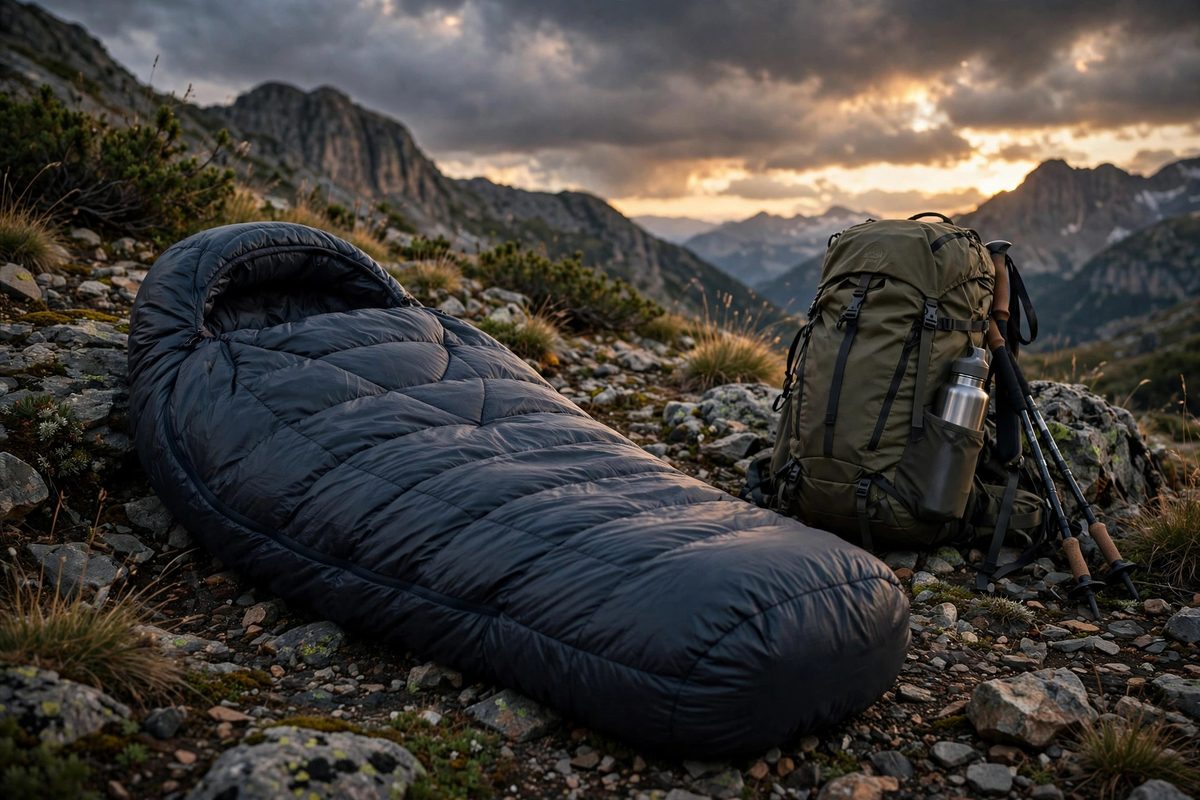
The REI Co-op Magma 15 closes this list with the strongest value proposition in premium down. Completely redesigned in 2024, it pairs a 15°F temperature rating with 850-fill-power RDS-certified goose down, responsibly sourced and treated to resist moisture. In the regular size it weighs about 2 lb 3.6 oz, which puts genuine 15-degree down performance within reach of backpackers who once had to choose between warmth and weight.
The construction details show where the redesign effort went. The shell is Pertex 15-denier ripstop nylon, light and compressible with a durable water-repellent finish. A contoured hood with an insulated yoke locks in warmth around your head and shoulders, a generous draft collar blocks the chill that sneaks in at the neck, and the trapezoidal footbox gives your feet room without wasting heat. An interior stash pocket keeps small essentials close.
Perhaps the most distinctive feature is the sizing: REI offers the Magma 15 in nine size combinations, from short-narrow to long-wide, with unisex cuts that move beyond the old gendered sizing. That means more campers can get a bag that actually fits their body, and proper fit is one of the biggest factors in real-world warmth. Reviewers consistently praise its warmth, compressibility, and the fact that larger sizes do not cost more.
It is still a mummy bag, so dedicated sprawlers may find even the wide sizes confining, and the 15-denier shell rewards careful handling. It is also realistically a three-season backpacking bag rather than a winter mountaineering bag, despite the impressive rating. But for backpackers seeking premium down performance without the boutique price tag, the Magma 15 is one of the best sleeping bags you can buy in 2026.
Our Final Pick
After weighing warmth, weight, comfort, value, and honest real-world usability, our overall pick for most campers is the Coleman Brazos Cold-Weather Sleeping Bag. For shoppers comparing the best sleeping bags for family camping, it covers the widest range of actual use: cold enough for frosty fall nights, roomy enough for restless sleepers, durable enough for kids, and priced so reasonably that outfitting a whole family does not hurt. The 20°F and 30°F options let you tune it to your climate, and the 5-year warranty backs up the promise.
Backpackers comparing the best sleeping bags for multi-day trips should look to the premium end of this list instead. The REI Co-op Magma 15 is our pick for the best value in serious down performance, delivering 850-fill warmth at a weight that works for multi-day trips, while the Western Mountaineering MegaLite is the no-compromise choice for ounce counters who want the finest 30-degree bag made. Budget shoppers and summer campers cannot go wrong with the MalloMe or Oaskys for fair weather, the ECOOPRO for ultralight summer trips, or the Sleepingo when two people share a tent. Match the bag to your trips, respect the temperature ratings, and you will sleep well.
Frequently Asked Questions
What temperature rating should I choose in a sleeping bag?
Choose a bag rated at least 10 to 15 degrees lower than the coldest temperature you expect to camp in. Manufacturer ratings are standardized, but most people sleep colder than the test dummy, and factors like your sleeping pad, tent, clothing, and metabolism all shift real comfort. When in doubt between two of the best sleeping bags on this list, pick the warmer one: you can always vent a warm bag, but you cannot add warmth you do not have.
Down vs synthetic insulation: which is better?
Neither is universally better; they suit different campers. Down offers the best warmth for the weight and packs smallest, which is why down bags lead our ranking of the best sleeping bags for backpackers. Synthetic insulation costs far less, keeps insulating when damp, and is easier to wash, which is why budget picks like the MalloMe, Oaskys, and Coleman bags use it. Choose down for weight-critical trips and synthetic for wet climates, kids, and tight budgets.
What do EN and ISO comfort and limit ratings mean?
EN and ISO ratings come from standardized laboratory tests using a heated manikin. The comfort rating is the lowest temperature at which an average cold sleeper should sleep comfortably, and the lower limit rating is the lowest temperature at which an average warm sleeper can sleep without waking from cold. The limit rating is the number most brands print biggest, so treat it as an edge case, not a guarantee, and use the comfort rating when comparing the best sleeping bags for your climate.
How do I wash and store my sleeping bag?
Most synthetic bags on this list, including the Coleman and TETON models, are machine washable on a gentle cycle with mild detergent, then tumble dried on low heat. Down bags need special down wash and thorough drying to restore loft, so follow the manufacturer’s instructions exactly. For storage, never keep a bag compressed long term: hang it or store it loose in a large breathable sack to preserve the insulation’s loft between trips.
Mummy vs rectangular: which shape is right for me?
Mummy bags are narrower at the feet and taper toward the head, which traps heat efficiently and saves weight, making them the standard for backpacking. Rectangular bags give you room to move and feel more like a bed, making them better for car camping, restless sleepers, and anyone who feels claustrophobic. Wide-cut options like the MegaLite split the difference. Pick the shape that matches how you sleep, not just how you camp.
How should I pack a sleeping bag for a backpacking trip?
Stuff, do not roll, a backpacking sleeping bag: start at the foot and push it into a stuff sack or waterproof dry bag to eliminate dead air. Pack it at the bottom of your pack, close to your back, since you will not need it until camp. Keep down bags in a dry bag or pack liner no matter the forecast. If you are still choosing your pack, see our guide to the 10 best backpacks for 2026 for options with the volume and compression to carry a bag like the Magma 15 or MegaLite comfortably.
The Bottom Line
The best sleeping bags are the ones that match your real trips. Fair-weather campers get everything they need from affordable 3-season bags like the MalloMe, Oaskys, and ECOOPRO. Cold-weather car campers should anchor on the Coleman Brazos or the TETON Sports Celsius Regular. Couples will love the Sleepingo double bag, and backpackers chasing the best warmth-to-weight ratio should invest in the REI Co-op Magma 15 or the Western Mountaineering MegaLite.
Whatever you choose from the best sleeping bags above, buy for the coldest night you will actually face, not the average one, and pair your bag with an insulated sleeping pad, since the ground steals more heat than the air. A good bag is a multi-year investment in better mornings. Pick honestly, store it uncompressed, and it will pay you back in warm nights for a decade.