
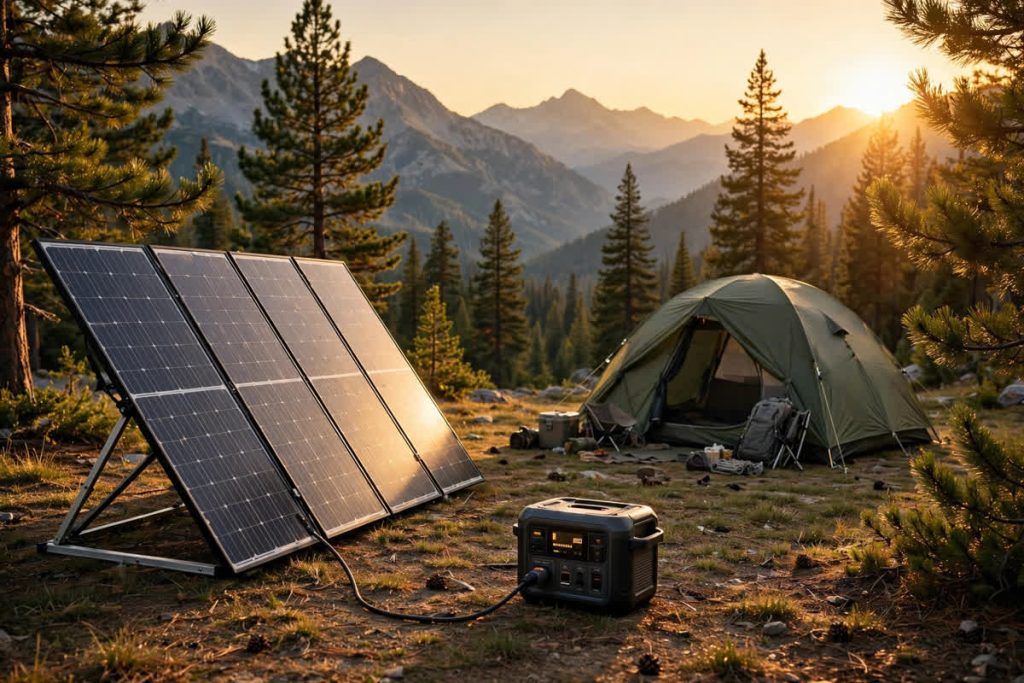
10 Best Solar Panels for Camping Trips in 2026
Table of Contents
Introduction
Camping has changed. A weekend in the woods used to mean going fully off the grid, but modern campers still want their phones charged, their cameras ready, and their lights on after dark. A portable solar panel is the simplest way to keep all of that running without dragging a noisy gas generator into the forest. Unfold it at camp, angle it toward the sun, and it quietly turns daylight into usable power for everything from smartphones to full portable power stations.
The best solar panels for camping share a few traits. They fold down small enough to ride along in a car trunk or strap to a backpack, they shrug off rain and dust, and they offer the right mix of USB and DC outputs for the gear you actually carry. Pair one with a power station and you can run a fridge, charge laptops, and keep your camp lit with one of the best camping lanterns for the whole trip. This guide to the best solar panels for camping walks through ten foldable panels worth considering for the 2026 camping season, from ultralight backpacking chargers to heavy duty panels built for RV base camps.
How We Chose the Best Solar Panels for Camping
We judged every panel on this list by the same practical criteria a camper would use in the field. Power output matters first, because a 28 watt charger and a 200 watt panel live in completely different worlds. The small ones are perfect for topping up phones and power banks on the trail, while the big ones can refill a portable power station that runs lights, fans, and small appliances all evening.
Portability came next. A panel that folds into a briefcase shape and weighs under ten pounds is easy to live with at a drive up campsite, while anything under five pounds can realistically ride on a backpack. We also weighed weather resistance, since camp weather changes fast, and output variety, because direct USB charging is convenient while a DC or MC4 output is what feeds a power station.
Finally, we looked at build quality details like ETFE laminated surfaces, sturdy kickstands, and compatibility with the major power station brands, because a panel that only works with one ecosystem is less useful on a mixed gear trip. Just as with picking the best camping stoves, choosing among the best solar panels for camping comes down to matching the gear to the way you actually camp.
ZOUPW Portable Solar Panel
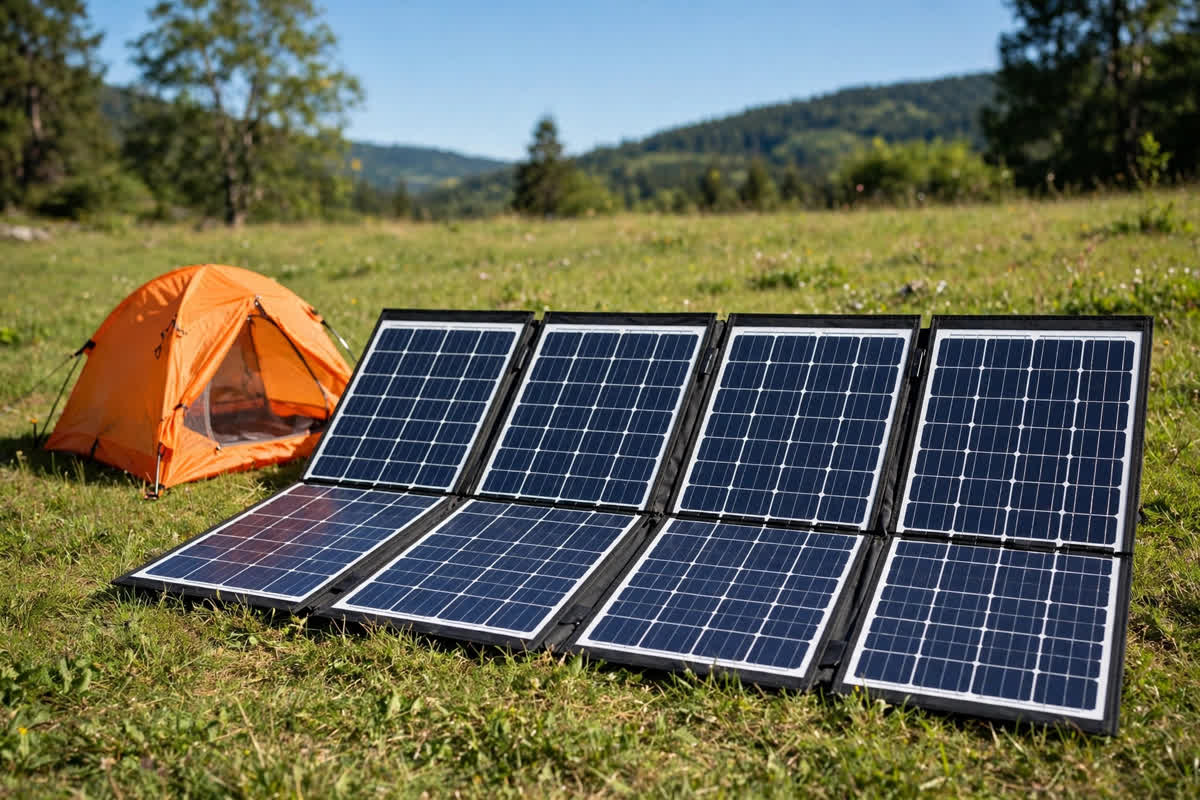
The ZOUPW Portable Solar Panel is a strong all rounder in the popular 100 watt foldable class. It uses high efficiency monocrystalline cells with a rated conversion efficiency around 23.5 percent, which helps it squeeze solid output from the panel surface even when the light is less than perfect. The ETFE laminated surface is a step up from older PET coatings, resisting scratches and weathering while the panel rides around in a trunk or truck bed.
What makes this panel especially camper friendly is its connectivity. Alongside USB-A and USB-C outputs for direct device charging, it carries DC outputs and ships with a wide set of adapters covering the common connector standards used by portable power stations. That means it can charge a phone directly in the morning and feed a power station through the afternoon without extra shopping trips. The IP67 weather sealing gives real confidence when a surprise shower rolls through camp, and the foldable briefcase form keeps it manageable at just under ten pounds.
This is the panel for the car camper who wants one purchase that covers both small devices and a power station. It is not the lightest option here, so ounce counting backpackers may prefer a smaller charger, but for drive up sites, RV trips, and emergency backup at home, it hits a sweet spot of power, durability, and flexibility that is hard to beat.
SOKIOVOLA Portable Solar Panel
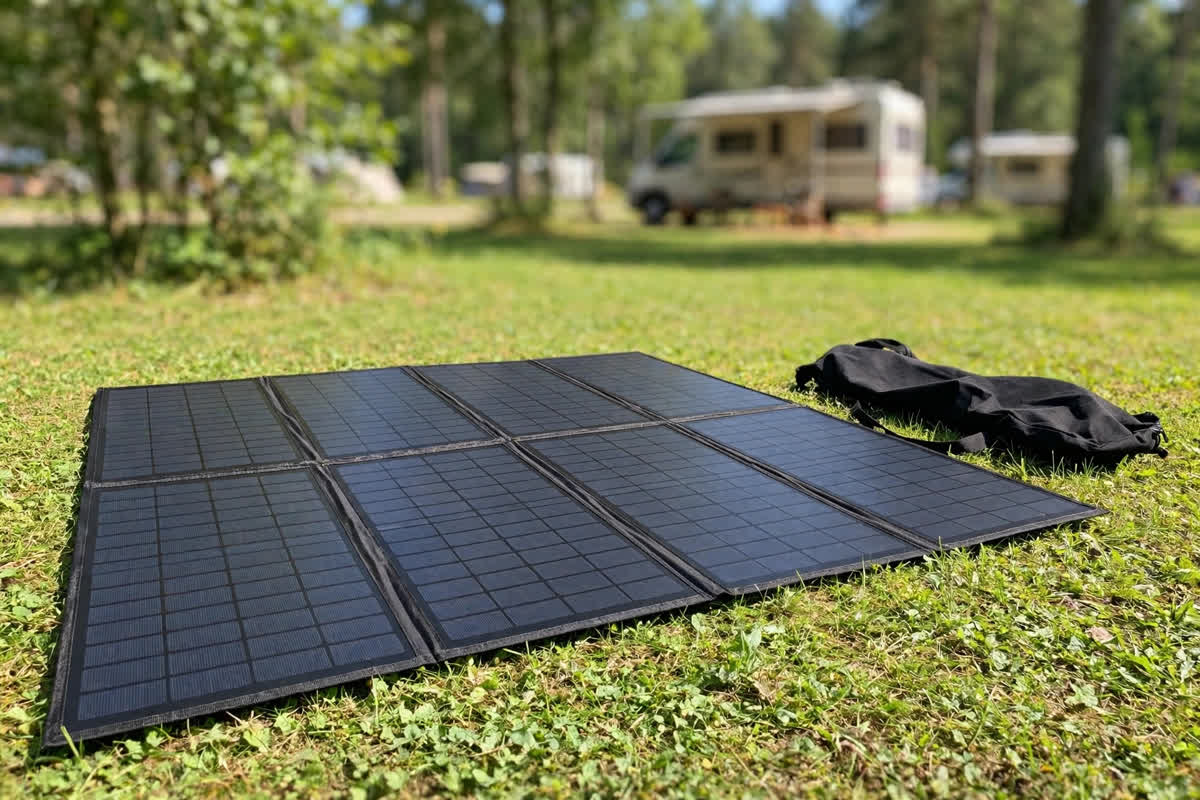
The SOKIOVOLA Portable Solar Panel is built around the same 100 watt foldable formula but leans harder into ruggedness. Its ETFE surface carries an IP68 dust and waterproof rating, which is about as weatherproof as portable panels get, and the compact fold keeps the carry weight in the light single digits. For campers who have watched cheaper panels fade after a season of sun and rain, that sealed construction is a meaningful upgrade.
Compatibility is another strong point. The included 4-in-1 MC4 style cable covers the connector types used by most mainstream portable power stations, so pairing it with a Jackery, EcoFlow, or Bluetti style unit is straightforward. The panel folds small enough to tuck behind a seat, and the included storage bag plus carabiner style mounting points make it easy to hang from a tent or strap to a pack during a lunch stop.
Where it gives ground is raw output ceiling. At 100 watts it will charge phones, tablets, cameras, and small power banks with ease, and it will feed a power station steadily through a sunny day, but it will not run high draw appliances on its own. Think of it as a durable daily driver for typical camping electronics rather than a base camp workhorse, and it earns its place on that basis.
Renogy Portable Solar Panel
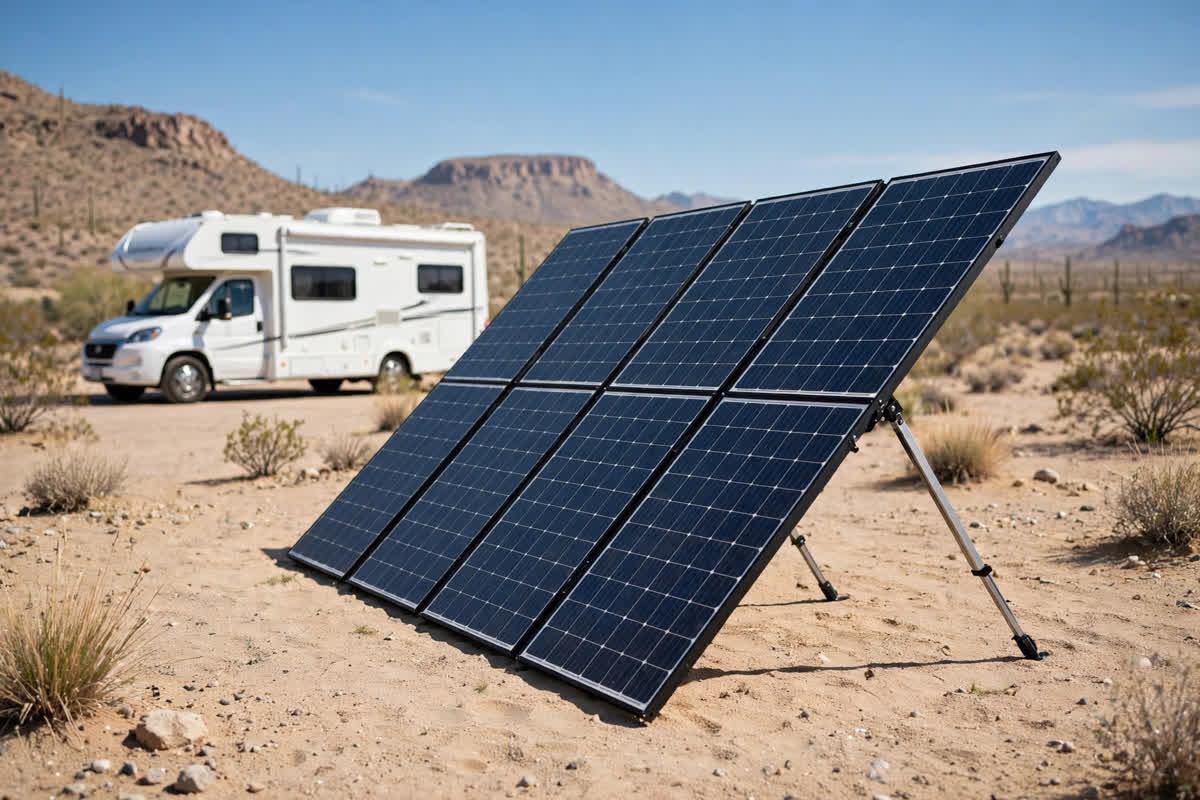
Renogy is one of the most established names in consumer solar, and the Renogy Portable Solar Panel brings that pedigree to the campsite in a 200 watt foldable format. The headline feature is the advanced N-type cell technology with efficiency around 25 percent, which is near the top of what foldable panels currently achieve. In practical terms that means more watt hours per square foot of panel, so the same patch of sunlight does more work for your batteries.
The output selection is genuinely versatile. A USB-C PD port handles modern phones and tablets at fast charging speeds, a pair of USB-A ports covers older gear, and an MC4 output feeds portable power stations and 12 volt battery systems. Adjustable kickstands and a foldable four panel layout make setup quick, and the IP65 weather resistant build handles rain and dust without drama. At just under fourteen pounds it is heavier than the 100 watt class, but that is the fair price of double the power.
This is the pick for campers running a real power station setup, whether that is an RV, a van build, or a well equipped tent base camp with a fridge and lighting. The brand backing and multi year warranty support add peace of mind for a panel you plan to use season after season. If your trips are mostly about phones and headlamps, it is more panel than you need, but for serious off grid comfort it is one of the most capable options here.
FlexSolar Portable Solar Panel
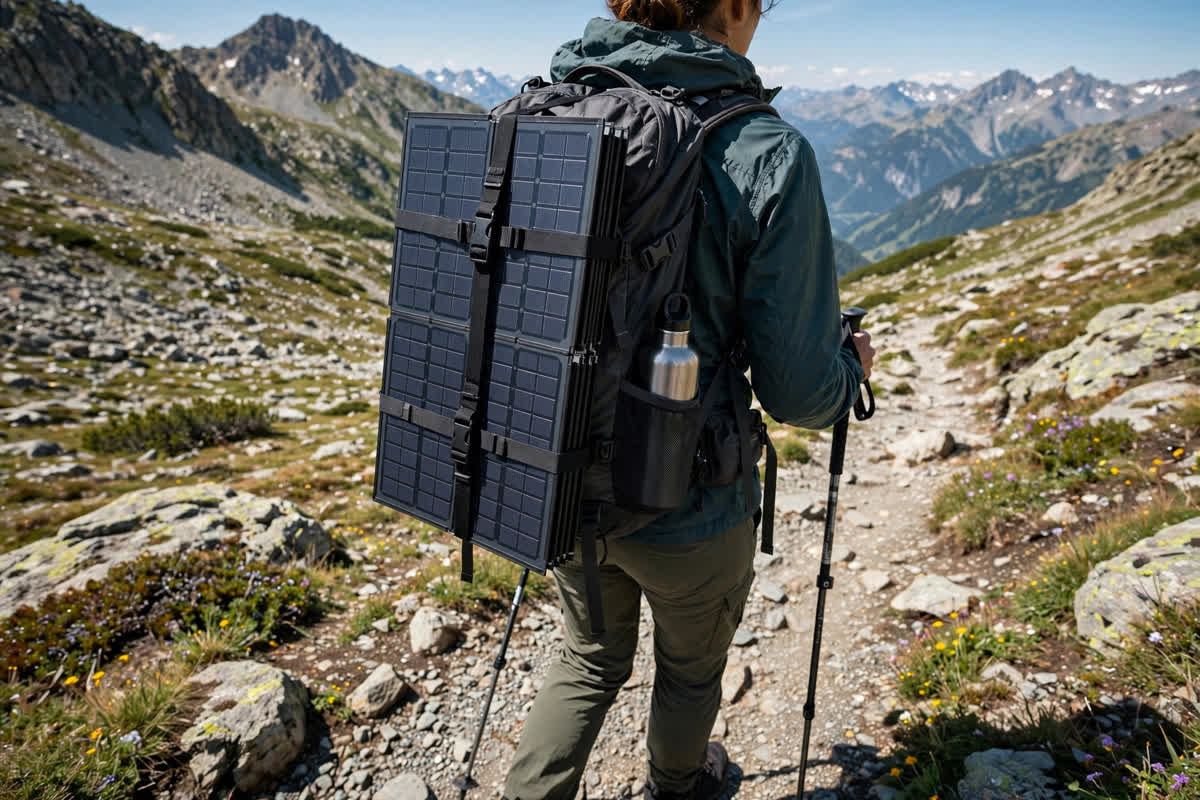
The FlexSolar Portable Solar Panel is the lightweight champion of the 100 watt class. Weighing just over four pounds and folding down to roughly the size of a laptop, it is one of the few full 100 watt panels that a backpacker can realistically carry. The monocrystalline cells are rated up to 24 percent efficiency, and a built in smart chip guards against over voltage, over current, and short circuits while charging.
Despite the featherweight build, the output list is complete. A USB-C PD port and a QC3.0 USB-A port handle direct device charging, while the DC output and included 4-in-1 cable connect to most portable power stations. The IP67 waterproof rating and ETFE armor stand up to rain and trail abuse, and eye holes in the corners make it simple to lash the panel to a backpack so it charges while you hike.
The trade offs are the ones you would expect. There is no built in kickstand on some versions, so you will lean it against a rock or pack for the best angle, and the slim foldable construction rewards gentle handling rather than rough stuffing. For backpackers, bikepackers, and minimalists who want real 100 watt power without the usual weight penalty, though, this is the most trail friendly panel on the list.
BigBlue Foldable Solar Charger
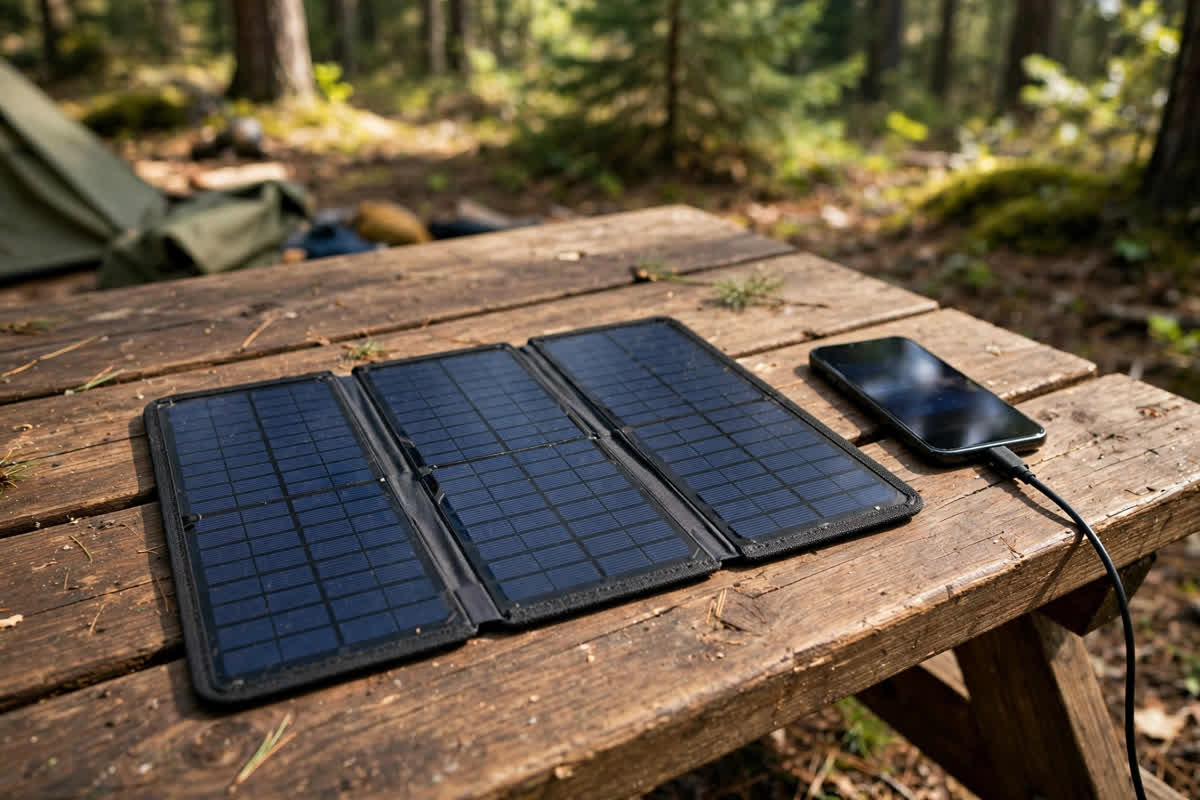
The BigBlue Foldable Solar Charger plays a different game from the big 100 and 200 watt panels. This is a compact charger class panel, with versions in the 28 to 60 watt range, designed to live in a daypack and keep small electronics alive on the move. It unfolds in seconds, and many versions include steel hooks or carabiners so it can hang from a backpack and charge while you walk.
The multi port USB layout is the star here. With USB-C and USB-A outputs and smart charging circuitry, it can feed two or three devices at once, automatically adjusting current for each one. Higher efficiency cells, rated above 25 percent on some versions, help it perform in the real world where panels rarely sit at the perfect angle, and auto restart circuitry means it resumes charging on its own after a passing cloud instead of needing a manual replug. Weather resistance varies by model from splash proof to fully sealed, so check the rating on the specific version you buy.
Be honest with yourself about the use case. This will not charge a portable power station in any reasonable time, and it will not run a fridge. What it does brilliantly is keep phones, headlamps, GPS units, and power banks topped up on day hikes, backpacking trips, and festivals. If your camping power needs stop at personal electronics, this is the simplest, lightest, and most affordable way to get them.
Renogy E.FLEX Portable Solar Panel
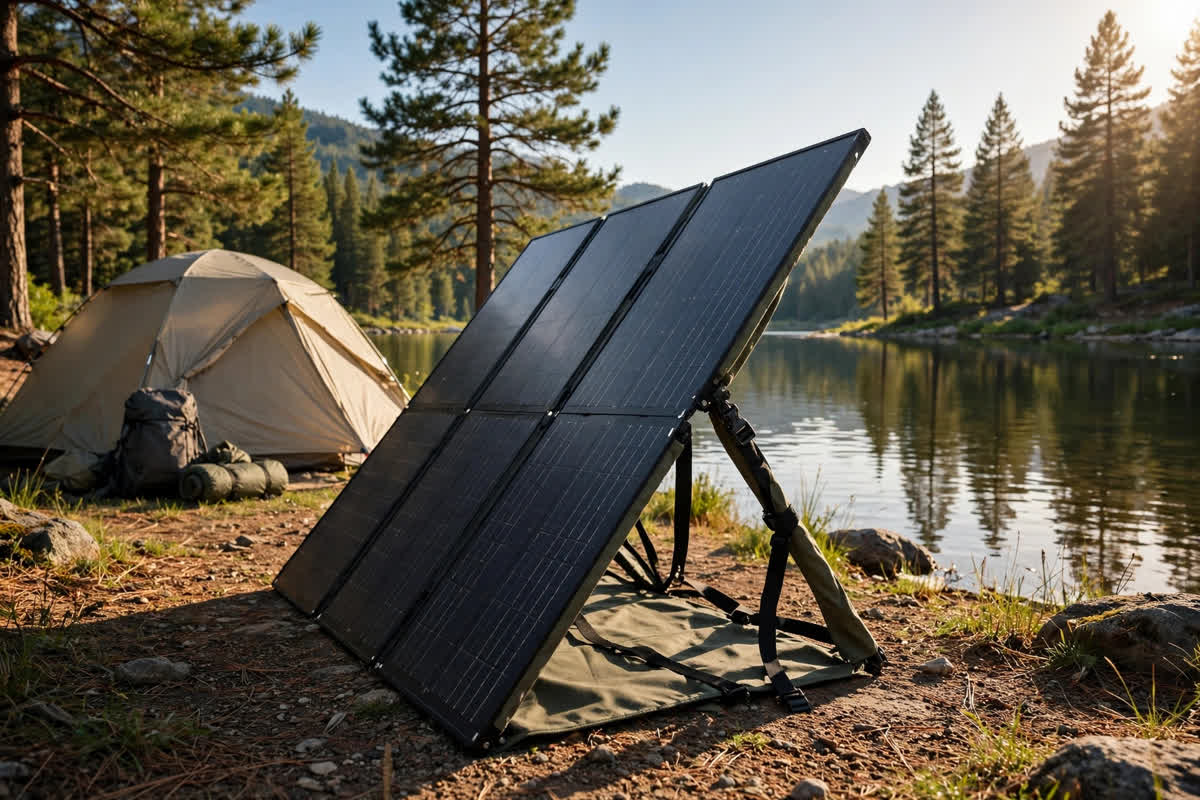
The Renogy E.FLEX Portable Solar Panel is Renogy’s dedicated foldable line for campers and overlanders, offered in sizes like the 120 watt version. It uses PERC monocrystalline cells rated around 22 percent efficiency, wrapped in an ETFE laminated case with an IP65 water resistant rating. The result is a panel that feels built for years of outdoor service rather than a single season.
Setup is thoughtfully designed for camp life. The panel folds into its own carry case, which doubles as an adjustable stand so you can tilt the cells toward the sun through the day for stronger output. An MC4 style output connects to portable power stations and 12 volt batteries, including Renogy’s own Phoenix series, and the broad voltage compatibility plays well with third party stations too. At around eleven pounds for the 120 watt size, it carries easily from the vehicle to the perfect sunny patch.
The E.FLEX sits in a comfortable middle ground. It offers more output and sturdier construction than ultralight chargers, while staying lighter and more packable than the full 200 watt class. For family camping, overlanding, and RV use where the panel gets set up and taken down every day, that combination of durability and manageable weight is exactly right.
GRECELL Portable Solar Panel
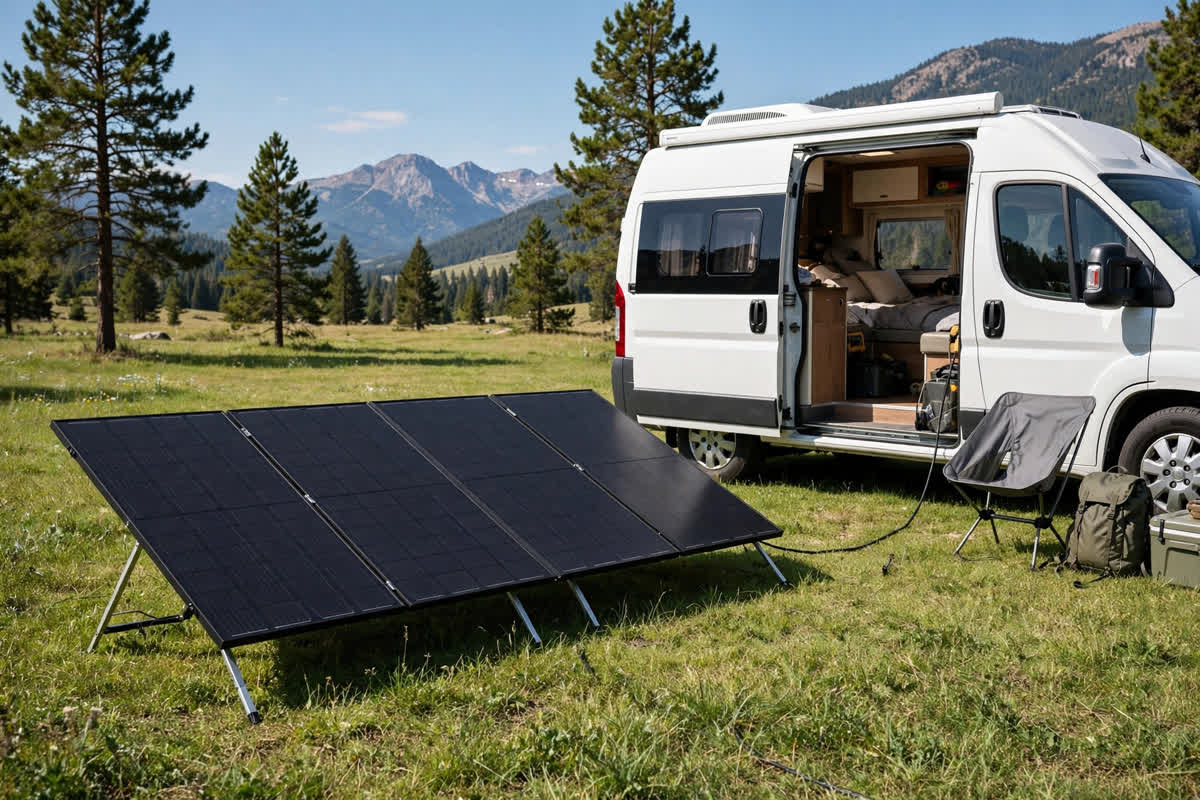
The GRECELL Portable Solar Panel is a well rounded 100 watt foldable that focuses on the details campers notice after a few trips. The monocrystalline cells are rated around 23.5 to 24 percent efficiency, and the ETFE laminated surface with an IP67 waterproof rating stands up to dust, rain, and the general knocking around that camp gear endures. Adjustable kickstands hold the panel at a good sun angle without improvising with sticks and rocks.
The kit approach is generous. An MC4 output feeds power stations, and the included adapter set covers the common DC plug sizes, so older and newer gear alike can connect without a separate adapter hunt. The panel supports linking a second unit in series or parallel for double the output, which is a nice growth path if your power needs expand from weekend trips to longer off grid stays. The foldable form with a carry handle keeps transport simple at just under ten pounds.
GRECELL may not have the brand recognition of the biggest names here, but the construction and feature set compare well with panels costing more. For campers who want a dependable 100 watt workhorse with room to expand later, it deserves a close look alongside the better known options.
Anker 625 Solar Panel
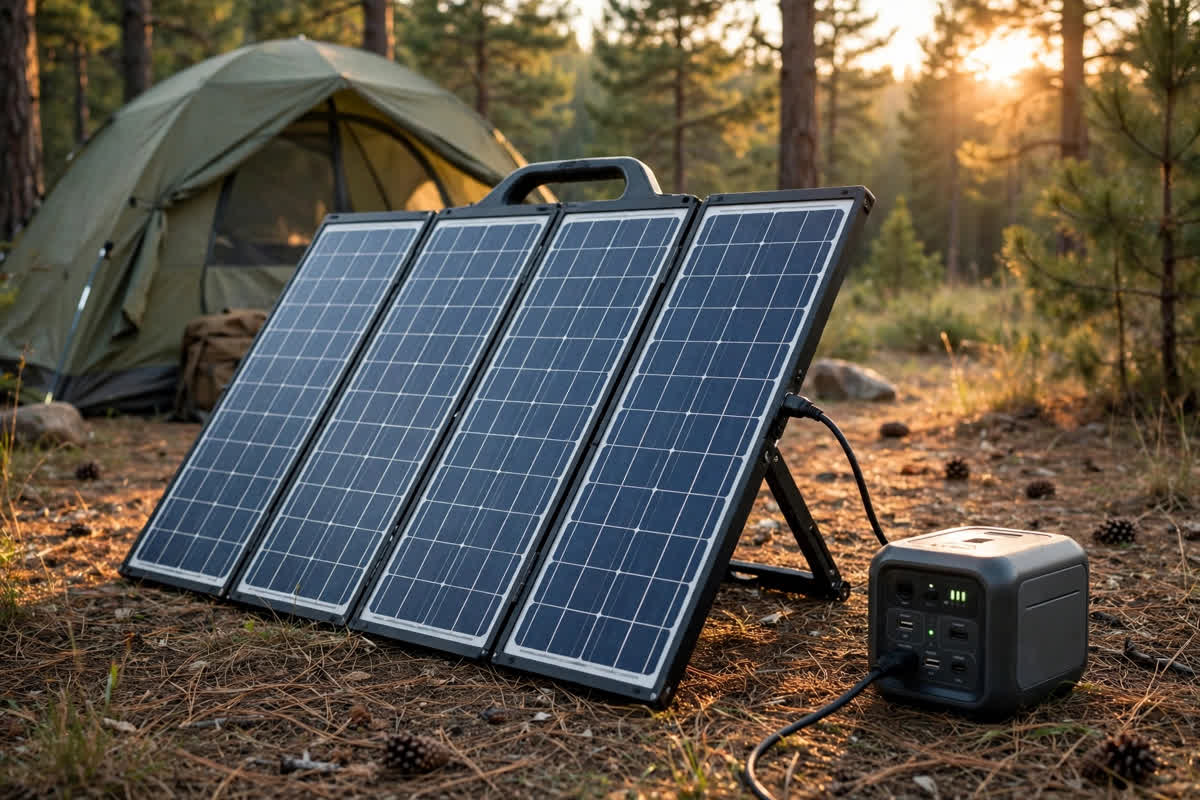
The Anker 625 Solar Panel brings Anker’s consumer electronics polish to the 100 watt portable class. The monocrystalline cells convert around 23 percent of sunlight, and the foldable design includes a built in adjustable kickstand plus a carry handle, so it moves from trunk to sunny clearing with minimal fuss. Anker’s Suncast alignment aid helps you find the best angle, which matters more than most people realize for real world output.
Outputs cover both use cases. A USB-C port and USB-A port charge phones, tablets, and cameras directly, while the XT60 solar output feeds portable power stations, with the Anker Powerhouse line being the natural pairing. The panel is scratch and weather resistant for outdoor duty, and short circuit and overvoltage protection are built in. One honest note is weight, since this is one of the heavier 100 watt folders, so it suits car camping better than backpacking.
If you already own Anker charging gear, the ecosystem fit is a genuine advantage, with matched connectors and predictable performance. Even outside the Anker family it is a solid, well finished 100 watt panel from a brand with a strong support reputation. Just plan to carry it rather than hike with it.
EF ECOFLOW Portable Solar Panel
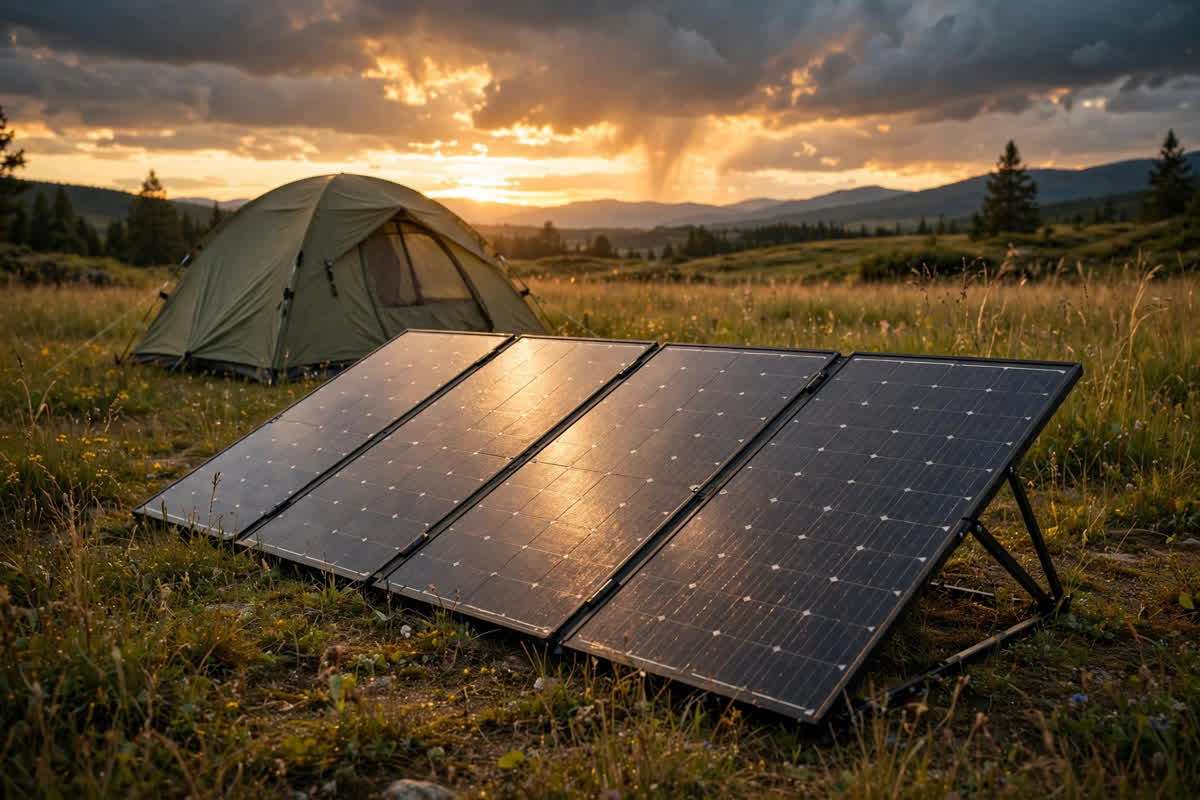
A quick note on the name first. The sheet lists this as the EF ECOFLOW Portable Solar Panel, which refers to the portable solar line from EcoFlow, the well known portable power station brand. EcoFlow’s portable panels come in sizes like 110, 160, and 220 watts, including bifacial versions that capture reflected light on the rear face for extra output in bright environments.
The design is pure camp convenience. The panels fold into their own carry case, which unfolds into a kickstand for angled setup, and the one piece ETFE laminated construction carries an IP68 waterproof and dustproof rating on current models. Conversion efficiency runs into the low to mid twenty percent range depending on the model, with the newest lightweight versions pushing toward 25 percent. They connect to EcoFlow River and Delta series power stations with a simple cable, and the voltage ranges are compatible with many third party stations as well.
The obvious buyer is someone who already owns or plans to buy an EcoFlow power station, since the matched pairing takes all guesswork out of solar charging. The bifacial models are particularly interesting for campsites with bright sand, snow, or light colored ground that bounces extra light onto the rear cells. As a standalone panel purchase they are premium priced, but the build quality and ecosystem integration justify it for committed EcoFlow users.
DOKIO Portable Solar Panel Kit
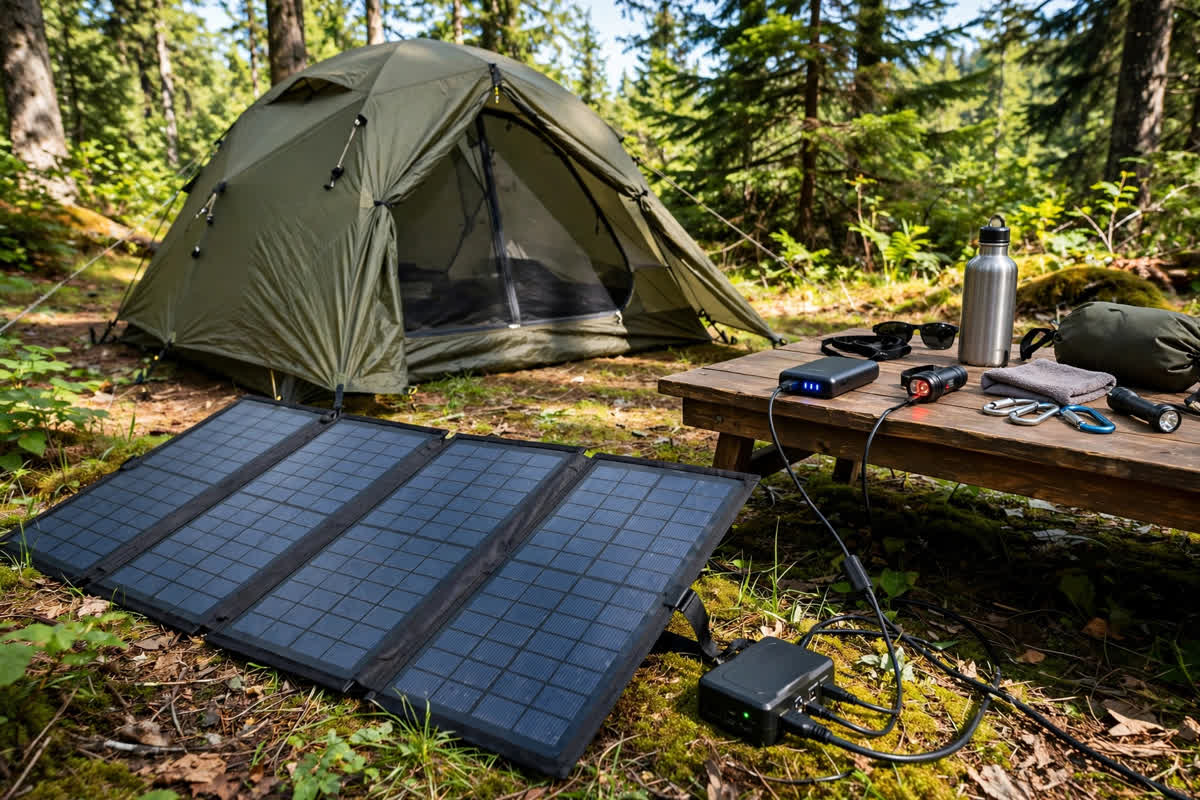
The DOKIO Portable Solar Panel Kit stands out because it is a true kit, not just a panel. The 100 watt monocrystalline panel ships with a standalone PWM charge controller, a long extension cable, alligator clips, and a full set of DC adapters, so it can charge 12 volt batteries directly in addition to feeding portable power stations. For campers running a dual battery setup in a van or charging a deep cycle battery at a cabin, that controller is the difference between a working system and a shopping list.
The panel itself folds down small and light at just over five pounds, with a fabric carry case and weather resistant cell surface. The long cable is a thoughtful touch, letting you park the panel in full sun while the battery or controller sits in the shade, which keeps everything cooler and safer. Dual USB ports on the controller handle phones and small gear when the panel is tied to a battery.
This is the most complete out of the box solution on the list for 12 volt battery charging, and a strong value for RV and van campers who want solar without assembling a parts list. Power station only users may prefer a panel with direct USB-C PD outputs, but for battery based setups the DOKIO kit is genuinely hard to beat for completeness.
Final Pick
For most campers, the Renogy Portable Solar Panel is the strongest overall choice. The 200 watt output paired with high efficiency N-type cells gives it the muscle to run a real power station setup, the USB-C PD and USB-A ports cover direct device charging, and the Renogy brand backing means support and warranty you can count on. It is the panel we would buy for family camping, RV trips, and van life.
Backpackers and weight conscious travelers should look at the FlexSolar Portable Solar Panel instead, since it delivers a full 100 watts at barely over four pounds. And if your needs stop at phones and power banks, the BigBlue Foldable Solar Charger is the simple, affordable answer. When comparing the best solar panels for camping, match the panel to the trip, angle it at the sun, and the days of rationing battery percentage at camp are over.
FAQ
What size solar panel do I need for camping?
It depends on what you are charging. Phones, headlamps, and power banks are happy with 28 to 60 watts, while charging a portable power station that runs lights and a fridge calls for 100 to 200 watts. As a rule of thumb, add up the watt hours your gear uses in a day and choose a panel that can replace that amount in four to six hours of good sun.
Can a portable solar panel charge a power station?
Yes, that is one of their main jobs. Most foldable panels in the 100 watt and larger class include a DC, MC4, or XT60 style output designed to feed portable power stations. Check that the panel’s voltage falls within your station’s solar input range and use the adapter cable the panel includes, and the station will charge whenever the panel sees good sun.
How long does it take to charge devices with a camping solar panel?
A phone can reach a useful charge in one to two hours of direct sun from even a small panel, while a mid size power bank takes a few hours. Refilling a large portable power station from a 100 watt panel typically takes most of a sunny day, and a 200 watt panel roughly halves that. Clouds, shade, and poor panel angle all stretch these times, so give the panel the clearest sky you can.
Are portable solar panels waterproof?
Most camping focused panels carry a real weather resistance rating, commonly IP65, IP67, or IP68, which covers rain and dust without worry. Splash proof models should not be left out in driving rain, and no portable panel should sit submerged. As a habit, bring panels under cover in severe storms and let the junction box area dry before packing.
Do I need a charge controller with a foldable solar panel?
Not always. When a panel feeds a portable power station, the station’s built in charge controller handles regulation, so you just connect the cable. A separate controller is needed when charging a bare 12 volt battery directly, which is why kits like the DOKIO include one. Panels with direct USB outputs also regulate themselves for safe phone charging.
Can I use a camping solar panel on cloudy days?
You can, but expect much less output. Heavy overcast can cut production to a tenth or less of the rated wattage, while light haze has a smaller effect. High efficiency monocrystalline cells perform better than older designs in diffuse light, and keeping the panel angled toward the brightest part of the sky helps. For trips with unreliable weather, a larger panel or a pre charged power station is good insurance.
The Bottom Line on the Best Solar Panels for Camping
The best solar panels for camping turn a sunny campsite into a quiet power plant, and the ten options above cover every style of trip from ultralight backpacking to full RV base camps. Choose a compact charger for personal electronics, a 100 watt folder for balanced versatility, or a 200 watt panel for serious power station duty. Buy once, angle it well, and enjoy camp power that never needs a fuel can.