
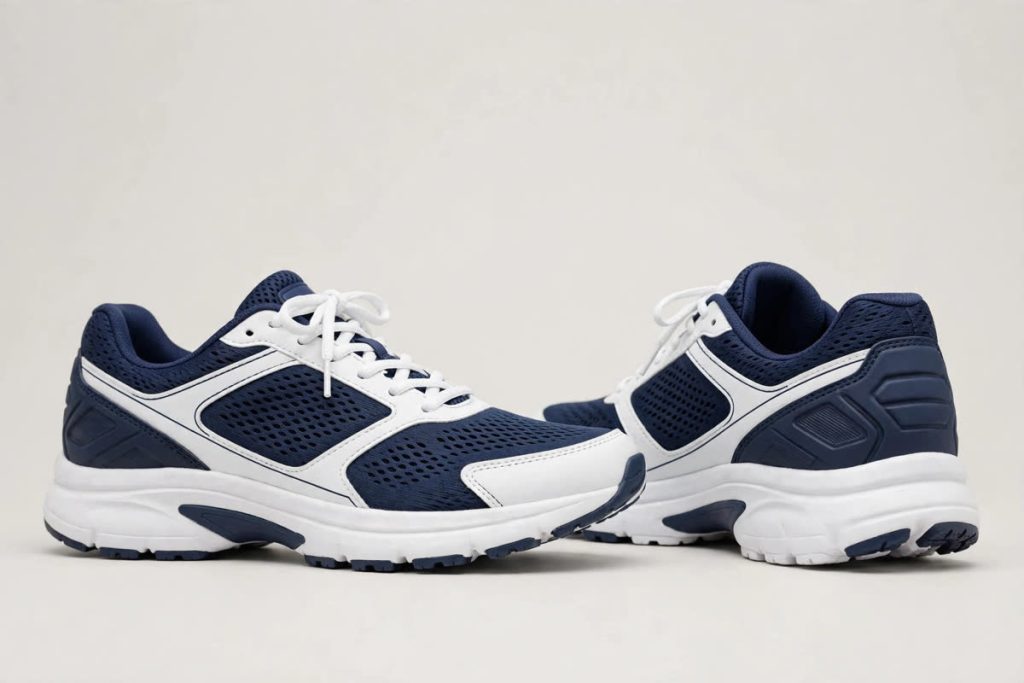
10 Best Running Shoes for Flat Feet Support 2026
Introduction to Our Best Running Shoes for Flat Feet Rankings for 2026
Flat feet change the way you run. When your arch sits low to the ground or collapses under load, your ankle tends to roll inward with every footstrike, a motion runners call overpronation.
That inward roll is not a flaw you need to be ashamed of, but it does load the ankles, knees, and shins in ways they were not built for.
The wrong shoes let that roll go unchecked, and the result is aching arches after a few miles, shin splints that never quite quit, and knees that complain long before your lungs do.
The best running shoes for flat feet fix the problem where it starts, at the foot, with support structures that guide your stride back to neutral without fighting your body.
We picked the ten shoes below for honest, practical support. Stability construction came first: guidance rails, medial posts, and firmer midsole walls that steady the ankle without turning the shoe into a brick.
Then we weighed cushioning, because a stable shoe you dread putting on is a shoe you will not run in, and fit, because flat feet often come with wider forefeets that narrow shoes punish.
We also looked hard at the real world trade offs, the heavier weight of stability shoes, the firmer feel of motion control, and the runners who might actually be better off in a neutral shoe with an orthotic. No brand paid for placement. These are the best running shoes for flat feet we would hand to a friend who is tired of hurting.
Table of Contents
1. Brooks Men’s Adrenaline GTS 23 Supportive Running Shoe
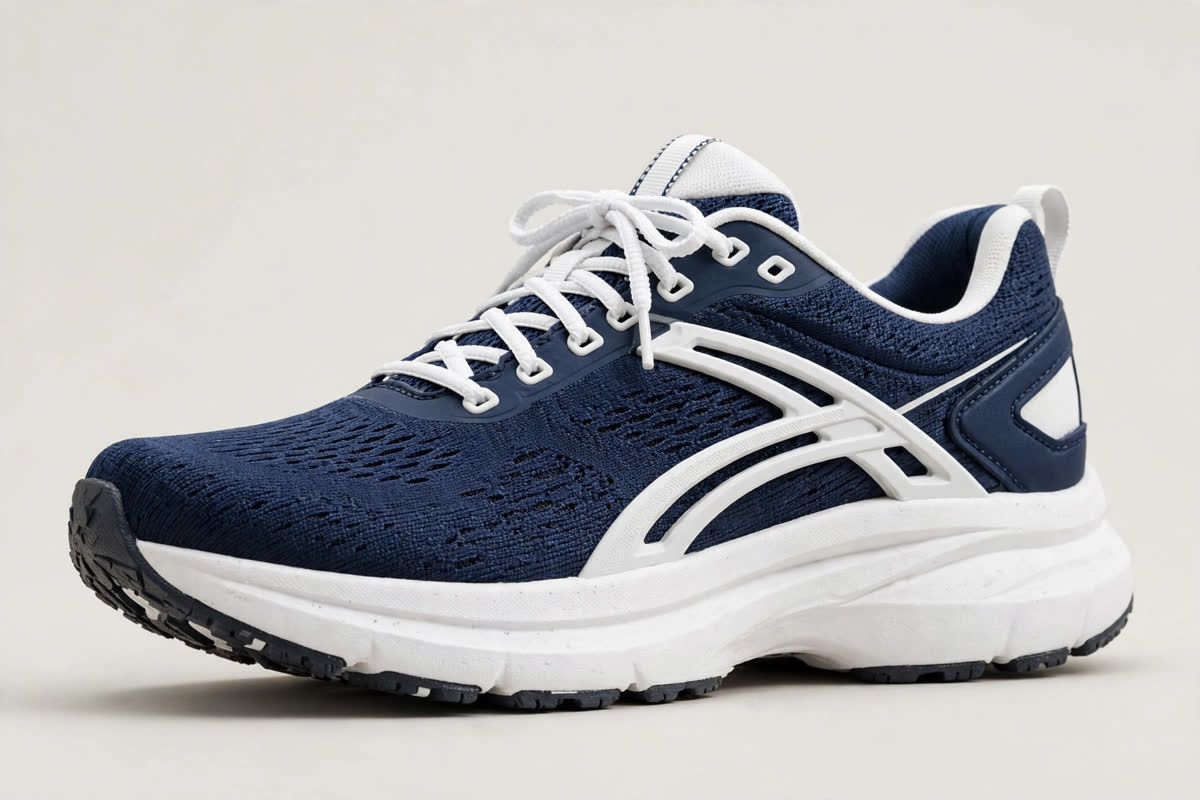
The Adrenaline GTS 23 is the shoe flat footed runners ask for by name, and there is a reason it has been the default recommendation in running shops for years. Its support comes from guide rails, firm foam walls along the sides of the midsole that keep the heel and
ankle aligned when the arch wants to collapse inward. Unlike the old school medial posts that jammed a hard wedge under the arch, guide rails work only when you need them, stepping in as your foot rolls and staying out of the way when it does not. For mild to moderate overpronation, the effect is remarkable: your stride feels guided, not corrected, and miles accumulate without the usual hot spots on the inside of the ankle.
The ride is what keeps runners coming back instead of wandering to flashier options. The cushioning is soft enough to feel kind on the first easy mile and firm enough to stay supportive when fatigue sets in late in a long run. The engineered mesh upper fits securely without pinching, the heel counter locks the rearfoot without rubbing, and the shoe breaks in fast. It runs true to size with enough room in the toe box for feet to spread on longer efforts, which wider flat feet will appreciate. Day after day, this is the pair that simply works.
The honest limitation is that the Adrenaline is a stability shoe through and through. Runners with very mild flat feet and no pain sometimes find they get along better with a neutral shoe and a supportive insole, and the Ghost 16 at number nine is that exact alternative from the same brand. But for the core audience, flat footed runners who overpronate and feel it, the Adrenaline GTS 23 remains the benchmark, and it earns the top spot among the best running shoes for flat feet.
- Best for: Mild to moderate overpronation, daily training, runners who want proven stability without harsh correction.
- Fit note: True to size with a secure heel and a comfortable toe box; wide widths are worth seeking if your forefoot spreads.
- Keep in mind: Heavier than neutral trainers; very mild cases may prefer a neutral shoe with an orthotic.
2. ASICS Men’s Gel-Kayano 30 Running Shoes
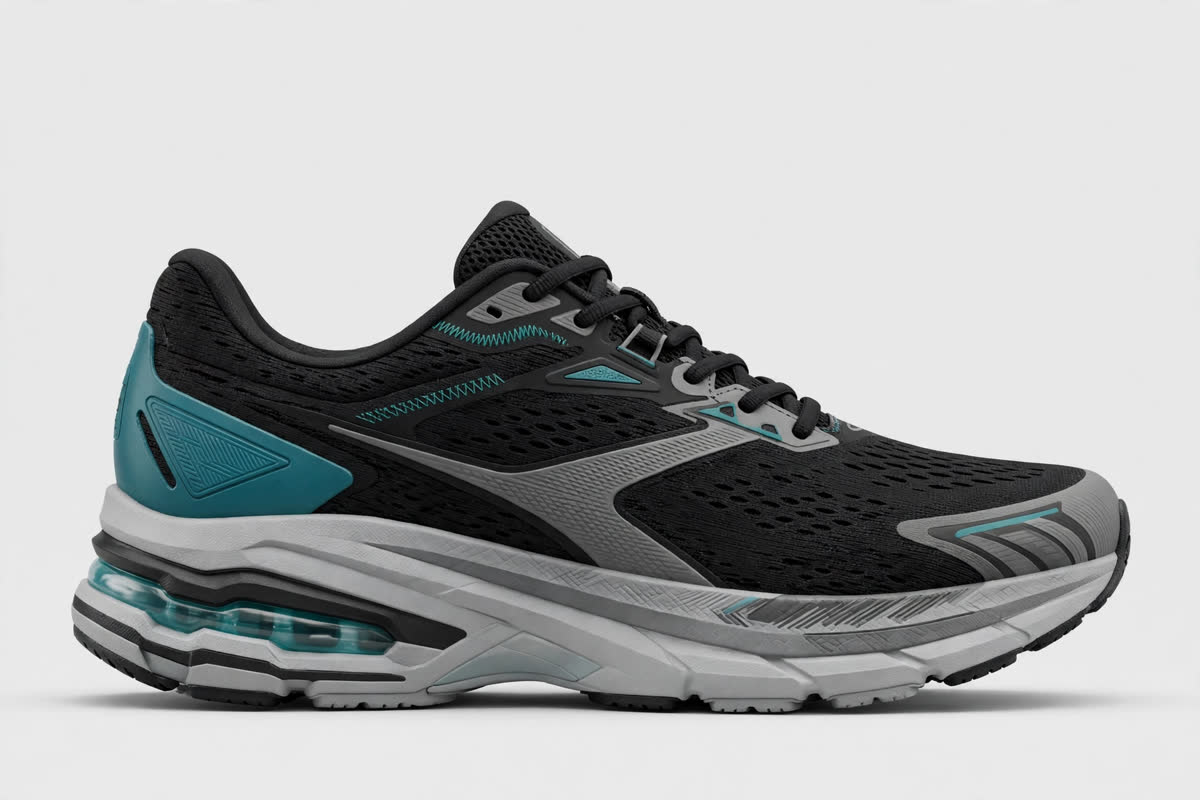
The Gel Kayano 30 is the heavyweight of stability running, the shoe serious overpronators graduate to when lighter support is not enough. ASICS rebuilt it with a 4D guidance system, a dynamic structure that cradles the foot through the whole gait cycle instead of just shoring up the arch. The
result is stability you feel from heel strike to toe off: the ankle stays aligned, the foot rolls through its natural path, and the nagging inward collapse that defines flat footed running gets firmly managed. Runners who have tried lighter stability shoes and still felt their arches give way on mile eight will notice the difference immediately. This is one of the best running shoes for flat feet when overpronation is severe rather than mild.
Cushioning is generous without feeling sloppy. The midsole blends soft foam with gel style impact absorption in the heel, so the ride is plush on the landing but stable underneath, a combination most stability shoes get wrong in one direction or the other. The upper is a refined engineered mesh that holds the midfoot firmly, and the heel collar padding is comfortable enough for long runs straight away. Fit runs true to size, and it handles everything from easy recovery miles to long weekend efforts.
The honest trade offs are weight and firmness at the edges. The guidance system is also more assertive than the Adrenaline’s guide rails, so runners with only mild flat feet may find it overcorrects and steers their stride in ways that feel unnatural. But for flat footed runners who need maximum confidence that their ankle will stay put, the Gel Kayano 30 is the premium answer among the best running shoes for flat feet.
- Best for: Moderate to severe overpronation, heavier runners, daily trainers who want premium cushioned stability.
- Fit note: True to size with a secure midfoot wrap; the heel collar is plush and break in friendly.
- Keep in mind: Substantial weight; the guidance is assertive, so mild cases may prefer lighter support.
3. Nike Men’s Pegasus 41 Road Running Shoes
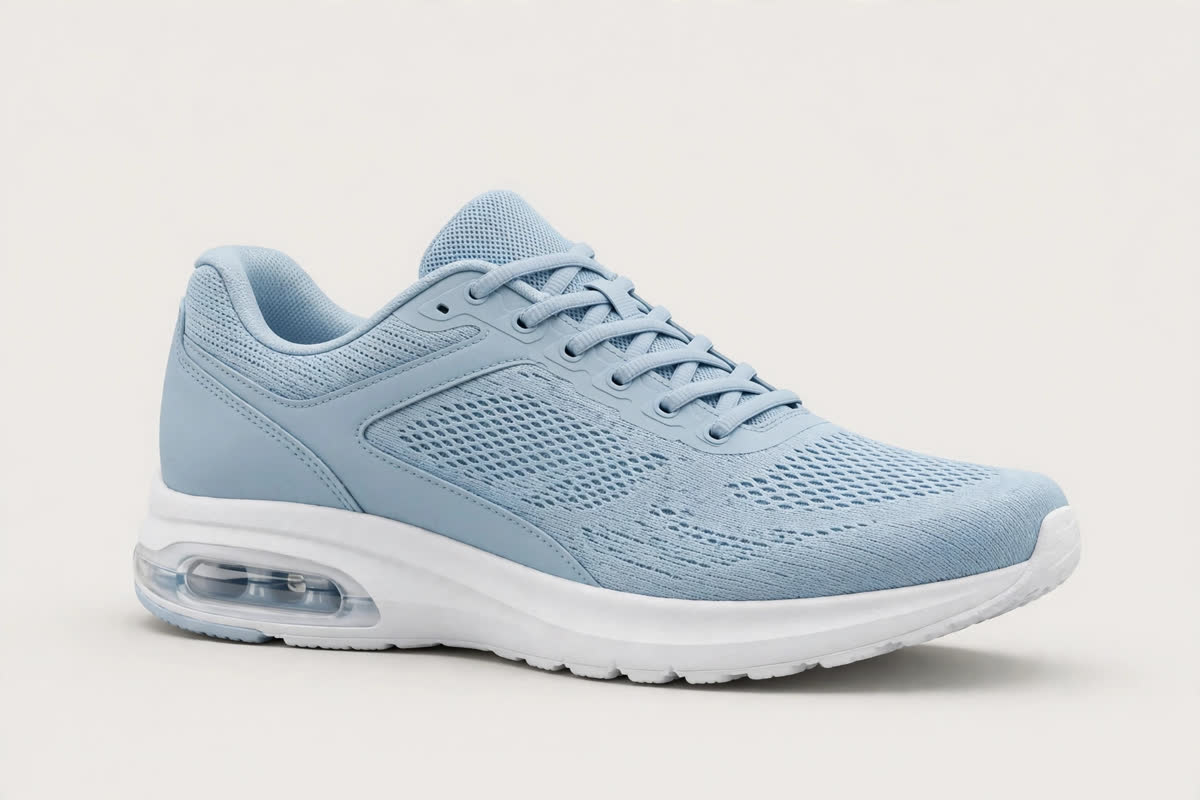
The Pegasus 41 looks like an odd pick on a list of the best running shoes for flat feet, because it is a neutral shoe, not a stability shoe. It earns its place for the large group of flat footed runners whose overpronation is mild and whose feet feel better
with soft cushioning plus an aftermarket insole than with built in motion control. If your arches are low and you have never had pain, or if a podiatrist has already fitted you with custom orthotics, forcing your feet into a stability shoe can cause more problems than it solves. The Pegasus gives those runners a responsive, cushioned daily trainer with a removable insole that welcomes a custom orthotic without a fight.
The ride is the classic Pegasus formula: springy responsive foam, air cushioning in the heel that takes the edge off heel striking, and a smooth transition that works at almost any pace. It is lighter and livelier than the stability shoes above it on this list, so it doubles well as a shoe for faster days and for runners who split their time between the road and the treadmill. Fit runs true to size with a familiar Nike feel, snug in the midfoot and comfortable in the forefoot.
The honest limitation is right in its category: this shoe provides no stability correction of its own. If your ankles roll inward noticeably and you feel arch or knee pain on runs, the Pegasus alone will not fix it, and you belong in one of the stability picks above or in a custom orthotic pairing. Think of it as the best running shoes for flat feet option for the mild cases, the orthotic users, and the runners who want a neutral trainer that plays well with inserts.
- Best for: Mild flat feet, runners using custom orthotics, neutral shoe lovers who want a responsive daily trainer.
- Fit note: True to size with a slightly snug midfoot; the removable insole leaves real room for orthotics.
- Keep in mind: No built in stability; moderate to severe overpronators need a different pick on this list.
4. Hoka Men’s Arahi 6 Running Shoe
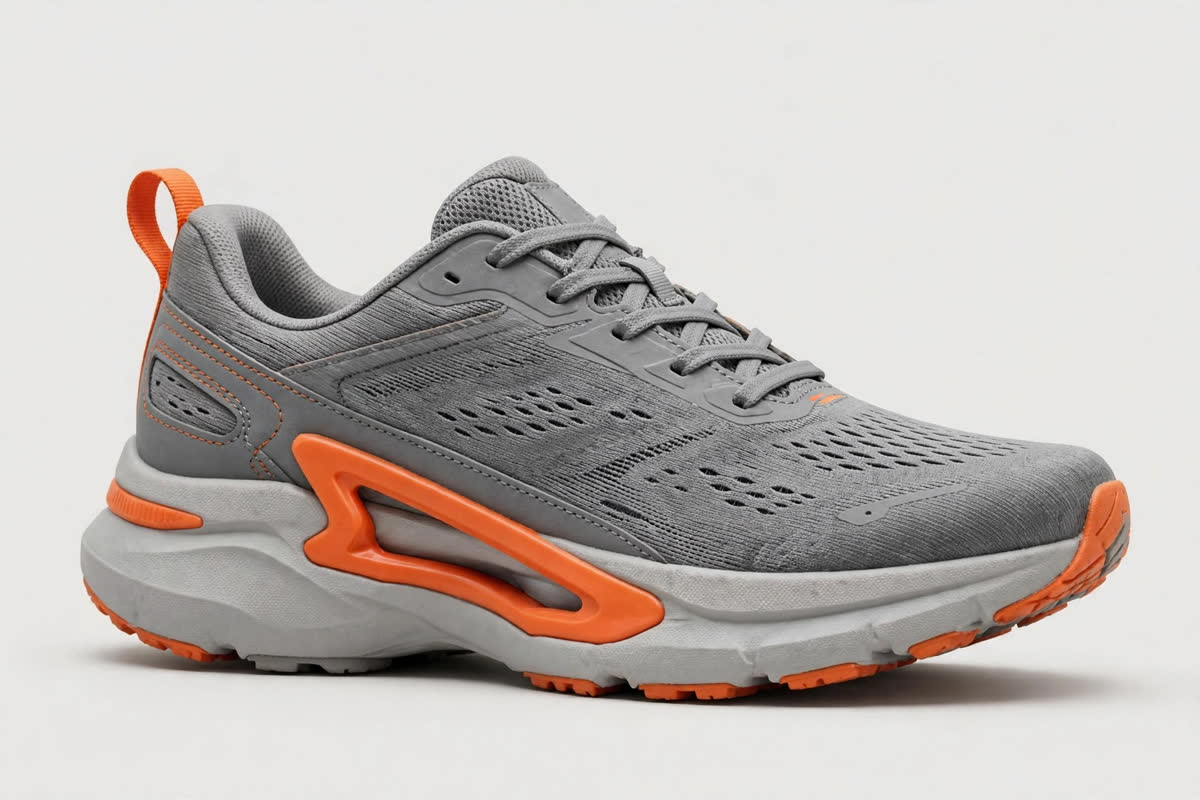
The Arahi 6 is proof that a stability shoe does not have to feel like one. Hoka’s support comes from a J shaped foam frame that wraps the heel and extends along the inner edge of the midsole, guiding the foot without a traditional medial post. The sensation is subtle
: the ankle stays centered, the transition feels smooth, and there is none of the blocky intrusive feeling older stability shoes forced on your arch. For flat footed runners who have tried support shoes and found them too aggressive, the Arahi is the gentle introduction that might change their mind. It belongs on any honest shortlist of the best running shoes for flat feet for runners who want stability to stay invisible.
The ride is classic Hoka: thick, light cushioning with a rockered geometry that rolls you forward. Weight is low for a support shoe, so the Arahi works for everything from easy miles to uptempo sessions. Fit runs true to size with a moderately roomy forefoot that suits many flat footed runners right away.
The honest limitation is durability of the soft foam and the width of the base. The plush midsole compresses faster under heavier runners, so big mileage flat footed runners may retire their pair sooner than they would a firmer stability shoe. But as the lightweight, invisible feeling stability pick among the best running shoes for flat feet, the Arahi 6 is the shoe to try if traditional support has always felt like too much.
- Best for: Flat footed runners who want light, subtle stability; uptempo days and racing in a support shoe.
- Fit note: True to size with a comfortably roomy forefoot; the rocker suits heel and midfoot strikers alike.
- Keep in mind: Soft foam wears faster under heavier runners; the wide base feels clunky in tight turns.
5. New Balance Men’s Fresh Foam X 860 V13 Running Shoe
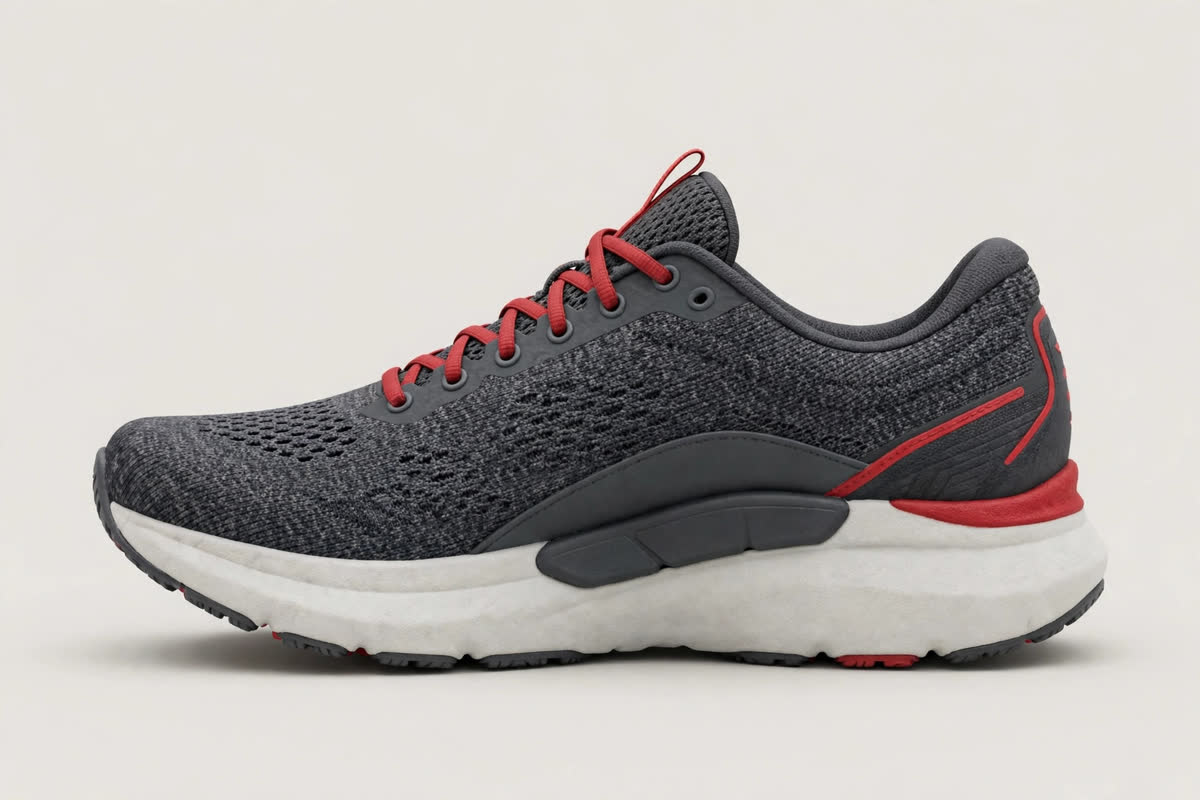
The 860 V13 is the workhorse stability shoe that never tries to be fashionable and never lets you down. Its support comes from a firmer medial post, a dense foam wedge on the inner side of the midsole that physically resists the inward roll of an overpronating foot. Flat footed runners who like to feel the shoe actively holding their arch up, rather than the gentle guidance of rails or frames, will find the 860’s approach reassuringly direct. Among the best running shoes for flat feet for high mileage daily training, this is the pick that quietly racks up thousands of trouble free miles.
Fresh Foam X cushioning keeps the ride soft enough for daily comfort. The engineered mesh upper with structured overlays locks the midfoot down, the heel counter is firm and protective, and New Balance’s famously generous sizing includes wide and extra wide options that flat footed runners with spreading forefeet should take seriously. Fit is true to size with one of the more accommodating toe boxes on this list, and the shoe handles rain and rough roads without complaint.
The honest limitation is the medial post itself. Some runners feel the firmer wedge under the arch as intrusive, especially on the first few runs, and if you are sensitive to posting you may prefer the rail or frame systems of the Brooks or Hoka above. It is also not the most exciting ride on this list: smooth, dependable, and slightly boring by design. But boring is a compliment for a stability shoe, and the 860 V13 earns its place among the best running shoes for flat feet as the reliable traditionalist.
- Best for: High mileage daily training, runners who like a firm medial post, wide feet needing generous sizing options.
- Fit note: True to size with a roomy toe box; wide and extra wide versions are genuinely generous.
- Keep in mind: The medial post can feel intrusive at first; the ride is dependable rather than exciting.
6. Saucony Men’s Guide 17 Running Shoe
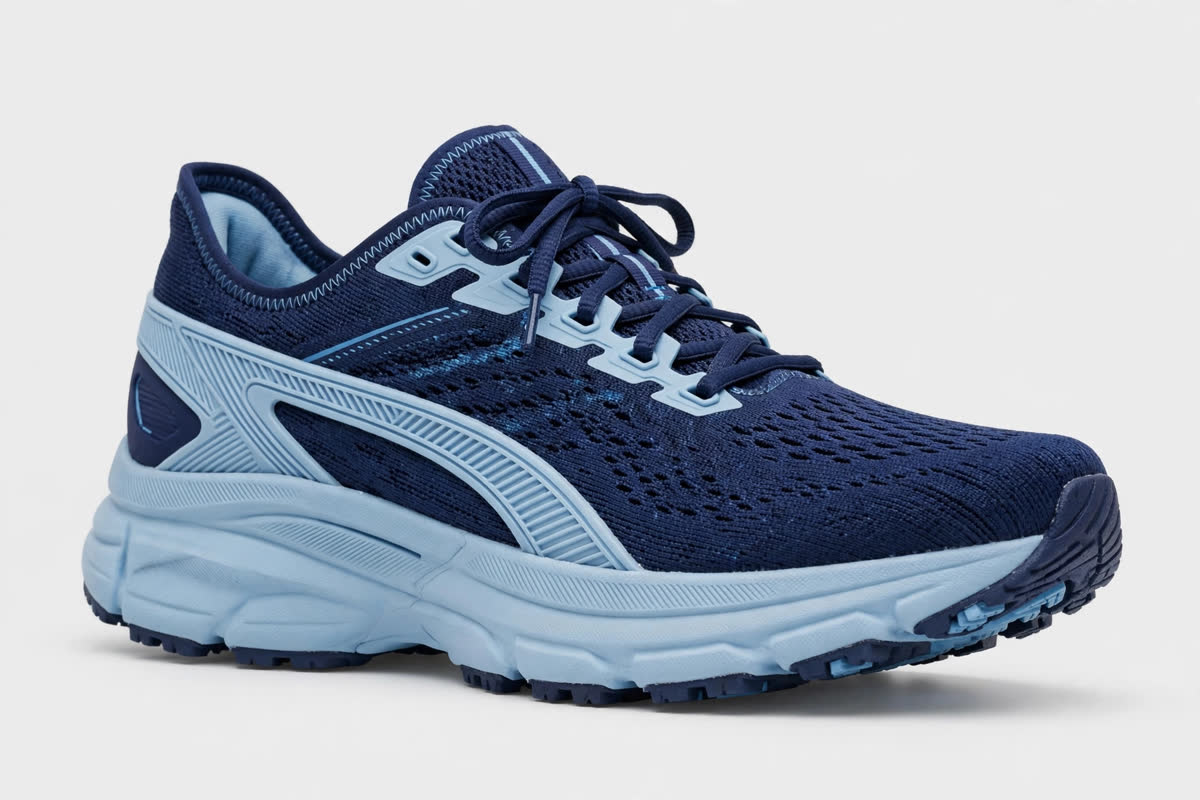
The Guide 17 represents the modern rethink of the stability category: support through geometry rather than hardware. Saucony widened the platform, raised the stack of responsive foam, and shaped the midsole so the foot naturally stays centered through the stride. There is no hard post and no obvious correction device; the shoe simply gives your foot a broad, stable base and lets good mechanics happen. For flat footed runners who want a smooth, natural feeling ride with support built into the shape of the shoe, the Guide 17 is one of the most comfortable ways onto a list of the best running shoes for flat feet.
The cushioning is the star. The responsive foam feels lively underfoot in a way most stability shoes do not manage, and the higher stack takes the sting out of heel striking without the mushy disconnected feeling of maximalist shoes. The engineered mesh upper fits true to size with good midfoot lockdown and no pressure points, and it covers most of a weekly schedule on its own.
The honest limitation is that geometry based stability has a ceiling. Runners with severe overpronation, the kind where the ankle visibly collapses on every step, will get more correction from the Kayano or the 860 above. The Guide’s support is real but moderate, aimed at the middle of the flat footed spectrum. For the large middle ground of flat footed runners, though, the Guide 17 hits a sweet spot among the best running shoes for flat feet.
- Best for: Mild to moderate flat feet, runners who want lively cushioning with moderate stability, versatile weekly mileage.
- Fit note: True to size with secure midfoot lockdown; no pressure points over the top of the foot.
- Keep in mind: Support is moderate, so severe overpronators should look to the Kayano or 860 instead.
7. ASICS Men’s GT-2000 12 Running Shoes
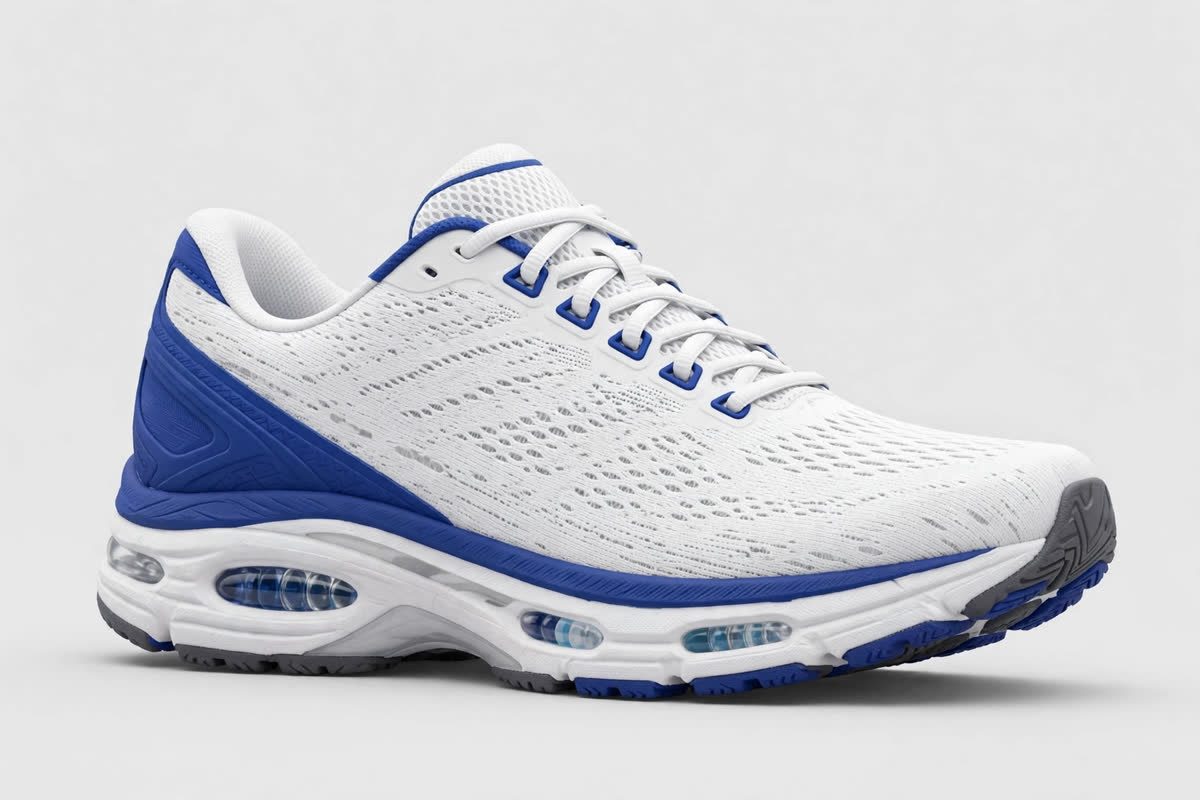
The GT 2000 12 is the Kayano’s little sibling, and it might be the smartest buy on this list. It uses a 3D guidance system that adapts its support to how your foot actually moves, firming up under the parts of the stride where flat feet need help and staying supple everywhere else. The technology trickles down from the flagship, but the price does not, which makes the GT 2000 the entry point into serious ASICS stability. For flat footed runners shopping for the best running shoes for flat feet on a budget, this shoe delivers the core of what makes the Kayano great at a far friendlier cost.
The ride balances cushioning and control well. Gel style cushioning in the heel softens landings, the midsole foam is responsive enough for daily miles at any pace, and the upper holds the foot securely without the bulk of the premium model. Fit runs true to size with a comfortable standard width that works for most feet, and the shoe is as happy on a 5K training run as on a long slow Sunday.
The honest limitation is that it is not quite the Kayano. The guidance is a step down in assertiveness, the premium foam blends are a step down in luxury, and very heavy overpronators will eventually feel the difference on their longest runs. But for mild to moderate cases and for runners who want proven stability without the flagship price, the GT 2000 12 is outstanding value among the best running shoes for flat feet.
- Best for: Value seeking runners, mild to moderate overpronation, daily training on a sensible budget.
- Fit note: True to size with a comfortable standard width; breaks in within a run or two.
- Keep in mind: A step below the Kayano in support depth; severe overpronators may need the flagship.
8. Hoka Men’s Gaviota 5 Running Shoe
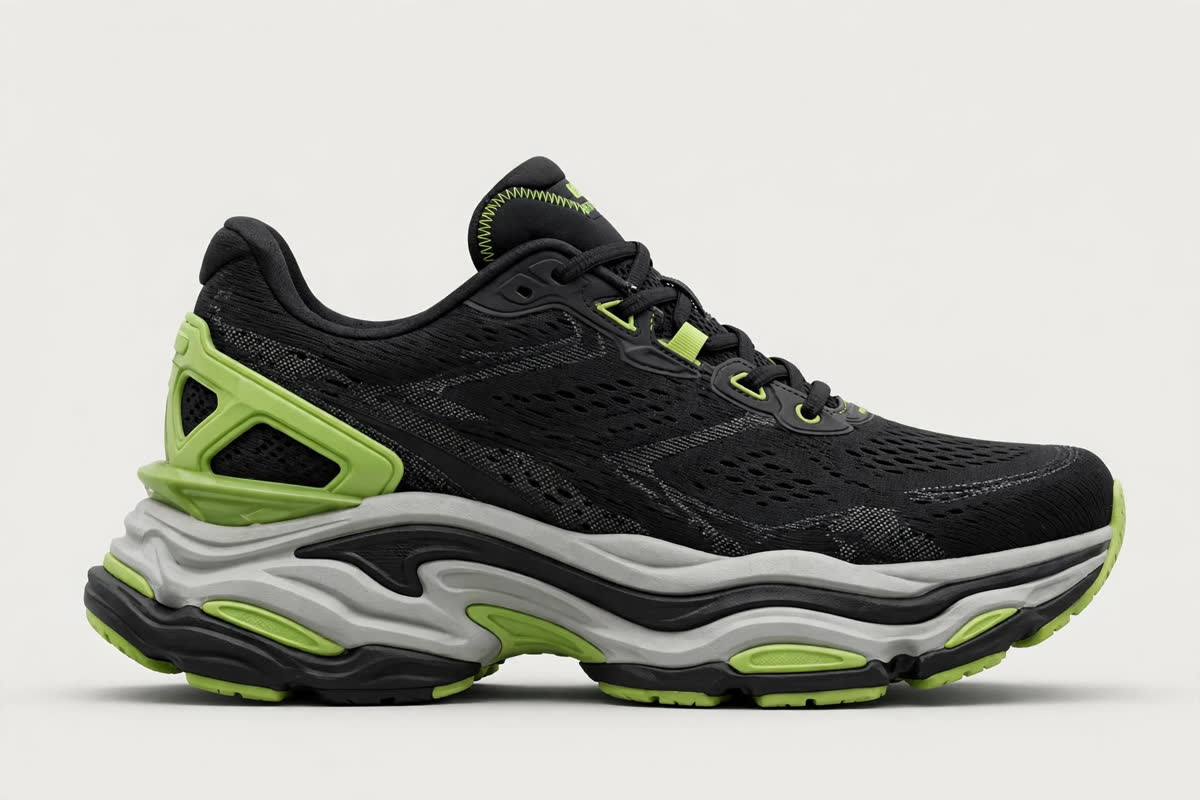
The Gaviota 5 is the maximalist answer to flat feet: maximum cushioning plus maximum stability in one wide, confident package. Its support comes from an H shaped frame that wraps the midsole and keeps the foot centered on top of all that foam, solving the classic problem of plush
shoes, which is that soft foam lets an overpronating ankle sink and roll. Here the foam is deep and protective but the frame keeps it honest, so flat footed runners get the soft landing they crave without giving up control. If your feet hurt because the road beats them up as much as because they roll inward, the Gaviota 5 addresses both problems at once and belongs among the best running shoes for flat feet for comfort seekers.
The ride is the softest stability experience on this list. Heel strikers will love the way landings disappear into the midsole, and the rockered geometry keeps transitions smooth despite the tall stack. Fit runs true to size, and the shoe works beautifully for long slow distance, recovery runs, and runners who spend their miles on hard pavement where cushioning matters most.
The honest limitation is bulk. This is a big shoe, heavy and tall, and it feels like one. Speed work and quick turnover feel muted, and runners who prefer a connected feel for the road will find the Gaviota distant. But for flat footed runners whose top priority is plush protected miles with real stability, nothing else on this list cushions like the Gaviota 5 among the best running shoes for flat feet.
- Best for: Long slow distance, heel strikers, flat footed runners who want maximum cushioning with stability.
- Fit note: True to size with a plush, accommodating upper; the wide base suits feet that spread.
- Keep in mind: Heavy and bulky; muted for speed work; soft foam wears faster under heavier runners.
9. Brooks Men’s Ghost 16 Neutral Running Shoe
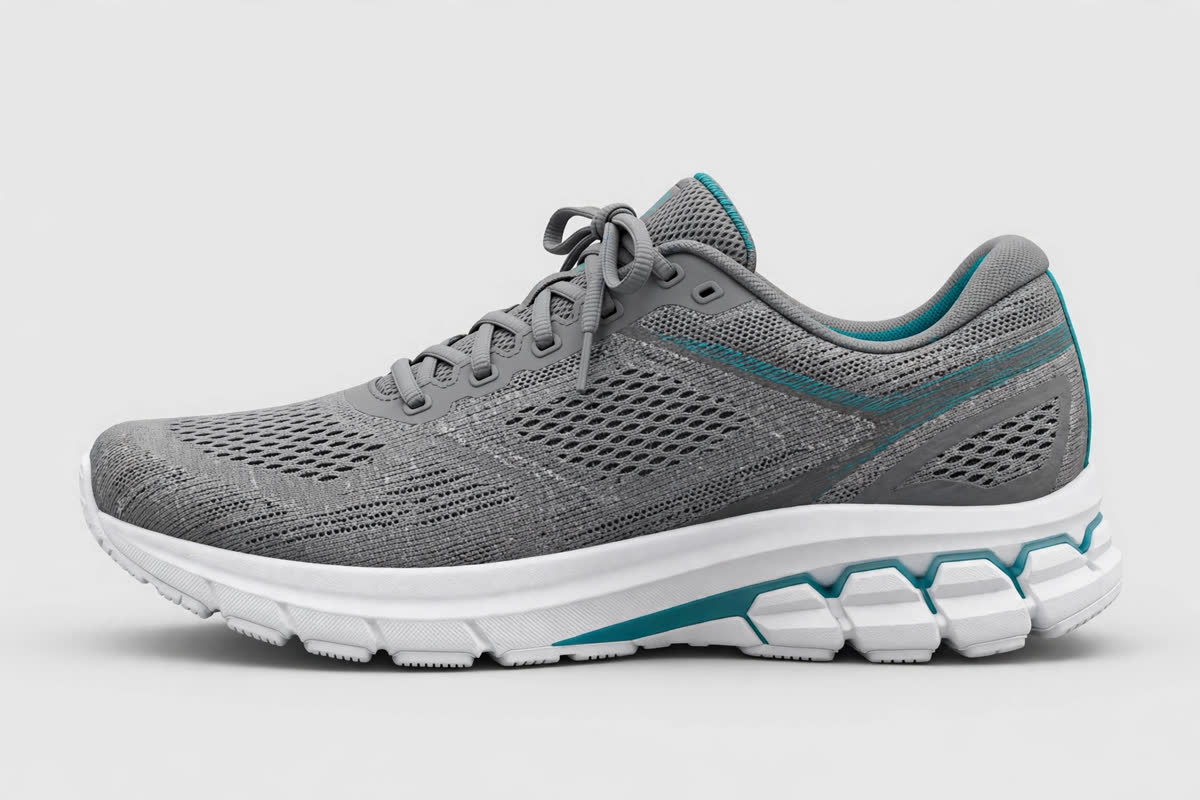
The Ghost 16 is the second neutral shoe on this list, and it serves the same mission as the Pegasus with a different personality. Brooks loads it with nitrogen infused DNA Loft cushioning that feels soft and smooth from the first step, and the segmented crash pad in the heel
makes landings whisper quiet no matter how you strike the ground. For flat footed runners with mild pronation who have decided that built in stability is not for them, whether because a podiatrist said so or because their feet simply feel better in neutral shoes, the Ghost 16 is the premium comfortable daily trainer that welcomes a custom orthotic. It is one of the best running shoes for flat feet for runners who manage their arches with inserts rather than with the shoe itself.
The ride is famously easy. The cushioning adapts to your stride instead of dictating it, the transitions are seamless, and the engineered air mesh upper is one of the most comfortable fits in running: secure in the heel, roomy in the toes, and free of pressure points. It runs true to size and works for everything from first 5K training to marathon long runs, which is why it has been a best seller for years.
The honest framing is the same as the Pegasus: no stability correction lives inside this shoe. If your overpronation is moderate or worse and you run in the Ghost without an orthotic, the arch collapse you are trying to escape will still be there, just better cushioned. Used with the right inserts or for mild cases, the Ghost 16 is a superb daily trainer among the best running shoes for flat feet.
- Best for: Mild flat feet, orthotic users, runners who want premium neutral cushioning and a proven daily trainer.
- Fit note: True to size with a famously comfortable upper; secure heel, roomy forefoot.
- Keep in mind: Zero stability correction; moderate or worse overpronation needs a stability pick or an orthotic.
10. Brooks Men’s Ghost 16 Neutral Running Shoe (v2)
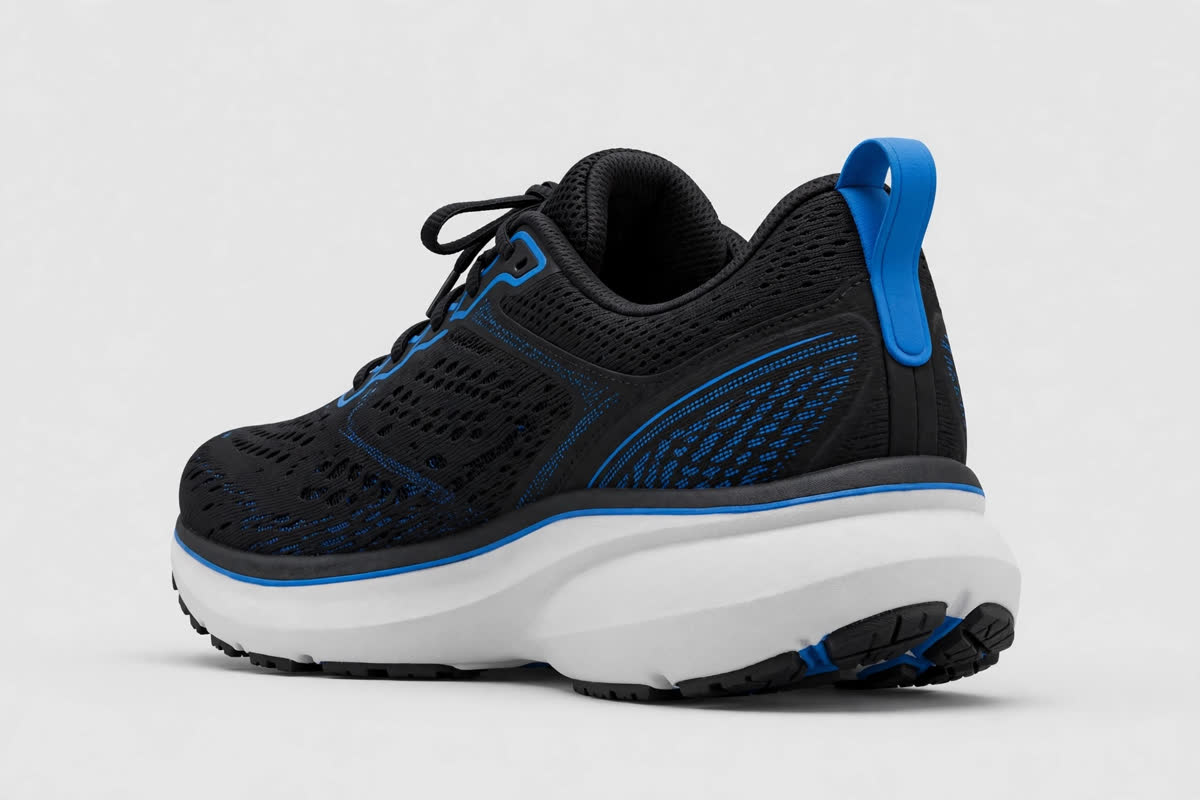
Yes, this is the same shoe as number nine, and it is here for the same honest reason a second colorway earns a spot: when a neutral trainer is the right prescription for your flat feet, having a second pair or a second look is practical, not padding
. This version spotlights the Ghost 16 as the long run specialist. The nitrogen infused cushioning that feels good at mile two still feels good at mile sixteen, and that matters because fatigue is when mild overpronation gets worse: tired muscles let the arch collapse further, and a shoe that stays supportive and comfortable deep into a long run protects you exactly when you are most vulnerable. Viewed through the long run lens, this is one of the best running shoes for flat feet for flat footed runners building toward half and full marathon distances.
Everything about the performance carries over from number nine. The smooth crash pad landings, the adaptable cushioning, the comfortable air mesh upper, the true to size fit with a roomy forefoot. What changes is the context: on long runs the Ghost’s lack of aggressive correction becomes a feature, because the shoe lets your foot move naturally while the orthotic or insert does the alignment work.
The honest framing matters most here. Do not buy this thinking it is an upgrade over number nine: it is the identical shoe in a different colorway. Pick whichever color you like, or whichever is available in your size, and judge it by the same standard. Among the best running shoes for flat feet color options, the right choice is the one that gets you out the door for the long run. Choose the look you like and let the miles do the rest.
- Best for: Long runs and marathon training, the same mild flat feet and orthotic use as number nine, rotation pairs.
- Fit note: Identical fit to number nine: true to size with a roomy forefoot and secure heel.
- Keep in mind: Same shoe as number nine in a different colorway; not an upgrade, just a choice.
How to Choose the Best Running Shoes for Flat Feet
How We Chose: The ten picks above were selected for stability construction that genuinely manages overpronation, cushioning that survives long miles, and fit that works for the wider forefeet flat feet often come with. Now here is how to pick among them.
https://www.asics.com/us/en-us/
Next, decide how you feel about orthotics, because they change the whole equation. Custom orthotics or quality over the counter insoles can turn a neutral shoe into a flat foot friendly shoe, and many runners prefer this route: the shoe provides the cushioning and the insert provides the arch support. If you go this way, choose shoes with removable insoles and enough interior volume to accommodate the insert without crushing your toes, which is exactly why the neutral picks above were chosen. The best running shoes for flat feet work as a system with your inserts, not against them.
Then get the fit right, because flat feet are sensitive to the details. Shop in the afternoon when your feet are slightly swollen, wear the socks and inserts you will actually run in, and leave a thumb’s width of space in front of your longest toe.
Your heel should stay locked without the collar digging in, and the arch of the shoe should contact your foot without pressing hard into it. Heel drop, the height difference between heel and forefoot, matters less than marketing suggests: most of the shoes on this list sit in the traditional 8 to 12 millimeter range, which suits heel strikers, while lower drops suit midfoot strikers. Pick your drop by feel, not by theory.
A detailed REI running shoe fit guide covers support levels, drop, and fit checks in depth if you want a second opinion before you buy. If you also spend long hours on your feet off the road, our guide to the best shoes for standing all day covers comfort picks for the other hours of your week. Related: https://dixtrick.com/10-best-shoes-for-standing-all-day-2026/
Finally, replace them on time and build up sensibly. Stability features are built into the midsole, and midsoles die before uppers do: most running shoes last 300 to 500 miles, and a stability shoe with a dead midsole is just a heavy neutral shoe.
Track your mileage, retire the pair when the cushioning feels flat or the inner edge of the outsole shows heavy wear, and rotate two pairs if you run daily so the foam recovers between runs. New to running altogether? Start with our broader roundup of the best running shoes of 2026 to see how these stability picks fit into the full landscape. And if pain persists after a few weeks in the right shoes, see a sports podiatrist or physical therapist. Shoes manage flat feet; a specialist diagnoses them. Learn more in our guide to the best running shoes of 2026.
Frequently Asked Questions
Should flat footed runners choose stability shoes or neutral shoes?
It depends on how much you overpronate and whether you have pain. Mild flat feet with no pain often do fine in a neutral shoe, especially with a supportive insole. Moderate to severe overpronation, or any recurring arch, shin, or knee pain, points toward a stability shoe like the Adrenaline GTS 23 or Gel Kayano 30. The safest move is a gait analysis at a running store: five minutes on a treadmill tells you which category you belong in, and it removes the guesswork from choosing among the best running shoes for flat feet.
Do I need custom insoles if I buy stability running shoes?
Not necessarily. A good stability shoe provides real arch support on its own, and many runners never need more. Insoles become important if you have specific issues the shoe alone does not solve, like plantar fasciitis or a leg length difference, or if you prefer a neutral shoe and want to add the support yourself. If you use insoles, remove the shoe’s stock insole first so the fit still leaves your toes room to move.
What heel drop is best for flat feet?
There is no single right answer, but most flat footed runners do well in the traditional 8 to 12 millimeter range that dominates the stability category. Higher drops take pressure off the Achilles and suit heel strikers, while lower drops encourage a midfoot strike that some runners find reduces overpronation. The practical rule: choose whatever drop your current comfortable shoes have, and change it gradually if you want to experiment.
Should I size up in running shoes for flat feet?
Often yes, by about a half size from your everyday shoe size. Feet spread under impact, flat feet spread more than most, and running swells feet further, so the thumb’s width of space in front of your longest toe is non negotiable. Try shoes on in the afternoon with your running socks and inserts. If your toes touch the front on a downhill step or the midfoot feels crushed, go up. A slightly long shoe with a locked in heel beats a snug shoe every time.
How long do stability running shoes last?
The same 300 to 500 miles as any running shoe, and sometimes less for the support features you bought them for. The guidance rails, posts, and frames are molded into the midsole foam, so when the foam compresses and dies, the stability dies with it, even if the upper looks fine. Heavy runners and high mileage runners should watch for the warning signs: the shoe starts feeling flat, your old aches creep back, or the inner heel of the outsole wears noticeably faster than the rest. Track mileage to make replacement predictable rather than painful.
Can flat footed runners run marathons?
Absolutely. Flat feet are a footnote, not a verdict, and plenty of marathoners have low arches. The keys are the right shoes for your level of overpronation, a gradual training build, and attention to warning signs like persistent arch or shin pain. The Ghost 16 at numbers nine and ten is there precisely because long run comfort matters so much for marathon training. If pain keeps returning despite good shoes and sensible mileage, a sports podiatrist can assess whether orthotics or gait work will unlock the distance for you.
The Bottom Line
Final Pick: The best running shoes for flat feet overall are the Brooks Men’s Adrenaline GTS 23 Supportive Running Shoe: proven guide rail stability that manages overpronation without feeling harsh, all day comfort, and a fit that works for most feet.
Severe overpronators should step up to the ASICS Gel Kayano 30 or the plush Hoka Gaviota 5, value hunters belong in the ASICS GT 2000 12, and mild cases or orthotic users will be happiest in the Nike Pegasus 41 or Brooks Ghost 16. Match the support level to your feet, fit them in the afternoon with your inserts, retire them before the midsole dies, and flat feet will be a footnote in your running story, not the headline.