
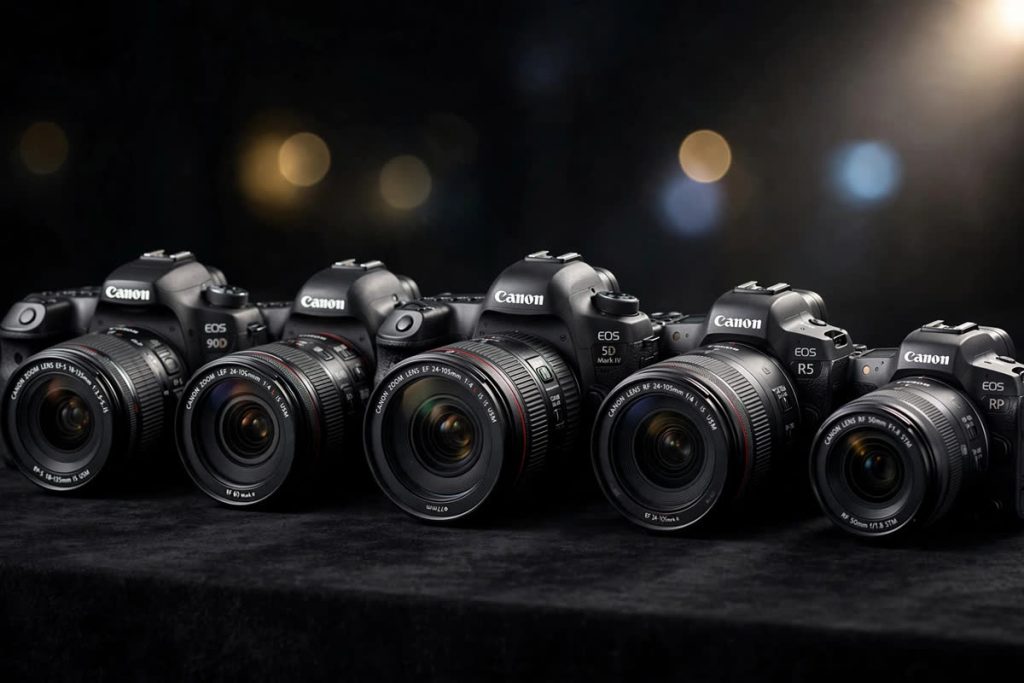
10 Best Canon Cameras for Every Type of Shooter
Introduction
Canon makes more cameras than any other brand, which makes choosing the best Canon camera for your needs genuinely tricky. The lineup spans two mounts, two sensor philosophies, and prices from student budget to flagship professional, and every body shares the color science and Dual Pixel autofocus DNA that built Canon reputation. Whether you shoot DSLR or mirrorless, full frame or APS-C, there is a Canon with your name on it.
The range breaks down cleanly. The EOS R system is the mirrorless present and future: the R50 and R10 for beginners, the R7 for wildlife and sports, the R6 Mark II for hybrid professionals, the R5 Mark II for high resolution work, and the R1 for flagship action. The EF DSLR line lives on through the Rebel T7 and the legendary 5D Mark IV, still excellent cameras with access to decades of affordable used lenses.
One honest flag before the list: the sheet this guide is built from lists the Canon EOS R5 Mark II twice, at entries 4 and 7 under slightly different names. We flag that openly instead of inventing differences between identical cameras, and we verified every model against official Canon product pages and established documentation. We invented no prices, no ratings, and no specs. For the wider camera landscape, our best camera for photography guide on DixTrick compares Canon against every other brand.
Table of Contents
How We Chose
Verification came first, and Canon made it easy: the EOS R50 and EOS R6 Mark II were confirmed on official Canon product pages, and the R1, R5 Mark II, R7, R10, RP, Rebel T7, and 5D Mark IV are all established models with official pages and years of reviews. Every camera on this list is real and shipping or widely available.
We scored each body for its intended shooter rather than against a single spec sheet. A beginner camera wins on ease of use and value, a wildlife camera on autofocus tracking and reach, a wedding camera on reliability and low light files, and a flagship on doing everything at once. Autofocus intelligence, sensor performance, lens ecosystem, video capability, and handling all fed the scoring, with the RF and EF lens systems weighed as part of every verdict.
The DSLR versus mirrorless question runs through this list, since Canon still sells both. Our best DSLR camera roundup on DixTrick goes deeper on the mirror side of the family.
1. Canon EOS Rebel T7 Double Zoom: Best Canon Camera for Beginners
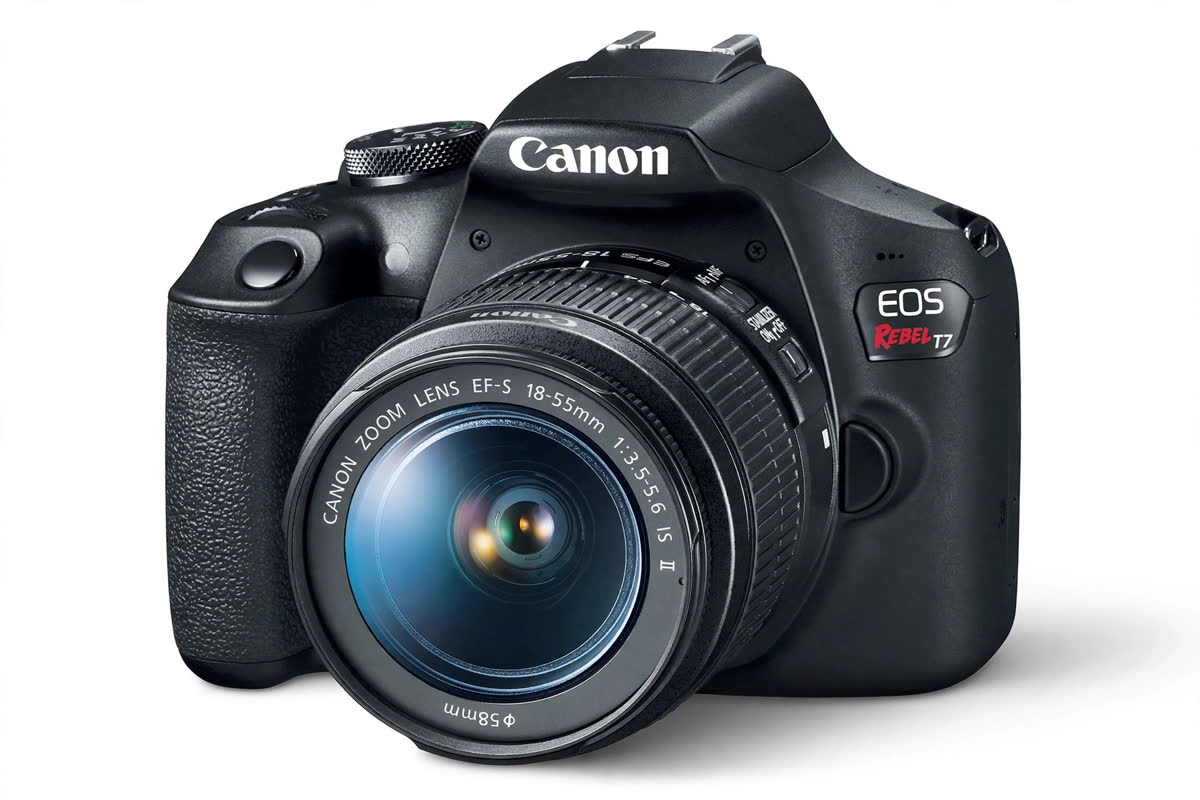
The Canon EOS Rebel T7 Double Zoom kit is real and widely sold: the 24.1 megapixel Rebel T7 DSLR bundled with two zoom lenses covering wide to telephoto. For an absolute beginner, that bundle teaches more about photography than any single lens kit, because you learn what focal lengths do by using them instead of reading about them.
As the best Canon camera for beginners on a tight budget, the T7 wins on simplicity and value. The optical viewfinder works with zero lag and zero battery drain, Canon color science makes JPEGs look great with no editing, and the EF mount opens up the largest used lens market in photography. Image quality from the 24.1 megapixel sensor remains genuinely good in daylight.
The honest caveats are the DSLR compromises: contrast based live view autofocus is slow, 1080p video only, and Wi-Fi but no modern connectivity. Buy it to learn photography cheaply with real lenses, and step up to the R50 below when you outgrow it. The double zoom bundle specifically is the smart buy over the single lens kit.
2. Canon EOS R6 Mark II: Best Canon Camera for Hybrid Shooters
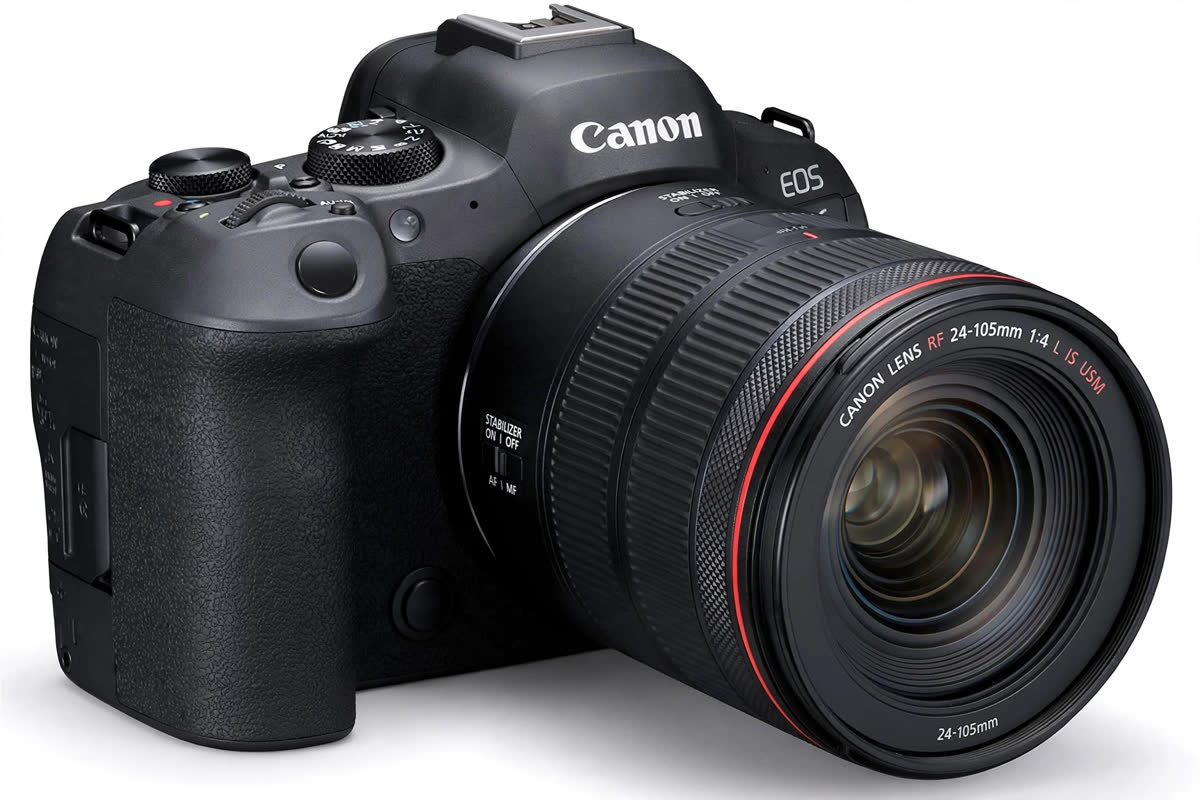
The Canon EOS R6 Mark II is real and verified on the official Canon product page, and it is the best Canon camera for anyone who shoots stills and video in equal measure. The 24.2 megapixel full frame sensor pairs with up to 40 frames per second electronic shooting, subject detection covering people, animals, and vehicles, and oversampled 4K 60p video with Canon Log 3.
This is the working professional body in the Canon lineup: weddings, events, documentaries, and YouTube channels run on R6 Mark II bodies because they simply do not miss. In body stabilization, dual card slots, and a deep buffer make it dependable under pressure, and the RF lens lineup now covers every need from budget primes to exotic telephotos.
The 24 megapixel resolution is the honest compromise, enough for almost everything except heavy cropping and enormous prints. If you need more pixels, the R5 Mark II below is the step up. For most hybrid shooters, the R6 Mark II is the sweet spot of the entire Canon system. The official Canon EOS R6 Mark II page has the full specifications.
3. Canon EOS R1: Best Canon Camera for Professionals
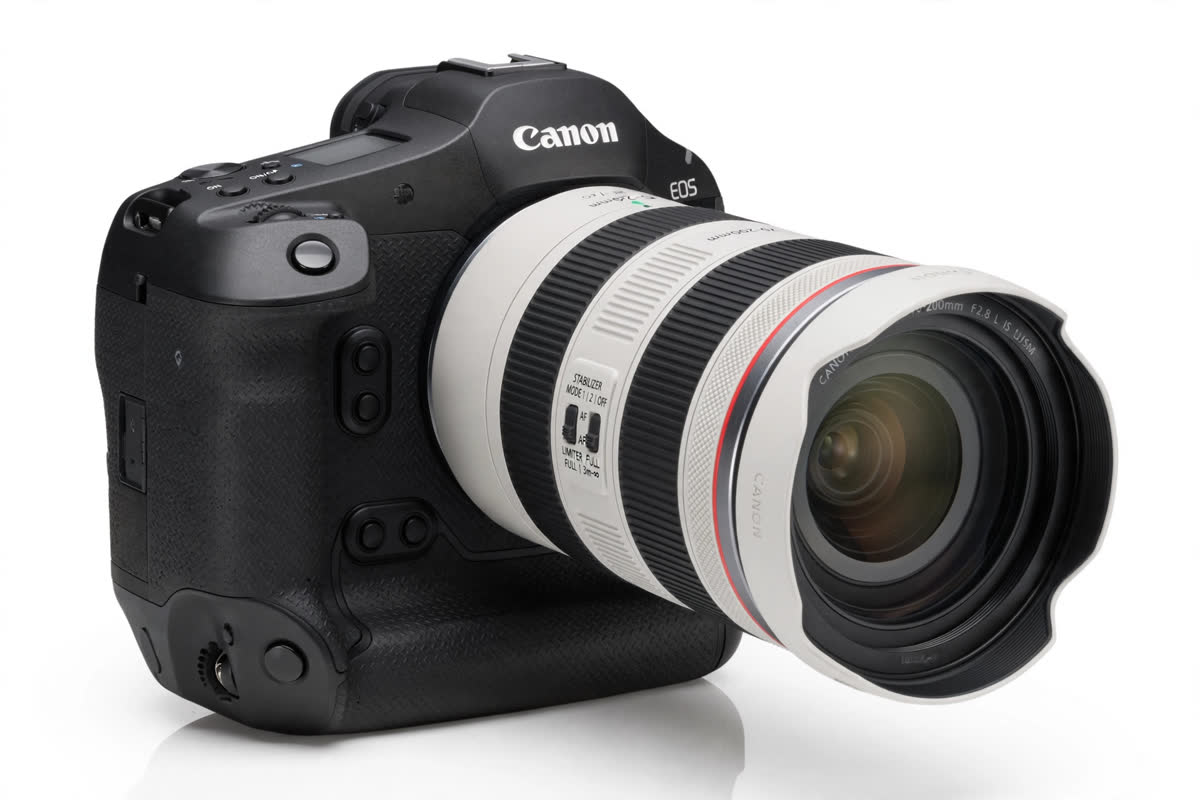
The Canon EOS R1 is real and documented as Canon flagship mirrorless body, built for sports, news, and wildlife professionals who cannot miss a moment. A stacked full frame sensor, blackout free shooting at extreme frame rates, and the most advanced subject detection autofocus Canon has ever made define a camera engineered for the Olympic sidelines and the front lines.
As the best Canon camera for professionals, the R1 case is about trust under pressure: weather sealing, dual grips worth of battery, dual card slots, and an autofocus system trained to find athletes, helmets, and animals in chaos. Image files are built for wire speed delivery, and the ergonomics assume long lenses and long days.
The honest caveat is price and specialization: this is flagship money for a camera whose advantages matter only to working pros. Enthusiasts get nearly all the joy from the R6 Mark II or R5 Mark II for far less. Buy the R1 if your income depends on the decisive moment.
4. Canon EOS R5 Mark II: Best Canon Camera for High Resolution
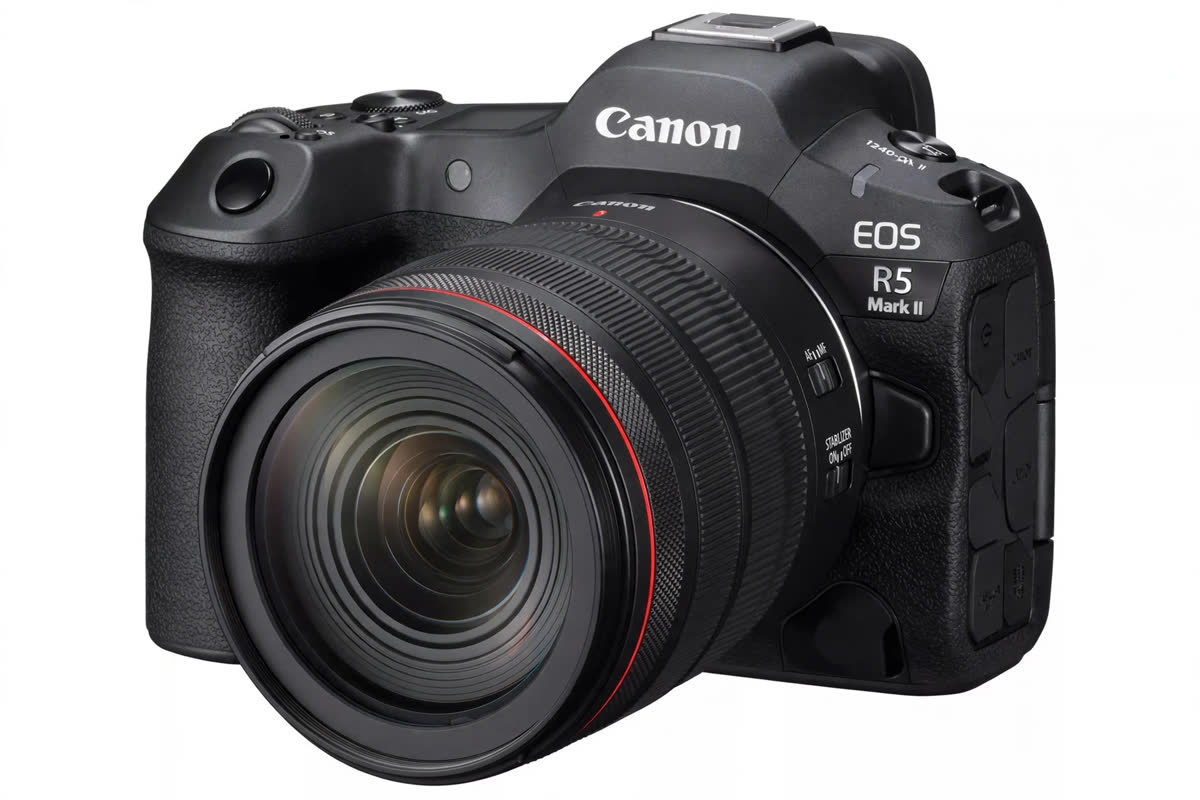
The Canon EOS R5 Mark II is real and documented, and it is the best Canon camera for photographers who need resolution without giving up speed. The 45 megapixel full frame stacked sensor delivers huge detailed files, 8K video, and subject detection autofocus from the flagship playbook, in a body smaller and lighter than the old 5D DSLRs it replaces.
Landscape, commercial, wedding, and wildlife photographers love the R5 Mark II because it crops like a medium format camera and shoots like a sports camera. In body stabilization, dual card slots including CFexpress for the 8K and high speed stills data rates, and Canon color science make it the do everything high end body.
The honest caveats are cost, both of the body and of the storage and computer power that 45 megapixel files and 8K video demand. Note the sheet connection: entry 7 below is the same camera under the name R5 II, which we flag openly there rather than reviewing it twice.
5. Canon EOS 5D Mark IV: Best Canon Camera DSLR Legend
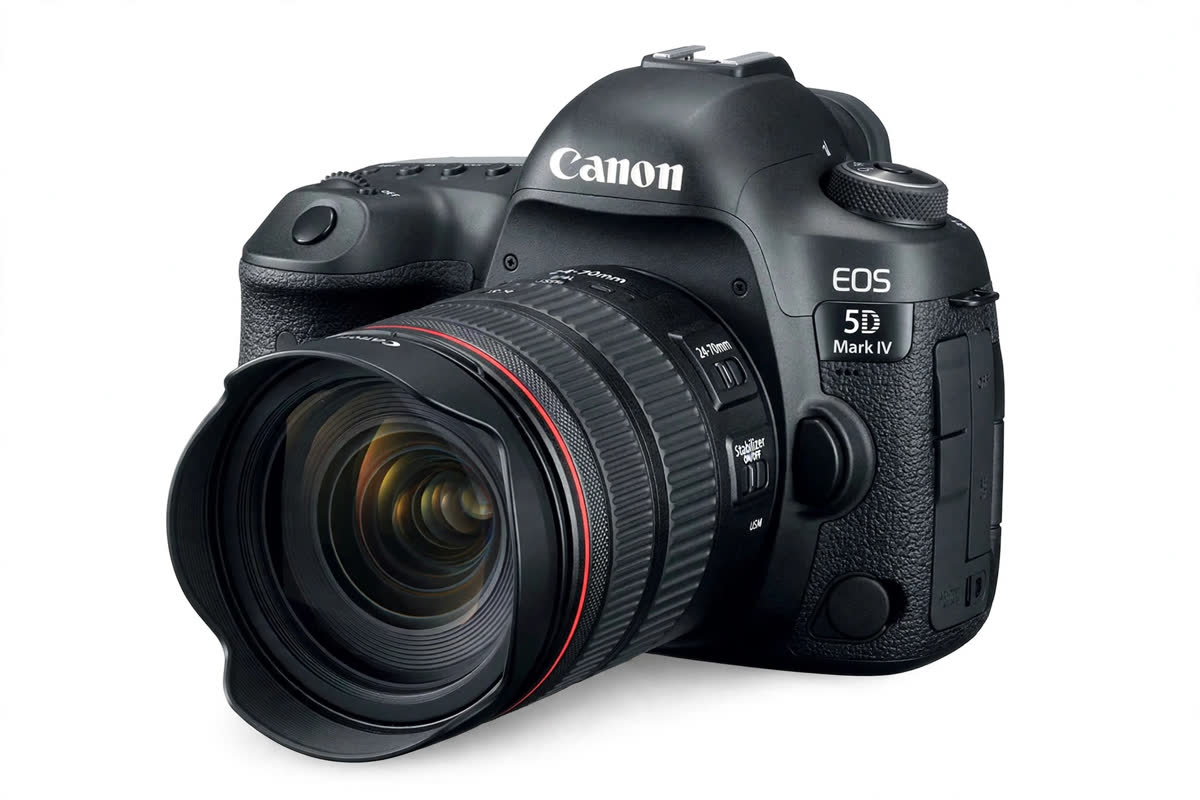
The Canon EOS 5D Mark IV is real and legendary: the DSLR that shot a generation of weddings, portraits, and commercial work. The 30.4 megapixel full frame sensor, Dual Pixel autofocus in live view, 4K video, and the tank like 5D build made it the default professional camera of its era, and it remains a superb stills tool today.
As the best Canon camera for DSLR loyalists and used market hunters, the 5D Mark IV wins on value. Used bodies sell for a fraction of their original price while delivering image quality that still embarrasses new mid range cameras, and the EF lens ecosystem is the deepest and cheapest in photography. The optical viewfinder experience remains something mirrorless cannot replicate.
The honest caveats are mirror era compromises: the 61 point viewfinder autofocus is dated next to mirrorless subject detection, and live view shooting is slow. Buy it used for maximum value as a stills workhorse, and buy mirrorless if video or action autofocus is your priority.
6. Canon EOS RP: Best Canon Camera Full Frame Bargain
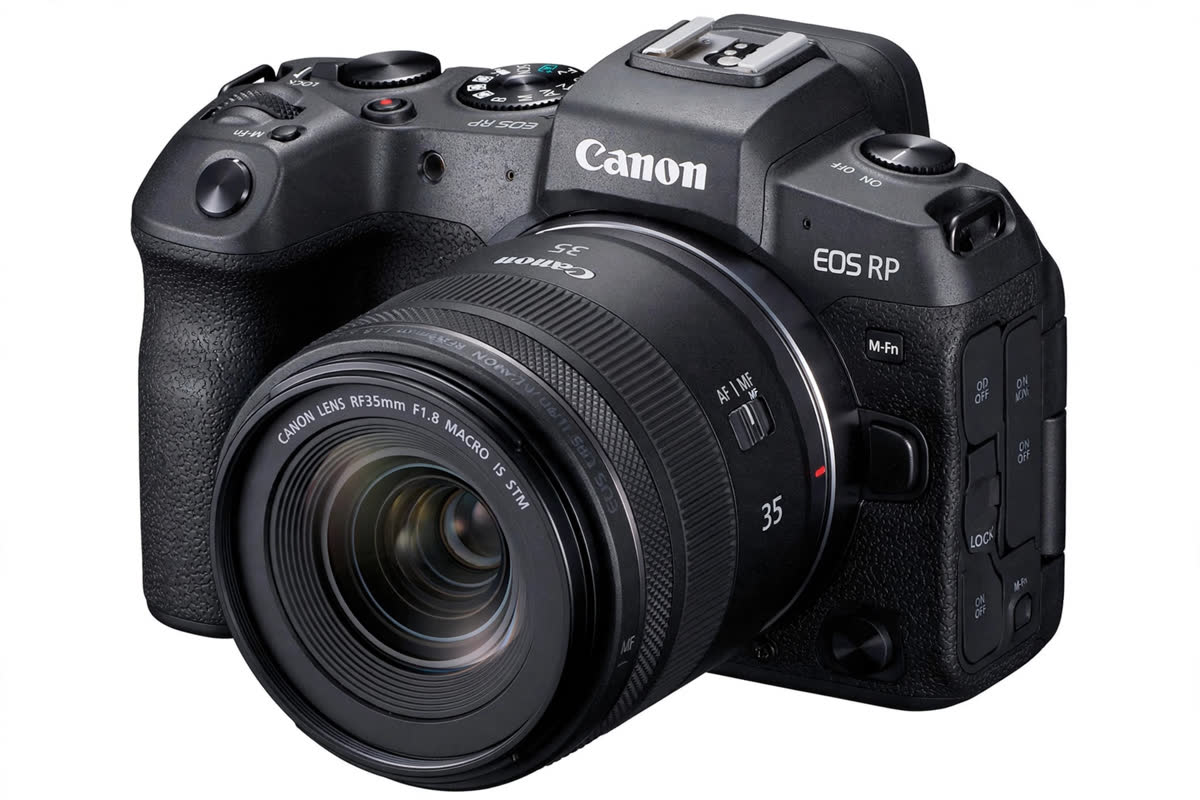
The Canon EOS RP is real and documented as the smallest and lightest full frame camera Canon has made. The 26.2 megapixel full frame sensor, RF mount, and vari angle touchscreen bring genuine full frame image quality to a price and size that used to mean APS-C.
As the best Canon camera for full frame on a budget, the RP is the gateway drug to the RF system. Image quality is classic Canon full frame, the body is genuinely portable, and it takes every RF lens, which means your glass investment survives any future body upgrade. For travel, portraits, and learning full frame, it remains a smart buy, especially used.
The honest caveats are age: slower burst shooting, older autofocus that hunts more than current Dual Pixel CMOS AF II, and 4K video with a heavy crop. Buy it for the sensor and the mount at a bargain price, and look at the R6 Mark II above when you need modern speed.
7. Canon EOS R5 II: Best Canon Camera for Detail Lovers
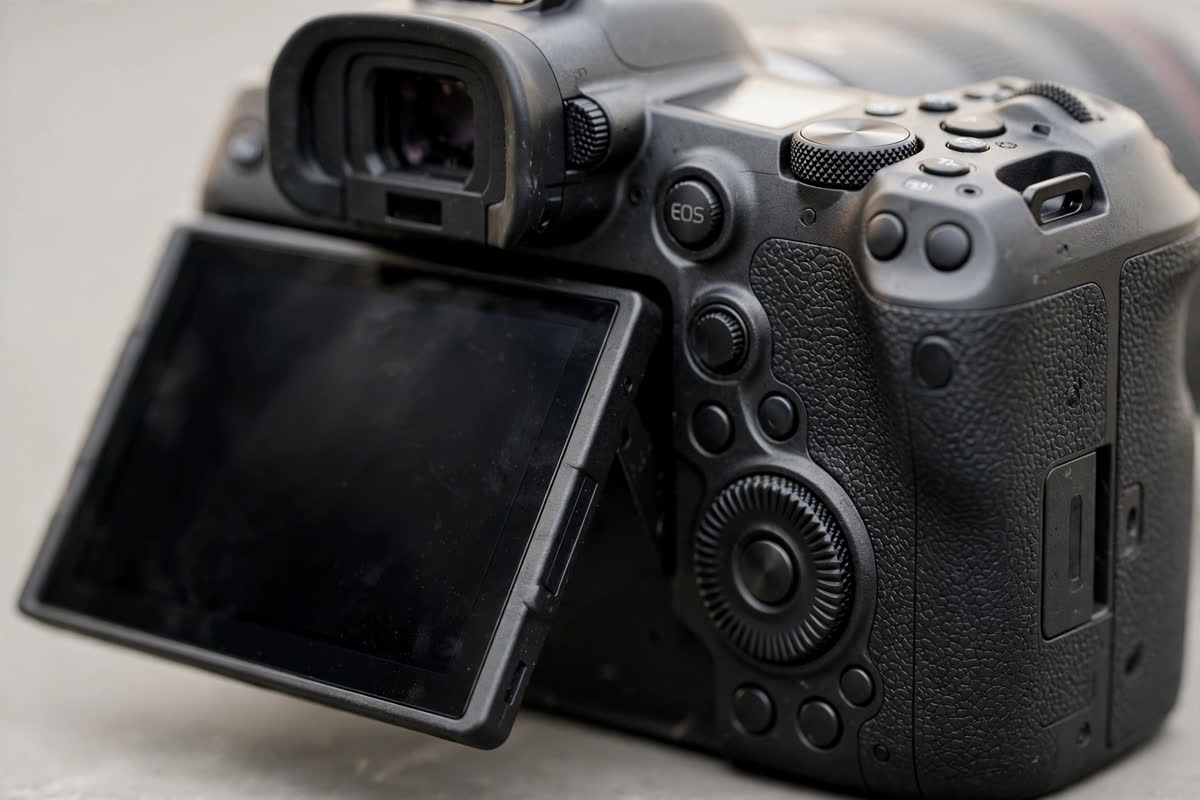
The honest flag for this entry: Canon EOS R5 II is the same camera as the Canon EOS R5 Mark II reviewed at number 4. The sheet listed it twice under slightly different names, so we say so openly instead of inventing differences. Everything about the 45 megapixel stacked full frame sensor, 8K video, and flagship autofocus at number 4 applies here identically.
Viewed from the detail lover angle, the R5 Mark II, by either name, is the resolution king of the Canon lineup. Landscape photographers get enormous cropping headroom, commercial shooters get files that survive any client demand, and wildlife photographers get reach multiplication that turns a 400mm lens into an 800mm equivalent view with room to spare.
The buying advice is the same as at number 4: budget for storage and computing power alongside the body, and choose this over the R6 Mark II when resolution is the job. Do not buy both entries on this list, because they are one camera.
8. Canon EOS R50: Best Canon Camera for New Creators
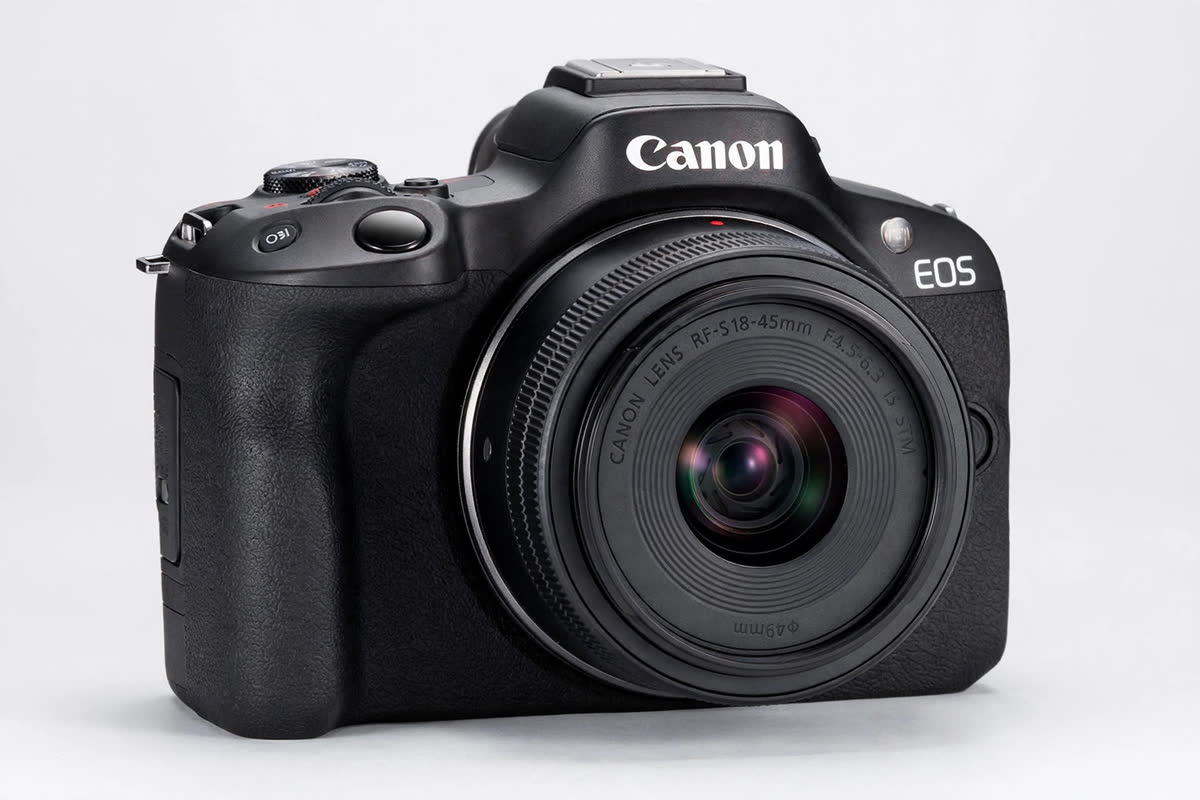
The Canon EOS R50 is real and verified on the official Canon product page, and it is the best Canon camera for new creators who want modern features in a tiny affordable body. The 24.2 megapixel APS-C sensor with DIGIC X processing, Dual Pixel CMOS AF II with subject detection, and oversampled 4K video make it a genuine hybrid tool, not a compromised starter camera.
What sells the R50 is how little stands between you and good results. The vari angle touchscreen flips forward for vlogging, Creative Assist modes teach exposure without a manual, and the 375 gram body goes everywhere. The RF-S mount keeps an upgrade path into full frame RF glass open for later.
The honest caveats are a single card slot and modest battery life, both fair at this price. Step up to the R10 below for more physical controls, or to the R6 Mark II for full frame. The official Canon EOS R50 page lists the complete specifications.
9. Canon EOS R10: Best Canon Camera for Enthusiasts
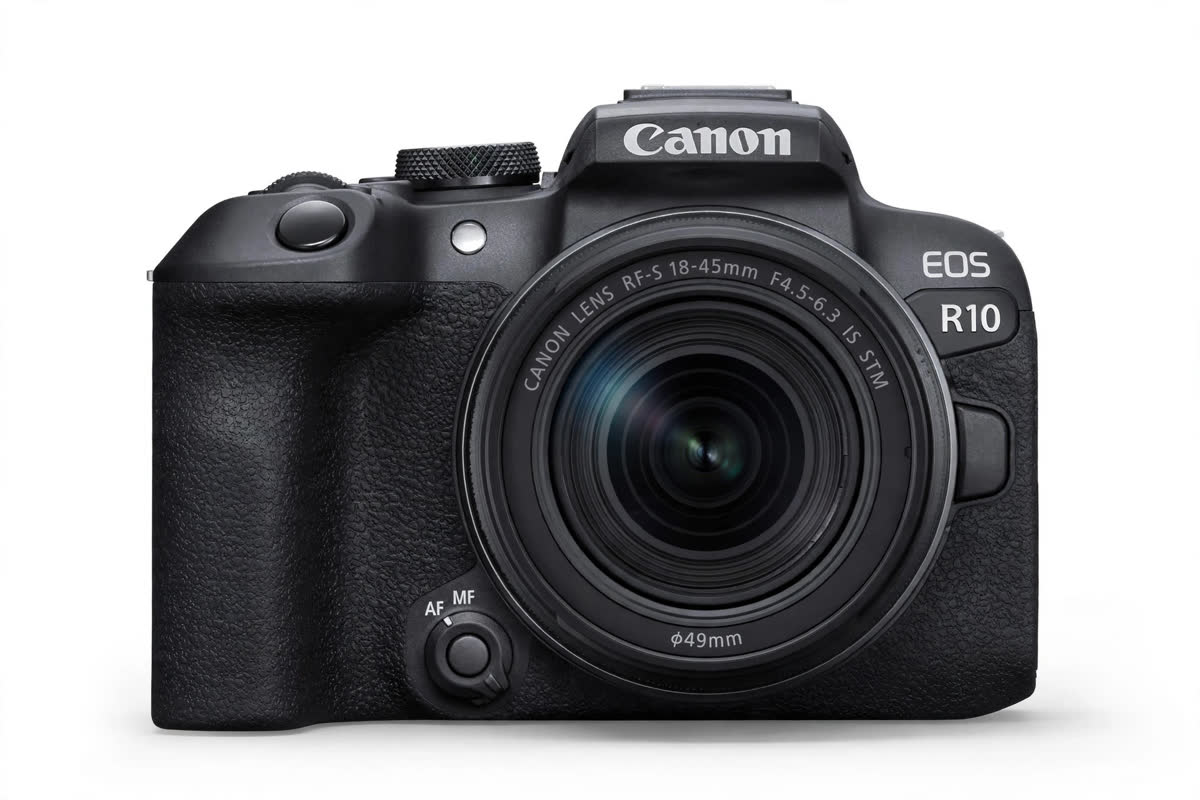
The Canon EOS R10 is real and documented, and it is the best Canon camera for enthusiasts who have outgrown beginner bodies. The 24.2 megapixel APS-C sensor and DIGIC X processor deliver up to 23 frames per second mechanical shooting, subject detection autofocus from the flagship playbook, and oversampled 4K video, in a body with the dials and controls that manual shooters want.
The R10 hits the enthusiast sweet spot: fast enough for sports and wildlife with the 1.6x crop giving free telephoto reach, capable enough for serious video, and small enough to carry daily. Paired with RF-S lenses it is a compact kit, and adapted EF glass opens up affordable telephoto options for wildlife.
The honest caveats are no in body stabilization and a single card slot, which keep it below the R7 for serious action work. Buy it as the thinking photographer APS-C body, and step up to the R7 below when stabilization and dual slots matter.
10. Canon EOS R7: Best Canon Camera for Wildlife and Sports
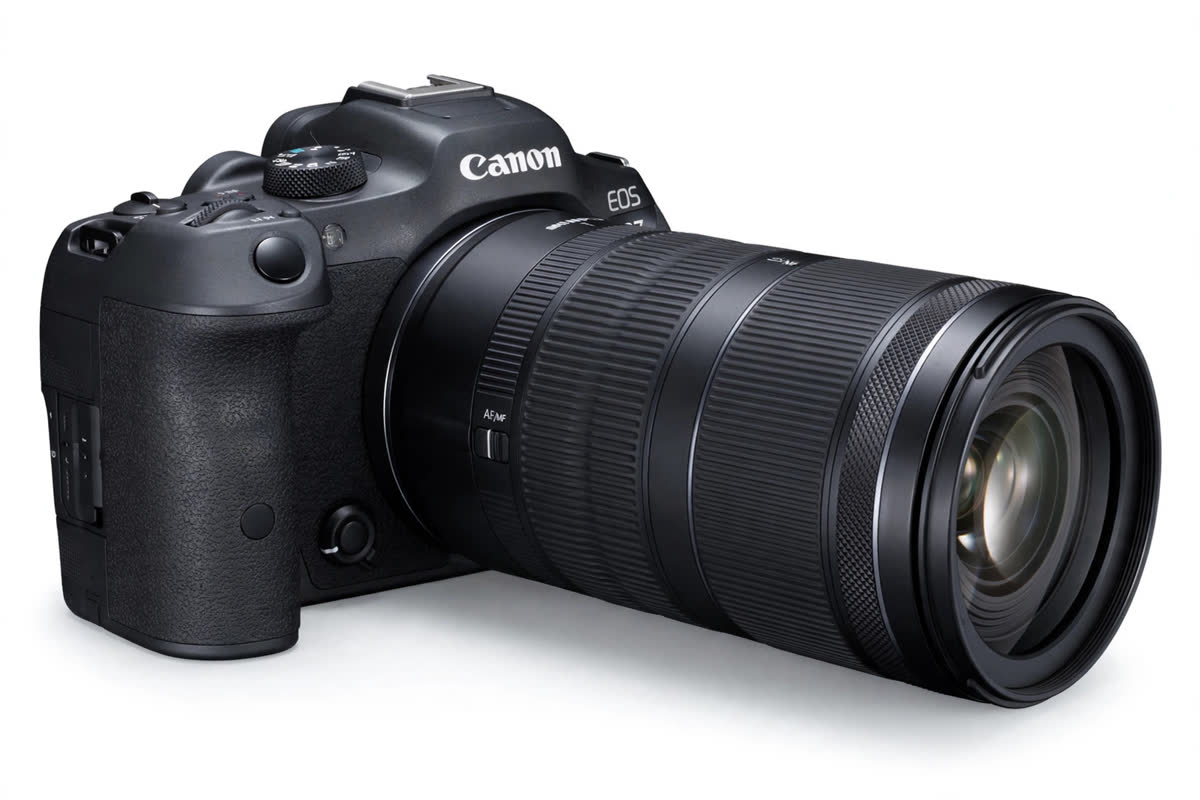
The Canon EOS R7 is real and documented, and it is the best Canon camera for wildlife and sports on a realistic budget. The 32.5 megapixel APS-C sensor gives the highest resolution in Canon APS-C, in body stabilization steadies long lenses, and up to 30 frames per second electronic shooting with subject detection built for animals and birds makes it a mini flagship for action.
Wildlife photographers love the R7 because the 1.6x crop turns a 400mm lens into 640mm of reach while the 32.5 megapixels leave room to crop further. Dual card slots, weather sealing, and deep controls make it a serious tool, not a consumer body with a fast burst mode bolted on.
The honest caveats are rolling shutter in electronic shutter mode during very fast action and an RF-S native telephoto lineup that is still growing, though adapted EF super telephotos are abundant and affordable. For dedicated wildlife and sports work, it is the smartest money in the Canon system.
Final Pick
Our pick for the best Canon camera overall is the EOS R6 Mark II. It is the body that does everything at a professional level, stills, video, autofocus, and reliability, without the flagship price or the resolution tax of the R5 Mark II. If one Canon has to earn its keep across every kind of shoot, this is it.
Beginners should start with the Rebel T7 double zoom kit or the EOS R50, enthusiasts get the R10, wildlife shooters get the R7, and resolution hungry pros get the R5 Mark II. Full frame on a budget points to the EOS RP, DSLR loyalists get the 5D Mark IV, and working pros who cannot miss get the R1. Pick the shooter you are, and Canon has the body.
Frequently Asked Questions
Should I buy a Canon DSLR or mirrorless in 2026?
Buy mirrorless for new purchases. The RF system gets all of Canon development, autofocus is generations ahead, and video is far superior. Buy a DSLR like the Rebel T7 or 5D Mark IV only for the used market value or if you specifically love optical viewfinders, because EF lenses are abundant and cheap.
What is the best Canon camera for beginners?
The EOS R50 for mirrorless or the Rebel T7 double zoom kit for the absolute lowest price. The R50 gives you modern autofocus and 4K video in a tiny body, while the T7 kit gives you two lenses and an optical viewfinder for less money. Both teach real photography with real interchangeable lenses.
Can I use old EF lenses on RF mirrorless cameras?
Yes, with Canon EF to RF adapter, and they work excellently, often focusing better on mirrorless than they did on DSLRs. This is one of the best Canon camera system advantages: decades of affordable used EF glass becomes native feeling glass on any R body. Budget for the adapter and shop the used market with confidence.
What is the best Canon camera for video?
The EOS R6 Mark II for most hybrid shooters, with oversampled 4K 60p and Canon Log 3. The R5 Mark II adds 8K for high end work, the R50 is the budget video pick, and the R1 is the professional video flagship. Match the video specs to the work you actually deliver.
Is the Canon EOS R5 Mark II worth it over the R6 Mark II?
Only if you need the 45 megapixels. For prints, cropping, landscape, and commercial work, the resolution is transformative. For events, weddings, and general shooting, the R6 Mark II is faster to work with, cheaper, and easier on storage. Note that the sheet listed this camera twice, at entries 4 and 7, and they are the same body.
What is the best Canon camera for wildlife photography?
The EOS R7, thanks to the 32.5 megapixel APS-C sensor giving extra reach, in body stabilization, and animal subject detection at 30 frames per second. Pair it with an RF 100-400mm or an adapted EF super telephoto for a wildlife kit that embarrasses systems costing twice as much.
The Bottom Line
The best Canon camera is the one built for the shooter you are: the R50 or Rebel T7 to learn, the R10 to grow, the R7 for wildlife, the R6 Mark II to do everything professionally, the R5 Mark II for resolution, and the R1 when missing is not an option. Every camera on this list is a real verified Canon product, the duplicate R5 entry is flagged honestly, and whichever body you choose, the RF and EF lens systems give you glass for decades.
Pingback: 10 Best Cameras for Beginner Photography 2026 - DixTrick