
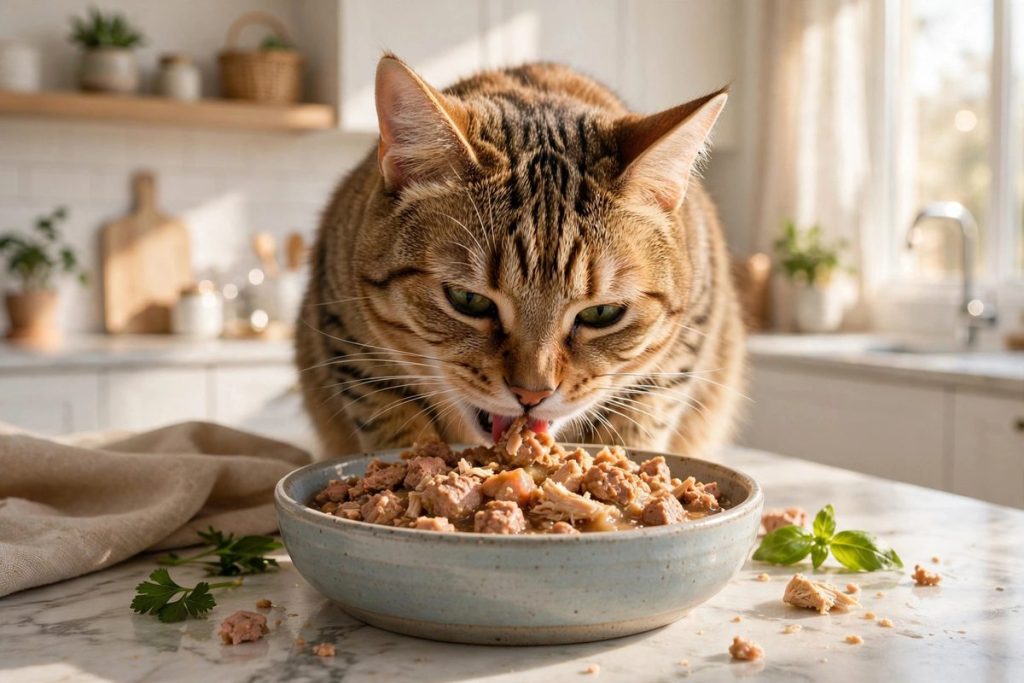
10 Best Canned Cat Food for Every Feline in 2026
Introduction to Our Best Canned Cat Food Rankings for 2026
Finding the best canned cat food in 2026 means sorting through a wall of cans that all promise the same thing: real meat, complete nutrition, and a cat that cleans the bowl. Canned food carries one built in advantage that no dry food can copy, and that is water. Cats evolved as desert hunters with a famously low thirst drive, so a diet that delivers hydration through food quietly supports urinary health, kidney function, and digestion every single day. That is why so many veterinarians now encourage owners to build meals around wet food, and why a thoughtful best canned cat food shortlist is worth more than any flashy label.
The first rule of shopping for canned food is the same rule that governs all cat nutrition: cats are obligate carnivores. Animal protein is not a preference for them, it is a biological requirement, so the cans that made our list lead with named meats, poultry, or fish and carry a complete and balanced statement for the life stage on the label. Vague ingredient lists, mystery meat blends, and formulas padded with fillers were cut early. The standards behind those statements come from AAFCO nutrient profiles, and the reasoning is backed by the feline nutrition specialists at Cornell University’s College of Veterinary Medicine: balance, completeness, and life stage fit decide quality far more than any single fashionable ingredient.
We also judged the whole can, not just the ingredient panel. Texture matters because cats are famously opinionated about it: some will only touch a smooth pate, others demand shreds or chunks they can chew, and a few hold out for a brothy stew. Palatability matters because the most nutritious can in the world is worthless if your cat stages a hunger strike in front of it. And honesty matters because premium pricing should buy genuinely better food, not just a prettier label. Every entry below survived all three tests, and each one represents a different answer to the question of what the best canned cat food looks like in practice.
One honest note before the list. No article can replace your own veterinarian, who knows your cat’s age, weight, and health history. If your cat manages kidney disease, urinary crystals, food allergies, or any chronic condition through diet, check with your vet before switching formulas. The ten picks below cover kittens, adults, picky eaters, and budget conscious households, from small batch American recipes to New Zealand sourced luxury. For more pet care reading alongside this guide, browse the pet guides on DixTrick.
How We Chose the 10 Best Canned Cat Food Options
Every corner of the internet hosts a best canned cat food list, so here is the exact method behind ours. No brand paid for placement, and no pick survived on reputation alone. We wanted a list a real owner could shop with confidence in 2026, then we wrote down the reasoning in plain language so you can check our work.
- Named protein first. The first ingredient had to be a specific animal protein like chicken, turkey, beef, venison, or fish, never a vague meat blend or a plant filler. Cats need animal based amino acids such as taurine, and the label should prove they get them.
- High moisture content. This is canned food’s home turf advantage, so we favored recipes that deliver meaningful hydration, the kind that supports urinary and kidney health through the diet itself rather than the water bowl.
- Complete and balanced AAFCO statement. Each pick had to be formulated to meet AAFCO nutrient profiles for its stated life stage, the closest thing the industry has to a shared quality baseline, rather than being sold as a mere topper or treat.
- Texture variety. We covered the three textures cats actually choose between: smooth pate, shreds or chunks in broth, and hearty stew, because the best canned cat food for your cat is the texture she will actually eat.
- Palatability for picky cats. We weighed feeding reports and owner experience, favoring recipes with a track record of winning over fussy eaters rather than cans that only look good on paper.
- Value honesty. Price never decided a ranking by itself, but we asked whether a premium can buys genuinely better nutrition or just fancier packaging, and whether a budget can delivers real nutrition per dollar.
Nutrition science keeps moving and individual cats keep disagreeing with it, so treat any list as a starting point. The cat nutrition resources at PetMD make a good companion read while you compare these picks, and your vet remains the final authority if your cat has any medical condition that affects diet.
Table of Contents
1. Daves Pet Food Naturally Healthy
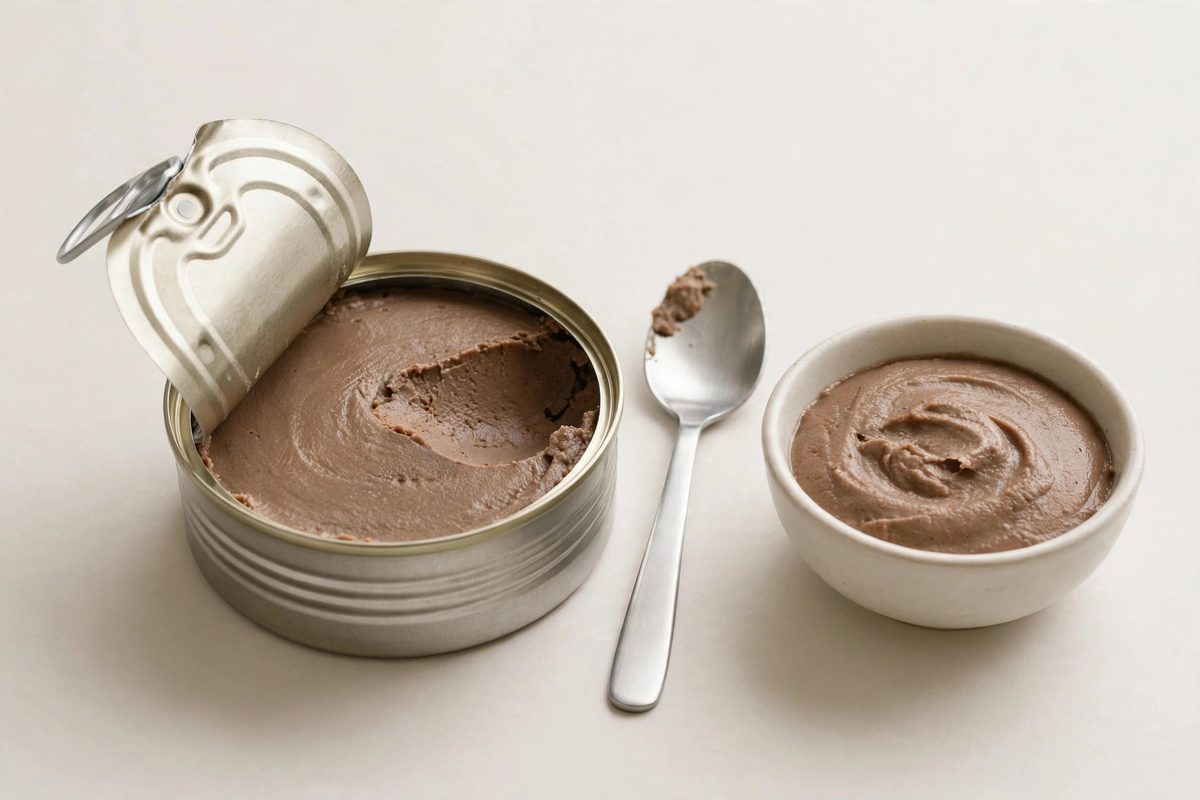
Dave’s Pet Food is a smaller American pet food maker with a loyal following among owners who read labels closely, and its Naturally Healthy canned line is built on a simple promise: grain free pate recipes led by named animal proteins. The cans keep ingredient lists short and legible, skip corn, wheat, and soy, and deliver the smooth pate texture that many cats prefer over chunks. For a brand without a giant advertising budget, it has earned shelf space the old fashioned way, through recipes that cats finish and owners rebuy.
The strengths here are honesty and value. You get named meats up front, a complete and balanced formulation for adult maintenance, and meaningful moisture in every can, all at a price well below the boutique tier. The pate format suits seniors, cats with dental issues, and the many felines that simply refuse textured food. Owners mixing wet and dry food often use this line as the wet half of the routine because it delivers premium style nutrition without premium style pricing.
The caveats are about scale, not quality. A smaller brand means narrower distribution, so you may need to order online or visit an independent pet store rather than grabbing a can at the grocery store. Variety is thinner than the giants offer, with fewer proteins to rotate through. As with any switch, transition over a week or more, and check with your vet if your cat manages a condition where protein or mineral levels matter. Used within those bounds, it is one of the most honest values in canned cat food.
- Best for: Owners wanting grain free pate nutrition from a smaller label reading friendly brand.
- Look for: Named protein first, complete and balanced adult statement, smooth pate texture.
- Keep in mind: Smaller brand with limited availability; transition gradually.
2. Halo Turkey and Duck Recipe Pate
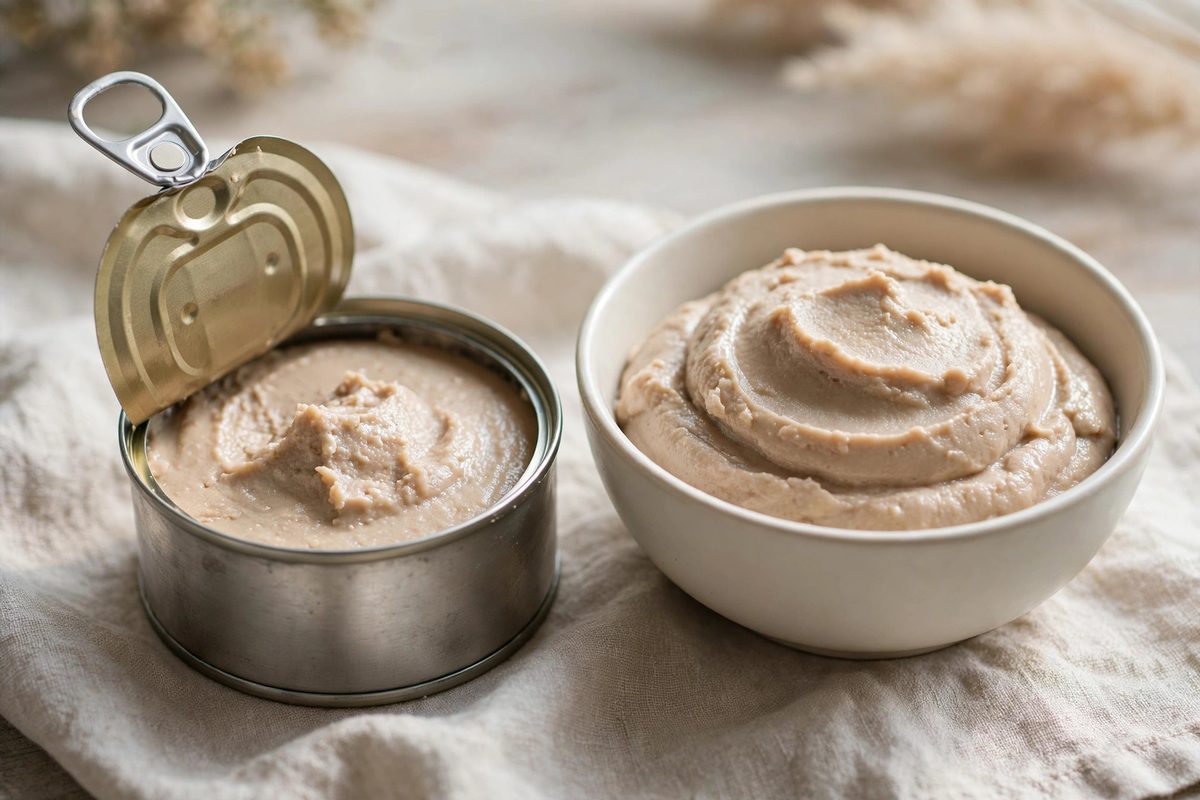
Halo built its reputation on a single idea: use whole meat, never rendered meat meals, and keep ingredients non GMO wherever possible. The turkey and duck recipe pate applies that philosophy to the can, blending two poultry proteins into a smooth, uniform pate. Duck adds a novel protein note for cats bored of plain chicken, while turkey keeps the recipe familiar enough for cautious eaters. It is a deliberate, thought through recipe rather than a generic poultry mix.
The appeal starts with digestibility. Whole meat recipes tend to sit well with sensitive stomachs, and the smooth pate texture works for kittens, seniors, and cats that lick rather than chew. Halo’s non GMO positioning and transparent ingredient sourcing give label readers plenty to like, and the cans carry the complete and balanced statement for the life stages they serve. For poultry loving cats, this is a refined daily driver.
Two honest limits. The premium positioning shows in the price, which runs above grocery store cans, and the poultry only protein base means you should rotate in fish or red meat recipes from other brands for long term variety. Pate loyalists will love it; chunk and shred devotees may stage a protest. Match the life stage on the label to your cat, transition slowly, and it earns its place in the rotation.
- Best for: Pate lovers, sensitive stomachs, owners who prefer whole meat and non GMO ingredients.
- Look for: Turkey and duck as named proteins, smooth pate, complete and balanced statement.
- Keep in mind: Premium price; rotate proteins for variety.
3. ZIWI Peak Venison Recipe Canned Cat Food
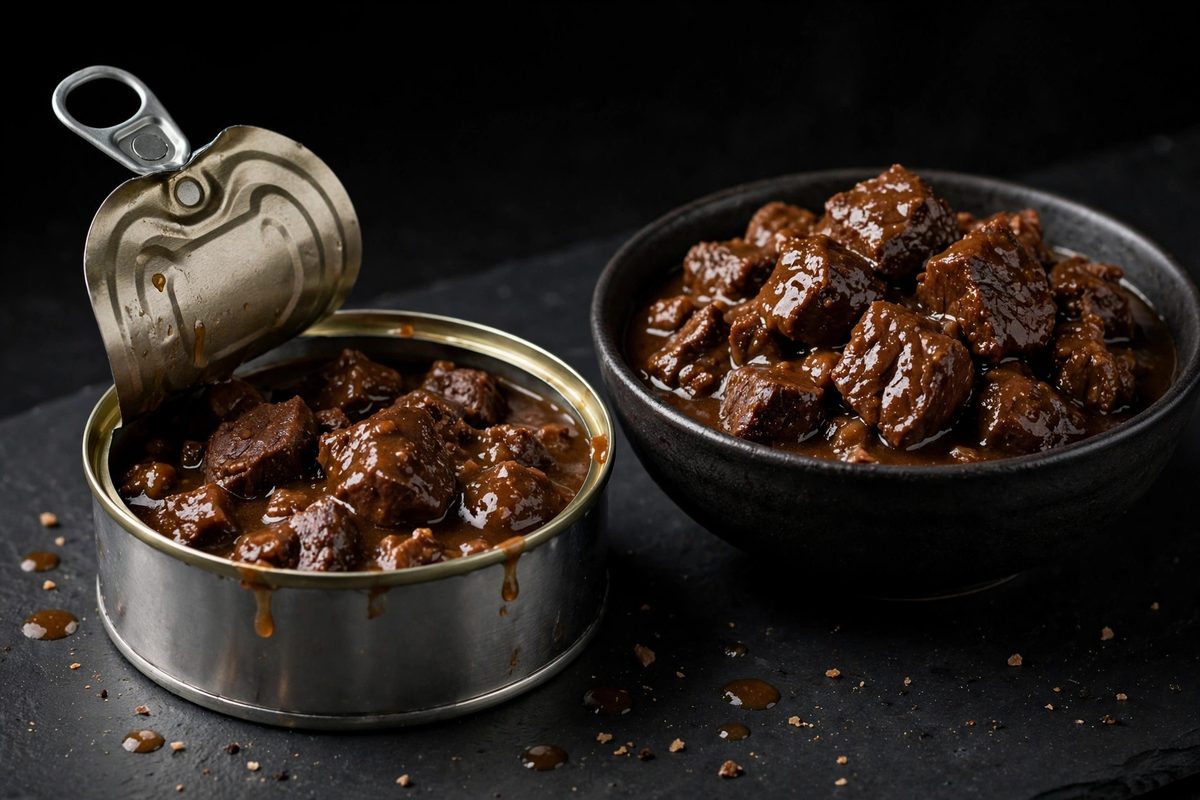
ZIWI Peak approaches cat food from New Zealand, where its venison comes from free range, grass fed herds raised without added hormones or antibiotics. The venison recipe canned food translates the brand’s whole prey philosophy into the can: generous meat inclusion with organs and bone in natural ratios, minimal carbohydrates, and a short ingredient list. Venison is also a novel protein for most cats, which makes this can interesting for owners whose cats have grown bored of chicken and turkey.
Nutrient density is the headline. Because the recipe is so meat forward, each can delivers concentrated protein and natural taurine with very little filler, and the rich aroma tends to win over even famously picky eaters. The ethical sourcing story is unusually specific for the category, with New Zealand’s strict farming standards behind it. As a rotational meal or a topper over a milder staple, it brings something genuinely different to the bowl.
Luxury has a price, and this is the most expensive can on our list by a clear margin. Rich, concentrated food also demands portion discipline: follow the feeding guidelines rather than eyeballing it, since overfeeding a calorie dense recipe is easy. Check with your vet first if your cat manages kidney disease, pancreatitis, or any condition affected by protein and fat levels. Used strategically, it is the most indulgent nutrition in our best canned cat food top ten.
- Best for: Nutrition maximalists, owners seeking novel proteins, ethical sourcing enthusiasts.
- Look for: New Zealand venison, whole prey ratios, high meat content.
- Keep in mind: Highest price on this list; measure portions carefully.
4. Caru Turkey Stew for Cats
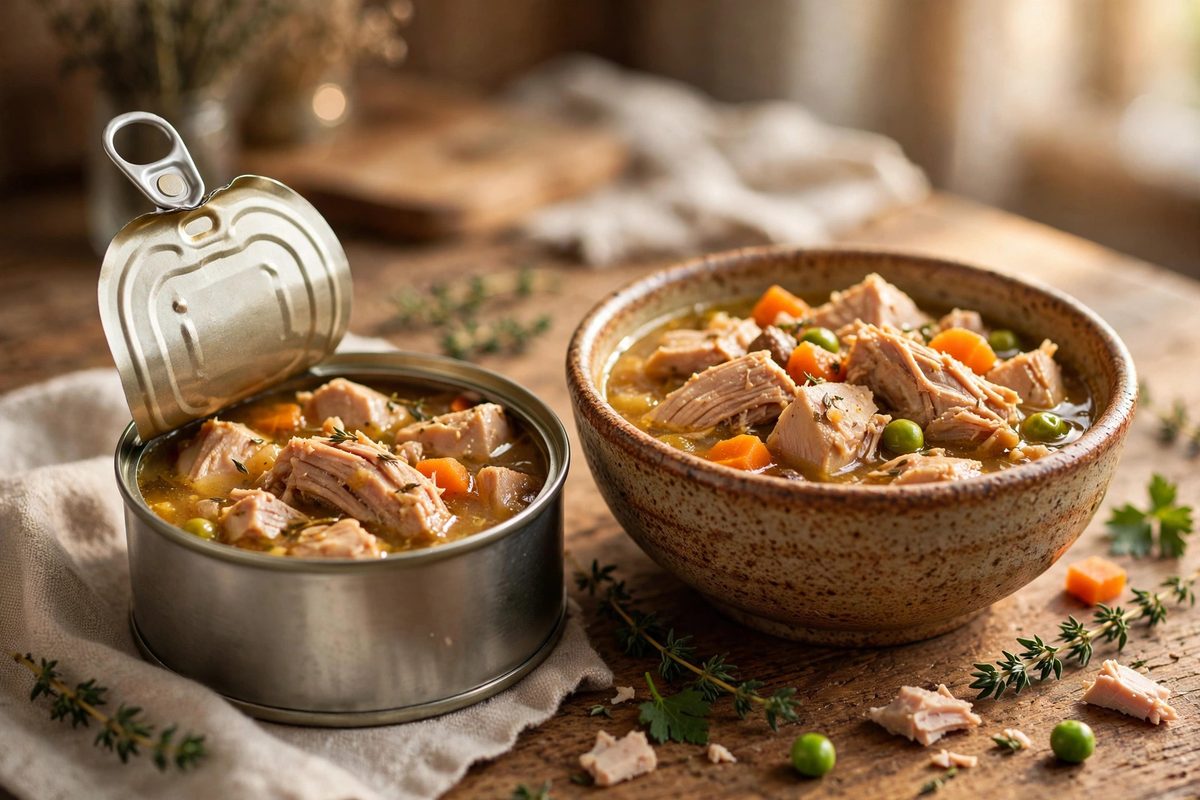
Caru made its name doing one thing well: slow cooked stews that look like food you would recognize from your own kitchen. The turkey stew for cats follows that template, with tender chunks of turkey simmered in a savory broth until soft. There are no rendered meals and no mystery ingredients, just a short list built around real turkey. For owners who judge a can by what it looks like when it hits the bowl, Caru passes the eye test immediately.
The stew format is the selling point. Soft chunks in broth deliver the hydration cats need while giving texture oriented eaters something to chew, and the gentle slow cooking keeps the aroma strong enough to tempt hesitant cats. Recipes stay free of grains, gluten, and artificial preservatives, and the ingredient lists read like a short recipe card. Cats that lick the gravy off standard chunks and shreds often do better here, because the stew pieces are soft enough to eat whole.
Stew lovers should know the practical side. This is premium priced wet food, so feeding it exclusively costs noticeably more than grocery store cans. Some cats will still perform the classic move of drinking the broth and abandoning the chunks, so watch the first few servings before committing to a case. Refrigerate opened cans and use them promptly, as with all wet food. Within a mixed feeding routine, it is a genuinely enjoyable texture option.
- Best for: Texture oriented cats, owners who want recognizable real food ingredients.
- Look for: Slow cooked turkey chunks, savory broth, no artificial preservatives.
- Keep in mind: Premium price; watch whether your cat eats the chunks or just the broth.
5. Weruva Cats in the Kitchen Chicken
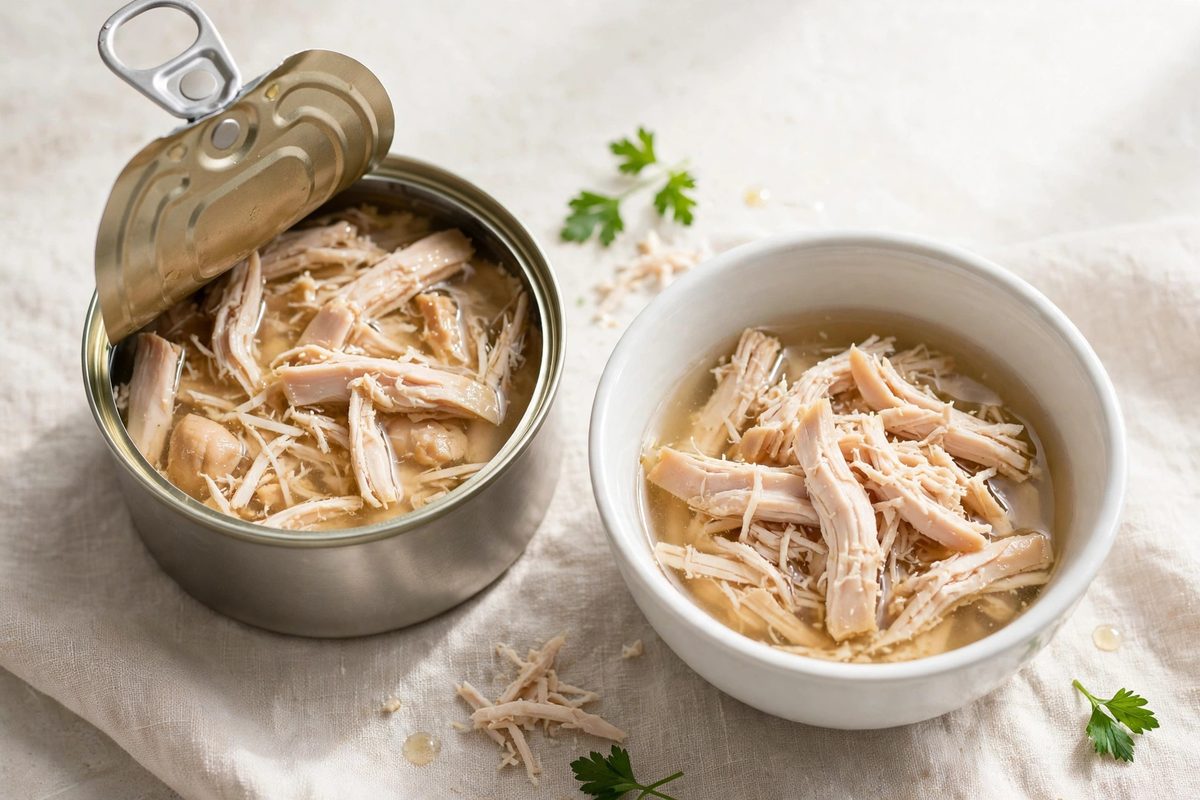
Weruva is a family owned company with an unusual standard: its recipes are made in human food facilities from human grade ingredients, and you can see the difference the moment the can opens. The Cats in the Kitchen chicken recipes center on shredded chicken breast in hydrating broth, looking more like pulled chicken than processed pet food. It is the line many owners reach for when their cat refuses pate but still needs serious moisture in the diet.
Hydration is the quiet superpower of this pick. With moisture levels far above any kibble, a broth based diet supports urinary tract health and helps cats that never seem to visit the water bowl. The recipes skip grains, GMOs, artificial colors, and carrageenan, and the shredded texture gives picky cats something interesting to work through. The packaging suits one and two cat homes, where a big can would go stale before it is finished.
The honest trade offs mirror the whole premium wet category: daily feeding costs more than budget cans, and a chicken only rotation should be balanced with other proteins for long term variety. Shred devotees will be thrilled; dedicated pate cats may need convincing. If your cat struggles with hydration or urinary crystals, ask your vet about making a high moisture food like this the foundation of meals. Few cans make drinking through dinner this appealing.
- Best for: Cats needing extra hydration, shred lovers, owners who want visible real chicken.
- Look for: Shredded chicken breast, hydrating broth, carrageenan free recipes.
- Keep in mind: Premium wet pricing; balance with other proteins over time.
6. Feline Natural Chicken and Lamb Feast
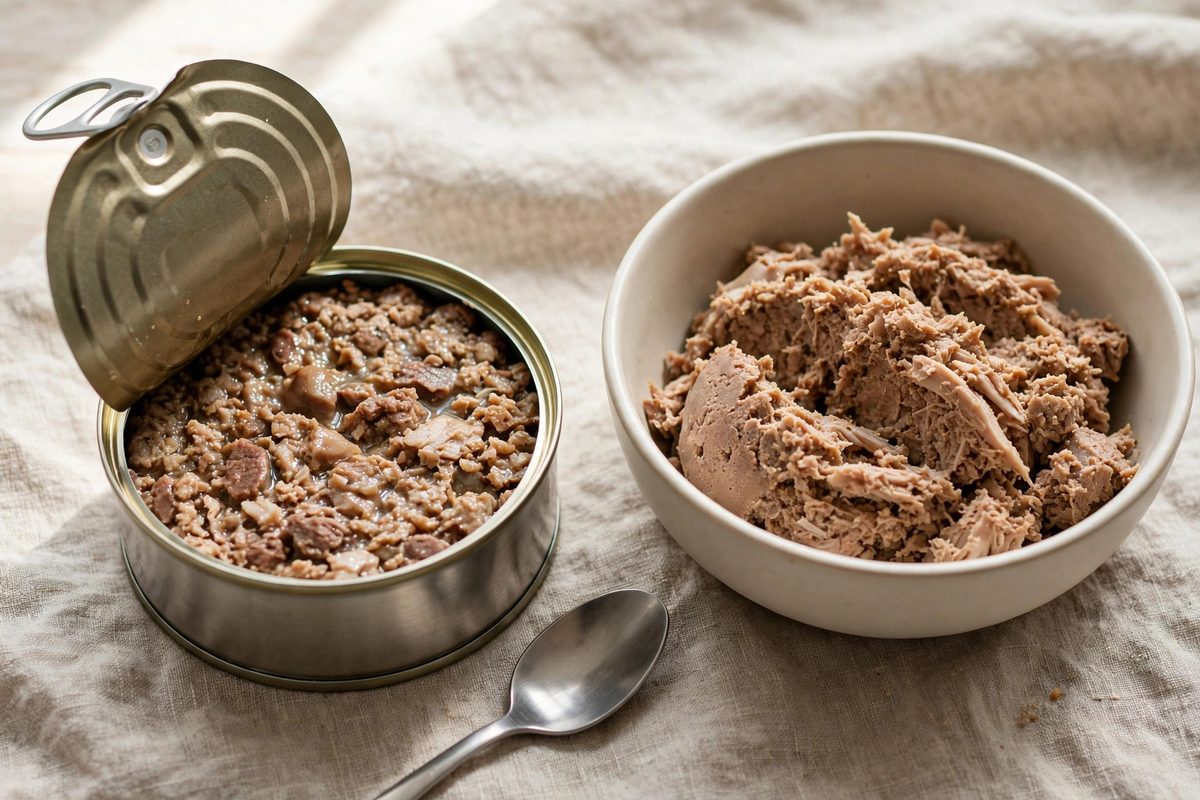
Feline Natural comes from New Zealand, where it built its name on freeze dried raw style nutrition before bringing the same philosophy to cans. The chicken and lamb feast pairs cage free chicken with grass fed lamb in a high meat recipe inspired by whole prey ratios, with organs included for natural nutrient density. For owners who want a taste of the raw feeding world without handling raw meat, this can is a comfortable middle ground.
The protein pairing is the point. Chicken keeps the recipe familiar and highly palatable, while lamb adds red meat variety and a different amino acid profile that benefits cats fed chicken only diets for years. New Zealand sourcing standards are among the strictest in the world, and the ingredient lists stay short and free of grains, artificial flavors, and fillers. Cats tend to find the rich aroma hard to resist, which helps with cautious eaters.
As with the other New Zealand premium on this list, price and availability are the honest caveats. Expect to pay firmly in the premium tier and to order online or visit specialty stores in many areas. Rich recipes also call for measured portions and a gradual transition, especially for cats moving up from milder grocery store food. Check with your vet if your cat manages a condition affected by dietary protein or fat. For a rotational luxury with real sourcing credibility, it earns its spot.
- Best for: Owners exploring raw inspired nutrition, cats needing red meat variety.
- Look for: Grass fed lamb, cage free chicken, New Zealand sourcing.
- Keep in mind: Premium price; transition gradually from milder foods.
7. Tiki Cat Luau Succulent Chicken
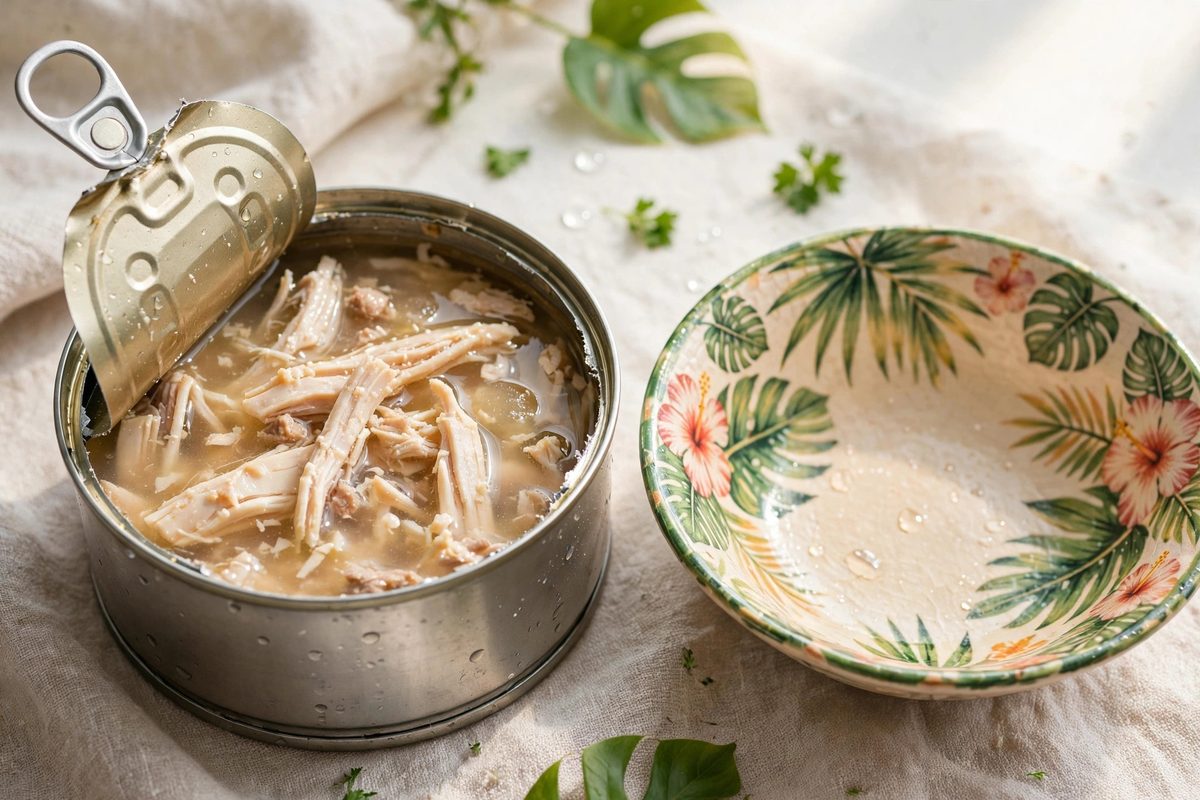
The Luau line is Tiki Cat’s love letter to shredded chicken: tender shreds of chicken in a light consomme, with ingredient lists so short you can count the items. It is the simplest expression of the brand’s wet food philosophy, which holds that cats do best on high moisture food built around recognizable proteins. For broth obsessed cats, opening one of these cans is practically a ceremony.
Simplicity is the strength. With chicken, broth, and a handful of functional additions, there is nowhere for fillers to hide, and the high moisture content supports the urinary and kidney health benefits that make wet food worth feeding. The shredded texture engages cats that chew their food rather than licking it, and the line’s variety makes protein rotation easy without leaving the brand. Picky cats that reject pate often accept these shreds on the first try.
A few practical notes keep expectations honest. These cans shine brightest as part of a rotation rather than the sole diet for every cat, so read the complete and balanced statement on the variety you buy. An all wet diet costs more than kibble based feeding and needs fridge discipline for opened cans. Balance chicken heavy menus with other proteins over the week. Within those bounds, it is one of the most reliably loved textures in canned cat food.
- Best for: Broth lovers, picky eaters that reject pate, hydration focused feeding.
- Look for: Shredded chicken, simple ingredient lists, high moisture.
- Keep in mind: Best in rotation; opened cans need prompt refrigeration.
8. Chicken and Grass-Fed Beef Pate for Cats
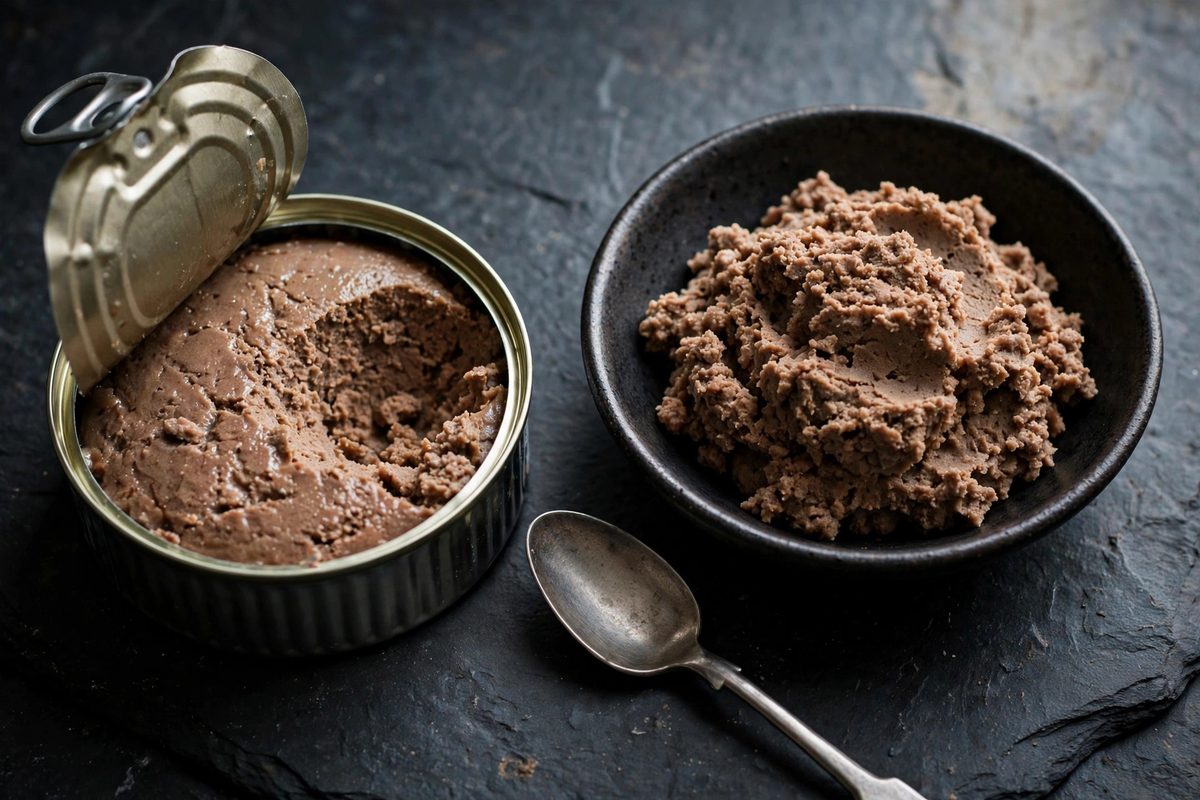
This pick represents a growing corner of the canned aisle: pate recipes built around grass fed beef, paired with chicken for the palatability cats expect. Grass fed beef brings a leaner fat profile and a different nutrient mix than conventional feedlot beef, and the pate format grinds everything into the smooth texture that pate loyal cats demand. It is red meat variety without the novelty protein price tag of venison or rabbit.
The combination works because chicken keeps the flavor familiar while beef adds iron rich red meat depth that many cats find deeply appealing. Pate texture suits kittens, seniors, and dental sensitive cats that struggle with chunks, and a well made grass fed recipe delivers strong protein with moderate fat. For owners building a protein rotation, a beef based pate fills the red meat slot neatly between poultry and fish days.
Because this is a category style pick rather than a heritage brand, label reading matters more than usual: confirm the first ingredients name chicken and beef specifically, and check for the complete and balanced statement for your cat’s life stage. Grass fed claims vary in how strictly they are certified, so treat the sourcing story as a bonus rather than the reason to buy. Buy a few cans before a case, since pate opinions are strongly held in the feline world.
- Best for: Pate loyalists, owners building a protein rotation with red meat.
- Look for: Named chicken and beef first, smooth pate, complete and balanced statement.
- Keep in mind: Verify the label; test a few cans before committing to a case.
9. Purina Fancy Feast Wet Kitten Food
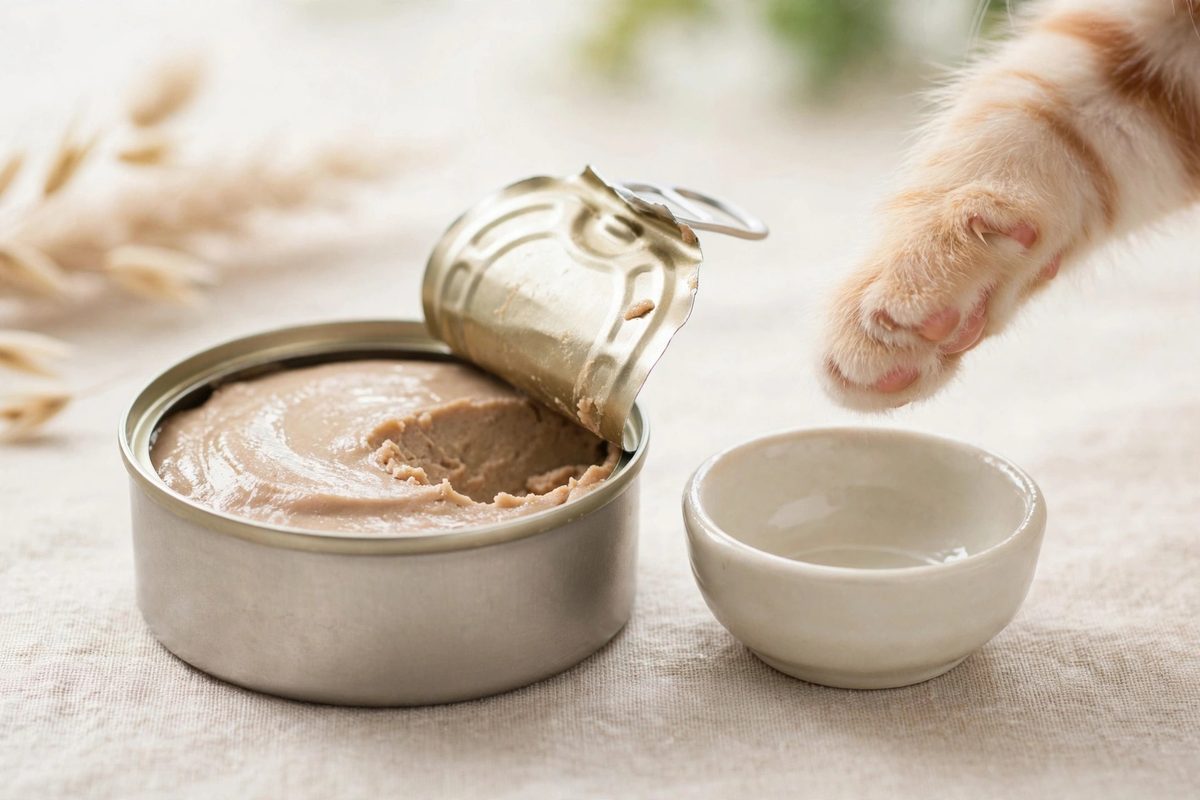
Fancy Feast kitten formulas are the cans many cats meet first: smooth pate recipes built specifically for growth, with the nutrient density kittens need in their fast growing first year. The kitten line keeps the classic Fancy Feast strengths, enthusiastic palatability and a texture kittens take to quickly, while tuning protein, fat, and minerals for development. It is widely available in grocery stores everywhere at a price almost any household can sustain.
The value story is genuine. Behind the budget price sits Purina’s enormous feeding trial and quality control operation, which means every batch is made under tight, well funded manufacturing systems. Kittens are notoriously picky during weaning, and these recipes have a long track record of getting small cats eating confidently. For shelters, foster homes, and multi kitten households, that combination of reliability and affordability matters enormously.
This is kitten food, not an all life stages shortcut: once your cat reaches adulthood, move to an adult formula rather than feeding kitten recipes indefinitely, since growth formulas run richer than adult maintenance needs. Measure portions against the feeding guide, because enthusiastic kittens become enthusiastic adults quickly. And as always, check with your vet about the right time to transition to adult food, usually around the first birthday.
- Best for: Kittens under one year, foster homes, budget conscious multi cat households.
- Look for: Kitten specific formulation, smooth pate texture, wide availability.
- Keep in mind: Switch to adult food after the first year; measure portions.
10. Hills Science Diet Kitten
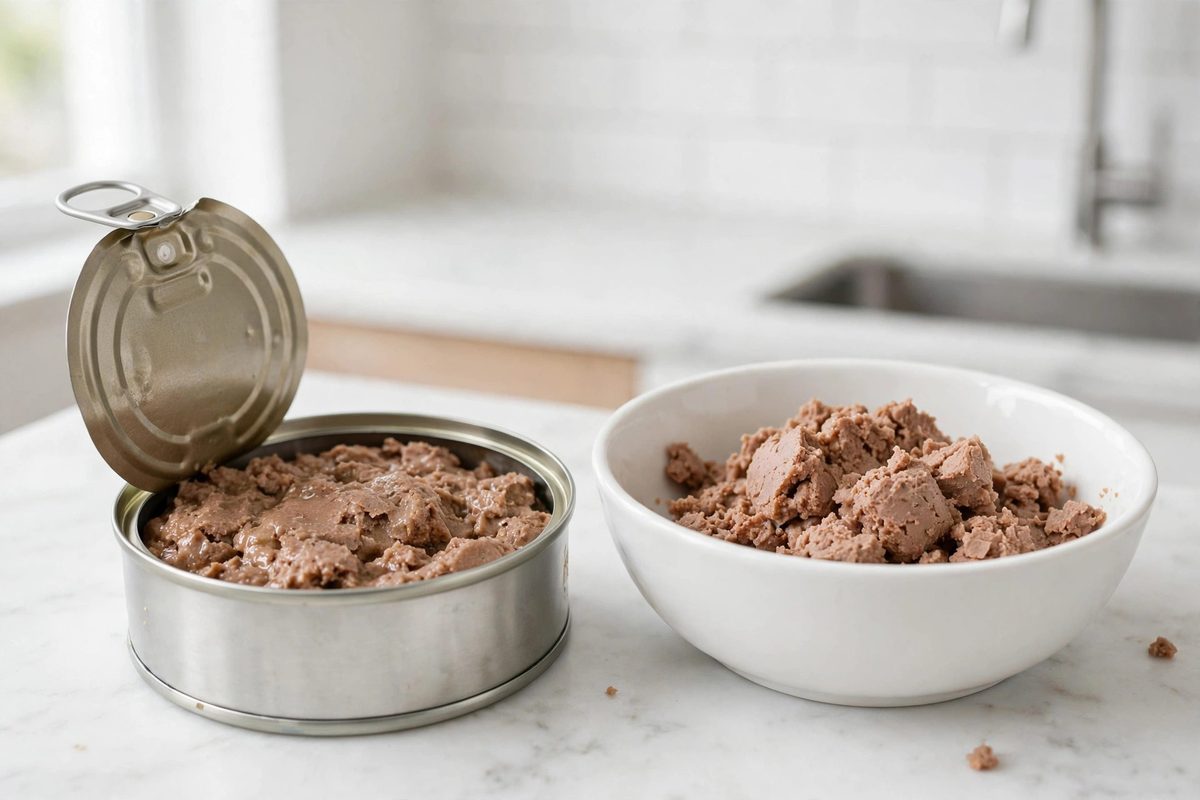
Hill’s Science Diet is the brand many veterinarians reach for first, and the kitten formula shows why: precisely balanced nutrition for growth, with high quality protein, DHA from fish oil for brain and eye development, and mineral levels tuned for developing bones. Every recipe is backed by feeding trials rather than formulation math alone, which is exactly the kind of evidence based approach vets trust. For first time kitten owners who want a science backed choice, this is the default recommendation.
The strength here is specificity. Instead of a generic kitten recipe, you get targeted nutrition for the growth stage, with digestible ingredients that suit small sensitive stomachs and a smooth texture kittens accept readily. The brand’s manufacturing consistency is exceptional, so the can you buy in March matches the can you buy in September. That reliability is why Hill’s appears in so many veterinary feeding plans.
Expect a premium price and an ingredient list that prioritizes precise nutrient targets over marketing romance; you will see grains and carefully chosen meals used in service of those targets. None of that bothers the nutrition science, but label romantics should know what to expect. Match the formula to your kitten’s age, transition gradually from the breeder or shelter food, and confirm the adult switch timing with your vet.
- Best for: First time kitten owners, vet guided feeding plans, sensitive kitten stomachs.
- Look for: DHA for development, feeding trial backing, growth specific formulation.
- Keep in mind: Premium price; switch to adult formula around one year.
Final Pick
So which is the single best canned cat food of 2026? For most healthy adult cats, our top recommendation is Weruva Cats in the Kitchen Chicken, because shredded real chicken in hydrating broth nails the two things that matter most in a can: nutrition cats thrive on and moisture cats rarely get enough of. The human grade ingredient standard and visible food quality make it the easiest enthusiastic recommendation on this list. For kitten households, Hills Science Diet Kitten is the science backed growth choice, with Purina Fancy Feast Wet Kitten Food as the budget friendly alternative that young cats genuinely love.
Budget pick honors for adult cats go to Daves Pet Food Naturally Healthy, proof that honest grain free pate nutrition does not require boutique spending, while ZIWI Peak Venison Recipe Canned Cat Food takes the luxury crown for owners who want the most concentrated, ethically sourced nutrition money can buy. Whatever you choose from this list, transition gradually over seven to fourteen days, measure portions against the feeding guide, keep fresh water available even with wet food, and check with your vet about the right formula for your cat’s age and health.
Each pick represents a different philosophy of what the best canned cat food should be, so match the philosophy to your cat. For more feline care content, explore the pet section on DixTrick.
Frequently Asked Questions
Is canned food better than dry food for cats?
Canned food has one clear advantage: moisture. Cats evolved with a low thirst drive, so wet food supports urinary and kidney health through diet based hydration in a way dry food cannot match. Dry food wins on convenience, cost, and dental crunch. Many veterinarians consider a mixed routine the practical sweet spot, and the moisture question belongs at the center of any best canned cat food decision either way.
How much canned food should I feed my cat each day?
Start with the feeding guidelines on the can, then adjust for your individual cat. Indoor, spayed or neutered, and senior cats typically need fewer calories than the label average, while active cats and growing kittens need more. Weigh your cat regularly and watch the waistline from above: you should feel ribs under a light fat cover. If weight creeps up or down unexpectedly, check with your vet rather than guessing.
How do I transition my cat to a new canned food?
Transition over seven to fourteen days. Start with about 25 percent new food mixed into 75 percent old food, then shift the ratio every few days until the bowl is fully new. Rushing the switch is the most common cause of vomiting and diarrhea during food changes. If digestive upset lasts more than a couple of days, pause the transition and check with your vet.
Pate, shreds, or stew: which texture is best?
The best texture is the one your cat actually eats. Pate suits kittens, seniors, and cats with dental issues because it requires no chewing. Shreds and chunks engage cats that like to work through their food, while stews win over broth lovers. Many owners rotate textures to keep meals interesting, and several picks on this best canned cat food list give you options within a single brand.
Do kittens need special canned food?
Yes. Kittens grow astonishingly fast in their first year, so kitten formulas pack more protein, fat, and calories per bite, plus DHA for brain and eye development and mineral levels tuned for growing bones. Adult maintenance food will not meet those needs. Feed a kitten specific recipe until around the first birthday, then transition to adult food, and confirm the timing with your vet.
When should I ask my vet about my cat’s diet?
Bring up diet at every checkup, and sooner if you notice weight changes, vomiting, diarrhea, dull coat, excessive thirst, or litter box changes. Kittens, seniors, and cats with kidney, urinary, thyroid, or allergy issues all benefit from professional diet guidance. The best canned cat food for a healthy adult is not necessarily the best canned cat food for a cat managing a medical condition, so let your vet tailor the choice.
The Bottom Line
The 10 best canned cat food options of 2026 prove there is no single perfect can, only the right can for your cat, your budget, and your lifestyle. That is the honest definition of the best canned cat food: the healthiest choice you will actually keep buying.
Hydration heroes like Weruva Cats in the Kitchen Chicken and Tiki Cat Luau, honest value in Dave’s Pet Food Naturally Healthy, whole meat refinement from Halo, slow cooked comfort from Caru, New Zealand excellence in ZIWI Peak and Feline Natural, red meat variety in grass fed beef pate, and science backed kitten nutrition from Hill’s and Fancy Feast: together they cover every kind of cat owner. Pick from this list, transition slowly, keep the water fresh, and let your vet have the final word on nutrition. Your cat will thank you at every meal.