
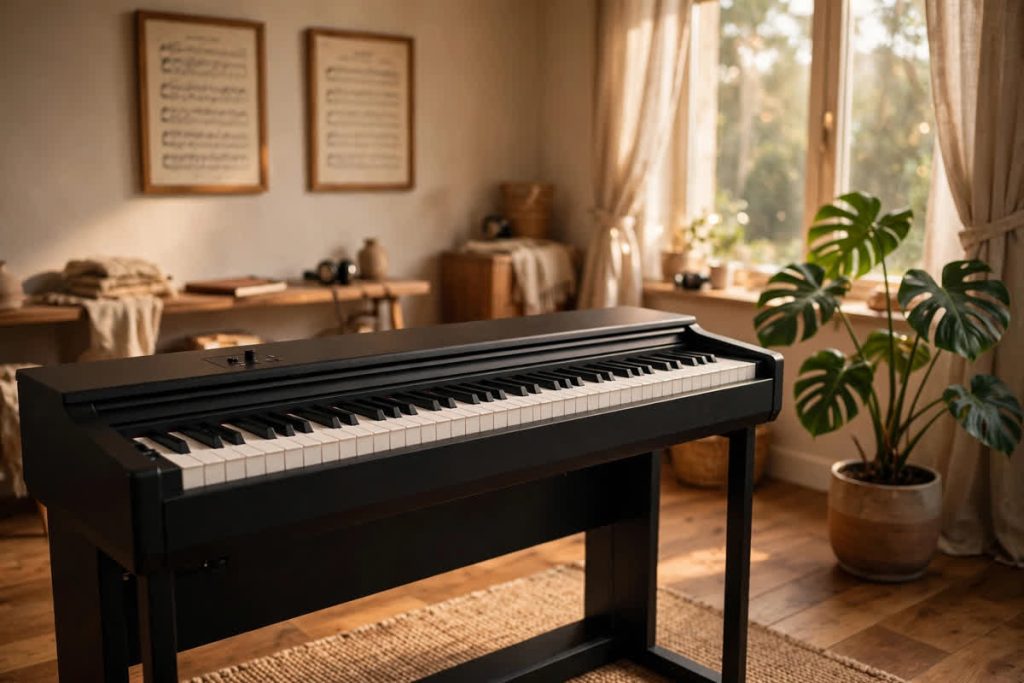
10 Best Digital Pianos for Home and Stage 2026
The digital piano is the bridge between the concert hall and your living room. It gives you the touch of a grand, the silence of headphones, and the freedom to practice at midnight without waking the house. Yet most buyers shop by price tag alone and never think about key action, sound engines, or whether those built-in speakers will actually fill a room. Our 2026 guide to the best digital piano changes that: we reviewed 10 instruments across every popular format, from flagship stage pianos to compact home consoles, to find the ones that genuinely earn a place in your music room.
Choosing the best digital piano is not about finding one magic instrument for everyone. A touring player needs roadworthy stage controls, a beginner needs forgiving keys and a headphone jack, and a home player needs furniture that looks as good as it sounds. Key action matters most of all: fully weighted hammer actions feel like an acoustic grand, while semi-weighted keys favor organ and synth playing. Below you will find honest reviews of all 10 instruments, a breakdown of what actually matters when you shop, and answers to the most common digital piano questions.
We judged every instrument the way a player would: how the keys feel after an hour of playing, how convincing the piano tone is at low volume, whether the controls make sense mid-song, and whether it fits your room, your car, and your gig schedule. Price plays a role too, because the best digital piano is the one you can afford and will actually play every day. Every instrument below earned its place on playing merit, not brand fame.
Whether you are a beginner buying your first set of weighted keys or a gigging pro replacing a workhorse, this guide will help you find the best digital piano for your hands, your home, and your music. And when you are done here, you can browse more DixTrick buying guides to finish building your setup.
How We Chose the 10 Best Digital Pianos
We built this list by comparing the things that actually affect your playing. Each instrument was evaluated against six criteria, and only the strongest best digital piano contenders across the board made the cut.
- Key action and touch: how the keyboard feels under your fingers, from graded hammer weight to escapement, synthetic ivory keytops, and triple sensor detection.
- Piano tone and sound engine: how convincing the main piano voice is, from modeled grands to multi-sampled concert grands, plus the quality of the electric pianos, organs, and extra sounds.
- Speakers vs stage readiness: whether built-in speakers fill a room for home practice, or whether the outputs, zones, and hands-on controls are built for live work.
- Features and connectivity: Bluetooth audio and MIDI, USB audio interfaces, companion apps, recording functions, lesson content, and pedal support.
- Size and portability: weight, footprint, and whether the instrument fits your room, your car, and your gig schedule.
- Value: from budget practice boards to flagship stage pianos, every instrument has to justify its price against the competition.
The instruments on this list share one trait: they make you want to sit down and play. Here are the 10 that made it.
Table of Contents
1. Roland RD-2000 EX
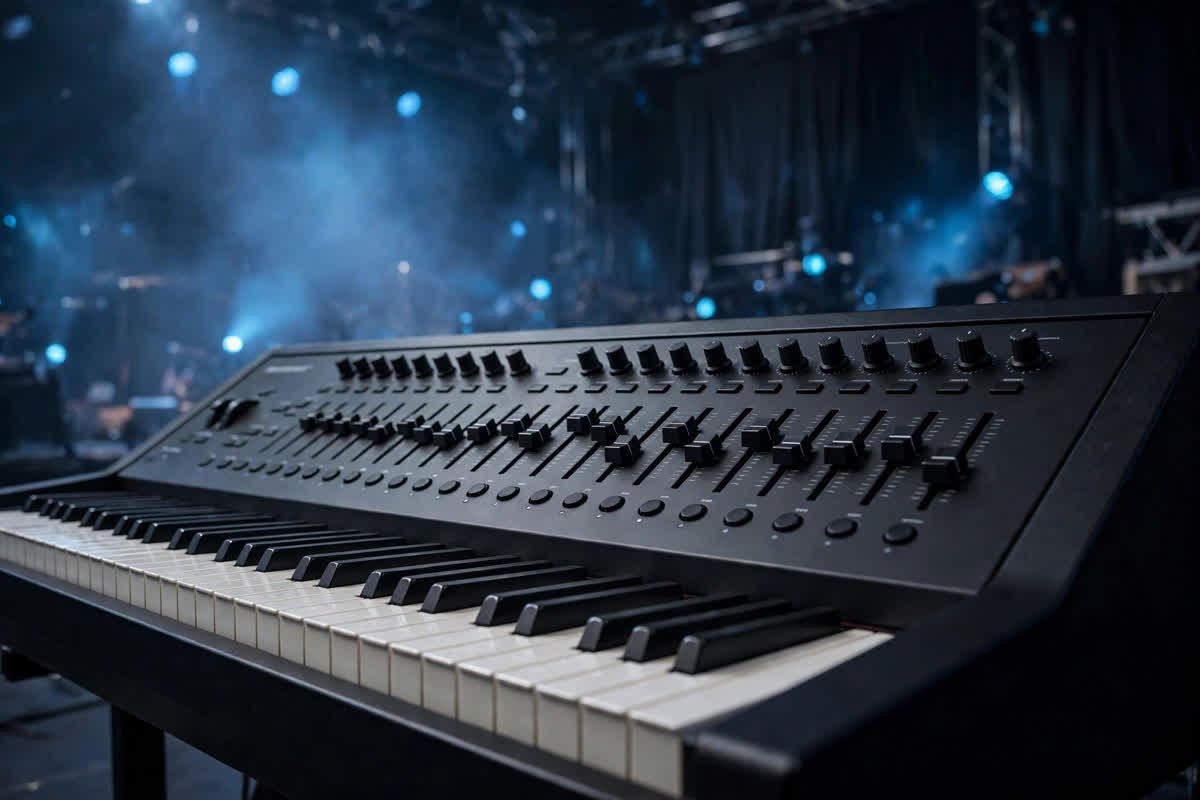
The Roland RD-2000 EX is the flagship stage piano that working professionals measure everything else against. Its PHA-50 keyboard blends wood and molded materials with escapement for a premium hammer action that stays consistent night after night. Under the hood sit two independent sound engines: V-Piano modeling for acoustic piano, and a separate SuperNATURAL engine with 128 voice polyphony covering electric pianos and over 1,100 additional tones. With 100 scene memories and eight assignable zones, it is one of the best digital piano choices for complex live rigs.
The V-Piano engine is the star: instead of playing back samples, it models the strings, hammers, and soundboard of a virtual grand, which gives natural note to note interaction and lets you tune individual notes with the Piano Designer tools. The SuperNATURAL side brings Roland classics like the RD-1000 and MKS-20 electric pianos, plus vintage effects modeled on the BOSS CE-1 chorus and Roland Dimension D. A built-in 24-bit and 192kHz USB audio and MIDI interface turns it into a studio front end.
You can explore the full piano lineup on the official Roland website. Keep in mind that there are no built-in speakers, so this is a stage and studio instrument that needs a PA or monitors, and at 21.7kg it is a serious lift.
This is the board for touring keyboardists, session players, and demanding home studios where the piano is the centerpiece. It handles everything from concert grand work to layered synth textures without breaking a sweat. If you want the best digital piano for the stage and you have the budget and the back for it, the RD-2000 EX is the benchmark.
- Best for: touring professionals, session players, and serious studios needing a flagship stage piano.
- Look for: the dual V-Piano and SuperNATURAL engines and the PHA-50 hybrid wood keybed with escapement.
- Keep in mind: no built-in speakers and 21.7kg of weight make it a stage instrument, not a casual home piano.
2. Yamaha Clavinova CLP-835
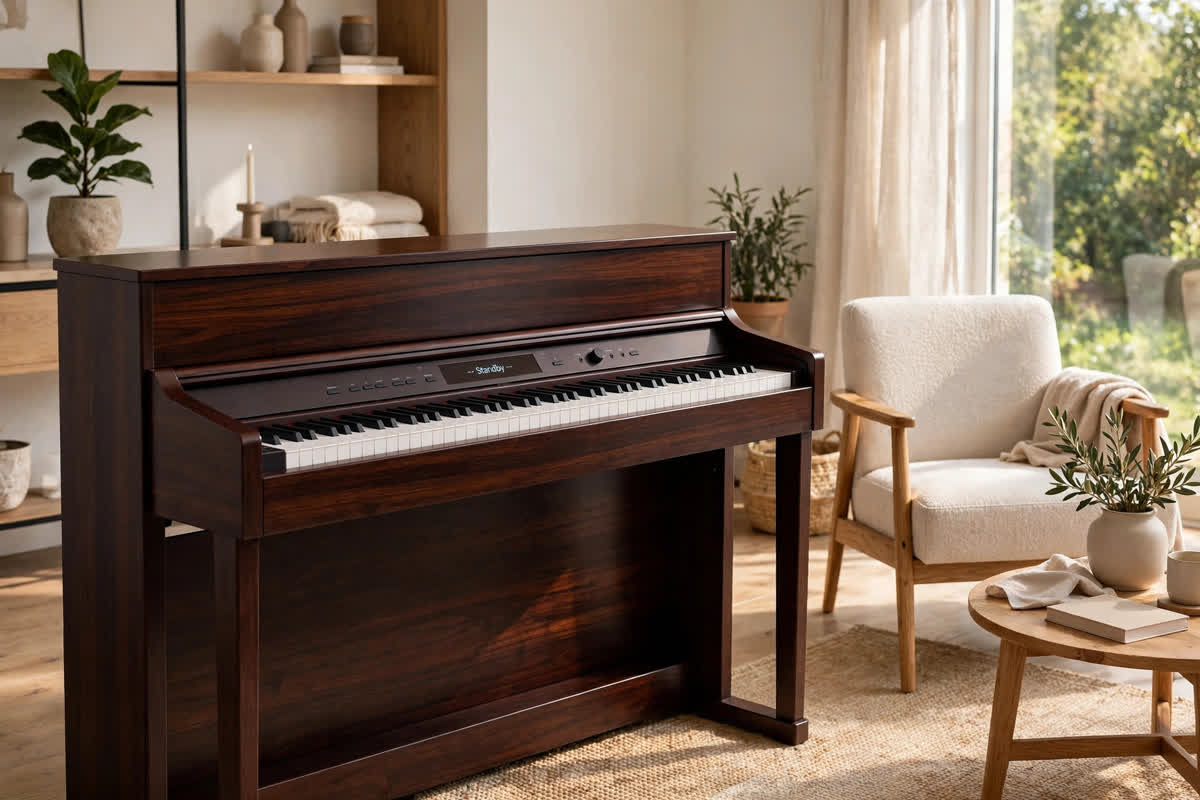
The Yamaha Clavinova CLP-835 is the home console that feels least like a compromise. Its GrandTouch-S keyboard uses synthetic ebony and ivory keytops with escapement for a touch that responds like an acoustic grand, and the piano voices sample the Yamaha CFX and Bosendorfer Imperial concert grands with binaural sampling for an immersive headphone experience. Virtual Resonance Modeling and Grand Expression Modeling reproduce the sympathetic string behavior and tonal variation of a real grand. With 256 note polyphony, 38 voices, and a 30W per channel speaker system, it is a leading best digital piano pick for the living room.
This is also a piece of furniture: finishes include polished ebony, rosewood, white, and white birch, with a sliding key cover and music rest with page holders. Bluetooth audio and MIDI plus the Smart Pianist app make control easy from your phone, while 20 rhythms, 50 classic songs, and over 300 lesson songs support students. You can browse the Clavinova range on the official Yamaha website. Keep in mind that at 57 to 71kg it is going nowhere once assembled, and the premium feel comes with a premium price.
For dedicated home players, advancing students, and anyone who wants the closest thing to a grand without the tuning bills, the CLP-835 is superb. It looks right in a living room, sounds rich at conversation volume, and the touch will keep developing technique honestly. Among home consoles, it is one of the best digital piano values at the serious end of the market.
- Best for: home players and students who want an acoustic-like touch and tone in a furniture cabinet.
- Look for: the GrandTouch-S action and the CFX plus Bosendorfer Imperial voices with binaural sampling.
- Keep in mind: heavy and non portable, and the price reflects its flagship home console position.
3. Yamaha CP88
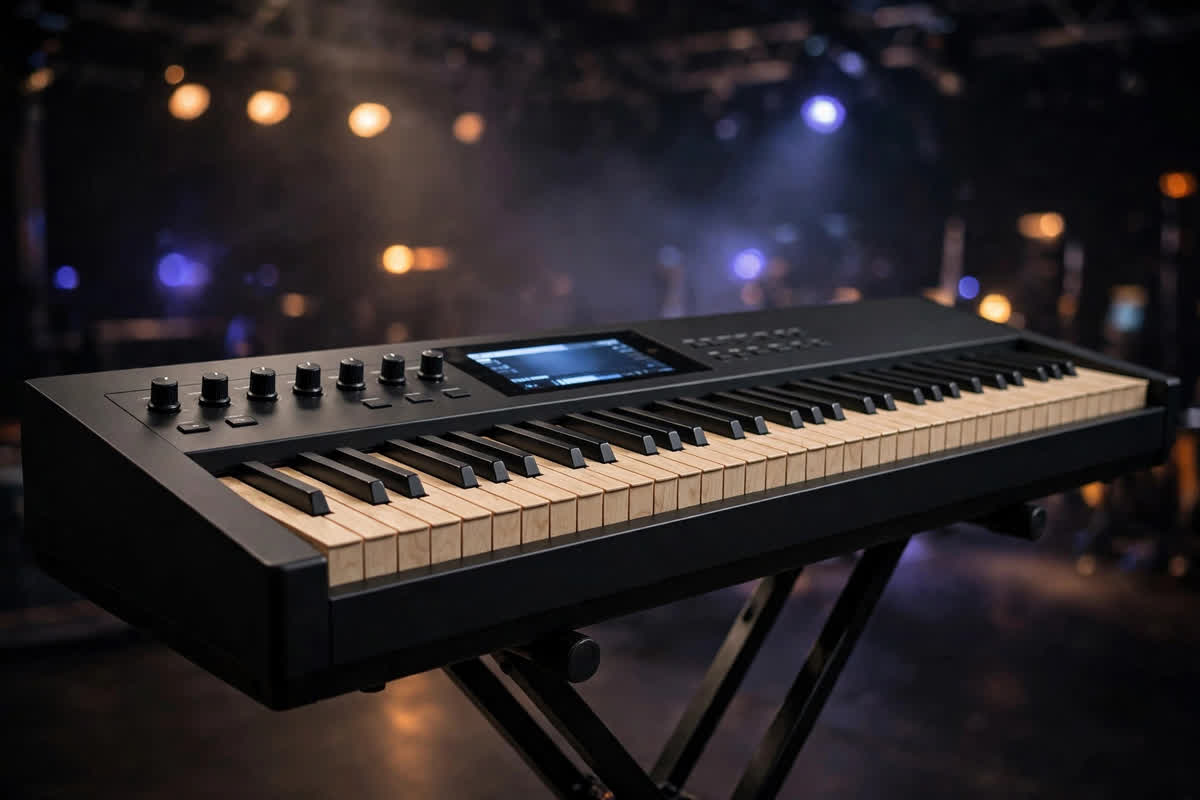
The Yamaha CP88 takes the opposite approach to the flagship above: instead of deep menus, it gives you a one-to-one panel where every section has its own physical knobs and switches. The NW-GH3 natural wood graded hammer keyboard has synthetic ebony and ivory keytops with triple sensor detection, and the AWM2 sound engine organizes 57 voices into three sections: 10 pianos, 14 electric pianos, and 33 sub voices covering organs, strings, and synths. Seamless Sound Switching means held notes never cut off when you change sounds mid-song. For players who want the best digital piano for grab and go gigging, the CP88 is a standout.
The piano section draws on Yamaha CFX, Bosendorfer Imperial, and S700 grands, U1 and SU7 uprights, and the CP80 electric grand, while the electric piano section covers tine and reed pianos plus Clavinet. Each section has dedicated effects, from damper resonance and drive on the piano to auto pan, tremolo, and wah on the electric pianos, with balanced XLR outputs ready for the house PA. A built-in USB audio and MIDI interface handles recording. Keep in mind that 128 note polyphony is modest next to some rivals, there are no built-in speakers, and at 18.6kg it is lighter than many stage pianos but still a full size board to carry.
Gigging pianists who hate menu diving will love this instrument: the interface is so direct that you can rebuild a sound in the dark between songs. It is equally at home in a worship band, a jazz trio, or a theater pit. If hands-on control matters more to you than having a thousand sounds, this is one of the best digital piano stage boards you can buy.
- Best for: gigging players who want direct, menu-free control and great acoustic and electric piano sounds.
- Look for: the one-to-one panel layout and the NW-GH3 natural wood graded hammer action.
- Keep in mind: no built-in speakers and a focused 57 voice set rather than an all you can eat library.
4. Nord Stage 4 88
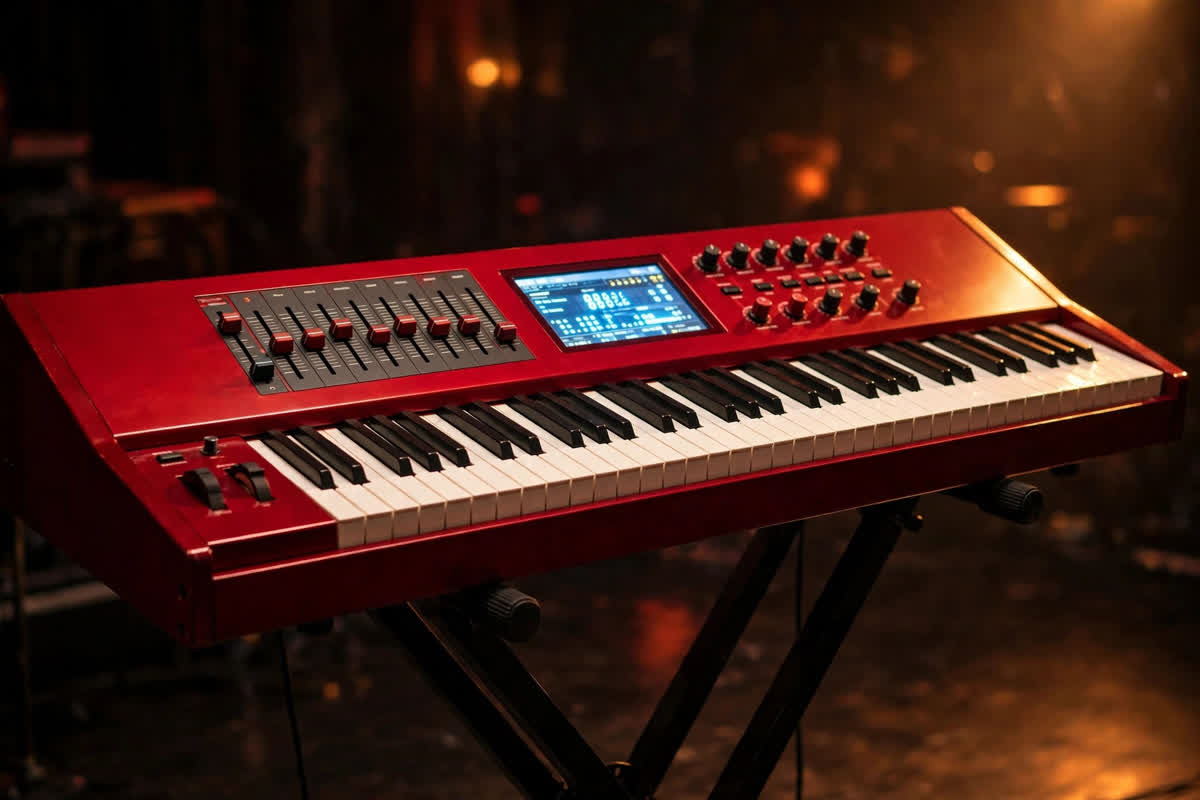
The Nord Stage 4 88 is the red board you see on stages everywhere, and for good reason: it packs a piano, an organ, and a synthesizer into one performance instrument. The fully weighted triple-sensor keybed gives pianists the resistance they need, while the organ section offers physical drawbars with LED indicators and faithful B3, Vox, Farfisa, and pipe organ models. The synth section runs the Nord Wave 2 engine with sample playback, and 512 programs with seamless transitions mean you can move between songs without a hiccup. It is a top best digital piano contender for the player who needs everything in one keyboard.
Each section has its own dedicated effects, so your piano reverb, organ rotary, and synth delay can all be dialed independently. The 2GB piano memory works with the downloadable Nord Piano Library, so the sound set keeps growing through the Nord Sound Manager. Aftertouch, three morph sources, and up to three split points with crossfades give deep expressive control. You can see the full Stage 4 story on the official Nord Keyboards website. Keep in mind that this versatility comes at a flagship price, the 19.6kg board is a commitment to carry, and there are no built-in speakers: it is pure stage gear.
For the working pro who plays piano on one song, organ on the next, and synth textures after that, nothing else covers this much ground this well. It is a favorite of touring bands, church musicians, and theater players for a reason. If your setlist jumps between instruments, this is the best digital piano style all-in-one to build your rig around.
- Best for: professionals who need piano, organ, and synth in a single stage instrument.
- Look for: the three independent sound sections and the physical drawbars with LED indicators.
- Keep in mind: flagship pricing, 19.6kg to transport, and no built-in speakers.
5. Kawai KDP120
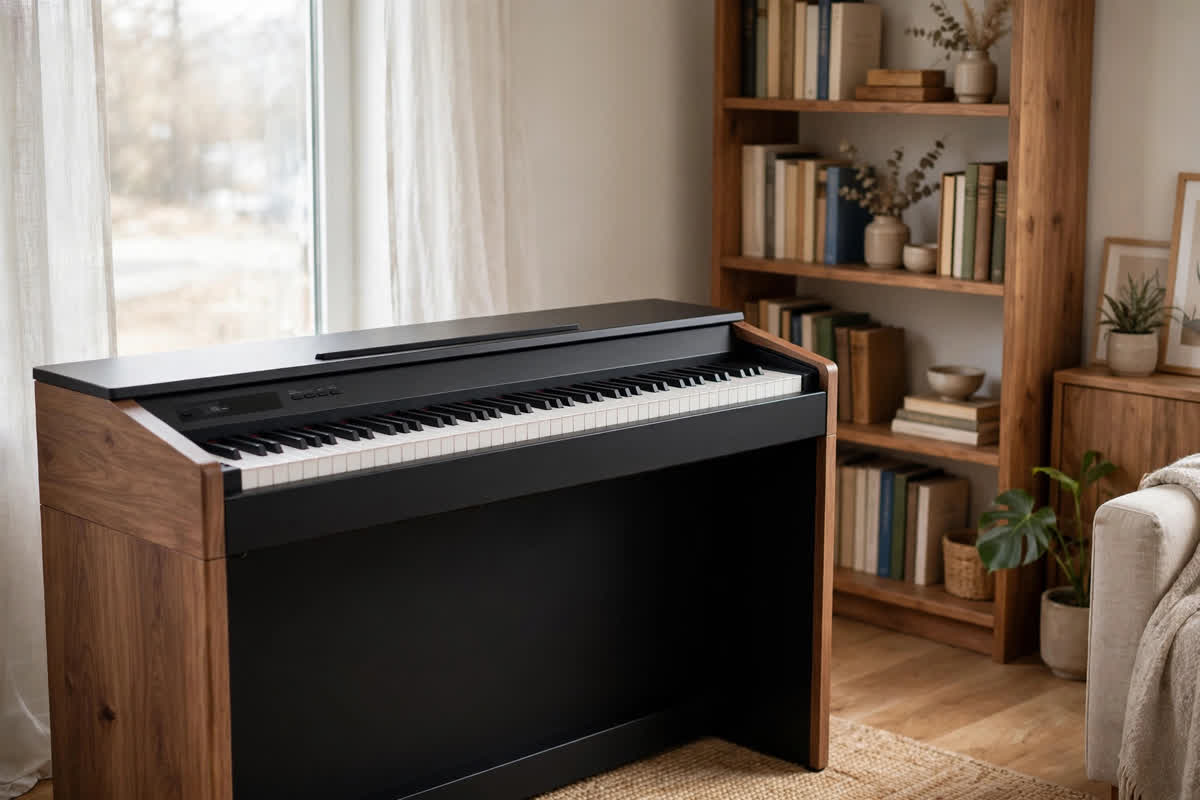
The Kawai KDP120 proves you do not need flagship money for an honest piano experience. Its Responsive Hammer Compact II action uses grade-weighted hammers, matte key surfaces, and triple sensor detection, and the Harmonic Imaging sound engine plays 88-key stereo samples of the Shigeru Kawai SK-EX concert grand. With 192 note polyphony, 15 sounds, and Kawai’s Virtual Technician offering 13 adjustable parameters through the PianoRemote app, it gives serious practice tools at a friendly price. The Grand Feel Pedal System even replicates the individual weight of the three pedals. For value seekers, it is one of the best digital piano buys for the home.
At just 40.5cm deep, the slim cabinet suits apartments and smaller rooms, and finishes include premium rosewood, satin black, and satin white. Bluetooth MIDI connects to learning apps, dual headphone jacks allow teacher and student to listen together, and Spatial Headphone Sound reduces listening fatigue during long practice sessions. The built-in lesson library covers Burgmuller, Czerny, Beyer, and Alfred method books. You can explore Kawai’s digital range on the official Kawai America website. Keep in mind that the panel is minimal by design, so deeper editing means reaching for the app, and 15 sounds will not satisfy players who want big synth and organ libraries.
Students, returning players, and families buying a first real piano will get more here than the price suggests. The touch is honest enough to build proper technique, and the SK-EX grand sample rewards expressive playing. If your budget says mid-range but your ears say concert grand, this is the best digital piano compromise in the guide.
- Best for: students and home players who want real piano touch and tone on a sensible budget.
- Look for: the Responsive Hammer Compact II action and the SK-EX concert grand sampling.
- Keep in mind: the minimal panel pushes deeper editing to the app, and the sound set is piano focused.
6. Studiologic Numa X Piano GT
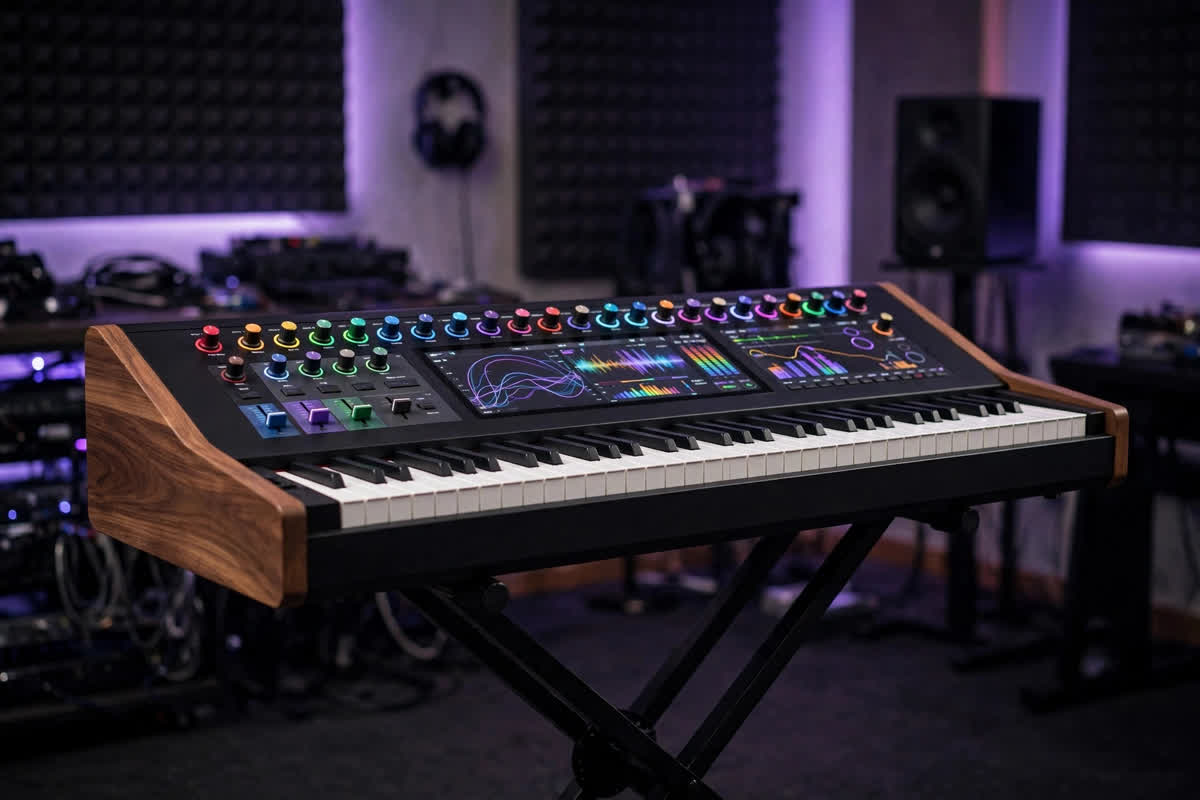
The Studiologic Numa X Piano GT is built around one obsession: the feel of real wood under your fingers. Its Fatar TP/400 keybed uses wooden hammer-action keys with escapement and aftertouch, which is as close to an acoustic action as stage pianos get. The sound side combines Studiologic’s TrS True Sound sampling with physical modeling across more than 200 factory sounds and 250 user slots, with a generous 300 note polyphony. The UXlogic color interface with color-coded encoders makes deep editing surprisingly pleasant. For touch purists, it is a distinctive best digital piano pick.
Each of the four key zones gets eight insert effects plus master delay and reverb, and the built-in four-channel digital mixer with EQ is genuinely useful for live setups. USB audio lets it double as your recording interface, and the included SLP3-D triple pedal covers damper, sostenuto, and soft from day one. Two joysticks handle pitch and modulation duties. Keep in mind that at 22kg it is one of the heavier boards here, there are no built-in speakers, and the depth of the sound design tools may overwhelm players who just want to plug in and play.
Piano-first players who judge every instrument by its keybed should put this at the top of their audition list. The wooden Fatar action has a character that plastic keybeds cannot match, and the modeling adds life to sustained chords. If touch is your number one criterion, this is the best digital piano in the guide for your fingers.
- Best for: piano purists who prioritize a wooden hammer action above all else.
- Look for: the Fatar TP/400 wooden keybed with escapement and aftertouch.
- Keep in mind: 22kg with no speakers, and the deep editing may be overkill for casual players.
7. Yamaha NP-15
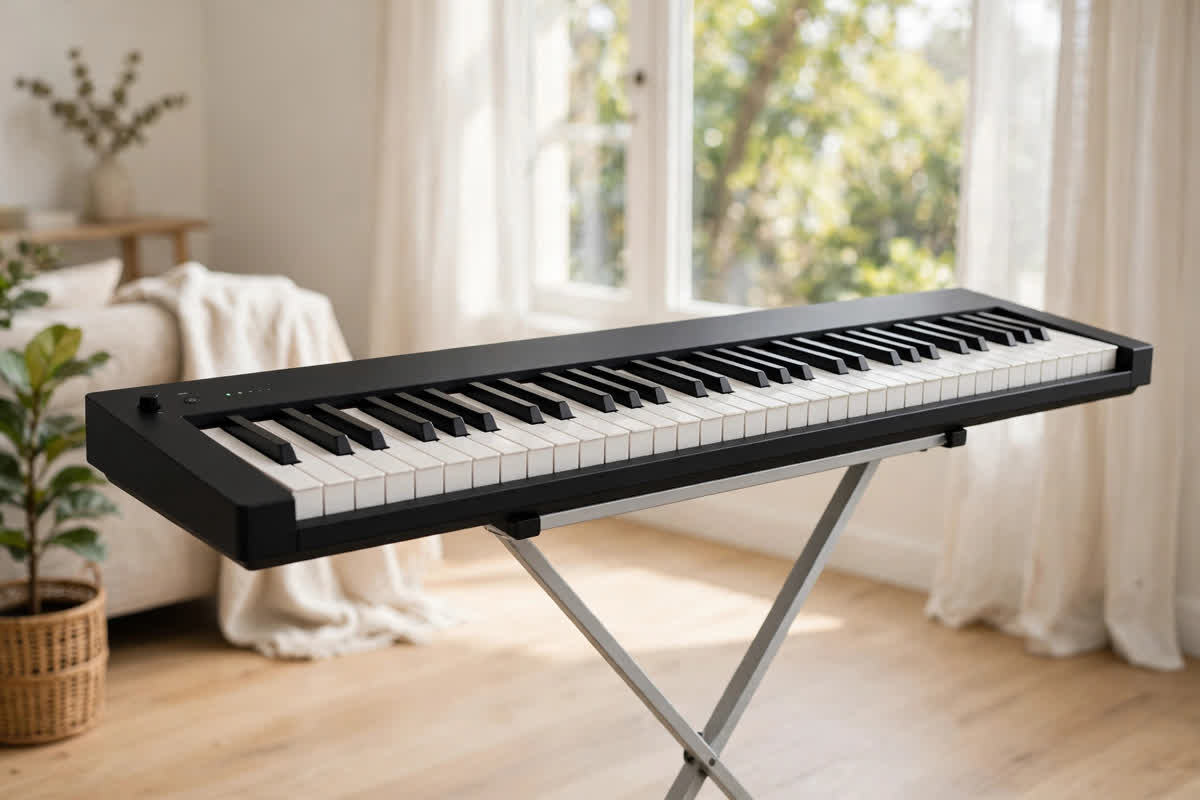
The Yamaha NP-15 is the featherweight of this guide: a 61-key Piaggero that weighs just 5.2kg and runs on six AA batteries. Its box-type graded soft touch keys are unweighted but touch sensitive, giving a lighter feel than a traditional piano while still responding to dynamics. Fifteen voices with AWM stereo sampling, 64 note polyphony, six reverb types, and a sound boost function cover practice and songwriting needs, and the Smart Pianist app unlocks deeper control from your phone. As a best digital piano for portability, nothing else here comes close.
This is the instrument for real life: toss it in the car for lessons, practice in a dorm room with headphones, or sketch songs on the couch. The one-track recorder captures up to 7,000 notes, layer mode thickens the sound, and USB to host handles both MIDI and audio to your computer. A sustain pedal port accepts Yamaha’s FC3A for half-damper control. Keep in mind the honest tradeoffs: 61 unweighted keys will not build proper piano technique, the 2.5W per channel speakers are for personal monitoring only, and advanced classical repertoire needs the full 88 weighted keys found elsewhere in this guide.
Beginners testing the waters, travelers, parents buying for a curious kid, and songwriters who need piano sounds anywhere will love the NP-15. It removes every excuse not to practice. Just know what it is: the best digital piano for going anywhere, not the one for conservatory auditions.
- Best for: beginners, travelers, and casual players who need maximum portability.
- Look for: the 5.2kg weight, battery power, and Smart Pianist app compatibility.
- Keep in mind: 61 unweighted keys will not develop proper piano technique for serious study.
8. Roland F701
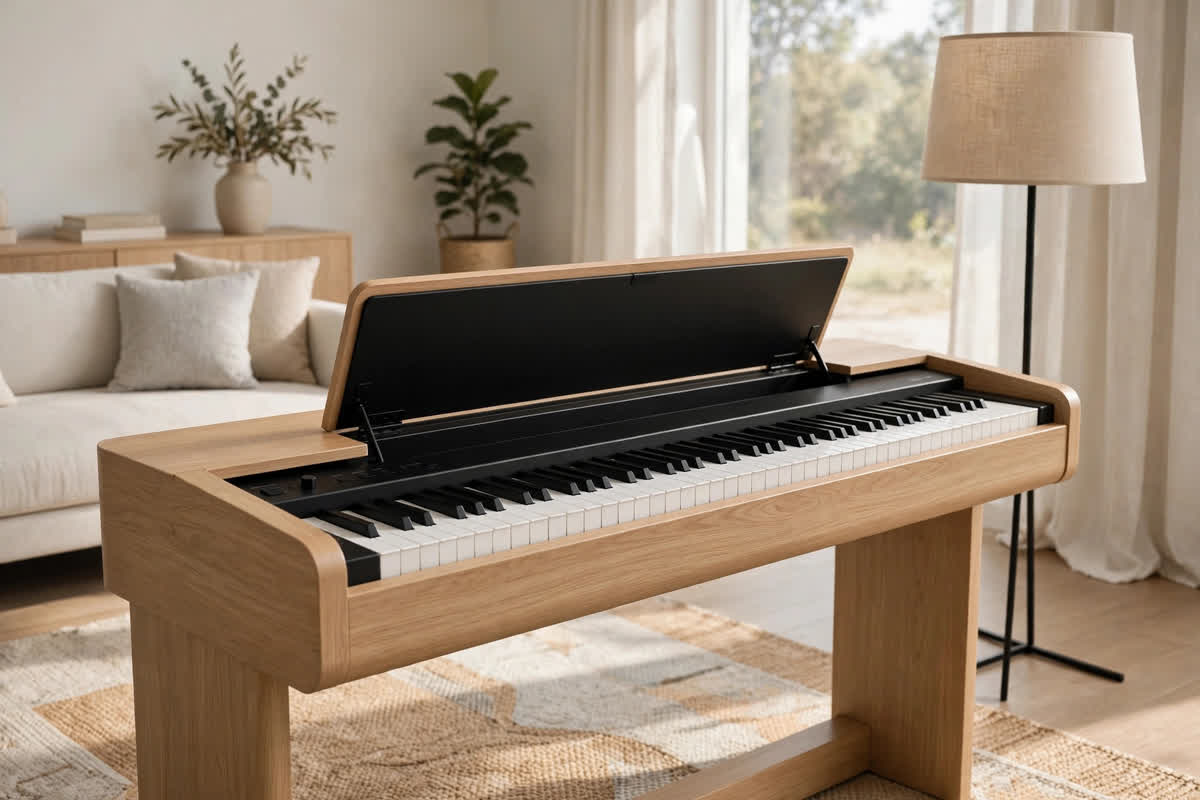
The Roland F701 is the home console for people who care what their piano looks like. The streamlined cabinet with rounded corners and a folding key cover comes in black, white, and light oak, fitting modern rooms where a traditional upright would dominate. Inside, the PHA-4 Standard keyboard offers hammer action with escapement and ivory feel, and the SuperNATURAL piano engine delivers 324 tones with 256 note polyphony. A huge 377 song internal library includes 287 lesson songs covering scales, Hanon, Beyer, Burgmuller, and Czerny. It is a graceful best digital piano choice for design-conscious homes.
Bluetooth audio lets you stream backing tracks through the piano’s speakers and play along, while Bluetooth MIDI and the Roland Piano App add interactive lessons and a one week master program for building repertoire. The graphic OLED display uses simple icons that beginners understand immediately, and Headphones 3D Ambience makes private practice feel spacious rather than boxed in. Keep in mind that the minimalist panel means deeper sound shaping happens in the app, and at 36kg it is a permanent resident once placed.
Adult learners returning to the piano, design lovers, and families who want lessons built in will feel at home with the F701. It balances genuine Roland piano technology with an instrument you will happily leave in the living room. For a modern home that needs a piano to match, this is the best digital piano in the guide for style plus substance.
- Best for: adult learners, modern homes, and families wanting built-in lessons and Bluetooth.
- Look for: the compact rounded cabinet and the SuperNATURAL piano engine with 377 internal songs.
- Keep in mind: deeper editing lives in the companion app, and the 36kg cabinet is not moving often.
9. Studiologic Numa Compact SE
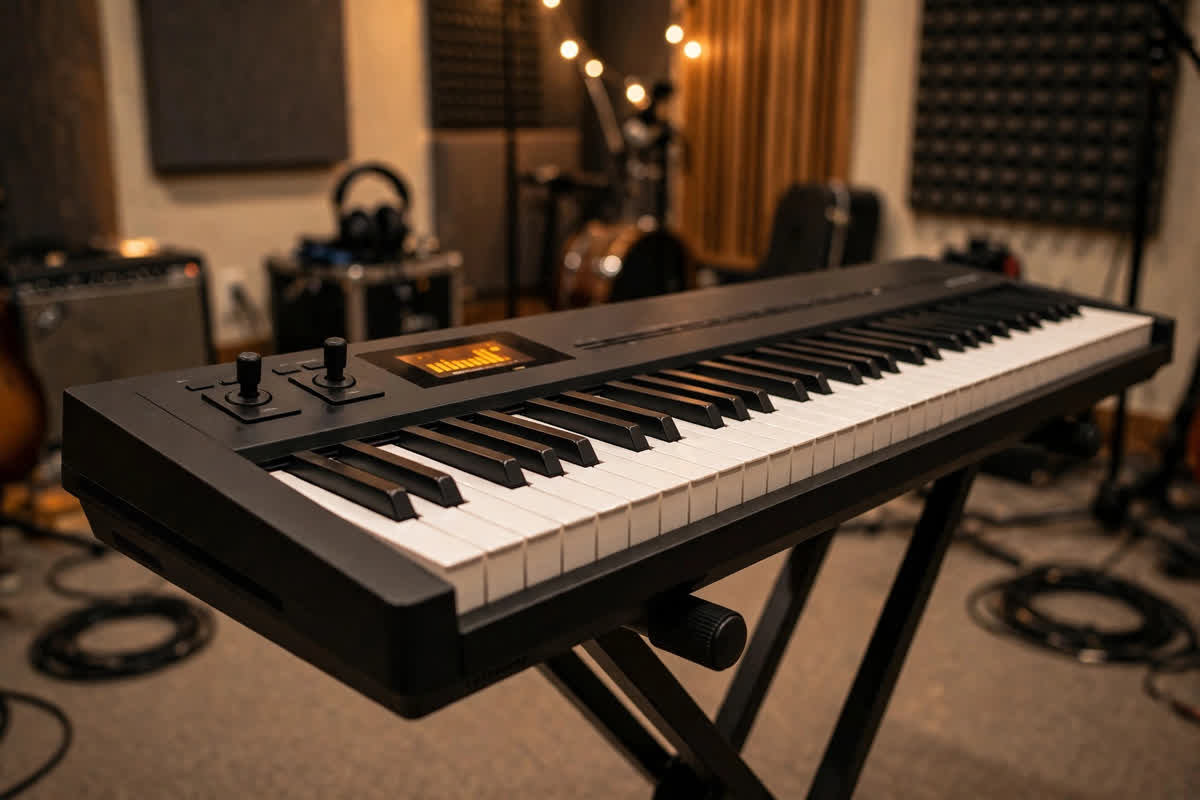
The Studiologic Numa Compact SE is the gigging keyboardist’s answer to heavy lifting: 88 semi-weighted keys with aftertouch in a board that weighs just 7.1kg. Four sound engines cover acoustic piano, electric piano including DX and tine sounds, tonewheel organ with rotary and chorus effects, and a synth section, drawing on 148 factory sounds with 200 note polyphony. Built-in 2x10W speakers mean you can rehearse without any extra gear, and the bright OLED display keeps navigation simple on dark stages. As a do-everything best digital piano for working players, it punches far above its weight.
The semi-weighted TP/9PIANO keybed with aftertouch is a smart compromise: light enough for fast organ and synth work, substantial enough for piano parts. Two programmable joysticks, up to six simultaneous effects, and a mastering EQ with bass and treble controls give real-time shaping power. USB MIDI and audio plus standard DIN MIDI make it a capable master keyboard and recording interface, and the Numa Manager app handles firmware updates and extras. You can explore the range on the official Studiologic website. Keep in mind that semi-weighted keys will not satisfy classical pianists, and the built-in speakers suit rehearsal and monitoring rather than filling a venue.
Working keyboardists, worship teams, and multi-instrumentalists who play a bit of everything will get enormous mileage from this board. It covers piano, EP, organ, and synth credibly in one trip from the car. If you need one lightweight board that does it all, this is the best digital piano value for the gigging musician.
- Best for: gigging keyboardists who need piano, organ, and synth in one lightweight board.
- Look for: the four sound engines and the 7.1kg weight with built-in speakers.
- Keep in mind: semi-weighted action is a compromise for serious classical piano study.
10. Studiologic Numa Compact SE
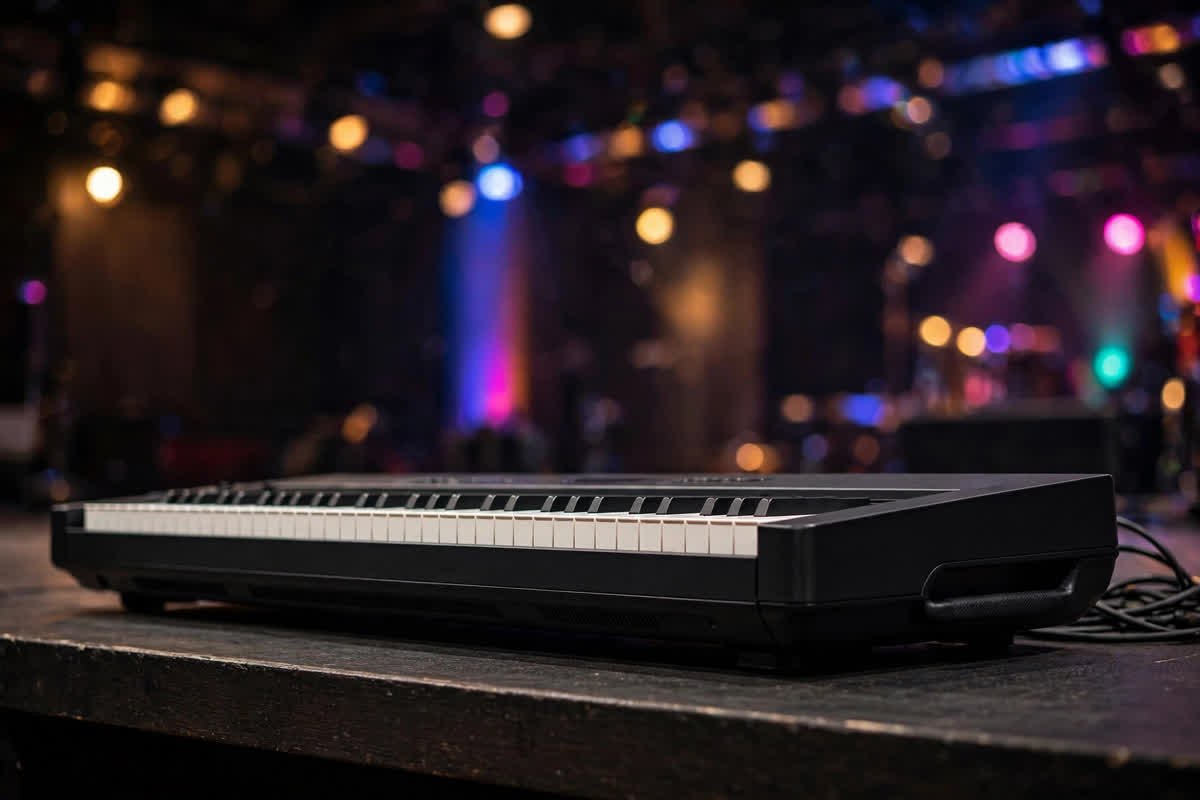
Yes, this is the same Studiologic Numa Compact SE that appears at number 9: our list carries it twice on purpose, once for its all-round gigging versatility and once for the value and portability story told here. Viewed through the travel lens, the headline is simple: full 88 keys, under 7.1kg, speakers included, and a price that undercuts most stage pianos. That combination makes it the board you grab for rehearsal rooms, classrooms, hotel practice, and any gig where the backline is a question mark. No other best digital piano in this guide packs this much independence into so little weight.
Think about the economics of a second board. A dedicated practice instrument that doubles as a backup stage piano, a master keyboard for your studio via USB or DIN MIDI, and a teaching tool with 120 user programs and 148 sounds is genuinely useful in three roles at once. The built-in speakers mean it works the moment you set it down, no amp hunt required, and the OLED display and joystick controls stay friendly for students. Keep in mind the same honest limits as above: the semi-weighted keybed is not a classical training tool, and you are buying one instrument, so compare it against the other nine here rather than against itself.
Teachers hauling gear between schools, players who need a dependable backup, and anyone building a home studio on a budget should look hard at this angle of the Numa Compact SE. It is the rare instrument that earns its keep in three different jobs. For pure value per kilogram, it may be the best digital piano deal in this entire guide.
- Best for: traveling players, teachers, and anyone needing a light second board or backup.
- Look for: the 7.1kg portability with built-in speakers and full MIDI master keyboard duties.
- Keep in mind: this is the same model as number 9, so judge it against the other instruments, not itself.
Final Pick
After reviewing all 10 instruments, our final pick for most players is the Yamaha Clavinova CLP-835. It hits the sweet spot that matters: an acoustic-like GrandTouch-S keybed, genuinely beautiful CFX and Bosendorfer Imperial grand voices, and a cabinet you will be proud to keep in your living room for a decade. It serves beginners who need honest touch, students who need lesson tools, and experienced players who need a daily practice instrument. If you are building out the rest of your setup, our other DixTrick music gear guides pair well with this one.
Stage players should start with the Roland RD-2000 EX for its flagship dual engines and pro controls, or the Yamaha CP88 if direct hands-on operation matters most. Touch purists will love the wooden Fatar action of the Studiologic Numa X Piano GT, gigging all-rounders get unbeatable value from the Numa Compact SE, and travelers or beginners can start affordably with the Yamaha NP-15. Whichever you choose, remember that the best digital piano is the one that makes you want to play every day.
Frequently Asked Questions
Are weighted keys really that important?
Yes, if your goal is to play piano. Weighted hammer-action keys teach your fingers the resistance and control of an acoustic grand, which matters for dynamics and expression. Semi-weighted keys, like those on the Numa Compact SE, are a fine compromise for players who split time between piano, organ, and synth. Unweighted keys, like the NP-15, are best for travel and casual playing rather than serious study.
What is the difference between a digital piano and a keyboard?
A digital piano is designed to emulate an acoustic piano: 88 full-size weighted keys, a piano-focused sound engine, and often a furniture-style cabinet. A keyboard is a broader term covering everything from 61-key portables to synthesizers, usually with unweighted or semi-weighted keys and more non-piano sounds. Every best digital piano in this guide has at least piano-grade keys except the travel-friendly NP-15.
How much should I spend on a digital piano?
It depends on your goals. Budget portables like the NP-15 cost the least and suit casual practice. Mid-range home consoles like the KDP120 and F701 give real weighted actions and furniture cabinets for serious learners. Flagship stage pianos like the RD-2000 EX, CP88, and Nord Stage 4 cost several times more but deliver pro keybeds, deep sound engines, and road-ready builds. Buy the best action you can afford: it is the part you touch every day.
Do I need built-in speakers?
For home practice, yes: speakers in the CLP-835, KDP120, F701, Numa Compact SE, and NP-15 mean you can play instantly without extra gear. Stage players do not need them, since venues provide a PA, which is why the RD-2000 EX, CP88, Nord Stage 4, and Numa X Piano GT skip speakers to save weight. Either way, a headphone jack is essential for quiet practice in apartments and shared homes.
Can a digital piano really replace an acoustic piano?
For most learners, gigging musicians, and apartment dwellers, yes. A good digital piano never needs tuning, offers volume control and headphones, includes recording and lesson tools, and weighs a fraction of an upright. High-end actions like the PHA-50, GrandTouch-S, and Fatar TP/400 come remarkably close to acoustic feel. Purists may still prefer a real grand for its acoustic resonance, but modern digitals satisfy the vast majority of players.
The Bottom Line
The best digital piano is the one that fits your hands, your room, and your musical life. All 10 instruments in this guide earned their place through honest key feel, convincing tone, and fair value. Start with the key action your goals demand, make sure the speakers or outputs match where you play, and choose the instrument you will reach for daily. The right digital piano does not just sound like music: it makes you want to make it.