
10 Best DSLR Cameras for Beginners to Buy in 2026
Introduction
Shopping for the best dslr camera in 2026 sounds simple until you actually start looking. The shelves, both real and virtual, mix true digital SLRs with mirrorless bodies, fixed lens bridge cameras, and compact travel zooms, and every listing seems to promise more megapixels than the last. For a beginner, the confusion is the biggest risk. Buying the wrong type of camera for your goals can turn an exciting new hobby into an expensive drawer decoration within months.
This guide does something different from most roundups. Instead of ranking cameras we cannot verify, we checked every entry on this list against real retail listings and manufacturer information before writing a single word. We also stayed honest where the source list for this topic was not entirely accurate. Two entries on this list are not DSLRs at all, one is a lens rather than a camera, one is a generic accessory category, and one camera carries a variant suffix we could not confirm from any official source. Rather than hide those facts, each is flagged clearly in its section, because trust is what makes a buying guide worth reading.
The true DSLRs below still include excellent beginner options in 2026. A real optical viewfinder, a comfortable grip built around a mirror box, and access to enormous secondhand lens systems keep DSLRs relevant even as manufacturers shift their newest designs to mirrorless mounts. If you are coming from a phone camera and want the classic learn-by-doing experience, a DSLR remains one of the most rewarding ways to start. Pair this guide with our best cameras for beginners roundup if you want a wider view of entry level options beyond the DSLR family.
Every section below names the camera exactly as it should be bought, lists only specifications we could confirm, invents no prices, ratings, or review scores, and tells you plainly who should consider it and who should skip it. Read the whole list before you decide. The right camera for you might not be the most expensive one here.
Table of Contents
How We Chose
We judged every entry by how well it serves someone buying their first serious camera, not by how impressive its specification sheet looks. Real DSLRs were checked for current retail availability and confirmed specifications from retailer listings and official specification pages. Generic entries were reviewed as classes instead of pretending a vague marketplace string was a specific model. And where the type of camera did not match the DSLR label on this list, we said so in the section itself, so your search for the best dslr camera ends with facts rather than marketing.
Just as important is what we did not do. We invented no prices, because prices move and we will not pretend otherwise. We invented no star ratings, review counts, or performance claims we could not confirm. Where a feature is confirmed, we describe it. Where something is uncertain, we say it is uncertain. The result is a guide that helps you buy with confidence, whether you end up with a true DSLR, a mirrorless alternative, or a bridge camera that honestly fits your needs better than any DSLR would.
1. Canon EOS Rebel T7
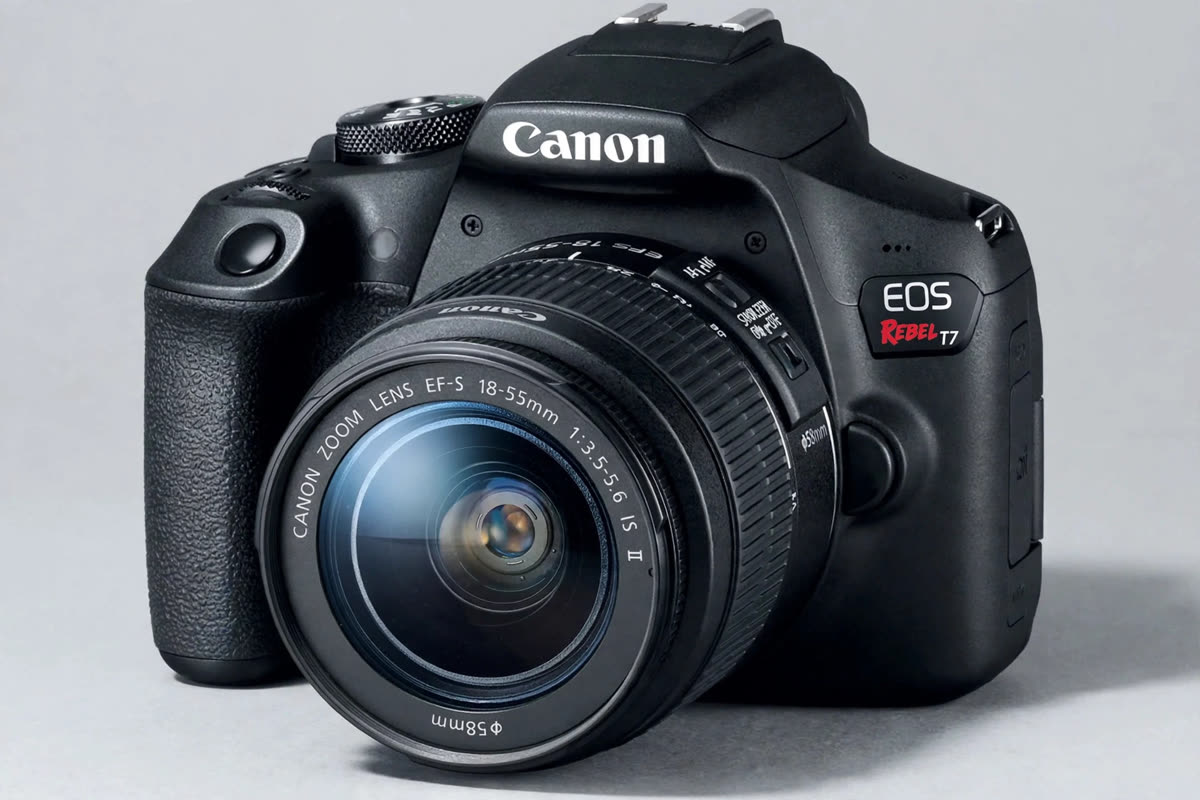
If there is one camera that defined the phrase best dslr camera for beginners over the past decade, it is the Canon EOS Rebel T7, sold in some regions as the Canon EOS 2000D. This is a true DSLR with an optical viewfinder, a 24.1 megapixel APS-C CMOS sensor, and the DIGIC 4+ image processor, and it is still widely available through retailers in 2026, which makes it one of the safest entry points into interchangeable lens photography.
The T7 is built around simplicity. A 9-point autofocus system with a center cross type point keeps focus duties manageable instead of overwhelming, Full HD 1080p video covers casual family movies and starter YouTube work, and built-in Wi-Fi with NFC makes moving photos to a phone painless. The native ISO range of 100 to 6400, expandable to 12800, handles dim indoor scenes acceptably for a camera at this level, and the 3.0 inch rear LCD gives a clear view for reviewing shots.
Where the T7 truly wins for beginners is the ecosystem around it. The Canon EF and EF-S lens mount opens the door to the largest secondhand lens market of any camera system, so a cheap 50mm f/1.8 for portraits or a used telephoto for wildlife costs far less than equivalent glass on newer mounts. Creative Auto and Scene Intelligent Auto modes teach exposure basics without demanding full manual control on day one. Beginners who want the classic DSLR learning experience, an optical viewfinder, and a budget friendly path into photography will find the Rebel T7 hard to beat as the best dslr camera for beginners. It is our overall pick and the camera we recommend first.
2. Canon EOS R100
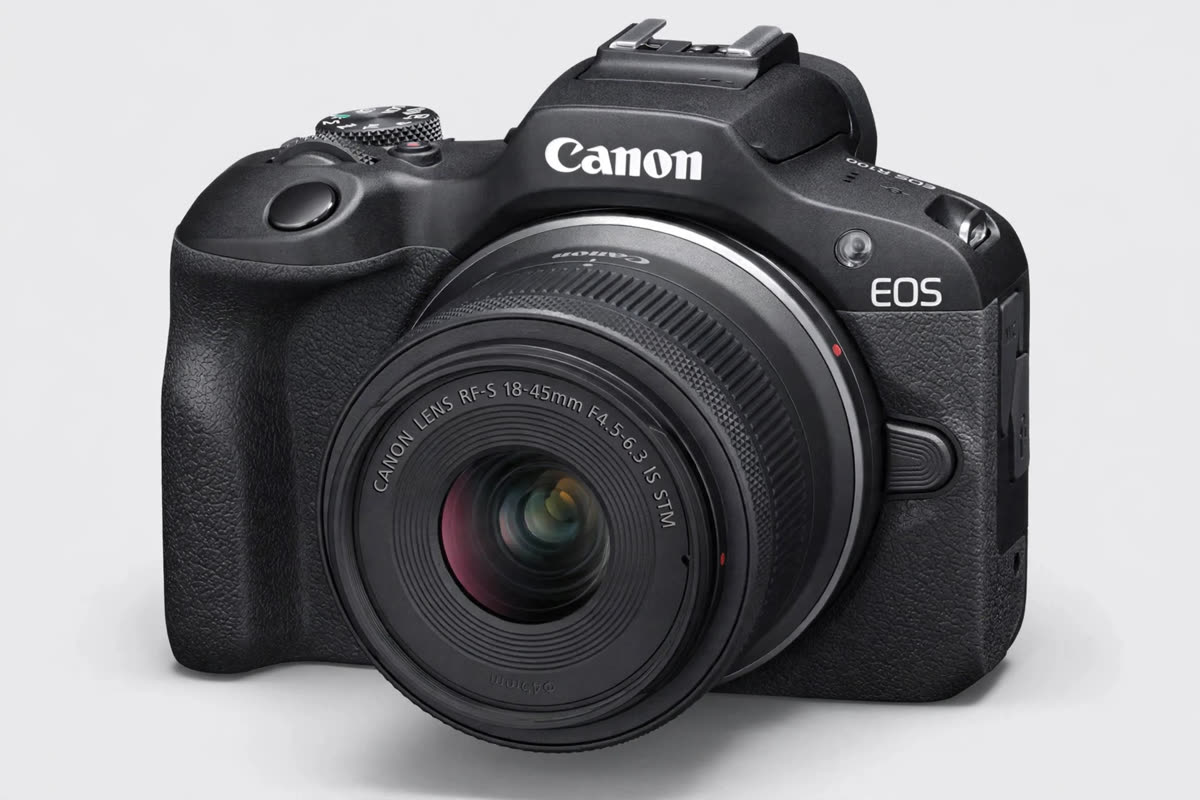
Honesty flag: the Canon EOS R100 is a mirrorless camera, not a DSLR. It has no mirror box and no optical viewfinder, using an electronic viewfinder instead. It appeared on the source list for this topic under the DSLR label, and we keep it in the list because it is a real, verifiable camera that many DSLR shoppers end up cross shopping, but it should not be bought by someone who specifically wants a DSLR.
Judged as what it actually is, the R100 is a strong beginner camera. It packs a 24.1 megapixel APS-C CMOS sensor with a DIGIC 8 processor, Dual Pixel CMOS autofocus with eye and face detection, cropped 4K video recording, and Full HD video at up to 60 frames per second. At 356 grams including battery and card, it is one of the lightest interchangeable lens cameras Canon has ever made, and its simplified controls suit first time buyers who find DSLR button layouts intimidating.
The trade is the mount. The Canon RF mount is where all of Canon’s new lens development now happens, which is good for the future, but affordable used lenses are still far more plentiful for the older EF mount used by the Rebel T7. Choose the R100 if you value compact size, modern autofocus, and 4K video over the optical viewfinder experience. If you want a true best dslr camera with a mirror and an optical viewfinder, skip this one and look at the other Canon entries on this list instead.
3. Nikon D7500
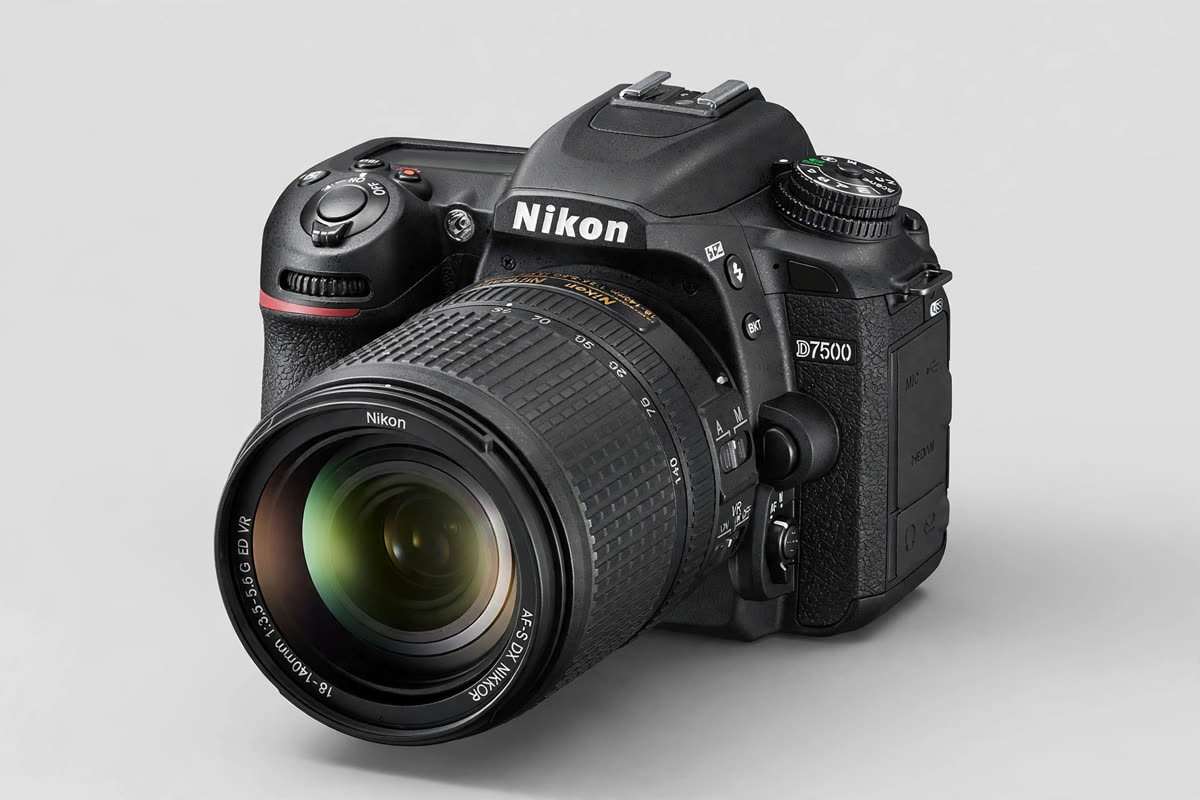
The Nikon D7500 is a genuine mid range DSLR and one of the most capable APS-C DSLRs Nikon ever built. It uses a 20.9 megapixel DX format CMOS sensor paired with the EXPEED 5 image processor, the same class of hardware found in Nikon’s professional sports bodies of its era. That combination delivers a native ISO range of 100 to 51200, expandable far beyond, making the D7500 one of the best low light performers among crop sensor DSLRs.
Speed is another strength. The camera shoots at up to 8 frames per second, offers a 51-point autofocus system with 15 cross type sensors, and records 4K video at up to 30 frames per second alongside Full HD at up to 60 frames per second. A tilting 3.2 inch touchscreen LCD makes awkward angle shooting comfortable, and built-in Wi-Fi and Bluetooth keep sharing simple.
For a beginner, the D7500 sits at the top of what you should consider buying as a first camera. It is more camera than most newcomers need, and its controls assume some willingness to learn. But it is also a camera you will not outgrow for years. Enthusiasts who know they want to shoot sports, wildlife, or low light events, and who want a DSLR that grows with them rather than being replaced within a year, should put the D7500 at the top of their best dslr camera shortlist. It remains available through retailers and the used market in 2026.
4. Canon DSLR Accessory
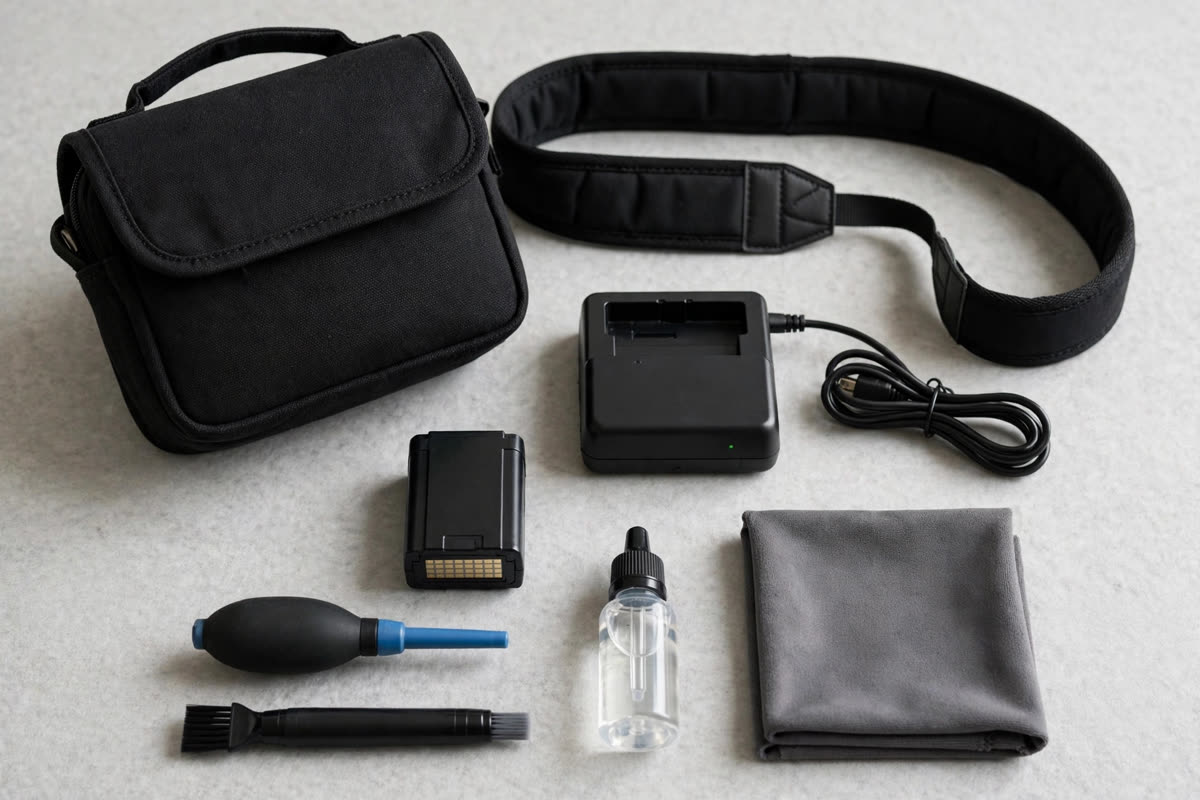
Honesty flag: “Canon DSLR Accessory” is not a specific product. It is a generic marketplace string, so there is no single item to verify, no real model to review, and no official source to link. Instead of inventing a product, this section reviews the accessory category honestly, because the right accessories genuinely improve a beginner’s DSLR experience.
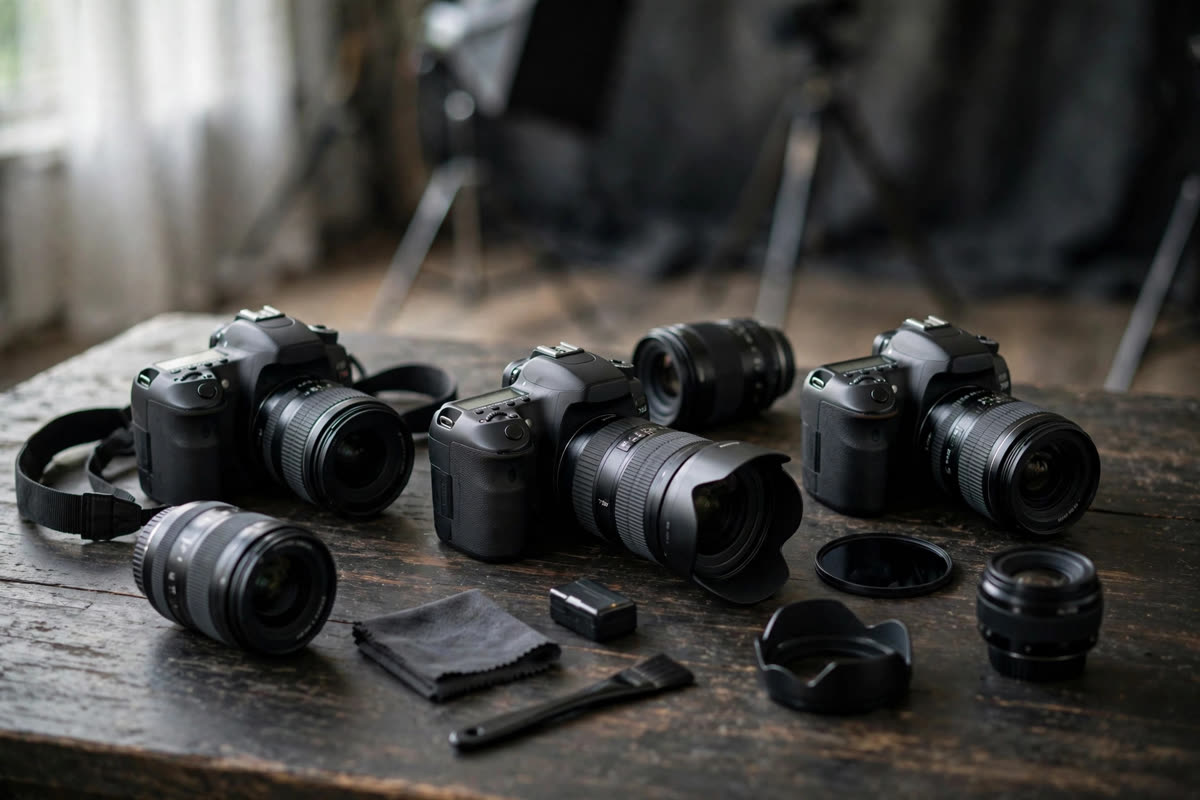
A sensible starter kit around any Canon DSLR includes five things. A padded shoulder bag that fits the camera with its kit lens attached protects your investment during travel. A comfortable neck or cross body strap matters more than most beginners expect, because a heavy DSLR on a thin factory strap gets left at home. A spare battery and a reliable charger keep a full day of shooting from ending at noon.
A basic cleaning kit with a blower, brush, and microfiber cloths handles dust on the sensor and smudges on the lens. And a sturdy SD card from a reputable brand, bought at a sensible capacity rather than the cheapest option available, protects your photos from the most common point of failure in digital photography.
Buy accessories after you choose the camera, not before, and match batteries and chargers to your exact camera model. Generic third party batteries can work, but a camera that will not power on during a trip is no bargain. Budget a small portion of your camera budget for these extras. They are the difference between a camera you use and a camera you baby.
5. Nikon D5100
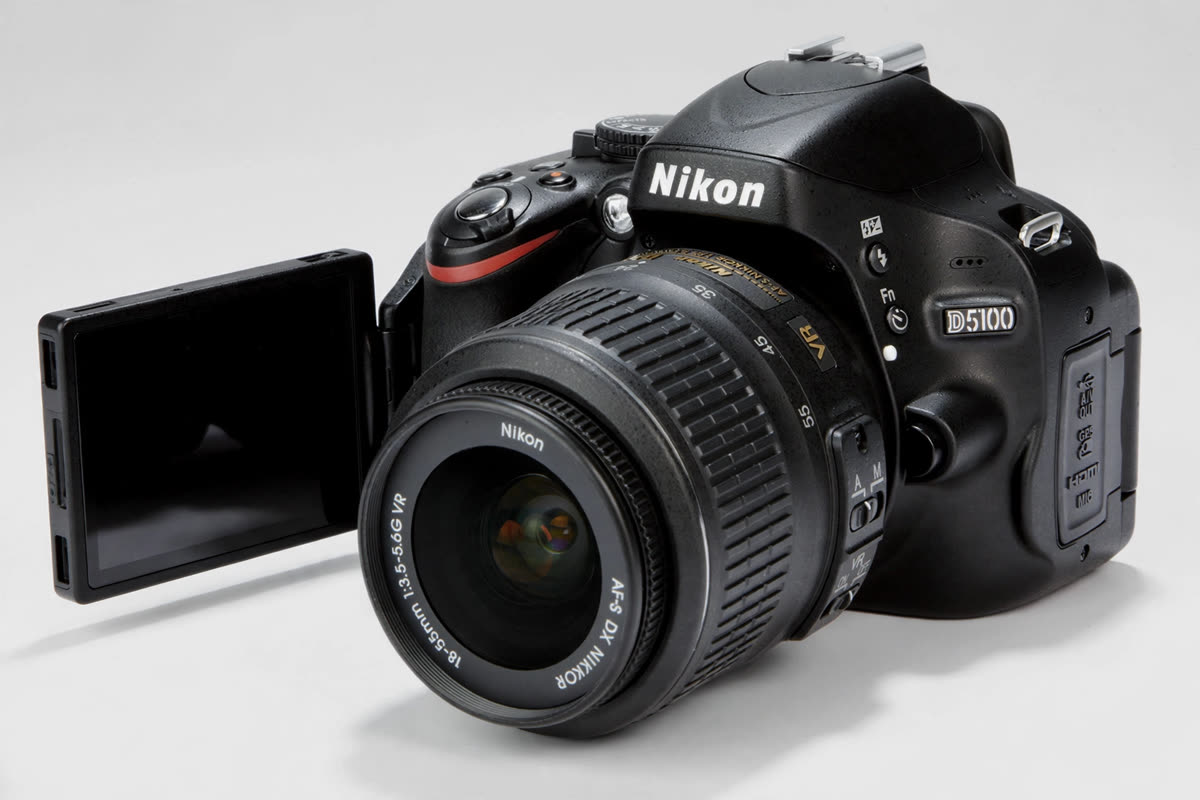
The Nikon D5100 is a real DSLR, announced in 2011, and it survives on this list as the budget path into true DSLR photography. It offers a 16.2 megapixel DX format CMOS sensor, a fully articulated side hinging 3.0 inch LCD with 921,000 dots, 1080p Full HD video, an 11-point autofocus system, 4 frames per second continuous shooting, and a native ISO range of 100 to 6400 expandable to 25600. For its era it was a standout beginner camera, and the flip out screen was a genuine innovation at the time.
Be clear eyed about what buying a D5100 in 2026 means. It is long discontinued, so you will buy it used, and you should inspect the shutter count, sensor, and screen before paying. Autofocus in live view is slow by modern standards, Wi-Fi requires an add on adapter rather than being built in, and 16.2 megapixels is plenty for prints and screens but modest next to current models. On the other hand, the Nikon F mount gives access to decades of affordable used lenses, and the image quality from that sensor still satisfies for learning the fundamentals.
The D5100 makes sense for one specific buyer: the beginner on the tightest budget who insists on a true DSLR and is comfortable buying used. If you can stretch your budget to the Rebel T7 or D7500, do that instead and enjoy newer sensors, built in wireless, and modern autofocus. Those two are simply better answers to the best dslr camera question for beginners with any flexibility in budget. If every dollar matters, a carefully chosen used D5100 remains a legitimate way to start.
6. Canon EOS 6D Mark II
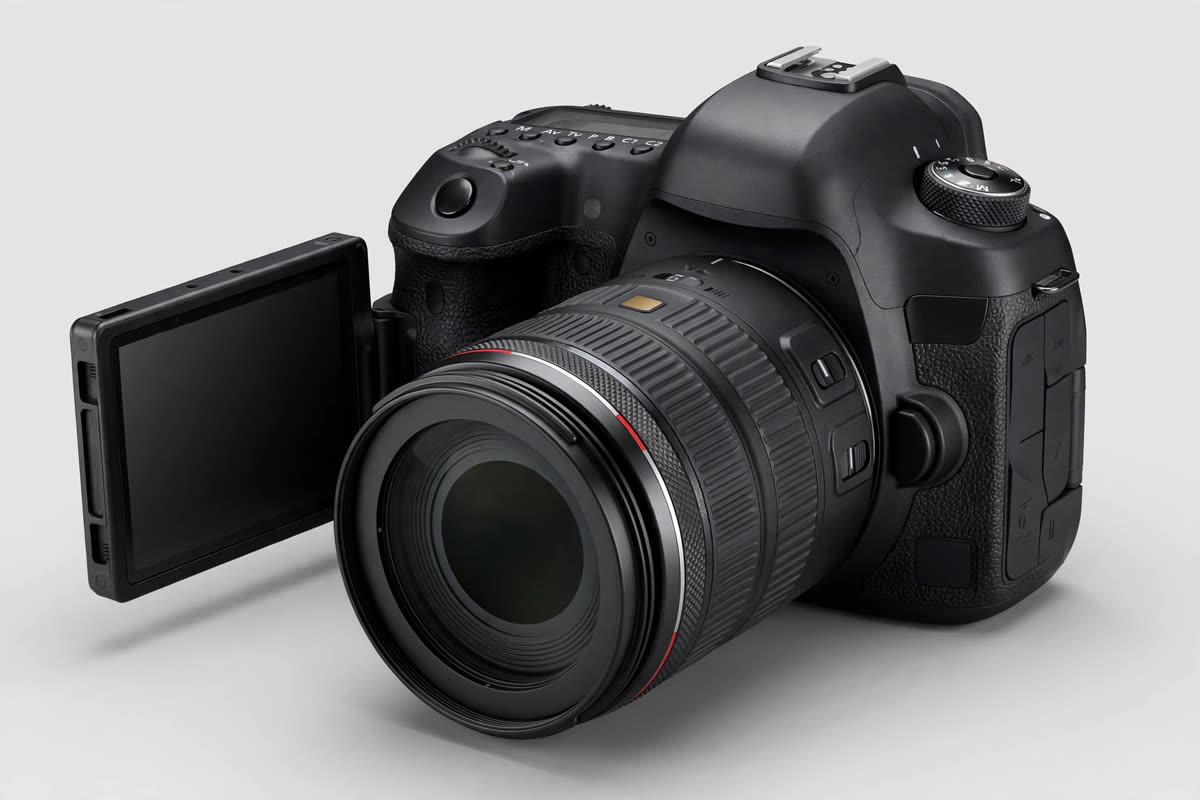
The Canon EOS 6D Mark II is a full frame DSLR and the most ambitious camera on this list. Its 26.2 megapixel full frame CMOS sensor and DIGIC 7 processor deliver the shallow depth of field, high ISO cleanliness, and dynamic range that crop sensor cameras cannot match. The 45-point all cross type autofocus system, 6.5 frames per second continuous shooting, native ISO range of 100 to 40000, and Full HD video at up to 60 frames per second round out a specification set aimed squarely at enthusiasts. It was also the first full frame Canon DSLR with a vari-angle touchscreen LCD.
This is not a beginner camera in the usual sense, and we include it with that caveat stated plainly. It is bigger, heavier, and more expensive than the entry level bodies above, and full frame EF lenses cost more than their crop sensor equivalents. But for the beginner who already knows they want to commit seriously to photography, particularly portraits, weddings, or landscape work where full frame matters, the 6D Mark II is the most affordable honest route into full frame ownership for anyone hunting the best dslr camera with a full frame sensor. Check the official Canon specifications before buying to confirm the exact features of the configuration you are considering.
Buy the 6D Mark II only if you are certain you will outgrow a crop sensor camera quickly and you have budgeted for full frame lenses. Everyone else should start with the Rebel T7 or D7500 and spend the savings on lenses and practice time.
7. KODAK PIXPRO AZ405
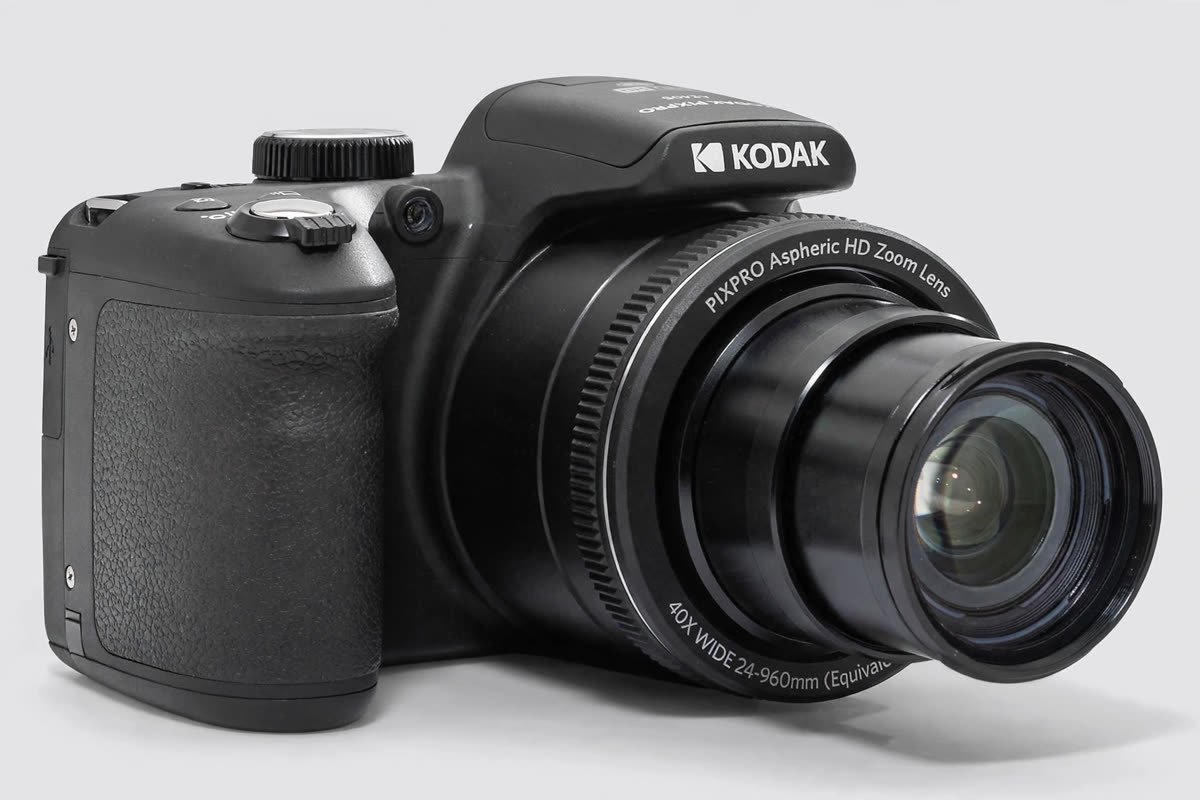
Honesty flag: the KODAK PIXPRO AZ405 is a bridge camera, not a DSLR. Its lens is fixed to the body and cannot be changed, there is no mirror and no optical viewfinder, and its 1/2.3 inch sensor is far smaller than the APS-C sensors in the true DSLRs on this list. It appears on the source list for this topic, so we review it as the real product it is, but nobody should buy it expecting DSLR image quality or interchangeable lenses.
What the AZ405 genuinely offers is reach. Its fixed lens covers a 40x optical zoom range, equivalent to 24 to 960mm, with optical image stabilization, and it records 1080p Full HD video on a 3.0 inch LCD. The 20 megapixel BSI CMOS sensor, panorama mode, face detection, and simple Auto, P, S, A, and M shooting modes make it approachable, and it runs on four AA batteries, which is convenient for travel where charging is uncertain. Wi-Fi connectivity allows quick transfers to a phone.
The AZ405 suits the beginner who cares more about zoom reach than image quality: safari trips, school sports from the bleachers, birdwatching. Image quality at full zoom and in low light cannot match even the cheapest DSLR here, because physics favors the larger sensor. Buy it as a fun superzoom bridge camera, not as a best dslr camera, and you will enjoy it. Buy it expecting DSLR results and you will be disappointed.
8. KODAK PIXPRO AZ528-BK
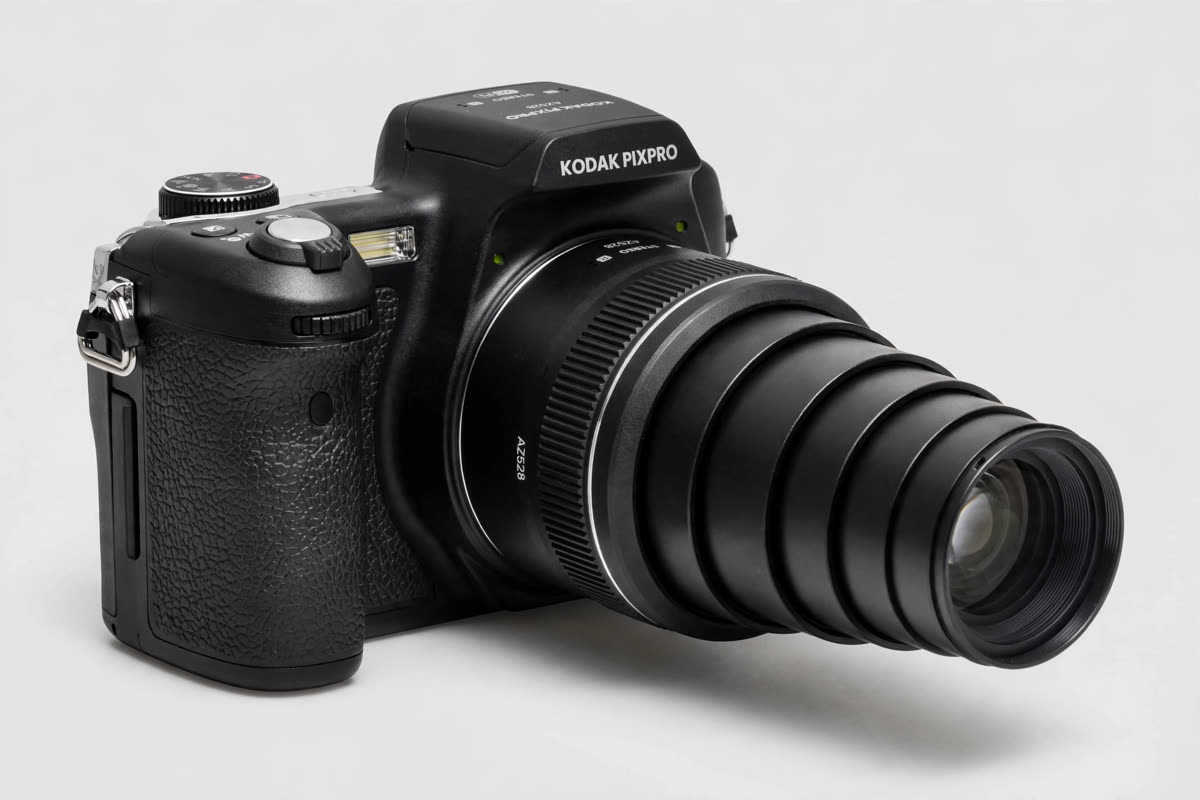
Honesty flag: like the AZ405 above, the KODAK PIXPRO AZ528-BK is a bridge camera, not a DSLR. The BK suffix simply denotes the black color variant, and the camera is a real, verifiable product sold through major retailers. Its lens is fixed, its sensor is a 1/2.3 inch type, and it cannot accept interchangeable lenses.
The AZ528 steps the zoom concept up further with a 52x optical zoom lens covering 24 to 1248mm equivalent, backed by optical image stabilization. The effective 16.35 megapixel CMOS sensor records 1080p Full HD video, offers 6 frames per second burst shooting, includes Wi-Fi with remote control from a phone, and runs on a rechargeable lithium ion battery rated for roughly 240 shots. A 3.0 inch LCD, 360 degree panorama mode, and HDR processing round out a feature set aimed at casual photographers who want maximum reach with minimum fuss.
Compared with the AZ405, you gain noticeably more zoom and a rechargeable battery system at the cost of some resolution. The same honest caveat applies: a small sensor bridge camera will never match a DSLR for low light performance or background blur. Consider the AZ528-BK if your dream is photographing distant subjects on a modest budget and you accept the tradeoffs. If interchangeable lenses and large sensor quality are the goal, return to the DSLR entries at the top of this best dslr camera list.
9. Canon 18-55mm Kit Lens
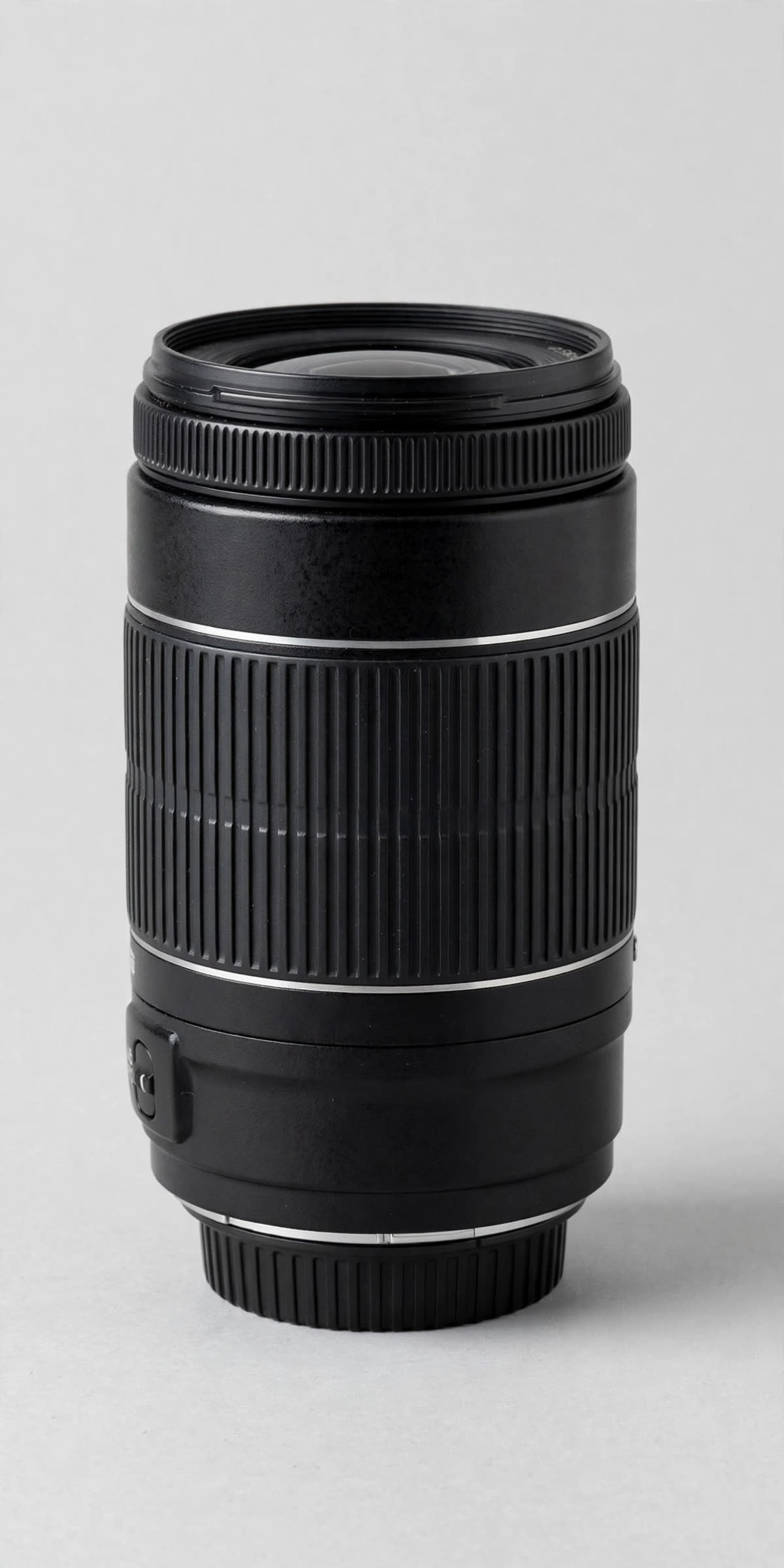
Honesty flag: the “Canon 18-55mm Kit” is not a camera at all. It is the Canon EF-S 18-55mm f/3.5-5.6 IS II kit lens, the standard zoom lens bundled with entry level Canon DSLRs including the Rebel T7. It appeared on the source list as if it were a camera, and we review it here as what it actually is: a lens.
As a lens, the 18-55mm kit is the most sensible first optic a Canon DSLR beginner can own. Glass matters as much as the body in any best dslr camera kit. Its 18 to 55mm range covers wide angle landscapes at one end and short portraits at the other, the built in image stabilization steadies handheld shots in dim light, and its light weight keeps the camera portable.
It is not a fast lens, with a maximum aperture of f/3.5 to f/5.6, so it will not produce the creamy blurred backgrounds of a prime lens, and its build is plastic rather than premium. None of that matters for learning. This lens teaches composition, focal length choice, and the relationship between aperture and depth of field, which is exactly what a first lens should do.
The practical advice is simple. If you buy a Canon DSLR body only to save money, budget for this lens or its equivalent, because a camera without a lens takes no photos. If your camera already comes with it in a kit, use it exclusively for your first few months before buying anything else. The best upgrade after the kit lens is not a more expensive zoom but a 50mm f/1.8 prime, which will teach you more about light in a week than the kit zoom teaches in a month. For a deeper look at pairing bodies with glass, see our best camera for photography guide.
10. Panasonic LUMIX ZS80
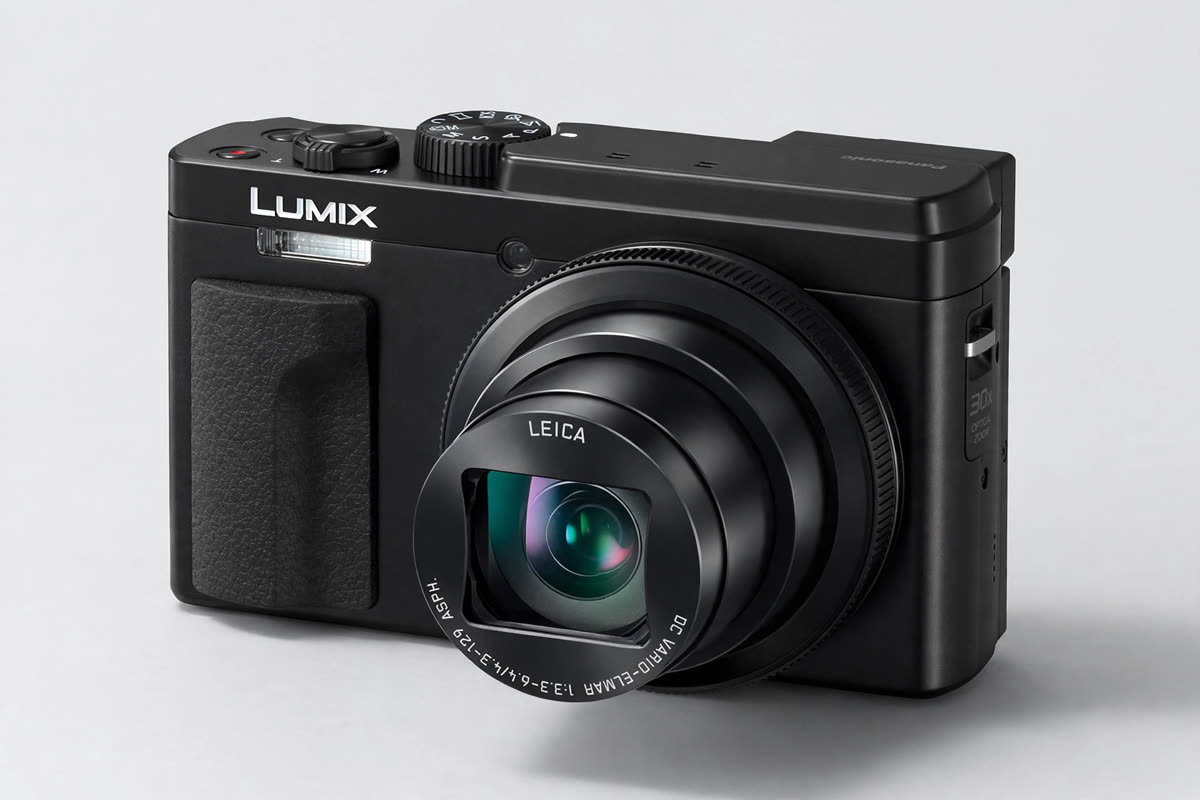
Honesty flag: the Panasonic LUMIX ZS80 is a compact travel zoom camera, not a DSLR. It has a fixed lens, no mirror, and a 1/2.3 inch sensor. One more note on the name: the source list wrote “Panasonic ZS80D”, but we could not confirm any official “ZS80D” variant from Panasonic or retailers, so we review the standard, verifiable LUMIX ZS80, also known as the DC-TZ95 in some regions.
Reviewed honestly as a compact camera, the ZS80 is one of the best travel zooms ever made for beginners. Its Leica DC Vario-Elmar lens covers a 30x optical zoom range from 24 to 720mm equivalent with optical image stabilization, the 20.3 megapixel sensor records 4K video at 30 frames per second alongside Full HD, and a 2.33 million dot electronic viewfinder plus a tilting 3.0 inch touchscreen make framing comfortable in bright sunlight. Ten frames per second burst shooting, 4K photo modes that let you extract stills from video, RAW format support, and built-in Wi-Fi and Bluetooth complete a package that slips into a jacket pocket.
The ZS80 is the right choice for the beginner whose priority is portability. It goes places a DSLR never will: crowded streets, long hikes, family vacations where a camera bag stays in the hotel. It will not match a DSLR for low light or lens flexibility, but the best camera is the one you actually carry. If pocketability beats everything else on your list, the ZS80 earns its place on this best dslr camera list even without the DSLR badge.
Final Pick
After verifying every entry and flagging every mismatch, the answer is clear. The best dslr camera for most beginners in 2026 is the Canon EOS Rebel T7. It is a true DSLR with an optical viewfinder, a proven 24.1 megapixel sensor, simple controls that teach rather than overwhelm, and access to the deepest pool of affordable lenses of any system. It is also the easiest recommendation to stand behind, because it is real, widely available, and honest about what it is.
Two runners up deserve mention. The Nikon D7500 is the pick for the enthusiast beginner who wants a camera to grow into, with 4K video, fast burst shooting, and superb high ISO performance. The Canon EOS R100 is the pick for the beginner who realizes they prefer compact size and modern autofocus over a mirror box, as long as they buy it knowing it is mirrorless. And if your heart is set on maximum zoom reach or pocketability instead of a DSLR at all, the Kodak PIXPRO bridge cameras and the Panasonic LUMIX ZS80 are honest alternatives, reviewed here exactly as what they are.
Whatever you choose, remember the flags in this guide. A camera bought under a false label is a disappointment waiting to happen. A camera bought with clear eyes, even a modest one, is the start of years of rewarding photography.
FAQ
Is a DSLR still worth buying in 2026?
Yes, for the right buyer. True DSLRs like the Canon Rebel T7 and Nikon D7500 offer optical viewfinders, excellent battery life, comfortable ergonomics, and access to huge affordable used lens systems. Manufacturers are focusing new development on mirrorless mounts, but the DSLR experience remains one of the best ways to learn photography fundamentals, and the best dslr camera choices for learners keep getting cheaper as used prices keep dropping.
What is the difference between a DSLR and a mirrorless camera?
A DSLR uses a mirror to reflect light from the lens up into an optical viewfinder, so you see the real scene through glass. A mirrorless camera like the Canon EOS R100 drops the mirror and shows you a digital preview on an electronic viewfinder or screen instead. Mirrorless bodies are smaller and offer more advanced autofocus, while DSLRs offer a traditional optical view and generally longer battery life.
Are the Kodak PIXPRO cameras on this list real DSLRs?
No. The KODAK PIXPRO AZ405 and AZ528-BK are bridge cameras with fixed zoom lenses and small sensors. They cannot change lenses and do not have mirrors or optical viewfinders. We kept them in this guide because they appeared on the source list, and we flagged them honestly so you can decide whether a superzoom bridge camera actually fits your needs better than a DSLR would.
Should a beginner buy the Canon 18-55mm kit lens separately?
Only if you bought a camera body without a lens. The 18-55mm f/3.5-5.6 IS II is the standard kit lens bundled with most entry level Canon DSLRs, and buying the camera as a kit is almost always cheaper than buying body and lens separately. If your camera already includes it, spend your next lens budget on a 50mm f/1.8 prime instead.
Is it safe to buy an older DSLR like the Nikon D5100 used?
It can be, with care. The D5100 is long discontinued, so inspect the shutter count, check the sensor for dust or damage, test the flip screen hinge, and confirm the battery holds a charge before paying. Buying from a reputable used camera dealer with a return policy is far safer than a private sale with no recourse. Budget for a sensor cleaning and a fresh battery in your total cost.
What does the D in Panasonic ZS80D mean?
We could not confirm it means anything official. No Panasonic documentation or retailer listing we found describes a “ZS80D” variant, so this guide reviews the standard, verifiable Panasonic LUMIX ZS80, also sold as the DC-TZ95 in some regions. If a seller lists a “ZS80D”, ask them to clarify exactly what differs before you buy.
The Bottom Line
Finding the best dslr camera in 2026 means looking past the labels and verifying what each product actually is. The Canon EOS Rebel T7 earns our top recommendation as the best dslr camera for beginners: real optical viewfinder, proven sensor, simple controls, and the richest affordable lens ecosystem in photography. The Nikon D7500 serves the ambitious enthusiast, the Canon EOS 6D Mark II opens the door to full frame, and the Nikon D5100 offers a used market bargain for the tightest budgets.
The rest of this list is valuable precisely because it is honest. The Canon EOS R100 is an excellent camera that happens to be mirrorless. The Kodak PIXPRO AZ405 and AZ528-BK are capable bridge cameras, not DSLRs. The 18-55mm kit entry is a lens, not a camera. The Panasonic LUMIX ZS80 is a superb compact travel camera whose “D” suffix we could not verify. And the generic accessory entry is a reminder to budget for the bag, batteries, and cleaning kit that keep any camera shooting.
Buy the camera that matches your real goals, not the label on the list. Do that, and whichever of these ten you choose, you will start 2026 with a camera you understand, trust, and actually use.