
10 Best Camping Ropes for Tents and Tarps 2026
Table of Contents
Introduction
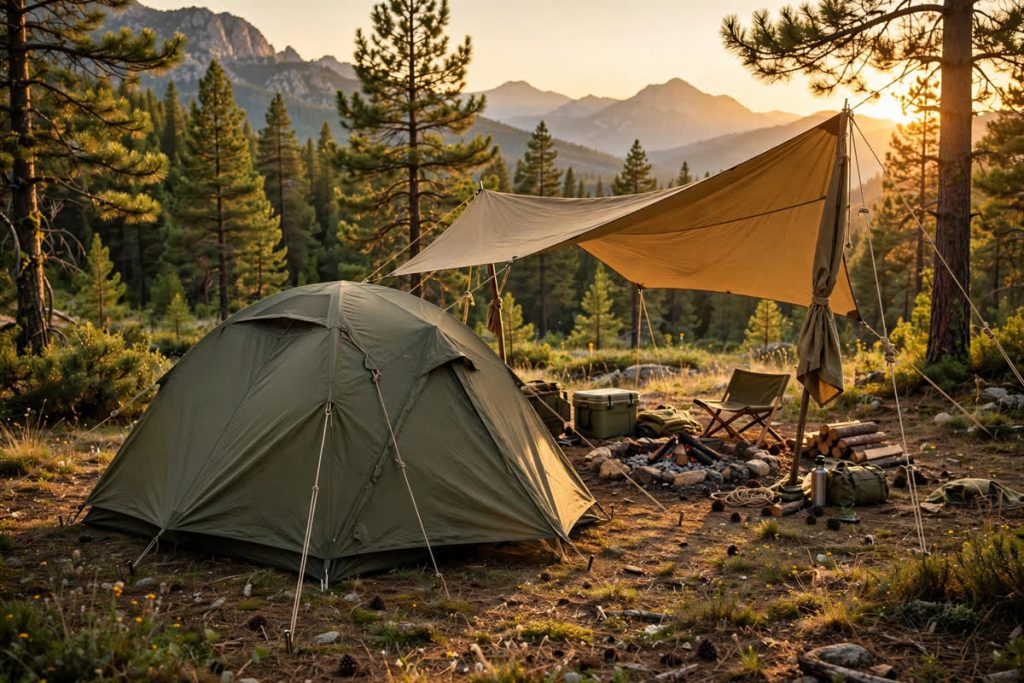
A tent is only as reliable as the cord holding it up. Wind, rain, and shifting ground all work against your shelter through the night, and the humble guy line is what stands between a cozy camp and a flapping, sagging mess. Choosing from the best camping ropes is therefore one of the smartest upgrades a camper can make, because strong, weather-resistant cord turns a basic tent into a storm-worthy shelter.
Camping ropes come in more varieties than most people expect. Classic 550 paracord is the do-everything workhorse, reflective guy lines keep you from tripping over lines after dark, ratchet ropes and rope tensioners let you get a drum-tight pitch without tying a single knot, and thick utility ropes handle the heavy jobs like bear hangs and cargo tie downs. Each style has real strengths, and the right choice depends on what you pitch, where you camp, and how much fuss you want at setup time.
This guide compares ten of the best camping ropes for tents, tarps, and hammocks, covering everything from budget paracord spools to clever ratcheting systems. Every pick below is a real, widely available product that we verified before writing this roundup. Rope is only half of the shelter equation, though, so if you are upgrading your whole setup, pair these picks with the covers we ranked in our 10 best camping tarps guide.
How We Chose the Best Camping Ropes
We started by verifying that each product on this list actually exists and is sold as described, checking current listings and manufacturer details rather than trusting old spec sheets. We then compared the specs that matter most at a campsite: tensile strength, rope diameter, material, weather resistance, and length options. A rope that stretches in the rain or rots in the sun is a liability, so nylon and polyester constructions with UV resistance scored higher than untreated natural fibers.
We also weighed practical camping factors that numbers alone cannot capture. Reflective strands are a genuine safety feature for guy lines, because tripping over an invisible line at 2 a.m. is a rite of passage nobody enjoys repeating. Packability matters too: a 1,000-foot spool is great value, but a compact coil with a storage strap is what actually ends up in a backpack. Ease of tensioning played a big role as well, which is why ratchet and roller systems earned spots on this best camping ropes list alongside traditional cord.
Finally, we kept the reviews honest about tradeoffs. No single rope is the best at everything, and we say so where it counts. We did not invent prices, star ratings, or lab-test claims, and where a product name in the lineup differs slightly from its retail listing, we flag it so you know exactly what to search for. The result is a lineup of the best camping ropes you can buy with confidence, matched to real camping jobs.
Teceum Paracord Type III
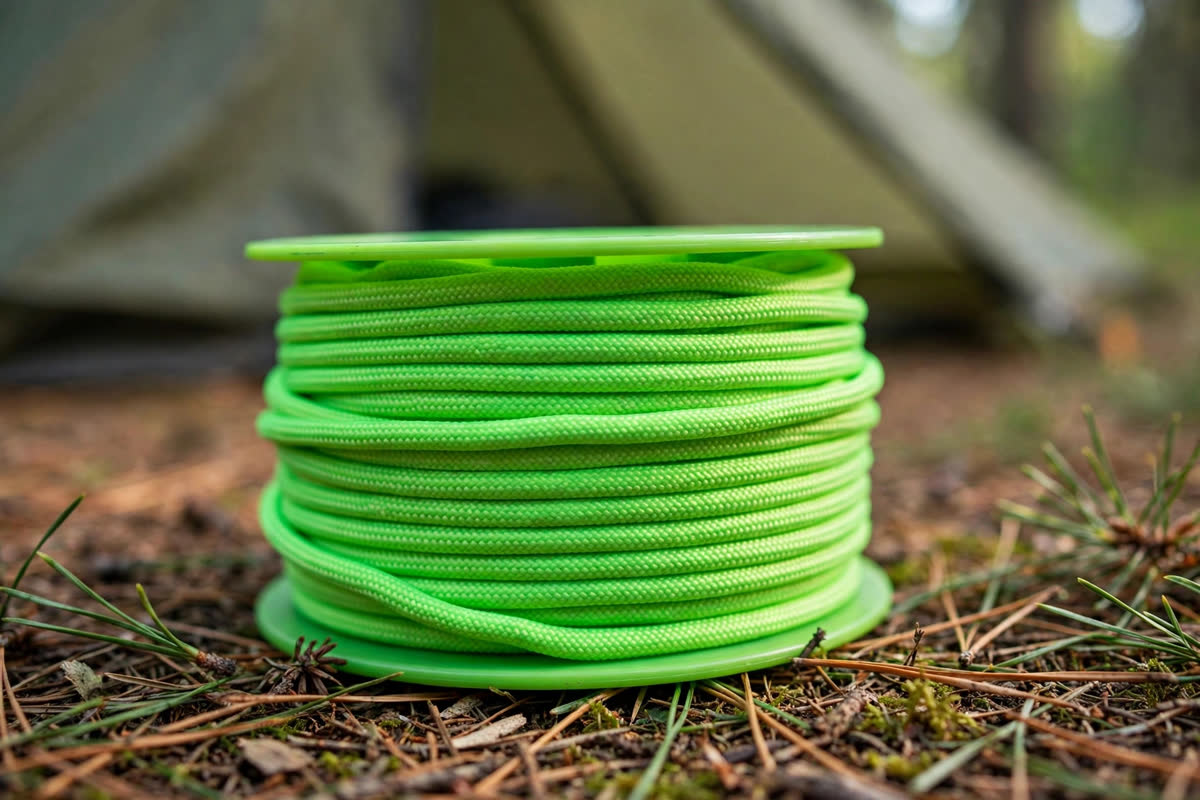
Teceum Paracord Type III is the classic 550 paracord that anchors this entire list. It is built to the familiar Type III formula: a 100 percent nylon core with seven inner yarns, each made of three twisted nylon fibers, wrapped in a 32-strand braided sheath. The result is a 4 mm cord rated to a 550 lb minimum breaking strength, which is more than enough for tent guy lines, tarp ridgelines, hammock suspension backups, and clotheslines.
What makes the Teceum cord especially practical for campers is the range of options. It comes in lengths from 50 feet up to 1,000 feet, so you can buy a small hank for a weekend kit or a bulk spool to re-rig an entire camp. Dozens of colors are available, which is more useful than it sounds: bright colors are easier to spot on the ground, while earth tones blend into a stealthy campsite. The nylon construction is UV and fade resistant, and it shrugs off rain and snow without going limp.
This is the rope to buy if you want one spool that does almost everything. It ties clean knots, holds tension well, and the inner strands can be pulled out for emergency fishing line, thread, or fire-starting tinder. The only real limitation is shared by all paracord: it is not reflective, so for night-critical guy lines you may want to pair it with one of the reflective options below or add clip-on reflectors.
XBEN Reflective Paracord
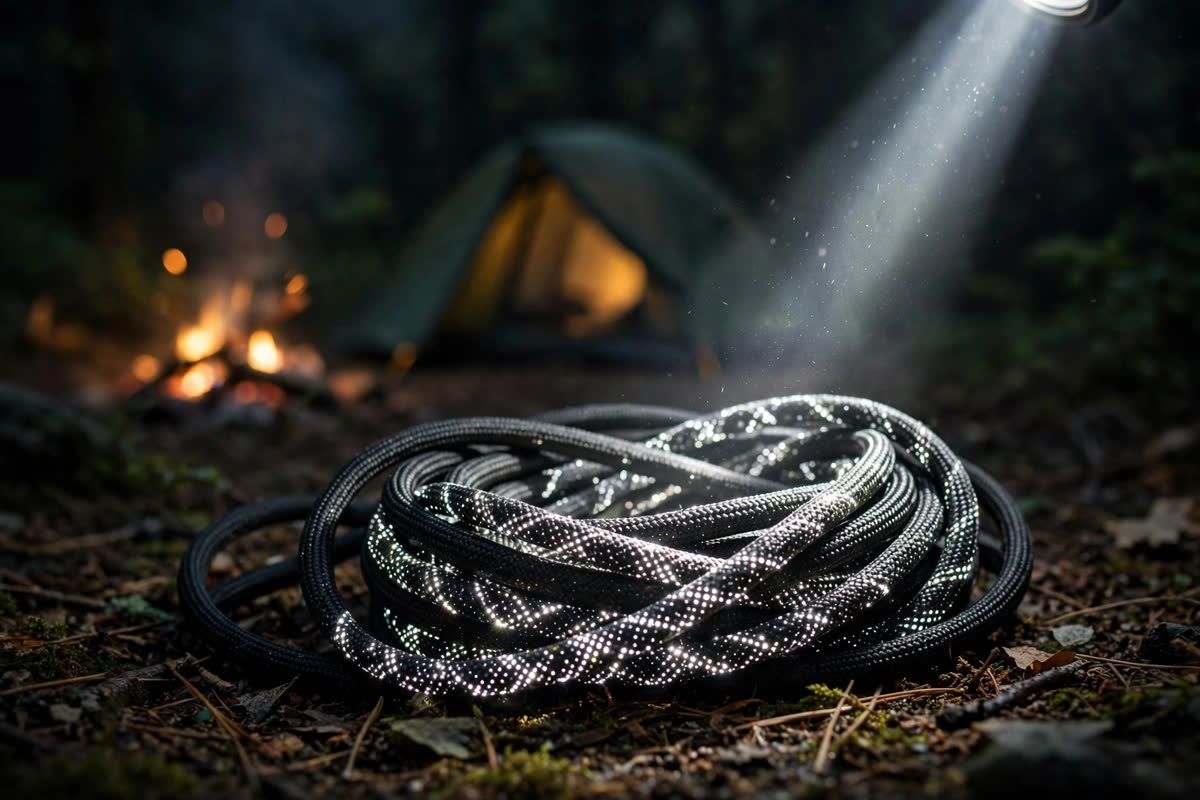
XBEN Reflective Paracord takes the standard paracord formula and upgrades two things campers care about: strength and nighttime visibility. Instead of the usual seven inner yarns, this cord packs thirteen inner strands of polyester inside a 32-strand sheath, and the manufacturer rates it at a 1,000 lb breaking strength. That is nearly double the rating of ordinary 550 cord, which gives you a comfortable safety margin for tensioned tarps and windy ridgelines.
The standout feature is the reflective strip woven into the sheath. Under a headlamp, flashlight, or even moonlight, the cord lights up brightly, which makes a genuine difference around a dark campsite. You can find your tent lines without kicking stakes loose, and fellow campers can see your setup instead of clotheslining themselves on it. The cord comes with a storage bag designed to keep it tangle-free, and lengths run from 50 feet all the way to 1,000 feet.
Polyester construction brings a useful bonus: it absorbs very little water and stretches less than nylon when wet, so your tarp stays taut through a rainy night instead of sagging by morning. If you camp in wet climates or simply want the most visible, strongest general-purpose cord on this list, the XBEN reflective paracord is the pick. Just remember that even a 1,000 lb rating does not make it suitable for climbing or rappelling, which no camping cord should be used for.
Hikeman Camping Rope with Ratchet
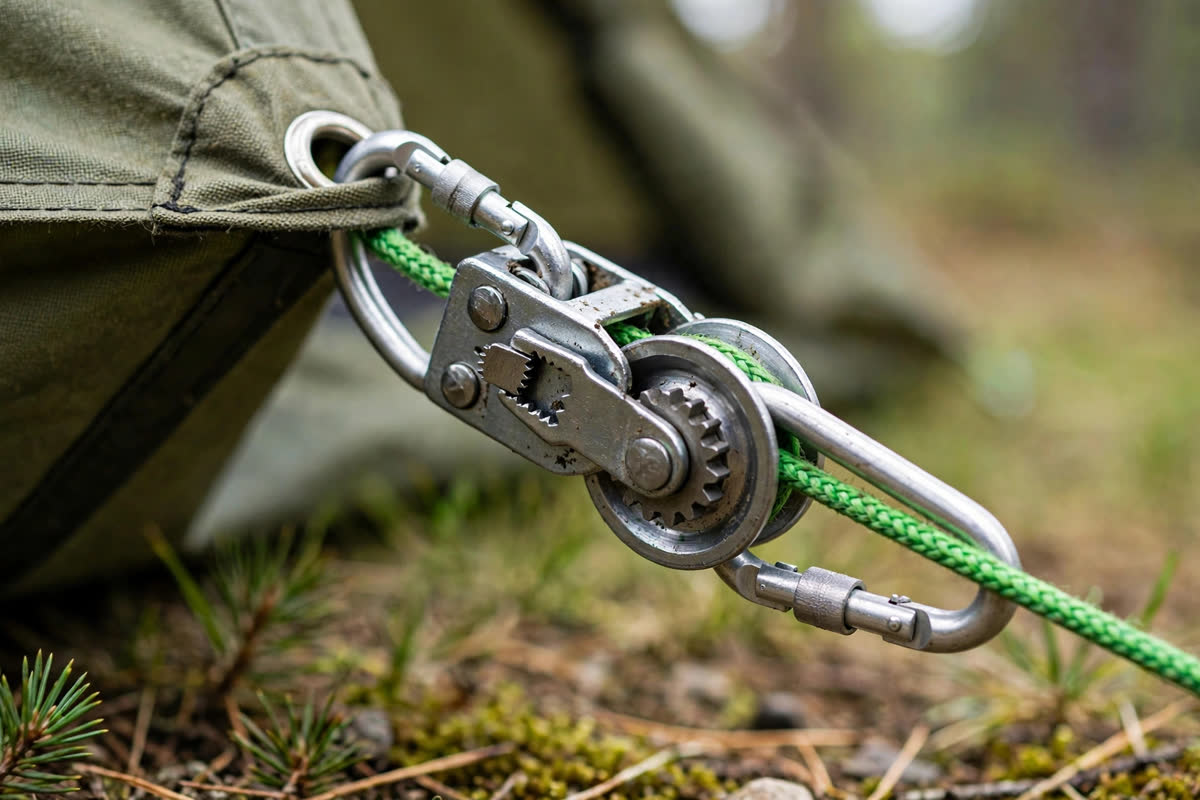
Hikeman Camping Rope with Ratchet is built for campers who hate fiddling with knots in the dark. Each rope is a 4 mm line, 13 feet long, made from a nylon inner core with a polyester surface and a reflective thread woven in. The headline feature is the ratchet pulley at one end: a zinc-alloy internal gear in an ABS housing that lets you pull the line tight and locks it in place, no trucker hitch required.
Setup is genuinely fast. You clip the two included aluminum carabiners to your tent, tarp, or stake, pull the free end to tension the line, and the ratchet holds it. Releasing tension is just as simple, which matters when you are adjusting a tarp in shifting wind. The manufacturer rates each rope to withstand up to 420 lbs, which is plenty for guy lines, canopy corners, kayak tie downs, and even hanging a grow light or camp lantern from a branch.
This is a system rather than a spool of cord, so think of it as four ready-made guy lines instead of raw material. That convenience is the whole point, and it is why this style has become so popular with car campers and overlanders. The 13-foot length suits tents and tarps well, though ultralight backpackers pitching big tarps may want longer lines. For everyone else, the Hikeman ratchet ropes turn shelter setup into a one-minute job.
VIPARSPECTRA Retractable Ratchet Rope
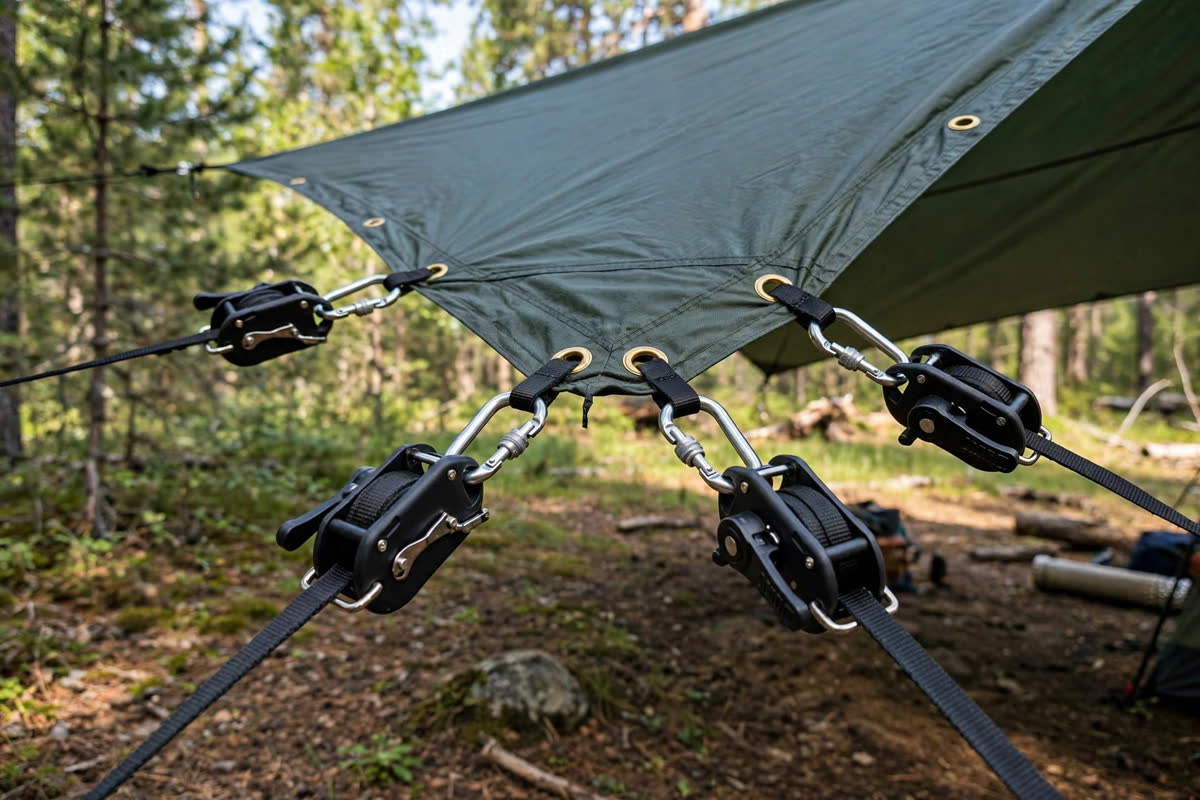
VIPARSPECTRA Retractable Ratchet Rope is the multi-pack workhorse of the tensioning world. Sold as sets of 4, 8, or 12 straps, each one is an 8-foot retractable line rated to 75 lbs, made from solid braided polypropylene rope with reinforced metal gears and rustproof galvanized iron carabiner hooks. A one-click locking pulley lets you raise, lower, and lock the line with one hand, then release it just as quickly.
A quick note on the name: the retail listings for this product call it a retractable ratchet tie down strap, and that description is accurate. It is a compact hanging and tie-down system rather than a traditional spool of rope. That is actually good news for campers, because the format is perfect for jobs where you want fast, adjustable tension: hanging a lantern, securing a tarp edge, strapping gear to a roof rack, or guying out a canopy at a tailgate camp.
The multi-pack format is the real value story here. Eight or twelve adjustable lines cover a whole campsite, and they pack down small enough to live permanently in a gear bin. The 75 lb per-strap rating is honest light-duty territory, so use them for tensioning and hanging, not for suspending heavy loads overhead. Within that lane, few of the best camping ropes make camp setup this effortless.
Roperoller Tightening Rope
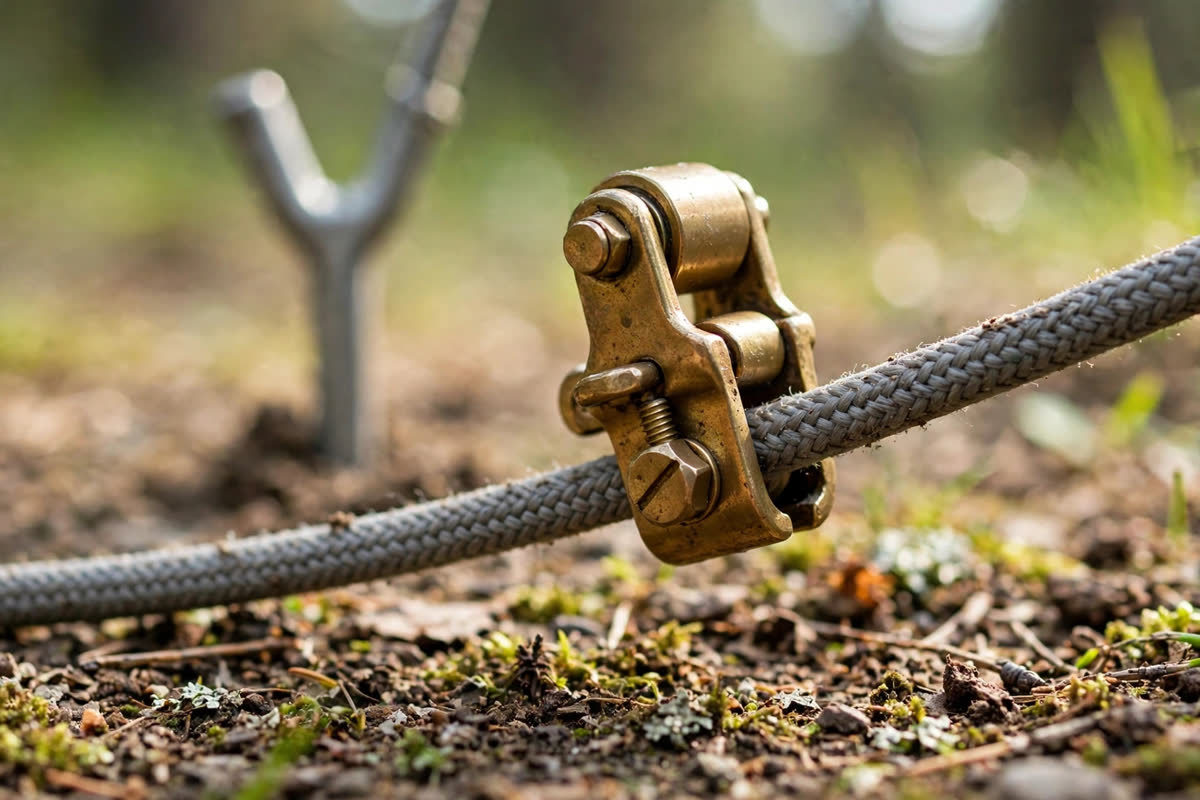
Roperoller Tightening Rope is less a rope and more a brilliant little machine for making any rope tighter. The kit centers on the Rollercam device: a compact tensioner with a marine-grade brass roller, stainless steel springs and shafts, and a corrosion-resistant cam. You thread your own 3 to 4 mm cord through it, pull to tension, and the roller mechanism grips the line without the friction damage that cheap plastic tensioners can cause.
The numbers are modest but honest: a 35 lb working load and 115 lb maximum load per tensioner. That is exactly the right range for tent guy lines, tarp corners, and hammock tarps, where you want firm, even tension rather than brute force. Each tensioner weighs only 0.8 ounces, so a set of six disappears into a stake bag. The kit includes six Rollercam devices, two 10-foot reflective cords to get you started, and a carry case.
What sets the Roperoller apart is adjustability. Unlike a fixed knot, you can micro-adjust tension in seconds as temperatures drop and fabrics stretch overnight, which is the secret to a tarp that stays quiet in the wind. If you already own paracord or guy line cord you like, this kit upgrades it into a precision tensioning system. It is the connoisseur pick on this list, and one of the best camping ropes accessories for anyone who pitches tarps regularly.
TECEUM Polypropylene Rope
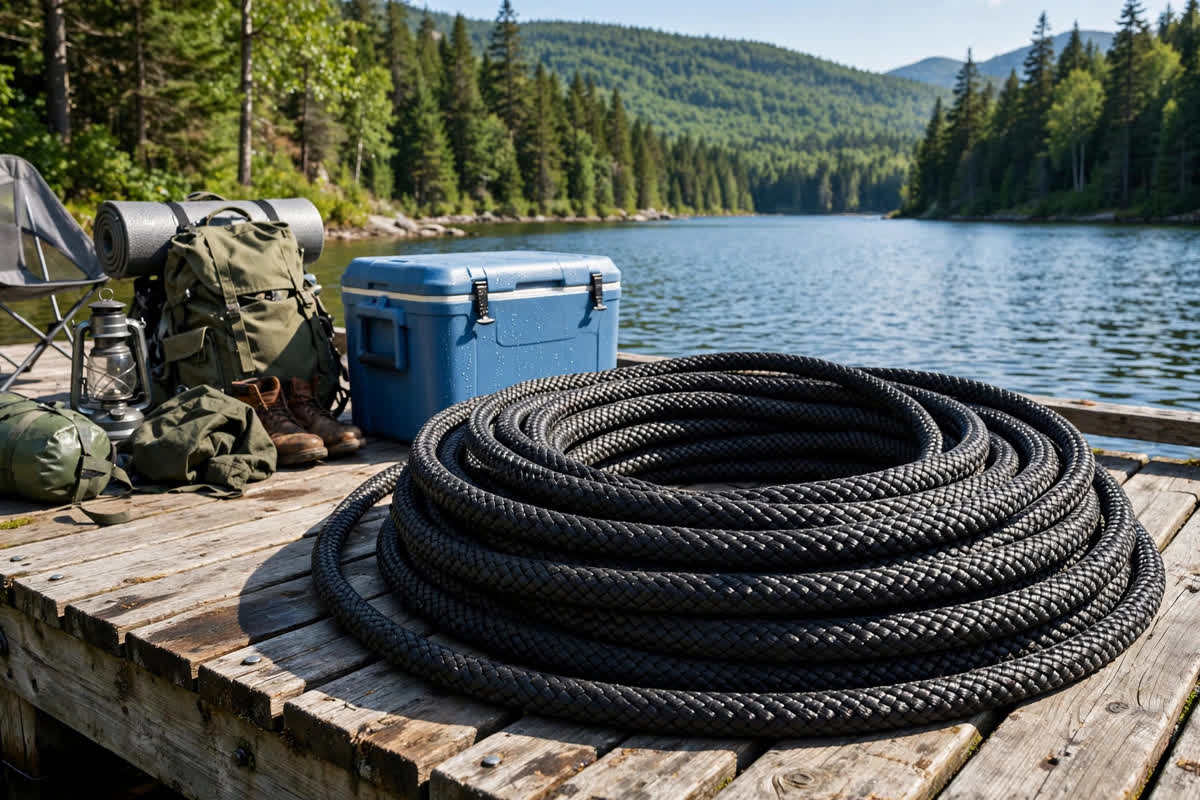
TECEUM Polypropylene Rope is the thick utility cord every well-stocked camp should have. This is a 90-foot, 1/4-inch (7 mm) diamond-braided rope made from 100 percent polypropylene, rated to 250 lb tensile strength. It is a completely different animal from the 4 mm paracords elsewhere on this list: thicker, stiffer, and built for the jobs where thin cord feels fiddly, like flag poles, clotheslines, lashing gear to a rack, or tying down a canoe.
Polypropylene has two properties campers love. First, it is naturally waterproof and floats, so it is ideal for anything near water, from boat tie-offs to riverside camps. Second, it resists UV damage and will not rot, mildew, or weaken when left out in the weather. The diamond braid distributes load evenly across the rope and gives it a firm, easy-to-grip texture that holds knots securely.
The tradeoff is packability: at 7 mm thick and 90 feet long, this coil takes up real space, so it suits car camping far better than backpacking. It is also not the right choice for precision guy lines, where thinner cord tensions more easily. But as a general camp utility rope, the kind you reach for a dozen times a trip without thinking, the TECEUM polypropylene rope earns its place. Keep a coil in the car and you will use it constantly.
Amazon Basics Paracord
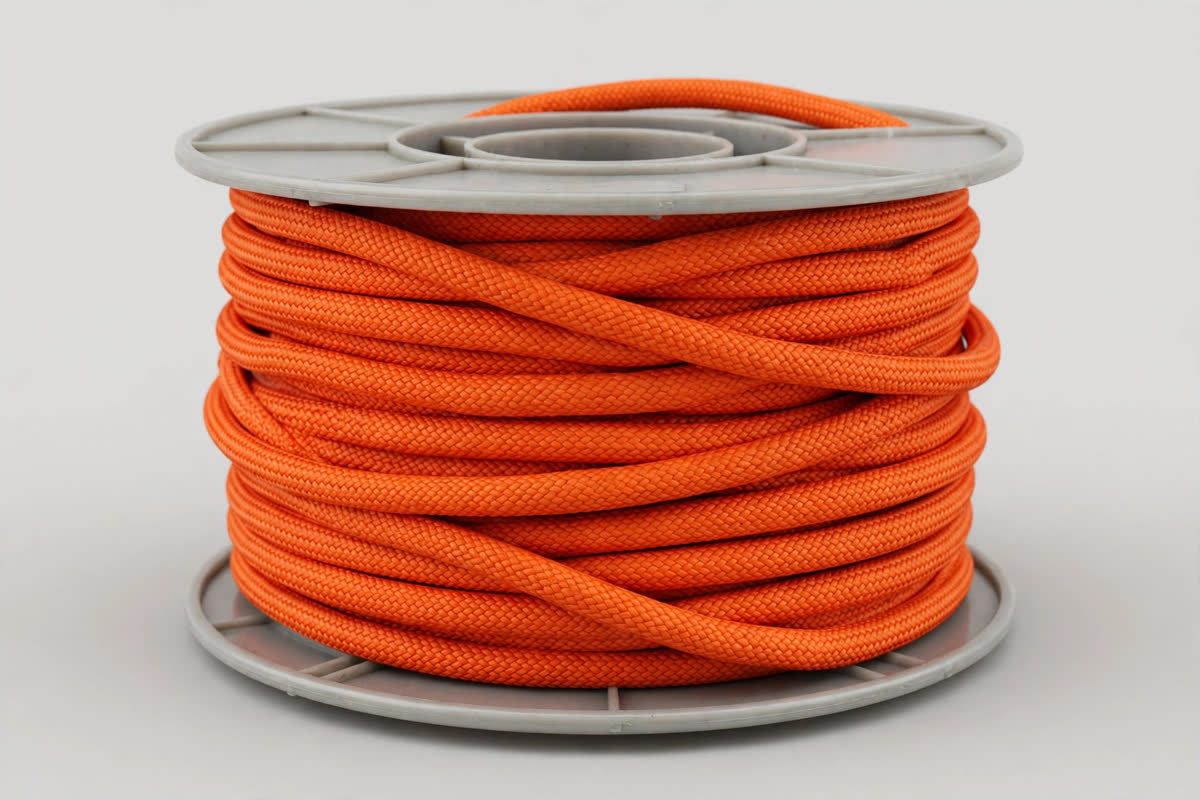
Amazon Basics Paracord is the no-nonsense baseline of the paracord world, and that is meant as a compliment. It follows the standard Type III recipe: a 32-braid UV-resistant nylon jacket over a 7-strand nylon core, 4 mm in diameter, 100 feet long, and rated to 550 lbs. There is nothing exotic here, which is exactly the point: it is a straightforward, honest spool of cord from a brand with a one-year limited warranty behind it.
For camping, it does everything classic paracord does. It makes excellent guy lines, tarp ridgelines, and clotheslines. The inner strands pull out for emergency repairs, fishing line, or sewing thread. It handles wet and dry conditions and resists oils, acids, and abrasion. The 100-foot length is the sweet spot for a camp kit: enough to re-rig a tent and a tarp with cord to spare, without the bulk of a giant spool.
Two honest caveats come straight from the product specs. This cord is not reflective, so it will not light up under a headlamp, and it sinks in water rather than floating. Neither is a flaw, just facts worth knowing before you buy. If you want proven 550 paracord at a sensible price without researching boutique brands, this is the easy, reliable choice, and one of the best camping ropes for beginners building their first kit.
VVAAGG Reflective Paracord
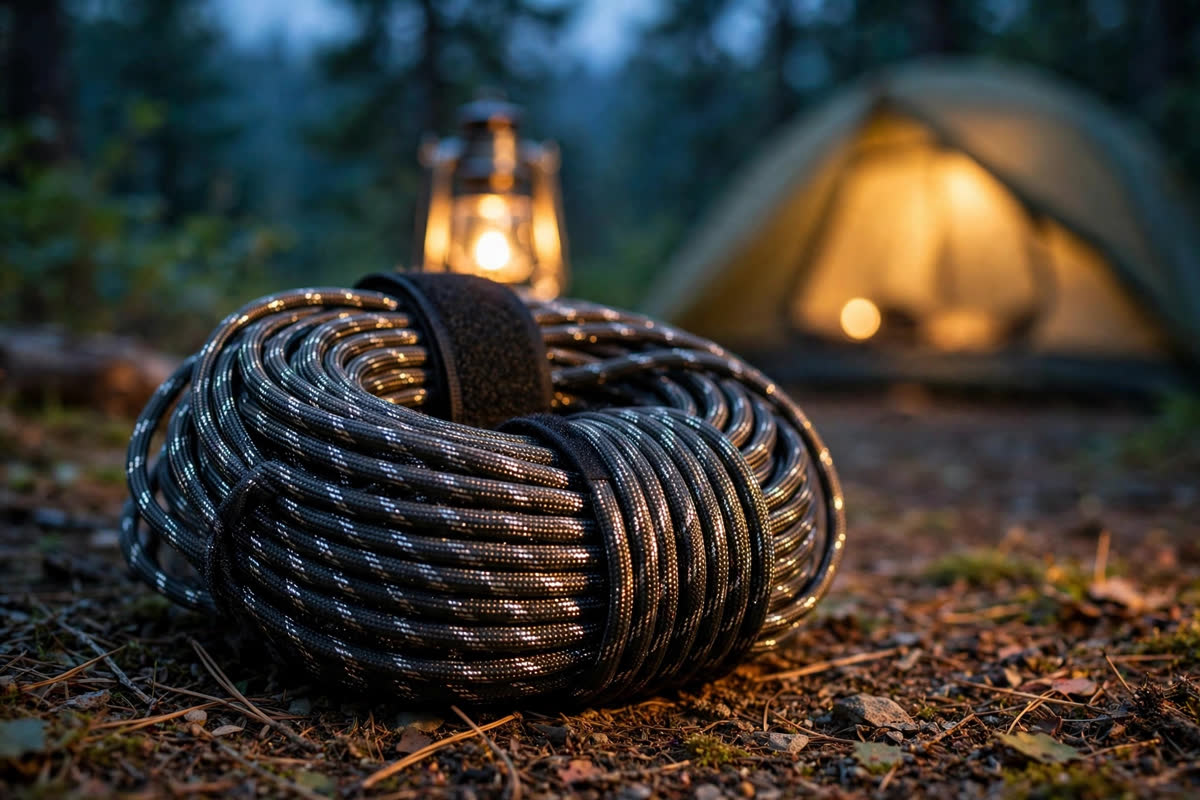
VVAAGG Reflective Paracord pairs the familiar 550 paracord spec with two thoughtful camping upgrades. The cord itself is standard Type III construction: a 32-strand braided sheath over seven all-nylon core strands, 4 mm thick, rated to 550 lbs. Woven into the sheath are reflective threads that catch headlamp and moonlight, so your guy lines glow instead of lying in wait for your shins.
The second upgrade is portability. The 100-foot hank comes with a quick-release strap that bundles the coil into a compact package and unfolds in seconds when you need cord. It is a small detail that solves a real annoyance, because loose paracord has a talent for tangling itself into a nest at the bottom of a pack. The cord is soft and flexible rather than stiff, which makes it easy to thread through small tent eyelets and tensioners.
Available in 100-foot and 200-foot lengths and a wide range of colors, the VVAAGG cord is a strong mid-pack choice for campers who want reflective safety without paying a premium. It is not the strongest cord on this list, but 550 lbs is ample for any tent or tarp guy line, and the reflective weave plus the tidy storage strap make it one of the most camp-friendly paracords you can buy.
Gear Aid 550 Paracord with Carabiner
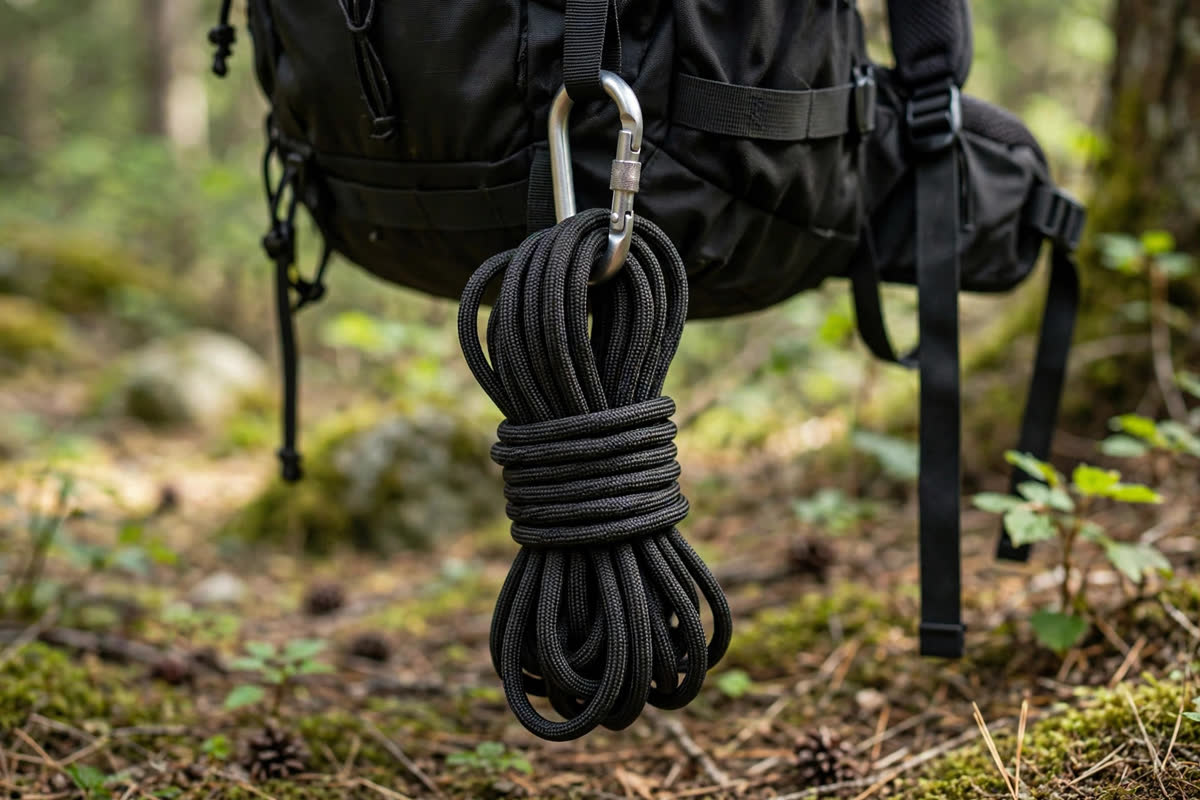
Gear Aid 550 Paracord with Carabiner comes from a brand campers already trust for repair and outdoor gear, and the product reflects that pedigree. The cord is 100 percent nylon, 4 mm, with seven inner strands and a 550 lb rating, available in 30-foot and 100-foot lengths. The included carabiner is the differentiator: a rustproof clip that gives you instant attachment options for hanging backpacks, lanterns, and water bottles, or for clipping the coil itself to the outside of your pack.
The inner strands pull apart for use as fishing line, thread, or floss, which is standard for good paracord but worth repeating because it is genuinely useful in the field. Color options include camo, bright orange, and reflective black and reflective orange variants, so you can choose between blending in and standing out. The reflective versions are particularly smart for guy lines, combining visibility with the convenience of the carabiner.
Gear Aid positions this as a multipurpose utility cord rather than a bulk spool, and the 30-foot option is perfect for a daypack or emergency kit while the 100-foot length suits full camp setups. It is a touch more curated than the generic spools, and you are paying for the brand reliability and the included hardware. For campers who like their gear ready to clip and go, this is one of the best camping ropes in a grab-and-hang format.
Loreso Paracord with Magnet Fishing Carabiner
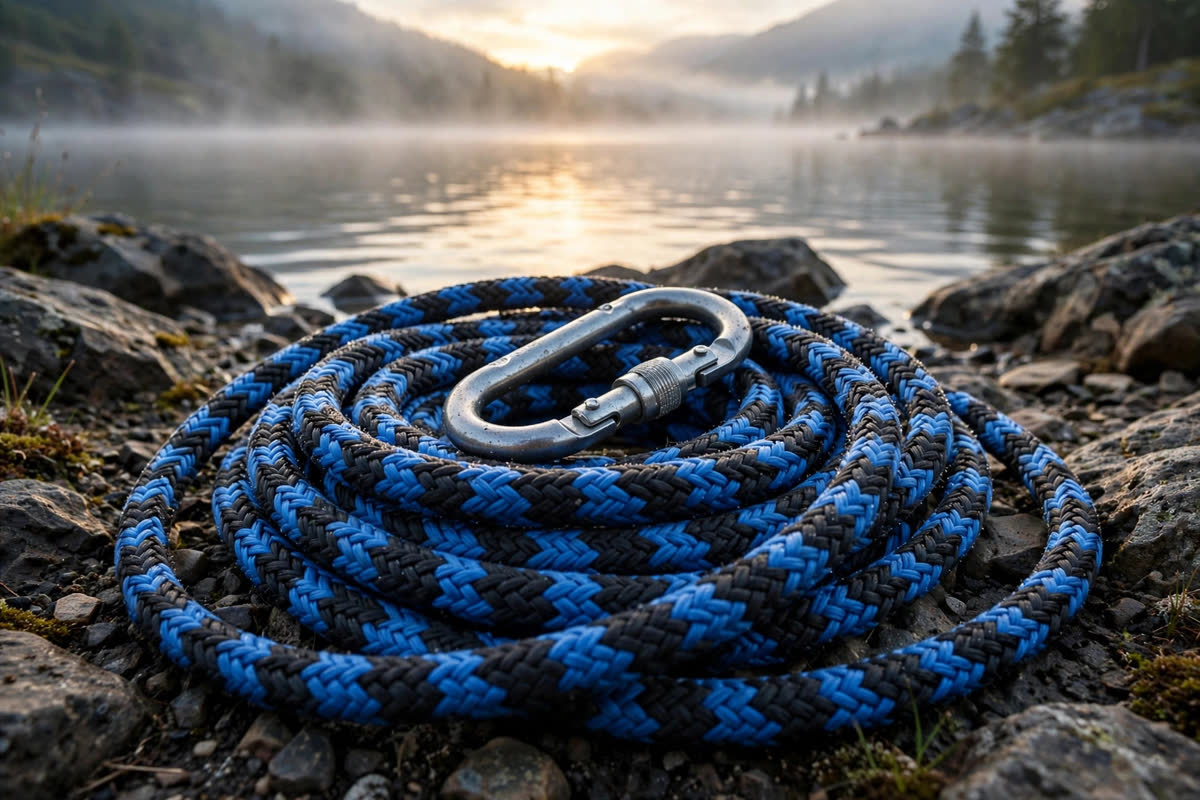
An honest note before the review: despite the product name on our list, the actual Loreso product sold under this style is not paracord at all. It is the LSR Loreso magnet fishing rope, a 65-foot length of reinforced polyester braid, 1/3 inch (8 mm) thick, rated to a 1,200 lb maximum tensile force, with a steel locking carabiner. We kept the listing name for consistency but want you shopping for the right product, so search for the Loreso magnet fishing rope rather than Loreso paracord.
With that clarified, this is the heavy-duty bruiser of the roundup. The 8 mm polyester braid is roughly twice the diameter of standard paracord, and the 1,200 lb rating is the highest on this list. It is designed for magnet fishing, which means dragging heavy, awkward metal objects out of lakes and rivers, but that same strength makes it excellent for the burliest camp jobs: high bear hangs, tensioning large tarps in storms, hauling gear, or tying down a boat. A rubber sleeve on the working section protects your hands under load.
Two important caveats. First, this rope is explicitly not for climbing or rappelling, and its 1,200 lb rating is a straight-pull tensile figure, not a climbing safety rating. Second, it is bulky: 65 feet of 8 mm rope is a car-camping proposition, not a backpacking one. But if your camping style includes heavy hauling, water crossings, or serious storm rigging, the Loreso rope is the strongest line here by a wide margin and a legitimate specialist pick.
Final Pick
After comparing all ten of the best camping ropes, our overall winner is the Teceum Paracord Type III. It hits the sweet spot that matters most: genuine 550 lb Type III construction, weather-resistant nylon, a huge range of lengths and colors, and the versatility to handle guy lines, ridgelines, repairs, and emergency uses. It is the one rope that belongs in every camp kit, and the one we would buy first if we were starting from scratch.
That said, the best camping ropes list has clear specialists worth calling out. Campers who pitch after dark should look hard at the XBEN Reflective Paracord, whose reflective weave and 1,000 lb rating solve the two biggest paracord complaints in one product. Knot-haters and car campers will get more joy from the Hikeman ratchet ropes or the VIPARSPECTRA retractable straps, which trade raw cord for push-button convenience. And anyone rigging heavy loads should keep the Loreso rope in the truck.
Whichever you choose, remember that rope is part of a system: good cord, solid stakes, and well-placed tensioners working together. To round out the rest of your setup, browse our 10 best camping gear roundup for the essentials that pair with everything on this list.
FAQ
What rope strength do I need for tent guy lines?
For ordinary tent and tarp guy lines, a 550 lb rated paracord is more than sufficient, since the actual load on a single guy line rarely exceeds a few dozen pounds even in strong wind. The 550 lb figure is a breaking strength with a large safety margin built in. Thicker utility ropes rated 250 lbs, like the polypropylene options here, also work fine for guy lines. Only specialized jobs like bear hangs with heavy food bags or storm-rigging large tarps benefit from going stronger. All of the best camping ropes on this list are rated well beyond typical guy line loads.
Is paracord strong enough for a hammock?
Standard 550 paracord can hold a hammock in a pinch, but purpose-made hammock straps are the better and safer choice for regular use. Straps distribute load across trees without damaging bark, and they are rated and tested for the dynamic loads of a person shifting in a hammock. Use paracord for the hammock tarp ridgeline and guy lines, and leave the suspension itself to proper tree straps.
What does 550 paracord actually mean?
The 550 in 550 paracord refers to its minimum breaking strength of 550 pounds. Type III is the military specification category it belongs to, defined by a 4 mm diameter, a braided nylon sheath, and seven inner core strands. When a product is labeled Type III or 550, it is claiming to meet that construction standard. Note that breaking strength is measured in a straight pull in a lab, so always keep a generous safety margin in real use.
Should my camping ropes be reflective?
Reflective rope is one of the most worthwhile upgrades for tent guy lines. Non-reflective cord is effectively invisible at night, and tripping over guy lines is one of the most common minor injuries at campsites. Reflective threads woven into the sheath light up brightly under a headlamp, making your whole shelter visible after dark. If you frequently arrive at camp late or get up at night, prioritize reflective options like the XBEN or VVAAGG cords on this list. Both rank among the best camping ropes for night visibility.
Which is better for tents: paracord or utility rope?
For tent guy lines and tarp ridgelines, 4 mm paracord is usually the better choice because it is light, packs small, ties clean knots, and tensions easily. Thicker utility rope, such as 7 mm polypropylene, shines for heavy camp chores like clotheslines, lashing gear, flag poles, and boat tie-offs, where its stiffness and grip are advantages. Many experienced campers carry both: paracord in the tent bag and a coil of utility rope in the car, which together cover every job the best camping ropes are asked to do.
How do I keep camping rope from tangling?
The simplest method is to coil rope properly and secure the coil with a strap, a rubber band, or a short piece of its own cord before it goes in your pack. Several products on this list include storage solutions for exactly this reason, such as the XBEN storage bag and the VVAAGG quick-release strap. Avoid stuffing loose cord into a bag, since that guarantees a tangled nest. For ratchet and retractable systems, retract or wind the line fully after each use.
The Bottom Line on the Best Camping Ropes
A good camping rope is cheap insurance for every trip. The ten best camping ropes above cover the full range of camp needs, from the do-everything Teceum 550 paracord to reflective night-visible cords, knot-free ratchet systems, and heavy-duty hauling rope. Match the rope to the job, keep a coil in your kit at all times, and your shelter will stand up to whatever the weather brings.
If you are building or refreshing your camp kit this season, start with one of the best camping ropes above and add a reflective option for guy lines plus a tensioning system for your tarp. Small upgrades like these pay off every single night you spend outdoors. For more ways to level up your setup, explore the rest of our outdoor gear guides and camp with confidence.