
10 Best Compasses for Hiking and Navigation 2026
Table of Contents
Introduction
A reliable compass still belongs in every hiker’s pack, even in an age of GPS watches and phone apps. Batteries die, screens crack, and signal disappears in deep valleys and dense forest. A good magnetic compass asks for nothing except a steady hand, and it keeps working for decades. If you are looking for the best compasses for hiking and navigation in 2026, the market offers two broad families: rugged military style lensatic compasses with folding sighting systems, and transparent baseplate compasses designed to work together with a paper map.
This guide covers ten of the best compasses you can buy for outdoor use. Some are built for quick bearings on a simple day hike. Others are precision instruments with mirror sighting, adjustable declination, and built in clinometers for serious backcountry travel. We looked at build quality, readability in low light, map friendly features, weight, and real world reputation among hikers, scouts, and survivalists. We built this list of the best compasses around real field needs, not marketing claims. Whether you want a tough lensatic compass for your emergency kit or a featherweight baseplate compass for thru hiking, you will find a solid match below.
Before we start, one honest note. This is a review only roundup. There are no affiliate buy links in this article. Our goal is to help you understand what each model does well and where it falls short, so you can buy with confidence wherever you shop.
How We Chose the Best Compasses
We did not test these compasses on a trail ourselves, and we will not pretend we did. Instead we researched each model against the same practical checklist. First, we confirmed the product is real and currently sold under the name on the sheet, because outdoor gear listings change fast. Every model below passed that check.
Then we compared the features that actually matter in the field. Needle quality and capsule design decide how fast and true a compass settles. Liquid filled capsules with jewel bearings beat dry or sticky alternatives. Luminescent markings matter for dawn patrols and late returns. Map scales printed on the baseplate, a magnifying lens for reading fine contour lines, and a declination correction system separate a navigation tool from a toy.
We also weighed build against bulk. A heavy zinc alloy lensatic compass survives abuse that would crack a plastic baseplate model, but you will feel it in your pocket after eight hours on trail. We flagged the tradeoffs honestly in every section. Finally, we read large volumes of real user feedback to catch recurring problems that spec sheets hide, such as loose bezels, dim glow paint, or bubbles in the capsule. What follows is our honest take on ten of the best compasses for 2026, and that is our promise for every roundup of the best compasses we publish.
Sportneer Military Lensatic Compass
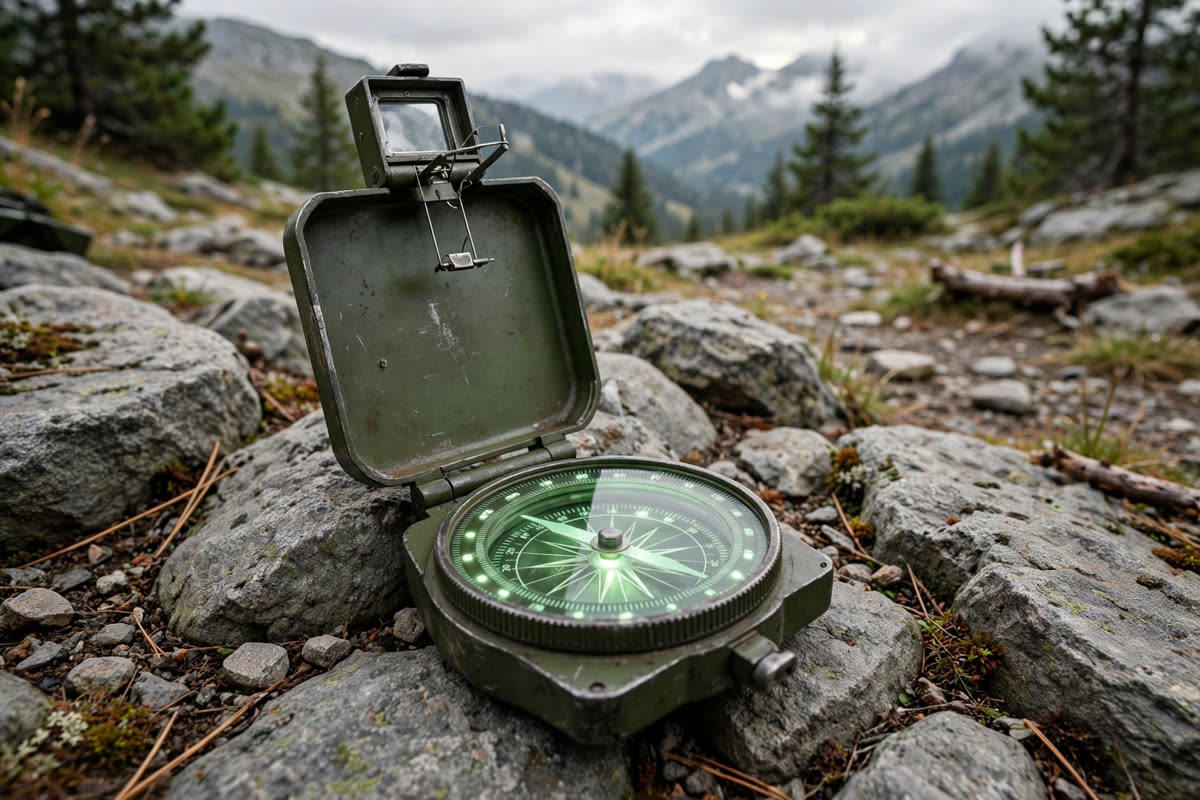
The Sportneer military lensatic compass is one of the most popular budget friendly compasses in the outdoor world, and for good reason. It copies the classic military lensatic layout: a folding metal body, a rear sight with a magnifying lens, a front sighting wire, and a floating dial that glows in the dark after exposure to light. For hikers and campers who want an old school rugged navigator without spending much, it is hard to beat. It earns its place among the best compasses for beginners on a budget.
The construction is mostly metal with waterproof and shakeproof design, so rain, bumps, and rough handling do not phase it. The lensatic sighting system lets you line up a distant landmark and read the bearing through the magnifier at the same time, which is more precise than guessing with a basic button compass. The included carry pouch has a belt loop, so it rides on your pack strap or belt within easy reach.
It is not perfect. The rotating bezel ring is plastic rather than metal, and some owners report it feels a little loose. The compass is also on the bulky side for ultralight hikers, and there is no way to adjust for magnetic declination, so you will need to do that math yourself or rely on a map with a declination diagram. Still, as one of the best compasses for beginners and emergency kits, the Sportneer delivers honest military style navigation for very little money.
SUUNTO A-30 NH USGS Compass
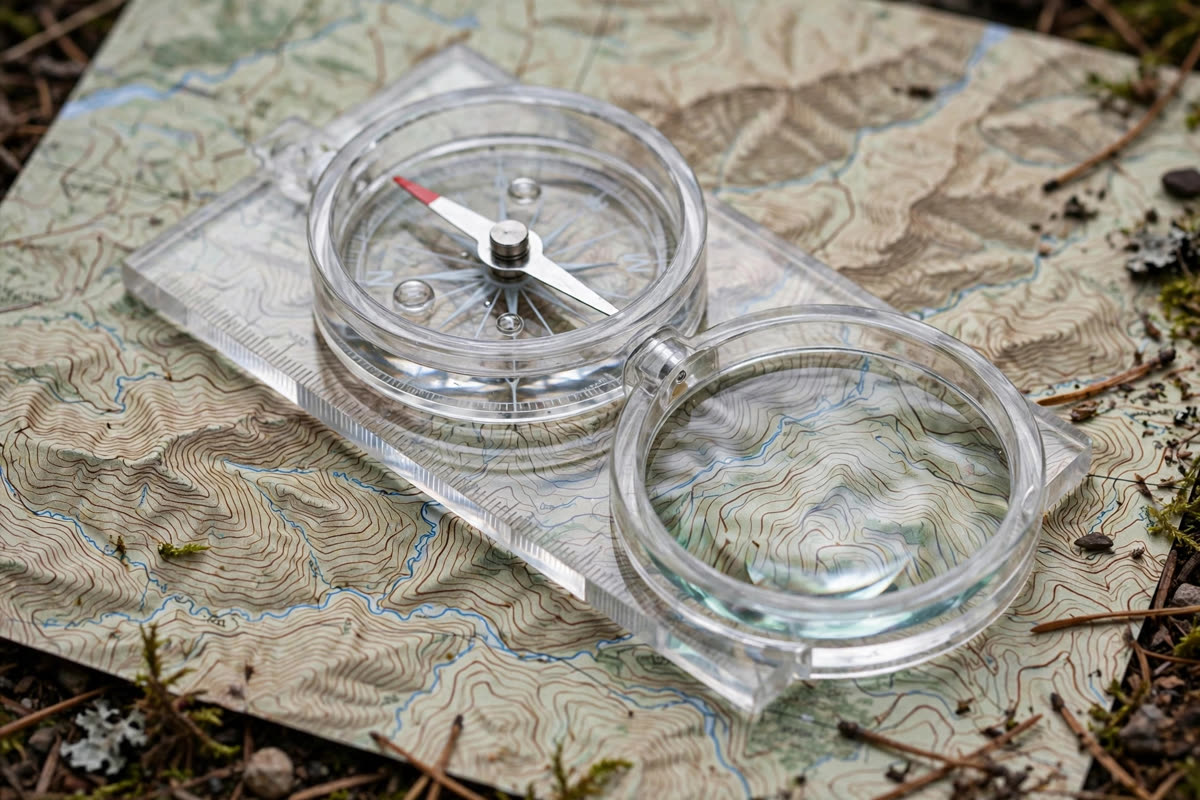
The SUUNTO A-30 NH USGS is a textbook baseplate compass, and it shows why Suunto has been trusted by orienteers for generations. The transparent baseplate carries imperial scales matched to USGS style topographic maps, including inch rulers and 1:24,000 and 1:50,000 mile scales, plus a magnifying lens for reading fine map detail and control marking holes for plotting routes. No wonder it appears on nearly every list of the best compasses for map work.
Inside, a high grade steel needle rides on a jewel bearing in a liquid filled capsule, so it settles fast and stays stable even in cold weather. The needle is balanced for the northern hemisphere, and luminescent markings on the bezel, orienting marks, and direction of travel arrow keep it readable in low light. A fixed declination correction scale helps you handle areas of large magnetic variation, and the detachable snap lock lanyard pops off quickly when you need to lay the compass flat on a map.
At 32 grams it is light enough for any hiking kit, and Suunto makes it in Finland with a limited lifetime warranty. You can read the full official specifications on the Suunto A-30 NH USGS product page. For map and compass navigation in the United States, this is one of the best compasses you can choose, and our recommended pick for most hikers.
SUUNTO MC-2 NH USGS Compass
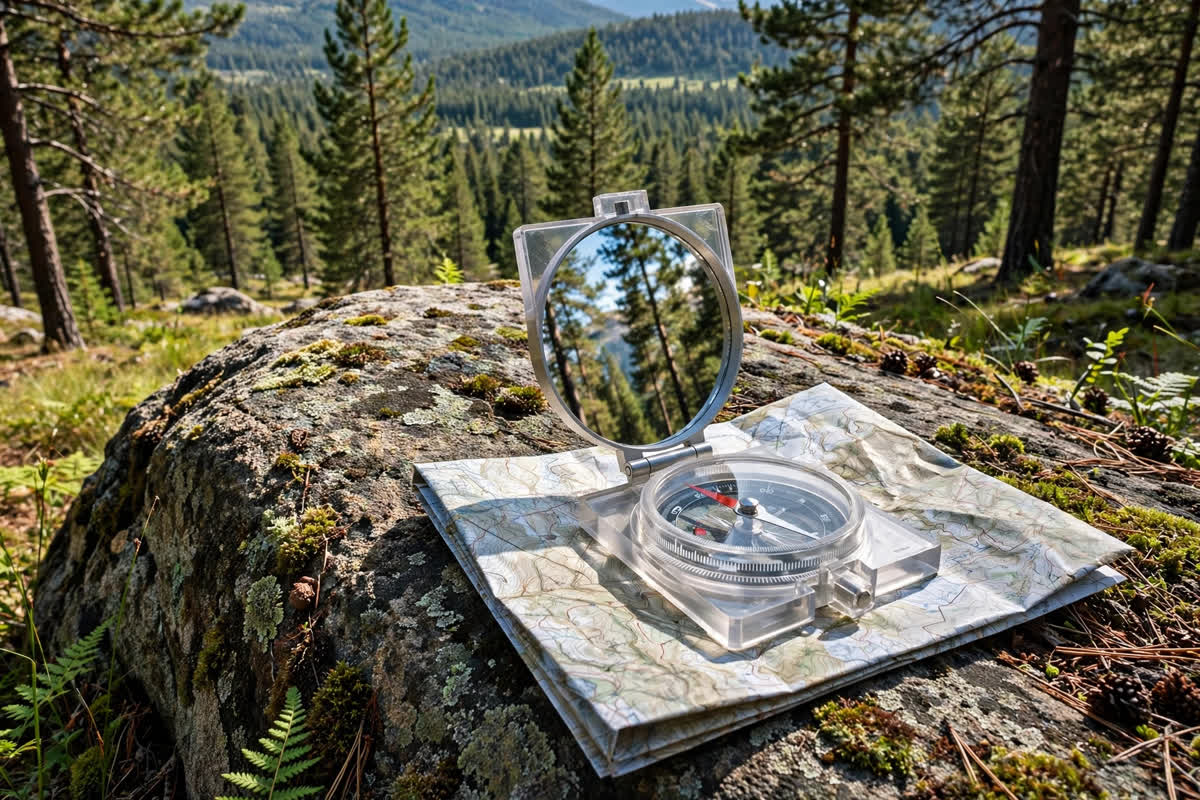
If the A-30 is the everyday hiker’s compass, the SUUNTO MC-2 NH USGS is its serious big brother. This professional mirror sighting compass adds everything a backcountry navigator could want: a sighting mirror for taking accurate bearings while viewing the dial and the target at the same time, a sighting notch and hole for precise alignment, and adjustable declination correction instead of a fixed scale.
The standout extra is the built in clinometer, which measures slope angle with 2 degree resolution. That is genuinely useful for avalanche awareness, estimating climb difficulty, and judging terrain in winter or mountain country. The liquid filled capsule, jewel bearing, and high grade steel needle deliver the same fast settling performance Suunto is known for, and luminous markings keep bearings readable after dark.
USGS scales including 1:24,000 and 1:50,000 UTM grids sit on the baseplate alongside a magnifying lens, and the detachable lanyard includes a wrist lock and a declination correction tool. At 74 grams it weighs more than double the A-30, and it costs noticeably more, but for serious hikers, search and rescue volunteers, and mountaineers, the MC-2 is one of the best compasses ever made. If you navigate off trail often, the mirror and clinometer earn their weight.
AOFAR AF-4580 Military Compass
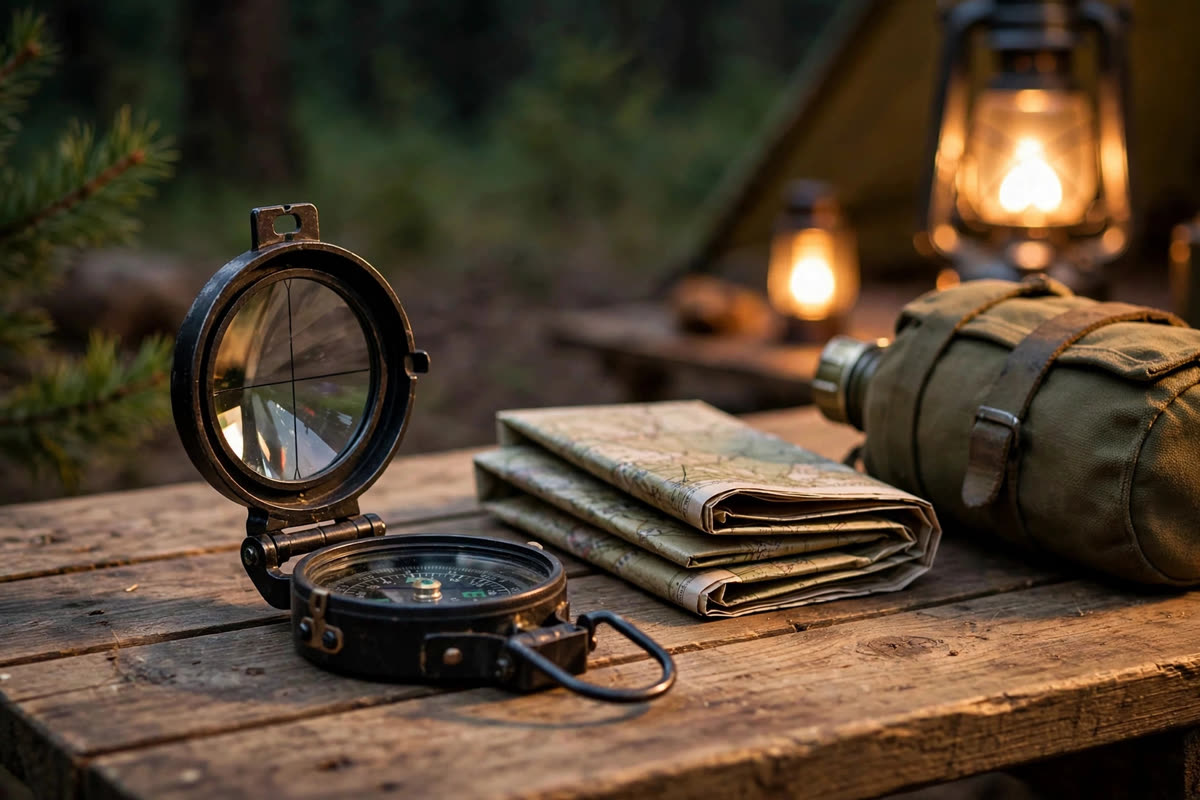
The AOFAR AF-4580 is a modern take on the military lensatic compass, built from heavy duty zinc die cast metal with a waterproof and shakeproof seal. It targets hikers and campers who want the toughness and sighting precision of a military compass plus a few extras the old issue models never had.
The headline extras are an integrated map measurer and a slope chart, which turn the compass into a small route planning tool. The 360 degree floating dial has a luminous magnet arrow for night use, and the adjustable prism lens lets you fine tune the sighting optics to your eyes. A tripod mount on the base is a nice touch for taking steady bearings during surveys or careful map work, and the compass ships with a waterproof pouch and lanyard.
The thermoelastic liquid filled capsule keeps the dial readable across temperature swings, and product listings back the compass with a two year warranty. On the downside, it shares the usual lensatic tradeoffs: it is heavier than a baseplate compass, and learning to read a floating dial through a prism takes practice. Still, among affordable military style compasses, the AF-4580 is one of the best compasses for campers who want maximum features per dollar.
Eyeskey Multifunctional Compass
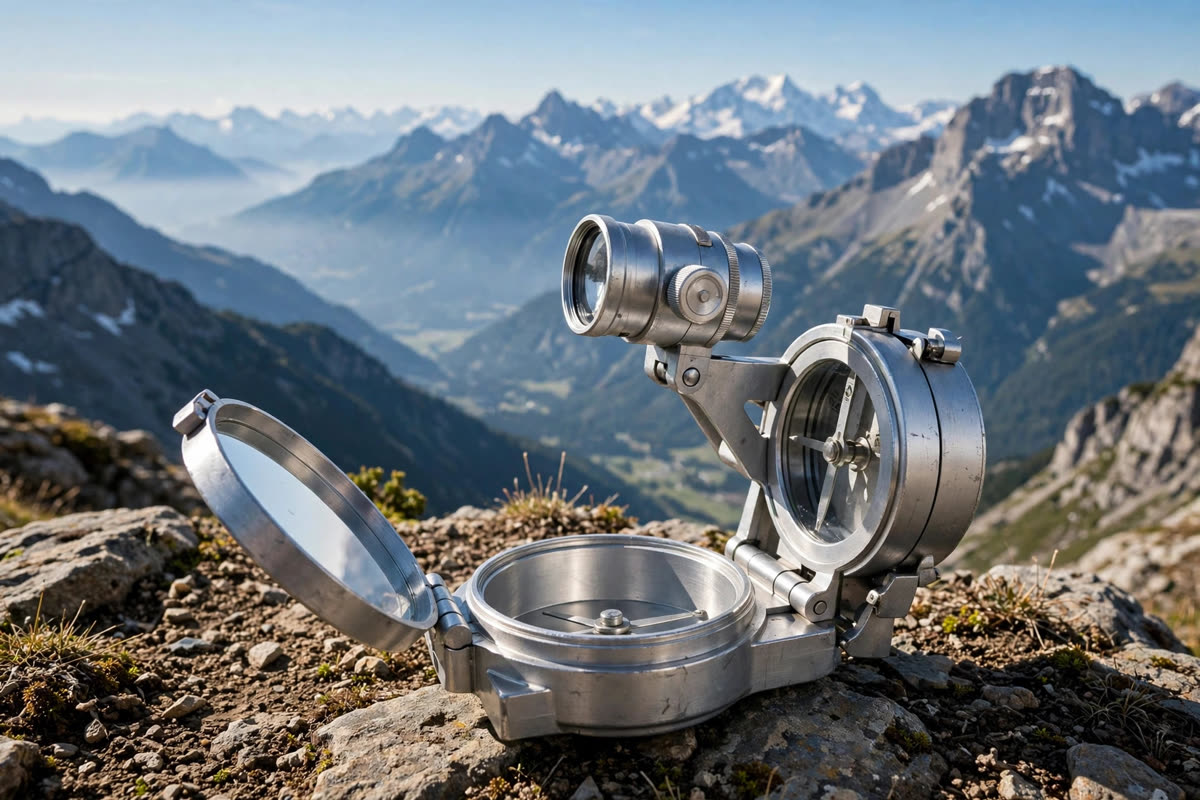
The Eyeskey multifunctional compass looks like it was designed by someone who got tired of carrying three separate instruments. This metal sighting compass packs a liquid filled dial, a built in clinometer, an integrated bubble level, and an adjustable diopter sighting lens into one waterproof aluminum alloy body.
The clinometer is the real star. It lets you measure slope angle, elevation change, and even get a rough read on avalanche risk when you are climbing or skiing steep terrain. The bubble level helps you hold the compass flat for accurate readings, the luminous dial and adjustable marching line stay readable in dim light, and a thumb hold plus magnifying viewer make one handed use practical. A tripod mount, rotating bezel ring, sighting hairline, and a measurement conversion chart round out a genuinely packed feature set. Few multifunction models pack this much into one body, which is why it ranks among the best compasses for technical users.
The whole package weighs about 175 grams and comes with a canvas pouch and lanyard. Eyeskey backs it with a lifetime warranty according to the product listing, which is generous at this price. The learning curve is steeper than a simple baseplate compass, and beginners may find all the scales distracting at first. But for hikers, scouts, and geology hobbyists who want one tool that does it all, this is one of the best compasses in the multifunction category.
SUUNTO A-10 NH Metric Compass
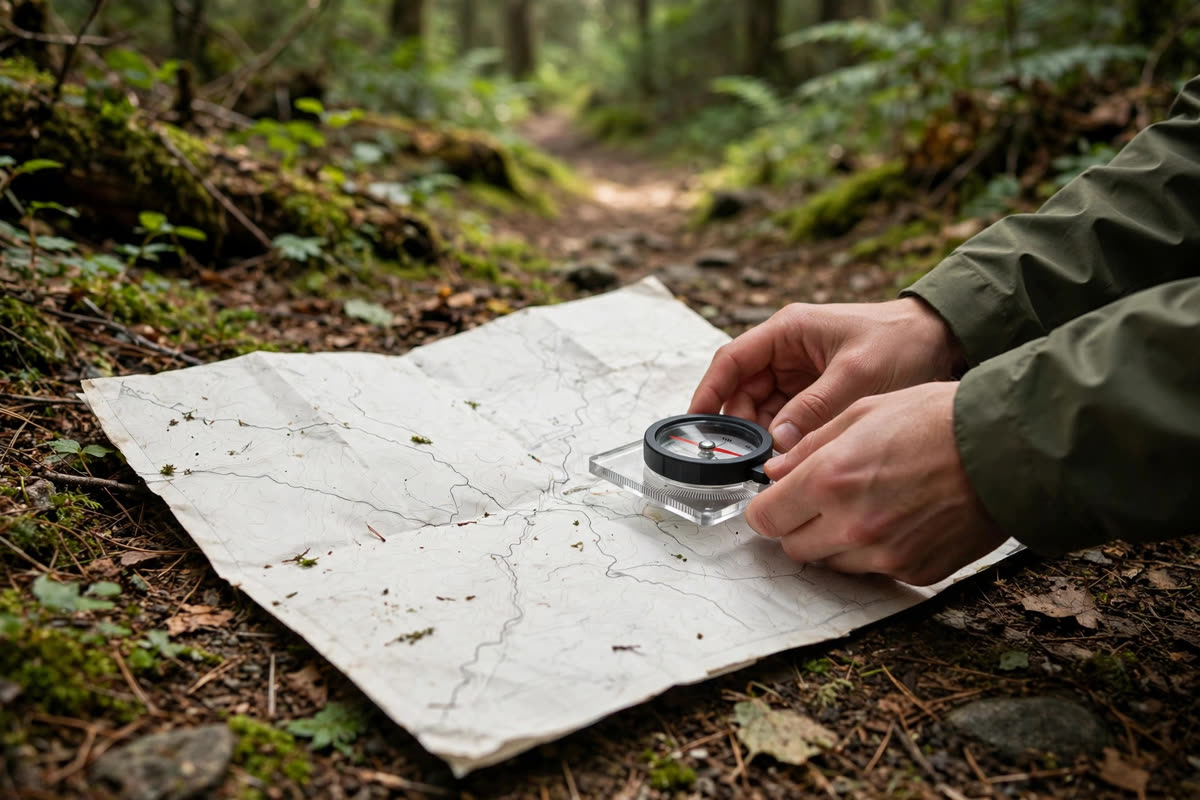
The SUUNTO A-10 NH is the minimalist of this roundup, and proud of it. This compact baseplate compass strips navigation down to the essentials: a fast liquid filled needle on a jewel bearing, a clear scratch resistant baseplate, and red metric and imperial scales that stand out clearly against a topographic map.
At just 30 grams, it disappears into a shirt pocket or a map case. The fixed declination correction scale covers areas of large magnetic variation without adding complexity, and the detachable snap lock lanyard detaches in seconds for flat map work. The needle is balanced for the northern hemisphere, and the compass is insensitive to water pressure, so rain and river crossings are no problem. Suunto handcrafts it in Finland and covers it with a limited lifetime warranty.
There is one honest compromise: the A-10 has no luminous markings, so night navigation is off the table unless you carry a headlamp. For daylight hiking, scouting, and orienteering practice, though, it is superb. You can confirm the details on the official Suunto A-10 NH page. If you want the lightest trustworthy compass for learning map and compass skills, the A-10 is one of the best compasses for the job and an excellent first compass for kids and scouts. Few models teach fundamentals this well, which keeps it on our best compasses shortlist year after year.
AOFAR AF-4074 Military Compass
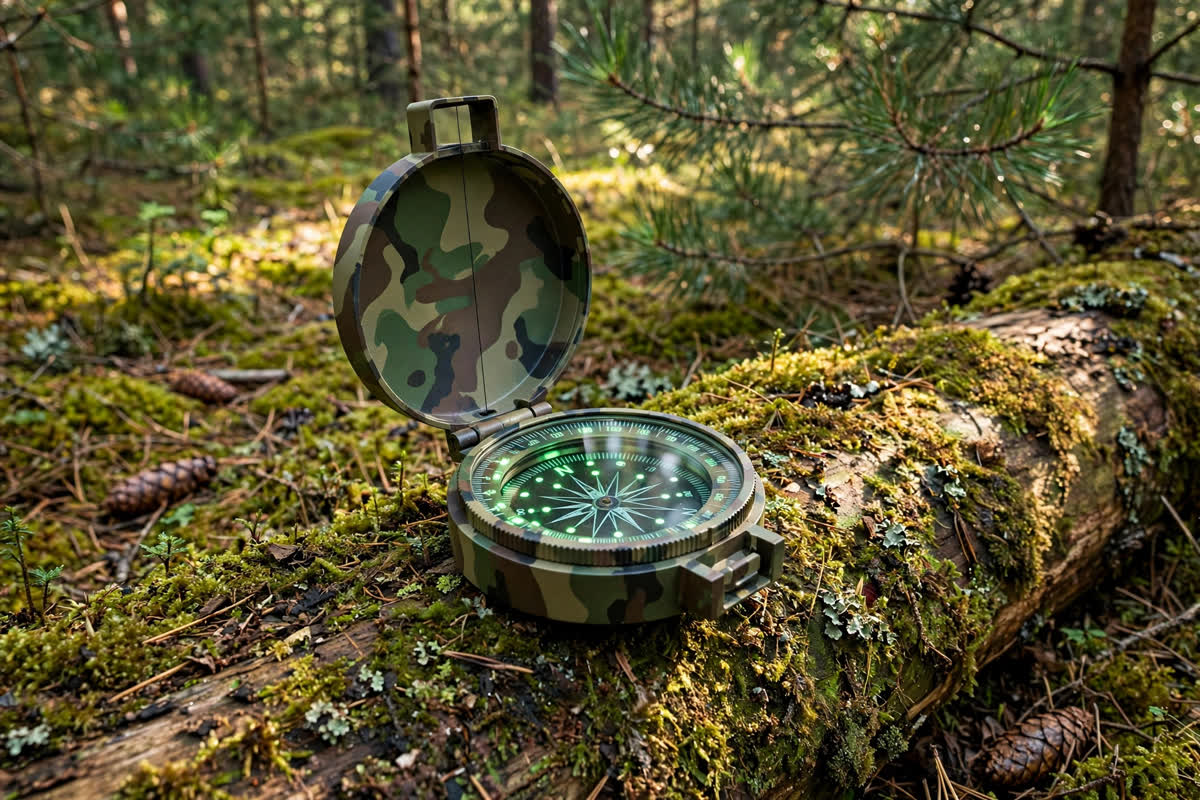
The AOFAR AF-4074 is the sibling of the AF-4580 with a slightly different personality. It keeps the classic lensatic formula, a floating 360 degree dial, an adjustable prism lens, a sighting hairline, and a folding metal lid, but adds an inclinometer for measuring slopes and heights, which the Sportneer style basics lack.
The body is durable zinc alloy metal with waterproof and shakeproof construction, and it comes in a camouflage finish that suits hunters and military surplus fans. The thermoelastic liquid filled capsule uses a true sighting optic, so you read the compass card directly through the eyepiece for a more precise bearing than a simple needle. A thumb hold and magnifying viewer speed up readings, and the package includes a pouch and an English manual.
The clinometer sets it apart for geology fieldwork, hunting from elevated stands, and estimating tree heights or slope grades on trail. Like most lensatic compasses it has no declination adjustment and it weighs more than a baseplate model, so it suits a pack or belt rather than a shirt pocket. For campers and scouts who want a tough sighting compass with slope measurement built in, the AF-4074 is one of the best compasses in its class.
SUUNTO M-9 Wrist Compass
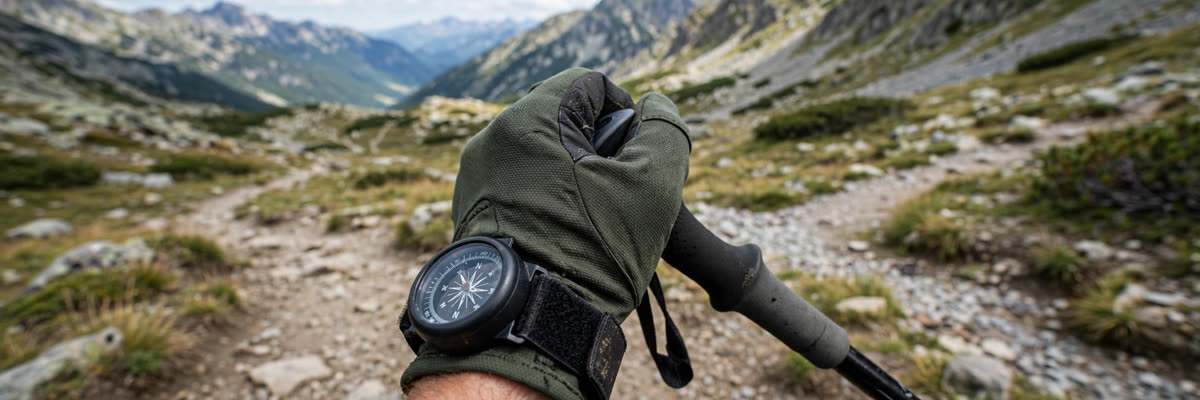
The SUUNTO M-9 takes a completely different approach: it puts the compass on your wrist. This compact liquid filled wrist compass straps on with velcro and keeps your hands free, which is why it has a loyal following among military members, geocachers, and hikers who need quick direction checks without digging through a pack.
The large luminous card is graduated in 5 degree increments and readable from the top or through a side reading window for taking bearings. A ratchet mechanism lets you set and hold a desired direction, and the capsule turns smoothly for easy adjustment. It is balanced for the northern hemisphere, uses a jewel bearing, and weighs only 16 grams. Suunto makes it in Finland with a limited lifetime warranty.
Be honest about what it is: a wrist compass is a quick reference tool, not a precision map instrument. There is no declination adjustment and 5 degree resolution cannot match a mirror sighting compass for fine bearings. But as a backup that is always on your wrist, it is brilliant. Pair it with a baseplate compass in your pack and you will never be without a heading. For hands free convenience, it is one of the best compasses you can strap on.
Proster Military Compass
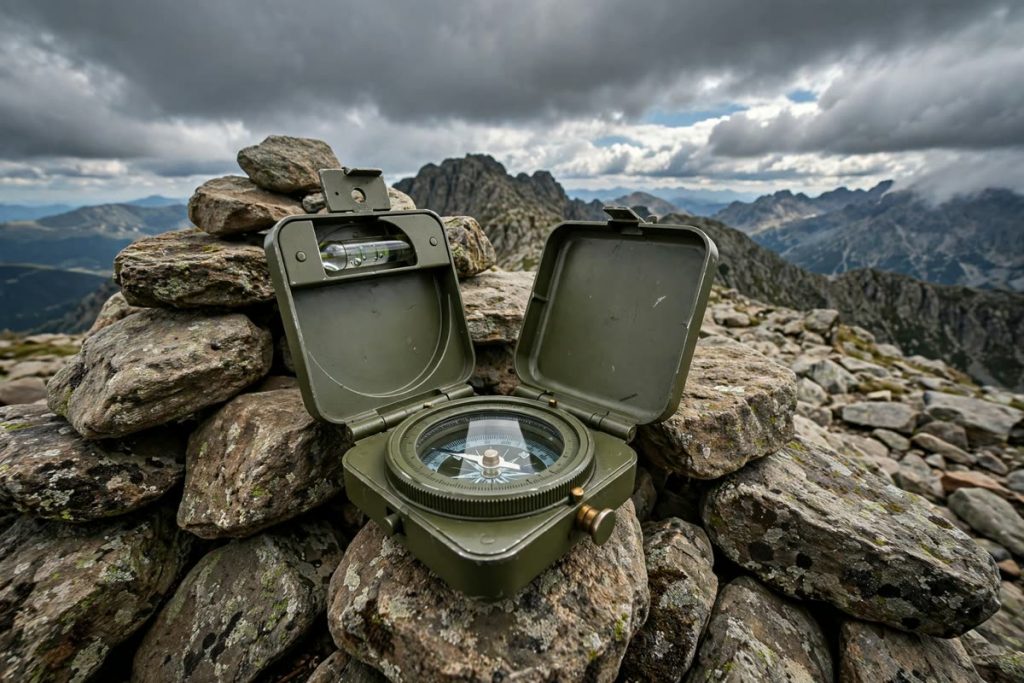
The Proster military compass is a heavyweight in every sense. This 330 gram metal sighting compass earns an IP65 rating for dust and water resistance, and its foldable metal lid, floating 360 degree dial, and adjustable prism lens follow the proven military lensatic pattern.
What sets it apart is the combination of a built in clinometer for measuring slopes and heights with a vertical lubber line in the sighting optic, which the manufacturer says improves accuracy and reduces reading errors. The luminous magnet arrow and compass card glow after sun exposure for night navigation, and the compass is rated to work from minus 20 to plus 50 degrees Celsius. A carry pouch, lanyard, and manual come in the box.
At 330 grams this is not a compass you slip into a running vest. It belongs in a hiking pack, a hunting kit, or a vehicle emergency bag where its mass translates into stability and durability. The minimum scale value of 1 degree gives fine readings for careful work. If you want a solid, no nonsense metal compass with a clinometer for serious outdoor use, the Proster is one of the best compasses at this level of ruggedness.
Silva Expedition S Compass
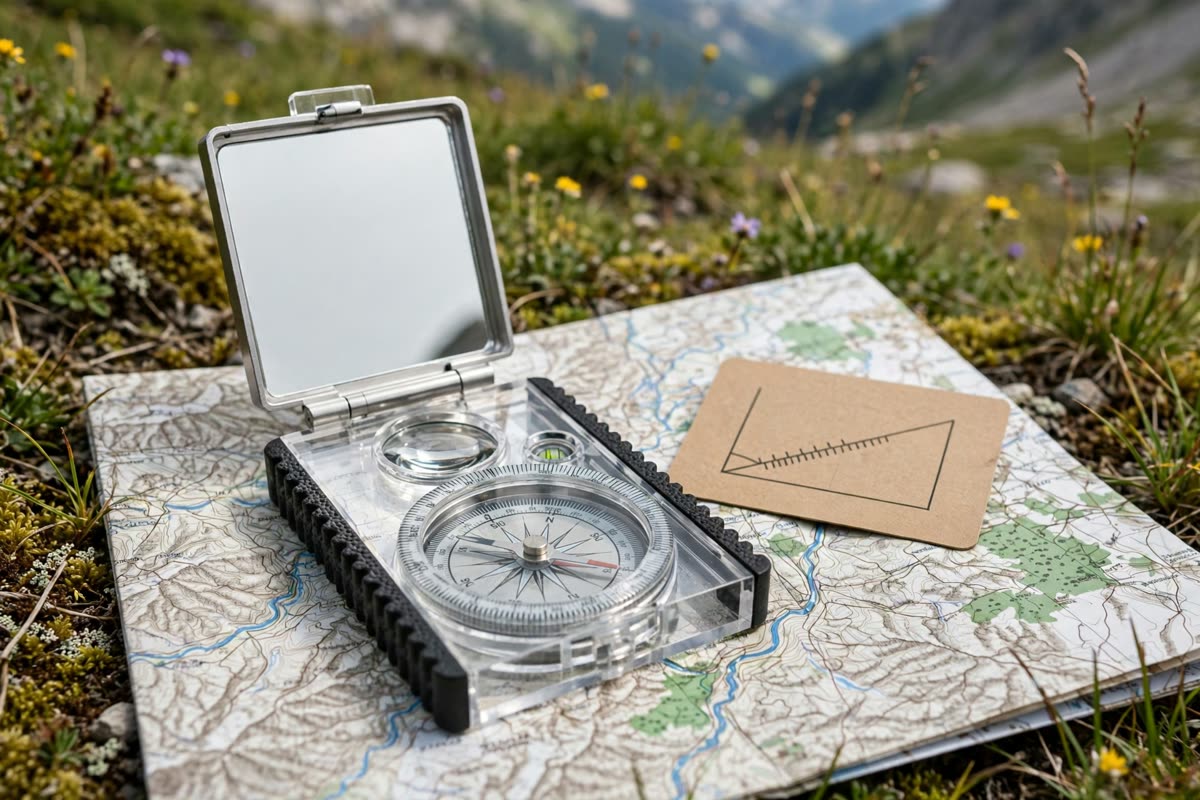
Silva practically invented the modern orienteering compass, and the Expedition S is the flagship of its expedition line. This mirrored sighting compass lets you view the compass dial and your target at the same time through the mirror, which is the most accurate way to take a field bearing short of a survey instrument.
The feature list reads like a navigator’s wish list: a built in clinometer for slope angle, permanent adjusters for magnetic declination, luminous markings on dial and needle for night work, a magnifying lens, silicon rubber feet that grip the map during precise plotting, and map measuring scales in millimeters, inches, 1:25,000, 1:50,000, and GPS scales. The easy handling Dryflex housing shrugs off tough conditions, and the detachable safety release lanyard doubles as a scale lanyard for measuring longer map distances.
Silva even includes a slope card for calculating avalanche risk and judging extra distance on steep routes. At 86 grams it is heavier than basic baseplates but light for what it does, and retailer listings note a five year warranty. The Expedition S is aimed at experienced users and professionals, and beginners may find its depth intimidating. But for expedition leaders, mountain guides, and serious orienteers, it is simply one of the best compasses money can buy.
Final Pick
So which of these is the best compass overall? For most hikers, our final pick is the SUUNTO A-30 NH USGS. It hits the sweet spot that matters: a trustworthy liquid filled needle on a jewel bearing, a transparent baseplate made for real map work, USGS friendly scales with a magnifier, low light markings, and a weight of only 32 grams. It does everything a trail navigator needs and nothing you will never use. That balance is what separates the best compasses from the rest.
If your adventures run more serious, step up to the SUUNTO MC-2 NH USGS for its mirror sighting and adjustable declination, or the Silva Expedition S for professional grade precision. If your budget is tight or you want a tough backup for an emergency kit, the Sportneer lensatic compass is the value champion. And if you want a compass that is always with you, add the SUUNTO M-9 to your wrist.
Whatever you choose, practice with it before you need it. A compass only works if you do. Pair your new compass with a paper map of your route and consider rounding out your kit with our survival gear guide for the other essentials that belong in every pack.
FAQ
What is the best type of compass for hiking?
For most hikers, a baseplate compass is the best choice because it works directly on a paper map for route planning, measuring distance, and taking bearings. Models like the SUUNTO A-30 and Silva Expedition S are designed exactly for this. Lensatic compasses suit users who mostly take field bearings toward distant landmarks and want maximum ruggedness.
What is magnetic declination and do I need to adjust for it?
Magnetic declination is the angle between magnetic north, where your compass points, and true north, which maps use. It varies by location and changes slowly over time. In many regions it is large enough to throw you badly off course over long distances. Compasses with adjustable declination, like the SUUNTO MC-2 and Silva Expedition S, let you set it once and forget it. With fixed scale or no adjustment models, you must add or subtract the declination yourself on every bearing. Once you understand it, any of the best compasses on this page will serve you well.
Lensatic vs baseplate: which compass should I choose?
Choose a baseplate compass if you navigate with a map, which most hikers should. Choose a lensatic compass if you want a tough standalone bearing tool for scouting, hunting, or emergency kits, and you are willing to learn its sighting system. Many experienced outdoors people carry both: a baseplate compass for map work and a small lensatic or wrist compass as backup.
Can I use a compass at night?
Yes, if it has luminous markings. Most of the best compasses in this guide use glow in the dark paint on the dial, needle, or bezel that charges in daylight. The Sportneer, SUUNTO A-30, MC-2, M-9, and Silva Expedition S all offer some form of night readability. The SUUNTO A-10 is the exception here, with no luminous markings, so bring a headlamp if you choose it.
Are hiking compasses waterproof?
Quality compasses handle rain and immersion without trouble. Suunto rates its capsules as insensitive to water pressure, and models like the Sportneer, AOFAR, and Proster are explicitly waterproof and shakeproof, with the Proster carrying an IP65 rating. Avoid cheap dry capsule compasses that fog up or stick in wet weather.
How accurate are hiking compasses?
A good baseplate or mirror sighting compass resolves to about 2 degrees, which is plenty for trail navigation. The Proster lists a 1 degree minimum scale value, and the SUUNTO M-9 wrist compass reads in 5 degree steps. Real world accuracy depends more on your technique than the instrument: hold the compass level, away from metal objects and electronics, and practice your bearings before the trip. The best compasses reward good technique with years of faithful service.
The Bottom Line
The best compasses for hiking and navigation in 2026 share the same virtues: a fast settling liquid filled needle, clear markings you can read in poor light, and construction that survives real weather. The SUUNTO A-30 NH USGS is our top recommendation for most hikers, the MC-2 and Silva Expedition S serve serious navigators, and the Sportneer and AOFAR models prove you do not need to spend much for a dependable lensatic compass.
Buy the compass that matches how you actually navigate, learn to use it with a paper map, and keep it in your pack on every trip. A compass never runs out of battery, never loses signal, and never asks for a software update. Choose from the best compasses above with confidence, carry your navigation setup in a solid pack like the ones in our hiking backpacks guide, and you will be ready for any trail with total confidence in your direction.